
20 min 51 sec
The Family Firm: A Data-Driven Guide to Better Decision Making in the Early School Years
By Emily Oster
Discover a data-driven approach to parenting for the elementary school years. This summary applies economic principles to help families make informed, stress-free decisions about sleep, school, nutrition, and more.
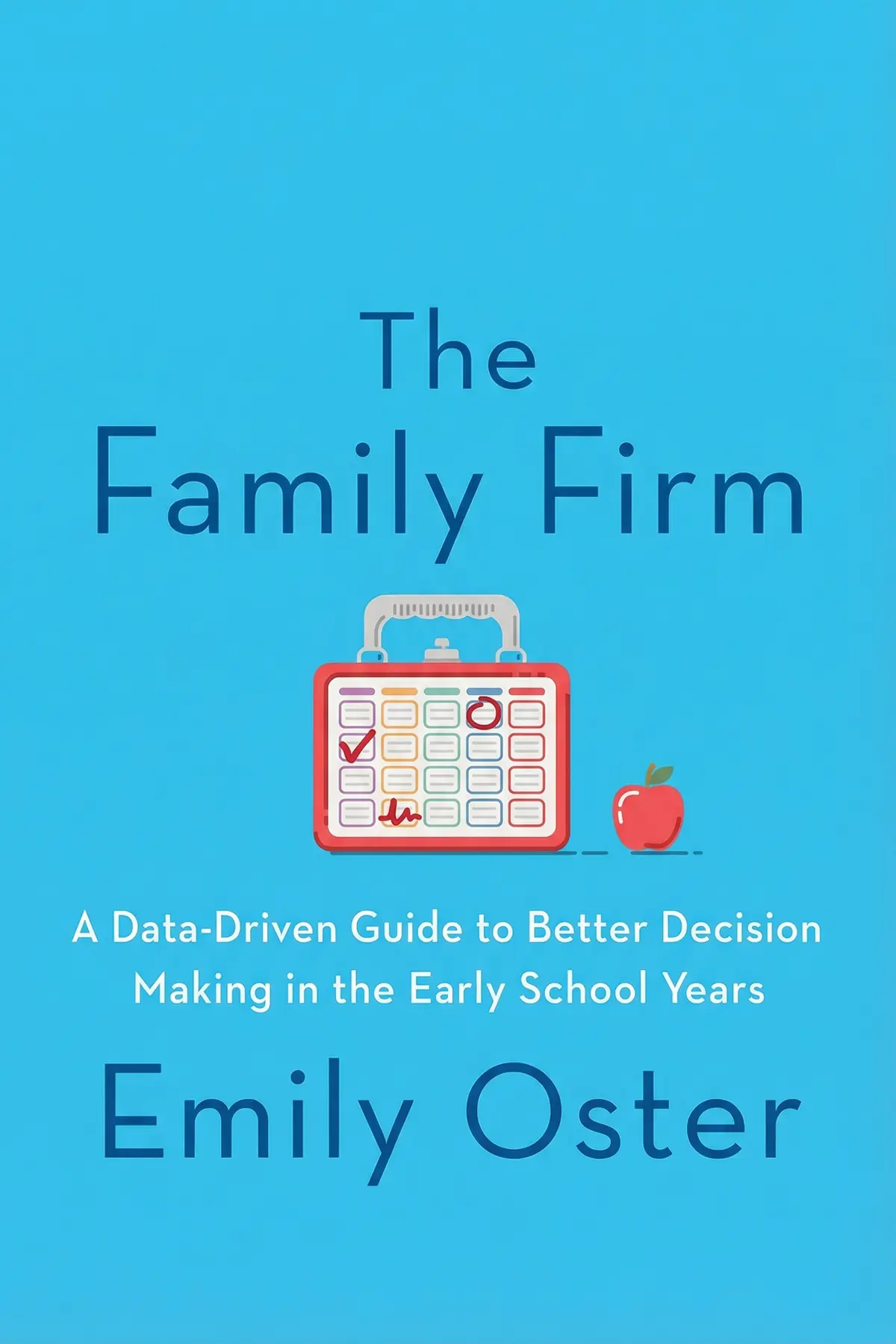
Table of Content
1. Introduction
1 min 41 sec
We often think of parenting as an experience defined by emotion, instinct, and perhaps a bit of trial and error. But when you step back and look at the sheer number of logistical hurdles, long-term investments, and daily management tasks involved in raising a child, it starts to look less like a hobby and more like a complex organization. This is the core realization at the heart of our exploration today: the idea that your family can be managed with the same rigor and clarity as a successful business.
As children move out of the toddler phase and into the early school years—roughly ages five to twelve—the stakes feel higher. Decisions about schools, extracurricular activities, and digital habits become more frequent and more permanent. It’s easy for parents to feel overwhelmed by the constant stream of advice from friends, the media, and social circles. How do you know what’s right? The answer, according to an economic perspective, isn’t found in a magic intuition, but in the data.
In the following sections, we are going to look at how to apply a professional decision-making framework to your home life. We’ll dive deep into the scientific research surrounding the most common parenting debates. From the physiological necessity of sleep and the long-term impacts of nutrition to the surprising data on ‘helicopter’ parenting and the risks of youth sports, we will uncover what the evidence actually says. By the end of this journey, you’ll have a clearer sense of how to manage your ‘family firm’—not by stripping away the love and spontaneity, but by adding a foundation of facts that helps everyone thrive. Let’s look at how to turn the chaos of family life into a well-oiled machine driven by informed choices.
2. The Economic Logic of Sleep
2 min 20 sec
Explore why sleep is the most critical foundation for your child’s cognitive and emotional success, backed by compelling research and experimental data.
3. Working Parents and the Success Equation
2 min 29 sec
Does a mother’s career help or hinder a child’s development? The data reveals surprising trends across different income levels.
4. The Long-Term ROI of Nutrition
2 min 10 sec
Tastes aren’t just born; they are built. Learn how repetitive exposure can shape a child’s lifelong dietary preferences.
5. The Surprising Benefits of Hovering
2 min 06 sec
Is ‘helicopter parenting’ really as bad as we think? Explore the data that suggests intensive involvement can boost school success.
6. Choosing the Right School Environment
2 min 13 sec
What truly makes a school ‘good’? We look at the data on teacher quality, class size, and the charter school debate.
7. The Calculated Risks of Youth Sports
2 min 06 sec
Sports offer more than just exercise; they build lifelong habits. But which ones carry risks that aren’t worth the reward?
8. De-mystifying Screen Time and Digital Habits
2 min 13 sec
Is technology truly ‘rotting’ your child’s brain? The data suggests we might be worrying about the wrong things.
9. The Power of the Family Meal
1 min 55 sec
Why sitting down for dinner might be the most effective intervention you can make for your child’s mental health.
10. Conclusion
1 min 38 sec
Running your household like a ‘family firm’ isn’t about being cold or calculating; it’s about using the best available information to create the best possible life for your children and yourself. We’ve seen that the foundation of a successful childhood is built on surprisingly simple pillars: ample sleep, consistent nutrition, and quality educators. We’ve also learned that the ‘hot-button’ issues like screen time or intensive parenting are often less scary when you look at the actual statistics, allowing you to focus your energy where it truly counts.
The throughline of all this data is the importance of intentionality. Whether it’s choosing a school based on teacher experience rather than prestige, or protecting the ‘sacred’ time of a family dinner, the goal is to make decisions based on evidence rather than social pressure or anxiety. By applying a business-like rigor to your decision-making, you remove the ‘decision fatigue’ that plagues so many parents. You can stop wondering if you’re doing the ‘right’ thing and start trusting the process you’ve built.
As you move forward, try this: pick one area where you’ve been feeling ‘frazzled’ or uncertain—whether it’s your child’s bedtime or their sports schedule—and look at it through the lens of a manager. What does the data say? What is the opportunity cost? By making even one data-driven shift, like moving the screens out of the bedroom or committing to three family dinners a week, you’ll be setting your family firm on a path toward greater health, happiness, and long-term success. Parenting is a marathon, and with the right data in your hand, you can run it with confidence.
About this book
What is this book about?
The Family Firm offers a refreshing, analytical perspective on the chaotic world of parenting children between the ages of five and twelve. Rather than relying on gut feelings or social pressure, the book encourages parents to view their household as a structured organization—a firm—that requires clear goals, efficient processes, and evidence-based decision-making. It addresses the big questions that keep parents up at night: How much sleep is truly necessary? Does a mother’s career impact a child’s grades? And are screen time or sports-related concussions something to fear? By synthesizing the latest research in child development and economics, this guide provides a roadmap for optimizing a child’s growth while maintaining parental well-being. It promises to cut through the noise of conflicting advice and cultural myths, offering a throughline of logic and data. The goal is to empower parents to create a family culture that aligns with their unique values and needs, ensuring that every choice—from school selection to dinner habits—is made with clarity and confidence.
Book Information
About the Author
Emily Oster
Emily Oster is a renowned economist and bestselling author who has revolutionized parenting literature with her data-driven approach. She serves as a Professor of Economics at Brown University and earned her PhD from Harvard University. Oster is widely known for her previous work, Expecting Better, which utilized her expertise in statistics and evidence-based research to help parents navigate the complexities and often contradictory advice surrounding pregnancy and decision-making for expectant families.
Ratings & Reviews
Ratings at a glance
What people think
Listeners find the book useful for navigating major choices and structuring life around what matters most, noting that it is well-researched and backed by evidence. They value the accessible prose and enjoy the reading experience, with one listener highlighting how it fosters understanding regarding packed daily routines. Listeners view it as an excellent tool for parents and describe the entire text as eye-opening.
Top reviews
Camila
Picked this up because our household schedule felt like a chaotic game of Tetris where no one was winning. Emily Oster’s application of business-school logic to the parenting grind is actually genius. The Four F’s framework—Frame, Fact-find, Final decision, Follow-up—provided a much-needed structure for our big family choices. It’s an approachable, empathetic look at the 'busy-ness' of modern life. While some might find the Google Doc suggestions a bit intense, it really helps coordinate priorities between partners. We’ve already started drafting our family mission statement to help us say 'no' to things that don’t fit our big picture. It’s a great parenting resource that feels like chatting with a very smart, very organized friend.
Show moreAir
Finally got around to finishing this, and it has completely shifted how my husband and I communicate about our priorities! The focus on being intentional rather than just reactive is worth the price of the book alone. We loved the 'Family Firm' metaphor; it doesn't make parenting feel like a chore, but rather a project we are collaborating on. Oster’s writing is fun, clear, and grounded in reality. Even though she concludes that much of the research on things like screen time is outdated, her advice on setting limits based on your own family’s opportunity costs is brilliant. It’s a thorough, enlightened guide for the school-age years.
Show moreOrawan
Ever wonder why there isn’t a manual for the elementary school years that actually relies on hard science? Oster admits the data is thin for older kids, which is frustrating but refreshingly honest compared to other gurus. The real meat here is the decision-making toolkit she provides. We’ve started using a shared calendar to manage the logistics of extracurriculars and school events. It feels a bit 'corporate' at times—maybe even OCD in its level of organization—but it stops the endless 7 PM arguments about soccer practice or dinner. To be fair, she does spend a lot of time on 'inconclusive' data, but knowing that 'everything will likely be fine' is its own kind of relief.
Show moreGai
The chapter on the 'Four Fs' should be mandatory reading for any couple struggling with the logistics of raising school-aged children. Oster successfully bridges the gap between economic theory and the daily grind of domestic life. While the lack of causal data for older kids is a hurdle, her methodology for navigating 'Two Extremely Shitty Options' is invaluable. It’s less of a parenting guide and more of a workflow optimization manual. Some might find the corporate tone off-putting, but for those of us who live in spreadsheets, it’s a breath of fresh air. It helped me empathize with my spouse’s busy schedule while also demanding more structure for our kids' activities.
Show moreLena
This book is a fantastic resource if you can get past the somewhat intense 'business school' vibes of the opening chapters. I particularly valued the sections on sleep hygiene and extracurriculars, which offered actionable advice backed by what little evidence exists. Oster's empathetic tone regarding the 'COVID crunch' also resonated deeply with me. It’s helpful to see someone acknowledge that there are no perfect answers, only choices with different trade-offs. It helped me realize that we don't need our kids to be world-class athletes by age eight; we just need a plan that keeps everyone sane. It’s thoroughly researched even when the research is sparse.
Show moreRatree
As someone who thrives on structure but feels like they are drowning in the elementary school years, this book was a lifesaver. It gave me permission to stop agonizing over the 'right' choice and start focusing on a consistent, repeatable process. The story about her son wanting to color during breakfast hit home—we have those exact same battles every morning! Having a framework to discuss these friction points with my partner has already reduced our household stress significantly. It's a great tool for anyone trying to navigate the messy middle of parenting with a bit more grace and a lot less screaming.
Show moreChai
Look, Emily Oster is a brilliant economist, but this book feels incredibly niche for a very specific demographic. If you have the luxury of debating sleepaway camps or expensive private schools, this will resonate. For many others, the 'business management' approach might feel a bit cold or even unattainable. I appreciated the chapter on sleep, as it's the only area with truly solid, causal data. However, many other chapters ended with a literal shoulder shrug because the research just isn't there. It’s a well-organized resource for those who love spreadsheets and mission statements, but it isn't as revolutionary as her first book, Expecting Better. It’s okay, just not essential.
Show moreWorawit
In my experience, Oster’s data-driven approach works best when there is actual data to drive the car. Here, she spends a lot of time telling you that the research on things like 'red-shirting' kindergarteners or picky eating is weak or non-existent. Why write an entire book if the conclusion is so often 'do what works for you'? The administrative suggestions, like using Google Docs for family philosophies, felt a bit over the top for my more casual parenting style. That said, the section on the importance of sleep was incredibly helpful and well-researched. It’s a decent read if you want to be more deliberate, but don't expect many hard answers.
Show moreSuwit
Not what I expected given how much I leaned on Cribsheet during the toddler years. This feels more like a productivity book than a parenting guide. The advice essentially boils down to 'be organized' and 'think ahead,' which is common sense for many parents. While her breakdown of school choice data was interesting, the constant 'results are inconclusive' refrain became quite repetitive after a while. It’s a well-written book, and Oster’s voice is always likable, but I didn't feel like I gained many new insights. If you aren't already using a shared calendar, you'll get a lot out of this, but otherwise, it's a bit thin on new info.
Show moreLucia
Frankly, this was a struggle to finish because it assumes a level of financial security and two-parent stability that isn't universal. I found the suggestion to create a Google Doc for my family’s 'mission statement' to be eye-rolling and a bit pretentious. This book is clearly aimed at a white-collar audience that spends their weekends debating travel sports and enrichment programs. When Oster does get into the data, it's usually just to tell us that the studies are too small to matter. The decision-making framework she describes is fine, but you could honestly find the same advice in a ten-minute podcast or a short newsletter. I'm glad I borrowed this from the library instead of buying it.
Show moreReaders also enjoyed


AUDIO SUMMARY AVAILABLE
Listen to The Family Firm in 15 minutes
Get the key ideas from The Family Firm by Emily Oster, plus 5,000+ more titles in English and Thai.
- 5,000+ titles
- Listen as much as you want
- 7-day free trial
- Cancel anytime







