
22 min 52 sec
Expecting Better: Why the Conventional Pregnancy Wisdom is Wrong and What You Really Need to Know
By Emily Oster
Emily Oster applies economic decision theory to pregnancy, debunking common myths and empowering parents with data-driven insights to navigate the journey from conception to delivery with confidence and clarity.
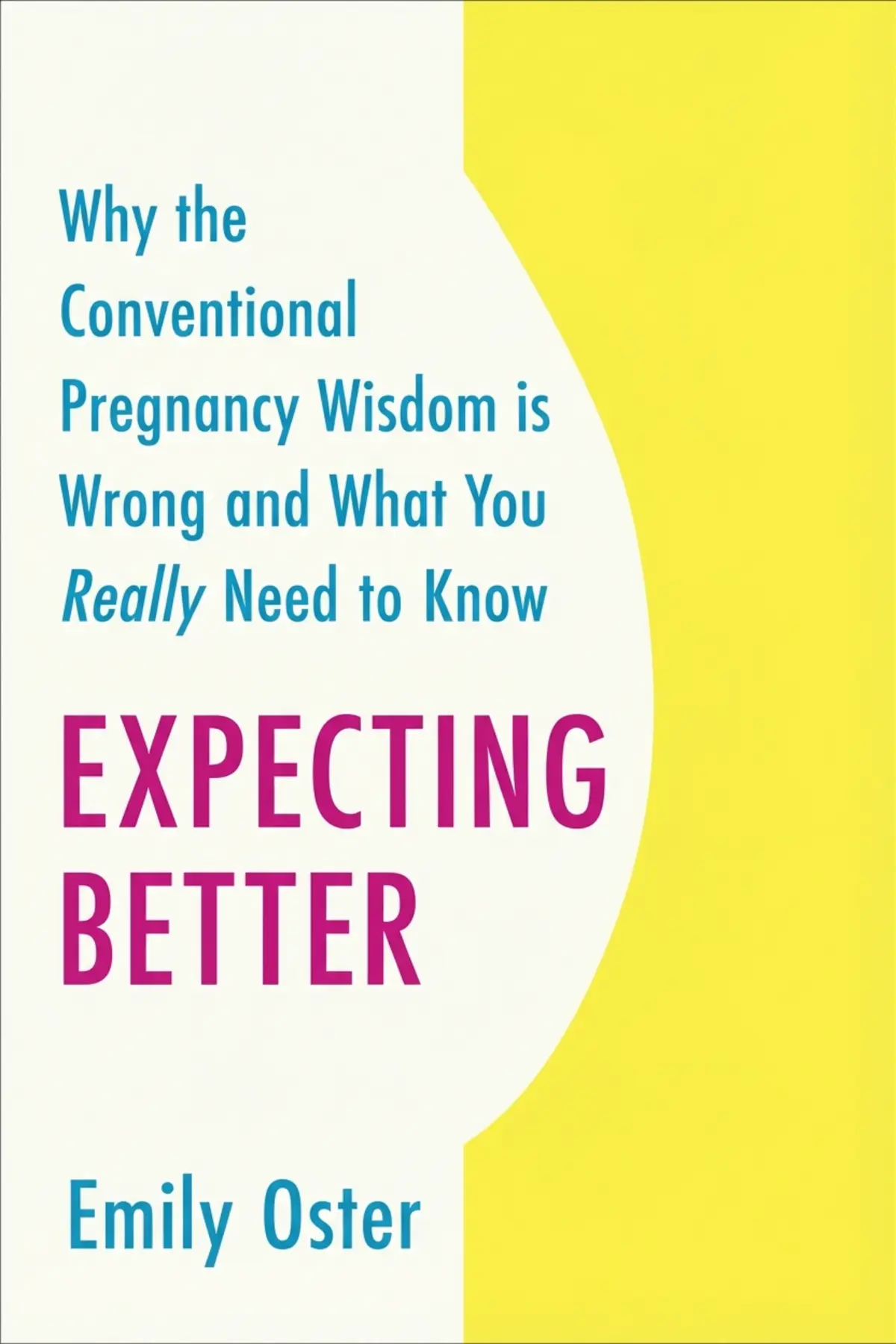
Table of Content
1. Introduction
1 min 43 sec
Pregnancy is often presented as a long list of things you can no longer do. From the moment that second line appears on a test, a woman is usually met with a barrage of restrictions: no soft cheese, no heavy lifting, no caffeine, and certainly no wine. These rules are frequently delivered as absolute commands by doctors, friends, and even strangers, yet the reasoning behind them remains frustratingly vague. For many, this leads to a nine-month journey defined by anxiety and the feeling that one’s autonomy has been replaced by a set of arbitrary protocols.
When Emily Oster, an economist, found herself pregnant, she encountered this same wall of mandates. As someone trained to look at data, she wanted to know the ‘why’ and the ‘how much.’ She didn’t just want to be told what to do; she wanted to understand the magnitude of the risks so she could make her own choices. What she found was a significant gap between official medical recommendations and the actual scientific evidence.
In this summary, we are going to explore a different way of approaching pregnancy. We will move away from the ‘one-size-fits-all’ edicts and instead look at the tools of economic decision theory. This approach isn’t about ignoring medical advice, but about reclaiming the right to make informed decisions based on the best available data. We will walk through the stages of pregnancy—from the mechanics of conception to the complexities of the delivery room—uncovering where the evidence supports traditional wisdom and where it suggests we can finally relax. By the end, you’ll see how a data-driven perspective can transform the labyrinth of pregnancy into a path you can walk with confidence.
2. The Economist’s Approach to Pregnancy
2 min 43 sec
Discover why traditional medical advice often lacks nuance and how using data and personal values can lead to better, more personalized decision-making throughout your journey.
3. The Truth About Fertility and Conception
2 min 37 sec
Explore the realities of age-related fertility and the most effective ways to track ovulation for a successful and less stressful path to pregnancy.
4. Debunking First Trimester Restrictions
2 min 36 sec
Re-evaluate the common bans on coffee, alcohol, and certain foods by looking at the actual risks and the decreasing probability of miscarriage over time.
5. Navigating the Choices of Prenatal Testing
2 min 23 sec
Demystify the world of prenatal screening and invasive tests, comparing their accuracy against potential risks to help you decide what’s right for you.
6. Managing the Mid-Pregnancy Milestones
2 min 29 sec
Address the realities of weight gain, exercise, and sleep in the second trimester, shifting focus from rigid rules to practical, evidence-based health.
7. Preparing for the Final Stretch and Potential Complications
2 min 17 sec
Learn why some common late-pregnancy interventions, like bed rest, are ineffective and how to evaluate the necessity of labor induction.
8. Demystifying the Process of Labor and Delivery
2 min 02 sec
Move past the Hollywood version of birth to understand the three stages of labor, the reality of water breaking, and when medical intervention is truly necessary.
9. Customizing Your Birth Plan with Evidence
2 min 23 sec
Evaluate the pros and cons of pain management, doulas, and birth settings to create a labor experience that reflects your priorities and safety.
10. Conclusion
1 min 39 sec
The journey through pregnancy is often portrayed as a series of hurdles to clear and rules to obey. But as we’ve seen, when you apply the analytical tools of an economist, the picture changes. You transition from being a passive recipient of medical edicts to an active, informed decision-maker. The core message of Emily Oster’s approach is that information is empowering. When you understand the actual numbers—the real probability of a miscarriage at ten weeks, the true impact of a morning cup of coffee, or the actual risk-to-benefit ratio of an epidural—the fear begins to dissipate.
Of course, data doesn’t make the decisions for you. It simply provides the foundation upon which you build your own choices based on what you value most. For some, the highest priority is minimizing every possible risk, no matter how small. For others, the priority is maintaining a sense of normalcy and autonomy throughout the nine months. Both are valid paths, provided they are chosen with open eyes.
As you move forward, remember to always look for the distinction between correlation and causation. Just because two things happen at the same time doesn’t mean one caused the other. This critical eye will serve you well not just during pregnancy, but in all the parenting decisions that follow. Stay curious, ask for the data, and trust yourself to weigh the costs and benefits. Pregnancy is the beginning of a lifetime of choices; by starting with an evidence-based mindset, you are setting a standard for a parenting journey defined by clarity, confidence, and a healthy dose of perspective.
About this book
What is this book about?
Expecting Better is a transformative guide for expectant parents who feel overwhelmed by the rigid, often contradictory rules of pregnancy. By applying the analytical rigor of an economist to medical literature, Emily Oster peels back the layers of conventional wisdom to reveal what the data actually says about alcohol, caffeine, bed rest, and more. The book’s promise is to replace fear and blind obedience with autonomy. Instead of offering a list of mandates, it provides a framework for evaluating risks and benefits tailored to individual preferences. From the nuances of prenatal testing to the realities of the delivery room, readers learn how to distinguish between high-quality evidence and outdated social norms, ensuring a more relaxed and informed pregnancy experience.
Book Information
About the Author
Emily Oster
Emily Oster is a distinguished American economist and a professor at Brown University. Known for her ability to translate complex data into practical life advice, she has become a leading voice in modern parenting literature. She is also the author of the best-selling book Cribsheet, which applies her data-driven approach to the early years of a child’s life, from birth through preschool.
Ratings & Reviews
Ratings at a glance
What people think
Listeners describe this pregnancy guide as highly accessible and meticulously documented, citing the extensive research behind its evidence-based methodology. They value how the author distinguishes myth from reality and delivers data in a clear format, considering it essential listening for both expectant mothers and fathers. Listeners note that the material reduces worry and provides a sense of calm during gestation, while equipping them with the confidence to make informed decisions.
Top reviews
Sangduan
Finally, a pregnancy book that doesn't treat me like a child or a walking vessel of fragility. As someone who naturally gravitates toward spreadsheets and logic, Emily Oster’s approach was exactly what I needed to survive the overwhelming noise of the first trimester. She essentially looks at the 'rules'—no caffeine, no sushi, limited weight gain—and asks for the receipts. To be fair, some people find her economist background a liability, but I found it to be her greatest strength because she isn’t just repeating what she was told in med school thirty years ago. The truth is, many of the restrictions we face are based on incredibly shaky or outdated studies. Reading this felt like a massive weight lifting off my shoulders. I didn't feel 'permitted' to drink; I felt empowered to make my own risk-reward calculations. My only gripe is that the tone can occasionally feel a bit dismissive of traditional care, but the relief from anxiety is undeniable.
Show moreDek
The peace of mind this gave me during my first trimester is worth its weight in gold. Before I found this book, I was a nervous wreck, googling every single bite of food and feeling like a failure every time I felt a twinge of pain. Oster's evidence-based approach is refreshing because it relies on hard numbers rather than old wives' tales. I especially loved the breakdown of genetic testing options like NIPT versus amnio; it made a terrifying decision feel like a logical choice. Personally, I think every expectant mother deserves this level of transparency. The book empowers you to have a real conversation with your doctor instead of just nodding along to whatever they say. It’s not about being 'naughty' or ignoring health; it’s about understanding the actual probability of risk. If you’re a high-anxiety person, buy this immediately. It changed my entire perspective on what it means to be a 'good' pregnant woman.
Show moreMarasri
After hearing all the controversy surrounding the alcohol chapter, I wanted to see the numbers for myself. What I found wasn't a call to binge drink, but a nuanced look at how light consumption actually impacts development according to the best available studies. This book is a masterclass in risk assessment. Oster’s writing style is accessible without being patronizing, which is a rare find in the 'baby' genre. She tackles everything from the probability of miscarriage by week to the effectiveness of different labor induction methods. I found the section on epidurals particularly helpful because it cleared up so many myths about their impact on the 'cascade of interventions.' Honestly, it’s just nice to be talked to like a rational adult who can handle complex information. It helped me feel like I was in the driver’s seat of my own pregnancy. The graphs alone are worth the price.
Show moreGor
I picked this up for my wife, but I ended up reading the whole thing myself. As an expectant father, I felt pretty sidelined by most of the pregnancy literature out there, which is usually either overly sentimental or terrifying. This was different. It felt like a briefing. The way Oster explains Type 1 and Type 2 errors in the context of prenatal testing made total sense to me. It gave us a common language to discuss the choices we were making, from which tests to get to how we wanted to handle the delivery. The truth is, most books tell you what to do, but this one explains the statistical trade-offs of every decision. It turned our 'doctor's orders' into a collaborative plan. If you’re a guy who wants to actually be helpful and informed during these nine months, this is the book you need. It helps you be a partner rather than a spectator.
Show moreMadison
Every expectant parent needs to have this on their nightstand. Not what I expected at all—I thought it would be a dry textbook, but Oster is actually a very engaging writer who sprinkles in her own experiences. The chapter on 'The Labor Room' was particularly eye-opening for me, especially the data on continuous fetal monitoring and C-section rates. It gave me the confidence to ask my midwife specific questions about their practices. Look, at the end of the day, knowledge is power. This book doesn't tell you how to live; it gives you the tools to decide for yourself based on actual evidence rather than tradition or fear. It’s well-documented and thorough, making it an essential companion for anyone navigating the modern medical system. Whether you agree with her conclusions or not, you'll walk away feeling much more informed about your body and your baby's development.
Show moreAmara
As a data nerd, I absolutely loved how Oster broke down the research surrounding common pregnancy myths. Picked this up after my OB gave me a generic list of 'no-nos' that seemed largely arbitrary. The chapter on caffeine was a game-changer for me; seeing the actual statistics on coffee consumption vs. miscarriage risk allowed me to enjoy my morning cup without the crushing guilt. However, look, I do understand why some medical professionals are skeptical. She’s an economist, not a doctor, and that shows in how she sometimes glosses over the clinical nuances of things like listeria or bed rest. Not gonna lie, the section on alcohol felt a little biased toward her personal preferences, which might lead some readers to take unnecessary risks. Even with those minor flaws, it’s a must-read for anyone who wants to understand the why behind the advice. It makes the whole experience feel much more manageable and significantly less scary.
Show moreAudrey
Ever wonder why you're suddenly forbidden from eating a sandwich just because you're pregnant? This book finally provides some much-needed context on things like deli meats and listeria outbreaks. Oster points out that the risk from a turkey sub is often lower than the risk from bagged lettuce, yet no one tells you to stop eating salad. In my experience, doctors tend to give the most conservative advice possible to avoid liability, but that doesn't always lead to the best quality of life for the mother. My main criticism is that she occasionally leans too hard into her own lifestyle choices—it’s pretty clear she likes her coffee and wine! Still, the statistics on weight gain and exercise were incredibly enlightening and helped me stop obsessing over the scale every morning. It’s a fantastic resource for anyone who prefers logic over fear-mongering, even if you don't agree with every single conclusion she draws.
Show moreNoo
This book is a breath of fresh air compared to the 'What to Expect' style of fear-mongering. Instead of just listing a hundred ways things can go wrong, Oster uses data to show you the actual likelihood of those events occurring. It turns out that a lot of the things we're told to fear are actually incredibly rare. For example, the sushi thing? Totally overblown if you’re eating at a reputable place. I felt so much more relaxed after reading the chapter on miscarriage rates—seeing the numbers drop week by week was the only thing that kept me sane during the first trimester. My only real complaint is that she sometimes ignores the psychological aspect of risk; for some people, even a 1 in 1,000 chance is too much, and she can be a bit glib about that. Overall, though, it’s a brilliant way to cut through the noise and focus on what actually matters for a healthy baby.
Show moreClaire
While I appreciate the effort to deconstruct antiquated medical advice, I felt a bit uneasy about an economist overriding clinical consensus. Frankly, the methodology is fascinating, and I think it’s important to question why certain guidelines exist, but there is a certain 'privilege' to the tone that rubbed me the wrong way. She treats pregnancy like a series of math problems to be solved, which ignores the reality that biological systems don't always follow a linear regression. For instance, her take on smoking and alcohol seems to downplay risks if the data isn't 'statistically significant' to her personal standard. Is it helpful? Yes, for de-stressing over a piece of sushi. Is it dangerous? Possibly, if a reader uses it to justify behaviors that could have long-term impacts. I’d recommend reading this alongside a more traditional medical guide to get a balanced view. It’s a compelling read, but take the 'prescriptions' with a healthy dose of salt.
Show moreWoramet
Gotta say, the logic here is mostly sound, but the author’s personal preferences definitely leak through the data. I enjoyed the deep dive into the 'why' behind various pregnancy restrictions, but I noticed a pattern where she’s very forgiving of the things she likes—like caffeine—while being more dismissive of things she doesn't care for, like gardening or certain types of exercise. As someone with a background in science, I found her dismissal of some medical professional's concerns a bit arrogant. Economics is great for trends, but medicine involves individual biology that doesn't always fit into a neat chart. To be fair, she does provide the sources so you can check her work, which I appreciate. It’s a useful tool for lowering your stress levels, but I wouldn't use it as my only source of medical guidance. Some of the advice on alcohol and weight gain feels a bit 'too good to be true' for comfort.
Show moreReaders also enjoyed
AUDIO SUMMARY AVAILABLE
Listen to Expecting Better in 15 minutes
Get the key ideas from Expecting Better by Emily Oster, plus 5,000+ more titles in English and Thai.
- 5,000+ titles
- Listen as much as you want
- 7-day free trial
- Cancel anytime







