

Afropean: Notes From Black Europe
Johny Pitts
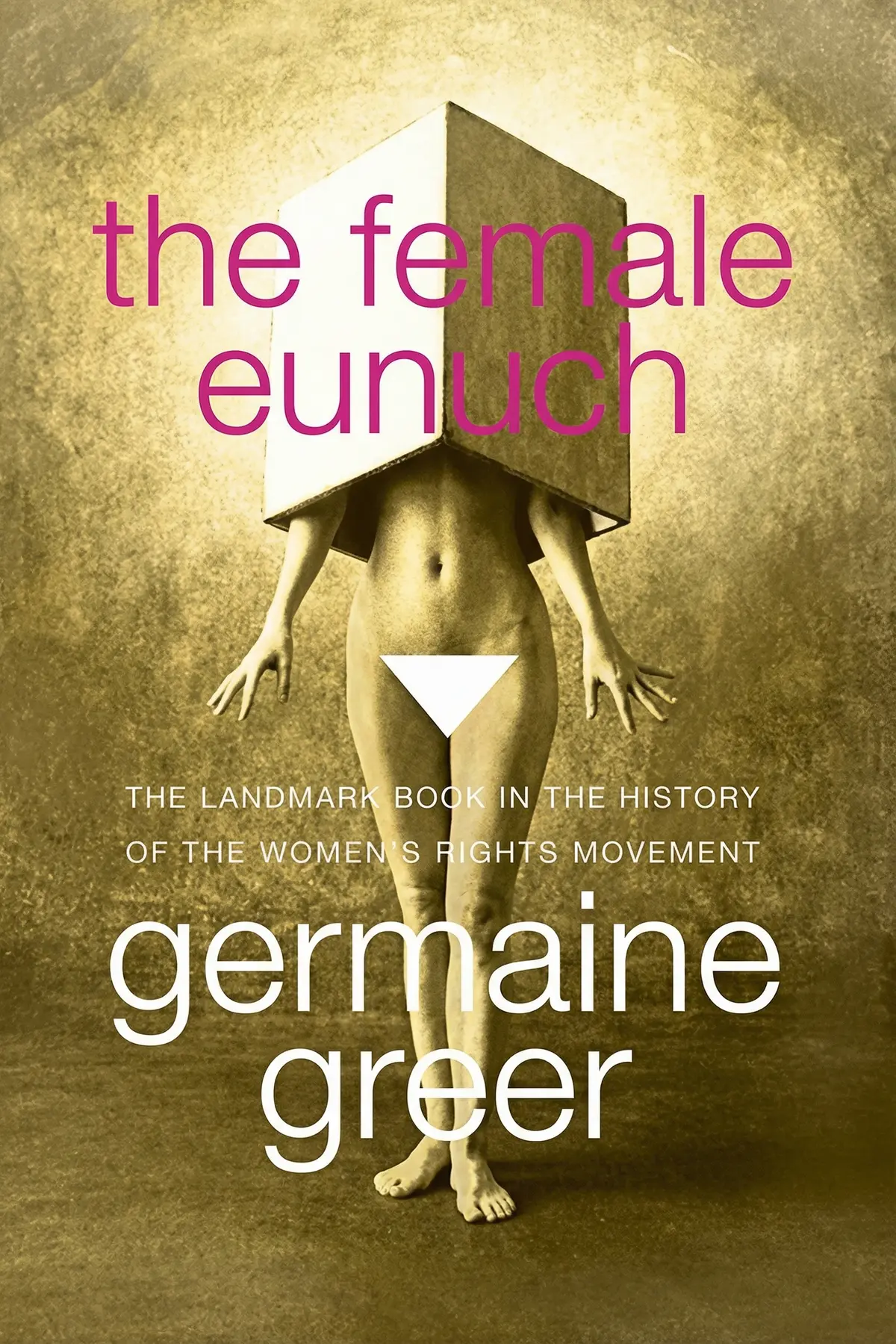
A radical examination of how societal expectations and traditional gender roles have historically limited women's freedom, urging a total liberation of the female spirit and body through autonomy and self-discovery.
1 min 33 sec
The mid-twentieth century was a period of profound transformation for the feminist movement. In many parts of the globe, the grueling battles for basic legal recognition had been won. Women finally had the right to cast their ballots, to hold property in their own names, and to enter professional spaces that had been locked away for centuries. However, despite these monumental victories on paper, a deeper, more insidious form of inequality remained. The legal framework had changed, but the cultural and psychological structures that kept women subservient were still very much intact.
In 1970, Germaine Greer released a text that would send shockwaves through this landscape. It wasn’t just a call for more rights; it was a radical demand for a total shift in how women perceived themselves and how the world perceived them. Greer’s central argument was that women had been systematically stripped of their power—not just by laws, but by a society that preferred them to be passive, gentle, and essentially neutered. She used a provocative metaphor to describe this state: the ‘eunuch.’
To understand the modern struggle for equality, we must look beyond the boardroom and the ballot box. We have to examine the bedroom, the nursery, and the very images of beauty we celebrate. This exploration will show us how traditional roles have historically acted as a form of social castration, and more importantly, how women can finally break free from those invisible chains. By the end of this journey, the goal is to see a path toward true liberation—one that begins with self-knowledge and ends with the courage to be a whole, uncompromised person.
2 min 04 sec
Discover how the societal blueprint for the ideal woman mirrors the characteristics of a historical eunuch. We explore why qualities like obedience and passivity have been enforced at the cost of genuine female autonomy.
2 min 08 sec
Explore the ways in which traditional sexual dynamics have turned women into passive participants. This section examines how reclaiming desire is the first step toward genuine human equality.
2 min 12 sec
Learn how the seeds of dependency are planted in early childhood and reinforced through education. We look at why young girls are often discouraged from taking the intellectual risks necessary for leadership.
2 min 22 sec
Examine how art, media, and even religion have conspired to make women feel ashamed of their own biology. This section calls for an end to the ‘fragile flower’ stereotype.
2 min 06 sec
Discover the final steps toward true liberation. We discuss why rejecting traditional marriage and celebrating intellectual bravery are the keys to a new, empowered future.
1 min 13 sec
The journey through Germaine Greer’s landmark ideas brings us back to a single, powerful realization: liberation is an internal job as much as it is a social one. We have seen how the ‘eunuch’ metaphor perfectly captures the way society tries to trim away the parts of a woman that are bold, sexual, and independent. We have explored how childhood conditioning, educational biases, and the shaming of the female body all work together to maintain a state of subservience.
But the conclusion is not one of despair. It is a call to action. True change happens when women stop waiting for permission and start taking ownership of their lives, their bodies, and their intellects. It means rejecting the ‘fragile flower’ aesthetic and embracing the messy, powerful reality of being human. It means building relationships based on mutual respect rather than economic dependency. As we move forward, the challenge is to cultivate what Greer calls intellectual bravery—the courage to think for oneself and to define one’s own worth. By doing so, we don’t just win rights; we win our very selves back from the world.
This summary explores the foundational arguments of Germaine Greer’s 1970 masterpiece, which remains a cornerstone of feminist literature. It examines the provocative central metaphor: that society has culturally 'castrated' women, turning them into compliant, sexless versions of themselves much like the eunuchs of history. The text journeys through the various facets of female life—from the restrictive conditioning of young girls and the performative nature of traditional beauty to the psychological barriers within marriage and sexual intimacy. It offers a promise of liberation, suggesting that true equality isn't just about gaining legal rights like the vote, but about reclaiming ownership of one's physical body, intellectual ambition, and emotional independence. By identifying the ways women have been taught to be passive, the book provides a roadmap for a more authentic and powerful way of existing in the world.
Germaine Greer is an Australian writer and academic who has left an indelible mark on modern feminist thought. She has held prestigious teaching positions at the University of Warwick and Newnham College in Cambridge. Beyond her most famous work, she is the author of other influential titles including The Whole Woman and Shakespeare’s Wife.
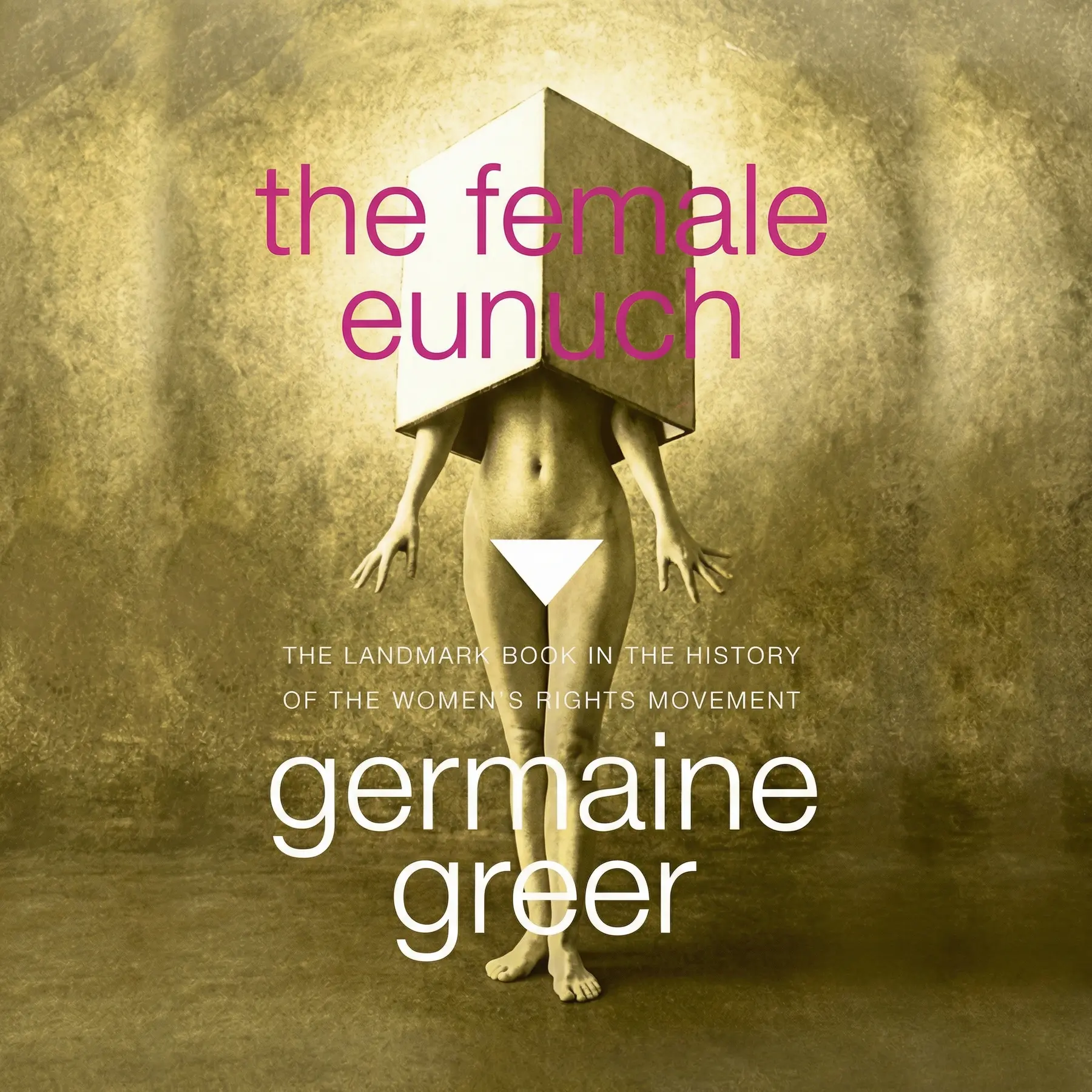
Listeners find this book to be a significant read for women, valuing its eye-opening perspective. Additionally, the pacing earns positive remarks, with one listener describing the work as groundbreaking in its time. However, several listeners consider the text dated, and some feel the writing is full of hate and anger. Furthermore, reactions to the writing quality are varied.
Wow, I finally finished this behemoth and I’m genuinely surprised by how much of Greer's wit still resonates after fifty years. To be fair, there are sections that feel like relics of a bygone era, but her central thesis on the 'castrated' woman is still remarkably sharp. She cuts through the absurd fantasies of romantic love that we are still fed today. The way she dismantles the suffocating nature of the nuclear family feels as groundbreaking now as it must have been in 1970. It’s an electric, feisty, and uncompromising read. Even when I disagreed with her, I couldn't stop turning the pages. This is essential reading for anyone who wants to understand the roots of the movement.
Show moreThis book is a total firecracker that absolutely refuses to apologize for its own existence or its confrontational nature. I love how Greer just shoots off her mouth without a filter; it forces you to actually think about your own biases. To be fair, she is often hilariously wrong or remarkably condescending, but the energy of the prose is infectious. This isn't just a dry academic study. It is a stirring call for a complete rethink of how we live our lives. Despite the dated parts, her central diagnosis of the 'female eunuch' remains an enlightening, essential concept for anyone interested in gender dynamics. Truly a powerful piece of writing.
Show moreThe chapter on the psychological construction of the female stereotype blew my mind and changed how I view my own social conditioning. This is a powerful book. At times it is almost too powerful. Greer doesn't just want equality within the existing system; she wants a complete reshaping of society for the benefit of everyone. I think people who label this as 'man-hating' haven't actually read it properly. It's an indictment of the roles we are all forced to play. Even the parts that are hilariously wrong provide a fascinating look at the evolution of feminist thought. It is an enlightening experience that I think every woman should have at least once. Simply groundbreaking.
Show morePicked this up during a spring cleaning session and ended up devouring it in two sittings because the prose is just that electric. It’s a classic rant. Greer’s argument about the 'castrated' nature of womanhood is still cuttingly relevant, even if her stance on menstruation and hygiene feels like a weird, hippie relic. I laughed out loud at her biting humor and her refusal to hem and haw around difficult subjects. Not gonna lie, some of the specific examples are very dated now. However, the core message about escaping patriarchal templates for achievement is incredibly powerful. She really demands that you ask yourself what you are going to do about your own freedom.
Show moreAfter hearing about this book for decades, I expected a dry academic tome, but instead I found a feisty, blunt assault on patriarchy. This 'softly spoken Australian'—as she was once ironically called—is actually anything but delicate in these pages. She attacks every assumption we have about marriage, work, and sex with a straight-talking wit that is refreshing to find in older literature. Some bits regarding the history of women in work are genuinely great. While I didn't agree with every conclusion, especially the more inflammatory comments on gender, I think the book is an indictment of society that still carries a lot of weight. It asks the hard questions that many people are still afraid to answer today.
Show moreNot what I expected at all, especially given how controversial Greer remains in modern social media circles. Look, the book is certainly problematic in several ways, particularly regarding its patchy views on homosexuality and trans identity. But if you can look past those serious flaws, the analysis of how women are socialized to be passive receptacles for male sexuality is brilliant. The pacing is excellent for a non-fiction text. I found it to be a very readable and funny exploration of why women feel so much anxiety in their domestic lives. It’s a bit of a mixed bag, but the high points are high enough to justify the read.
Show moreAs someone who came to this text late in life, I found myself oscillating between profound agreement and deep frustration. In my experience, the writing quality is quite mixed; Greer is capable of spooky perceptiveness one moment and then descends into dry, academic boredom the next. The chapter on body image was enlightening, yet the pseudo-scientific claims about biology felt like straight-up nonsense. It is definitely a product of its time. You can feel the anger bubbling under the surface, which is sometimes empowering and sometimes just exhausting. It’s an important historical document, but I wouldn't call it a definitive guide for modern life. Take the good bits and leave the rest behind.
Show moreEver wonder what second-wave feminism felt like in its rawest, most unpolished form? This book provides that window, though it isn't always a comfortable view. Greer is witty and perceptive, but she’s also a bit of an attention-seeking troll at times. I found the sections on capitalism's role in shaping the female stereotype to be the most compelling parts of the entire work. On the other hand, the blatant lack of intersectionality makes it feel very much like a middle-class white woman's grievance list. It’s interesting to see how feminism has changed since then. She’s definitely someone I’d invite to a dinner party just for the drama, but I’m not sure I’d follow her advice blindly.
Show moreThe truth is, while Greer is obviously intelligent, her writing is so suffused with a particular brand of vitriol that it becomes hard to digest. I expected a manifesto for liberation but found something that frequently felt elitist and, frankly, quite misogynistic in its dismissal of 'normal' women. The blatant transphobia is impossible to overlook and colors much of the text's second half. While it was likely groundbreaking in 1970, reading it now feels like listening to an angry relative who refuses to update their worldview. There are better feminist books that don’t rely on such exclusionary rhetoric. It’s just too full of hate for me to find it genuinely empowering.
Show moreWhatever historical value people claim this book has is completely eclipsed by how repugnant the author’s worldview feels today. I picked this up hoping for a foundational text but instead found something that is dated, elitist, and shockingly homophobic. Greer’s prose is incredibly condescending, frequently veering into pseudo-scientific nonsense and weirdly aggressive 'hippie' rhetoric that just doesn't hold up. Frankly, it feels like she takes pleasure in being inflammatory rather than actually helping women. The transphobia alone is enough to make me regret buying it. I would recommend skipping this trash and reading literally any other modern feminist author. Germaine Greer is a figure better left in the past.
Show moreJohny Pitts
bell hooks

Fay Bound Alberti

Daniel Goleman

Virginia Woolf

Tracy Rosenthal
Jessica Valenti
AUDIO SUMMARY AVAILABLE
Get the key ideas from The Female Eunuch by Germaine Greer, plus 5,000+ more titles in English and Thai.







