
17 min 13 sec
The Formula: How Geniuses and Speed Freaks Made F1 the Fastest-Growing Sport
Explore the high-stakes evolution of Formula 1, from its dangerous post-war roots to its modern status as a multi-billion-dollar global entertainment empire shaped by visionary engineers, ruthless businessmen, and legendary drivers.
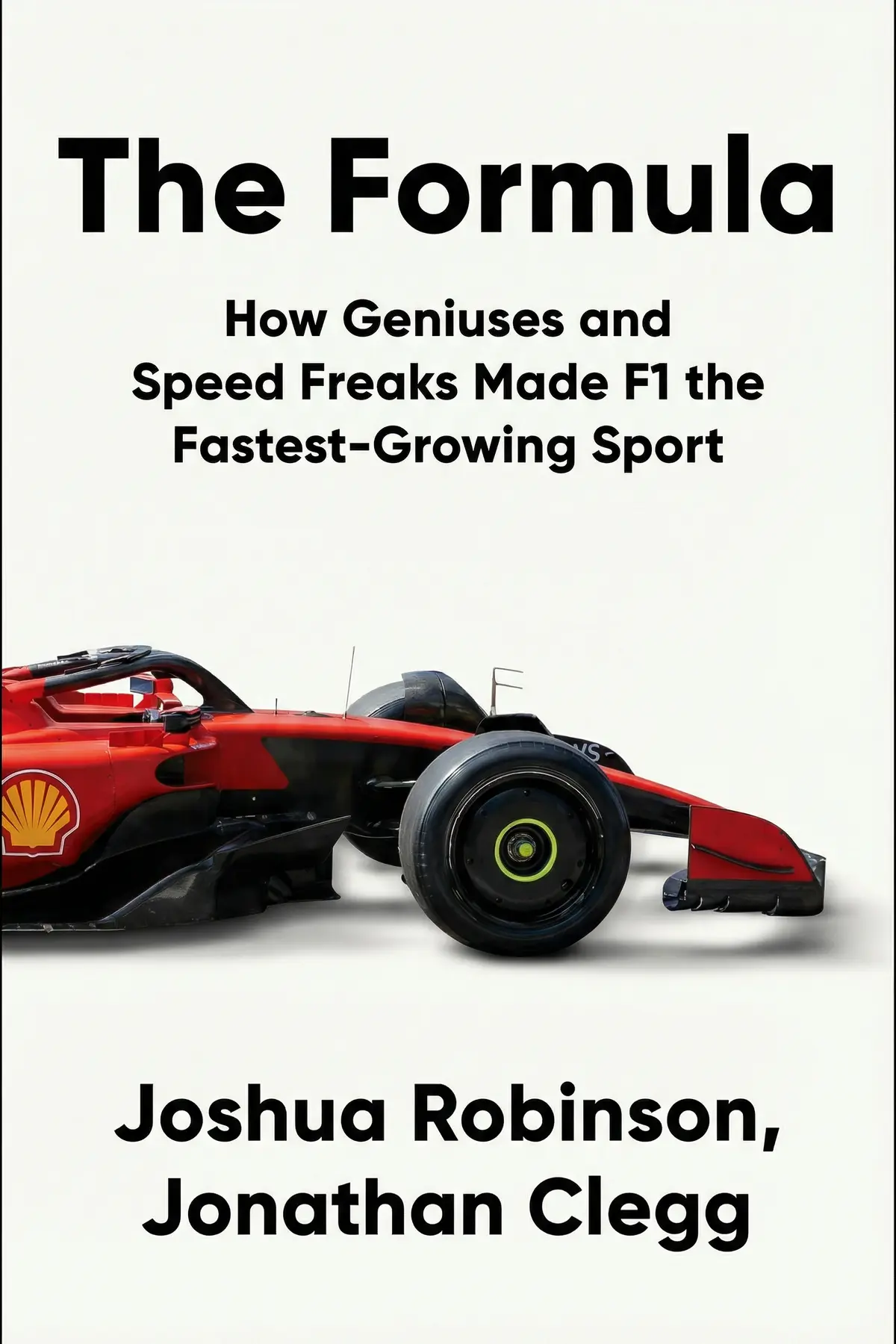
Table of Content
1. Introduction
1 min 34 sec
Imagine the scene: a roar of engines so loud it vibrates in your chest, a blur of carbon fiber moving at two hundred miles per hour, and a global audience of millions held in rapt attention. Today, Formula 1 is a gleaming, high-tech marvel, synonymous with luxury, cutting-edge engineering, and celebrity glitz. But it wasn’t always this way. There was a time when F1 was a gritty, incredibly dangerous pursuit involving a few veterans and some repurposed military airfields in the English countryside.
In our look at The Formula by Joshua Robinson and Jonathan Clegg, we are going to trace the improbable journey of this sport. We will see how it moved from the margins of society to the center of the global cultural stage. This transition wasn’t an accident. It was the result of a specific kind of alchemy—a mixture of engineering genius, reckless bravery, and a level of business cutthroat-ism that would make a Wall Street shark blush.
We’ll explore the pivotal moments that changed everything: from the early technical innovations that made the cars faster and more lethal, to the marketing shifts that brought in billions in sponsorship, and finally, to the modern digital revolution that turned the drivers into household names. Along the way, we’ll meet the mavericks who refused to follow the rules and the titans who realized that the real race was happening in the boardrooms and the broadcast booths just as much as on the asphalt. This is the story of how a niche interest became the fastest-growing sport in the world.
2. The Engineering Loophole
2 min 09 sec
Discover how the early days of racing were defined by a relentless search for mechanical advantages, where finding a gap in the rules meant the difference between winning and losing.
3. The Cult of Personality
2 min 22 sec
Meet the legendary figures whose egos and ambitions transformed a garage-based hobby into a world-renowned brand led by icons like Ferrari and Senna.
4. The Piranha Club
2 min 01 sec
Enter the ruthless world of F1 business, where a few clever power brokers turned a disorganized racing series into a multi-billion-dollar empire.
5. Culture Clash and Disruptors
2 min 09 sec
See how an energy drink company upended the established order of racing by bringing a party atmosphere to a serious corporate world.
6. The Hybrid Revolution
1 min 45 sec
Follow the rise of Mercedes as they mastered a new era of technology, creating one of the most dominant streaks in sporting history.
7. The Netflix Effect
1 min 45 sec
Learn how the arrival of American ownership and a hit documentary series turned Formula 1 into a mainstream pop-culture phenomenon.
8. Integrity Versus Entertainment
1 min 57 sec
Analyze the controversial 2021 finale that highlighted the ongoing tension between following the rules and creating a spectacular show.
9. Conclusion
1 min 31 sec
As we look back at the journey of Formula 1, it’s clear that its success was never a historical certainty. It was built by a long line of rule-breakers and risk-takers. From the post-war engineers like Colin Chapman who found speed in simplicity, to the corporate titans like Bernie Ecclestone who saw a billion-dollar broadcast empire where others saw a dusty track, F1 has always been about more than just driving in circles.
We’ve seen how the sport survived through eras of extreme danger and intense political infighting within the ‘Piranha Club.’ We’ve watched as disruptors like Red Bull changed the culture and manufacturing giants like Mercedes redefined the technology. And most recently, we’ve witnessed the ‘Netflix Effect’—the moment where F1 finally conquered the global mainstream by realizing that the human drama is its most valuable asset.
The lesson of The Formula is that any organization or industry can be transformed if it embraces the tension between tradition and disruption. F1’s willingness to constantly reinvent its own rules—and then find ways to break them—is what keeps it at the cutting edge. Whether you are a fan of the technical specifications or the soap-opera-style rivalries, there is no denying that the sport has hit its stride. As it moves into a future of new markets and new technologies, the race to stay relevant, profitable, and thrilling continues at full speed. The checkered flag is nowhere in sight.
About this book
What is this book about?
The Formula offers a deep dive into the dramatic transformation of Formula 1. It charts the sport's path from a niche, dangerous hobby for mechanical obsessives to a global powerhouse of commercial and technological prowess. This is not just a story about who crossed the finish line first; it is an investigation into how the sport was built, marketed, and managed through decades of upheaval. The narrative captures the constant tension between engineering brilliance and commercial ruthlessness, showing how figures like Bernie Ecclestone and teams like Red Bull disrupted the status quo. The book promises to reveal the behind-the-scenes mechanics—both literal and metaphorical—that turned a grease-stained pastime into the fastest-growing sport on the planet. Listeners will see how the paddock transformed into the so-called Piranha Club, where fortunes are made and lost as quickly as a mid-race pit stop. Ultimately, it is an exploration of how a specific breed of geniuses and speed freaks conspired to create the ultimate modern spectacle.
Book Information
About the Author
Joshua Robinson
Joshua Robinson and Jonathan Clegg are acclaimed writers for the Wall Street Journal, where Robinson serves as the European correspondent and Clegg as the sports editor. Together, they have built a reputation for dissecting the business and culture of elite sports through meticulous research and narrative flair. Their collaborative work includes The Club, which examines the meteoric rise of the English Premier League, and Messi vs. Ronaldo, which chronicles the rivalry that defined an era of global football. Their expertise lies in blending investigative journalism with the human drama of competition.
Ratings & Reviews
Ratings at a glance
What people think
Listeners find the work highly readable and well-constructed, maintaining an excellent pace throughout. The historical detail is both thoroughly researched and fascinating, with one listener mentioning that it perfectly encapsulates the heart of F1. Furthermore, they appreciate the unique perspective on the subject matter, with one review highlighting the conflict between heritage and innovation.
Top reviews
Sven
Finally got around to reading this after bingeing Drive to Survive, and it really fills in the gaps that the show leaves out. Robinson and Clegg don't just recap races; they dig into why the sport actually functions as a business. Truth is, I never understood why Ferrari struggled so much until I read the sections on their internal politics and Enzo's legacy. The authors have a great way of explaining complex tech—like why Williams was so dominant with computerized cars—without making it feel like a textbook. It’s got that "Real Housewives of Monte Carlo" drama but backed by serious journalistic research. My only gripes are a few tiny factual slips, but they don’t ruin the overall flow. It moves fast, much like the cars themselves, and captures that weird tension between racing heritage and the massive commercial innovation we see today. If you’re a new fan, this is basically your required reading.
Show moreNiphon
Wow, Robinson and Clegg really hit the mark here. I’ve read my fair share of sports books, but this one captures the essence of F1 better than most because it treats the sport as the high-stakes business it is. The storytelling is top-notch, moving from the early days of Enzo Ferrari to the modern dominance of Red Bull with a great sense of rhythm. Not gonna lie, I was mostly here for the drama, and the authors delivered on that front. The anecdotes about Christian Horner and the psychological warfare between drivers are just brilliant. It highlights the incredible tension between staying true to the sport's roots and the constant need to innovate for a global audience. It’s a well-written, fascinating piece of journalism that feels very current. I finished it in two sittings because the pace never lets up.
Show moreJan
After hearing the authors on a podcast, I knew I had to pick this up to see if the book lived up to the hype. It did. The research is deep, especially when it comes to the early days of Colin Chapman and the birth of modern aerodynamics. They manage to make the business side of the sport—something that could easily be boring—into one of the most fascinating parts of the book. In my experience, most F1 books focus too much on race stats, so this focus on the "Game of Edges" was refreshing. The narrative regarding Spygate and the Crashgate scandals was particularly well-handled, showing just how far teams will go to win. It’s a great read that balances the technical evolution of the cars with the personal ambitions of the owners. A must-read for any sports fan.
Show moreNit
Not what I expected from a sports book, but in the best way possible. Instead of just listing winners and losers, it tells the story of how F1 became a global entertainment powerhouse. The authors have a real talent for prose, making the high-speed world of racing feel accessible and exciting. Personally, I found the chapter on why Ferrari has historically struggled to be the most enlightening section. It explains the culture of the team and the pressure of the Tifosi in a way that makes their recent performance issues make total sense. To be fair, there are a couple of minor factual errors that a copyeditor probably should have caught, like the Finnish/Estonian mix-up. But if you can look past that, it’s a brilliant exploration of the sport’s essence.
Show moreCarlos
The chapter on Spygate alone is worth the price of admission. I’ve heard bits and pieces about it before, but the level of detail here regarding the McLaren-Ferrari rivalry is absolutely staggering. Frankly, the fines involved make every other sports scandal look like child's play. The writing is incredibly sharp and maintains a breakneck pace throughout. It’s a fascinating look at the entrepreneurs and engineers who turned F1 into a global behemoth. I appreciated how it highlighted the business side, specifically how Liberty Media transformed the American market. It feels like a well-researched deep dive that still manages to be accessible to someone who isn't an engineering expert. Some parts feel a bit like an overview rather than a definitive history, but for a general audience, it hits the sweet spot. It’s the kind of book that makes you want to go back and watch old race highlights immediately.
Show moreKai
Ever wonder how a niche European sport became the most talked-about thing in the States? This book answers that question by focusing on the boardroom battles as much as the track ones. It’s less about who won the 1998 season and more about how the sport’s "Formula" evolved through rule changes and television contracts. The portraits of characters like Colin Chapman and Max Verstappen are vivid and compelling. I personally loved the explanation of Jenson Button’s championship run and the whole double diffuser saga—it perfectly illustrates the tech vs. talent debate. The authors do a fantastic job balancing the sport's deep heritage with the aggressive innovation that defines the modern era. It’s a very readable, high-speed journey through F1 history. Whether you are #TeamHamilton or #TeamAnyoneButMax, you’ll find something here that changes how you view the Sunday grid.
Show moreOm
Look, I’m the person who watches every Practice 1 just to see the flow-vis paint, so I was worried this might be too basic. Fortunately, "The Formula" offers a fresh take even for those of us who are already obsessed. The business side of the sport is usually shrouded in secrecy, but this book peels back the curtain on the television deals and the influence of Liberty Media. The chapter on Michael Schumacher was a highlight, providing a nuanced look at the man who defined an era. Gotta say, the way they explain the transition from engines to aerodynamics is very well-structured and easy to follow. There’s a slight tendency to gloss over some of the more technical aspects of the cars, but the human stories more than make up for it. It’s a solid performer that successfully bridges the gap between the die-hard fans and the newcomers.
Show moreGift
This book reads like a high-octane thriller rather than a dry sports history. I picked it up because I wanted to understand the "Formula" better, and it delivered exactly that. The authors explore the rivalry between heritage teams like Ferrari and the innovative upstarts like Red Bull in a way that feels genuinely cinematic. It’s got all the "Real Housewives of Monte Carlo" energy you could want, featuring larger-than-life personalities like Bernie Ecclestone and Lewis Hamilton. My favorite part was the deep dive into the business mechanics that allowed F1 to explode in popularity post-2020. The truth is, I didn't realize how much of the sport happens behind closed doors in the paddock. While it’s definitely an overview, it’s a highly entertaining one that captures the glitz, greed, and genius of the sport. It’s the perfect companion to a Sunday race weekend.
Show moreRyan
It’s rare to find a book that captures the soul of F1 while explaining the corporate machinery behind it. Joshua Robinson and Jonathan Clegg have written a book that is as fast-paced as the sport it covers. They do a great job of explaining the tension between the sport’s European heritage and the new American-led innovation. The portraits of drivers like Ayrton Senna and Max Verstappen are poignant and well-drawn. Frankly, I think this is the best book out there for anyone who wants to understand why people are so obsessed with cars going in circles. It’s well-researched, engagingly written, and offers a comprehensive look at the business of speed. While it might be a bit light on technical specs for the hardcore gearheads, it’s an absolute winner for everyone else.
Show morePrayoon
As someone who has followed F1 since the V10 era, I have mixed feelings about this one. To be fair, the writing style is very engaging and the business insights are genuinely interesting, especially the stories about Bernie Ecclestone and his back-room dealings. However, I noticed some frustrating factual errors that made me question the polish of the research. Referring to Valtteri Bottas as Estonian when he is very famously Finnish is a pretty glaring mistake for a book of this stature. Also, the way they handled the safety discussion felt a bit off—claiming no one died on track since Senna while glossing over the specifics of Jules Bianchi’s tragic accident felt like a bit of a cop-out. It’s a decent introductory text for the Netflix crowd, but seasoned fans might find it a little "once over lightly" in places. Still, the narrative drive is strong enough to keep you turning the pages despite the flaws.
Show moreReaders also enjoyed
Ali: A Life
Jonathan Eig
7 Powers: The Foundations of Business Strategy
Hamilton Helmer
Alibaba: The House That Jack Ma Built
Duncan Clark
AUDIO SUMMARY AVAILABLE
Listen to The Formula in 15 minutes
Get the key ideas from The Formula by Joshua Robinson, plus 5,000+ more titles in English and Thai.
- 5,000+ titles
- Listen as much as you want
- 7-day free trial
- Cancel anytime







