
17 min 03 sec
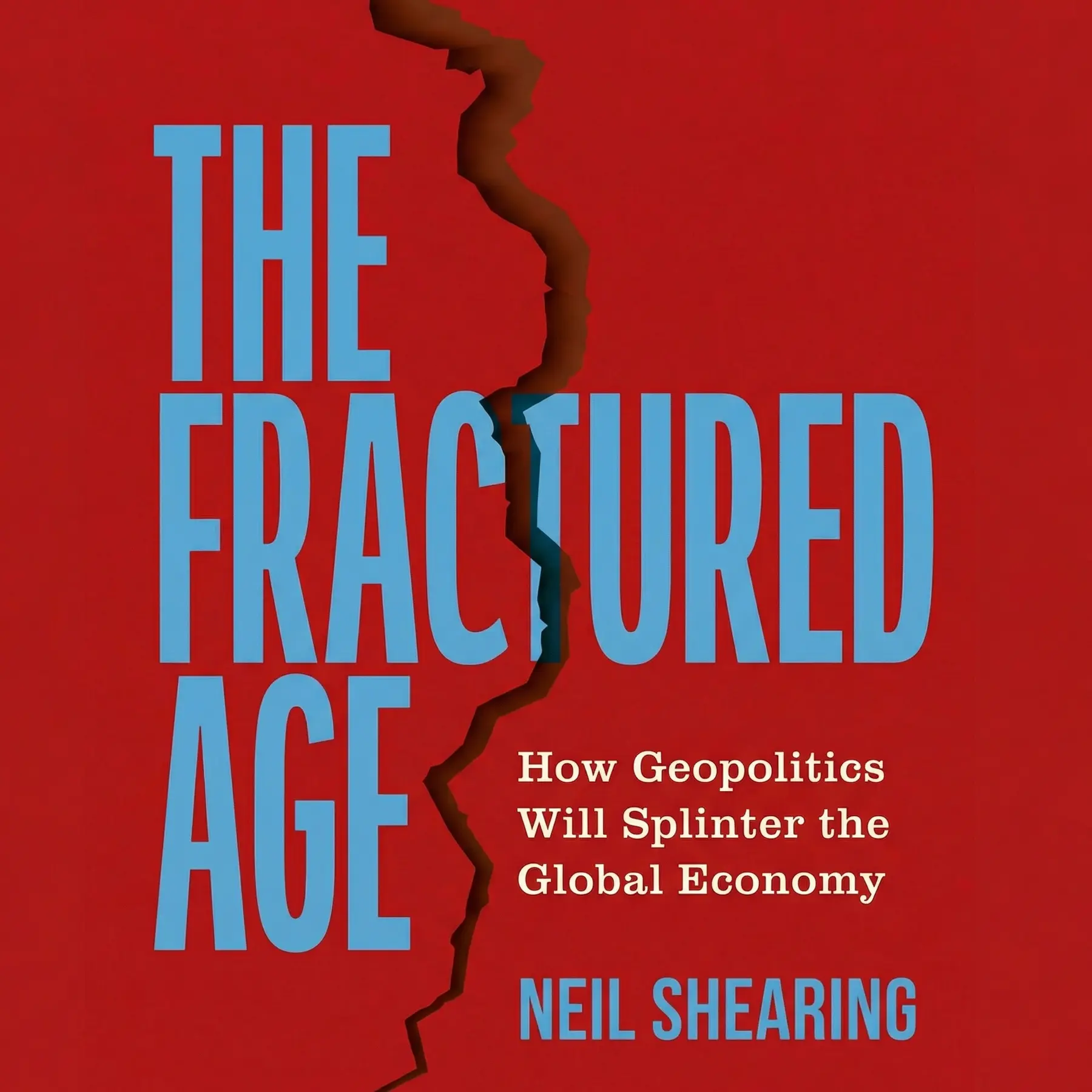
The Fractured Age: How Geopolitics Will Splinter the Global Economy
The Fractured Age examines the end of seamless globalization, revealing how the world economy is splitting into rival geopolitical blocs and what this massive shift means for our collective financial future.
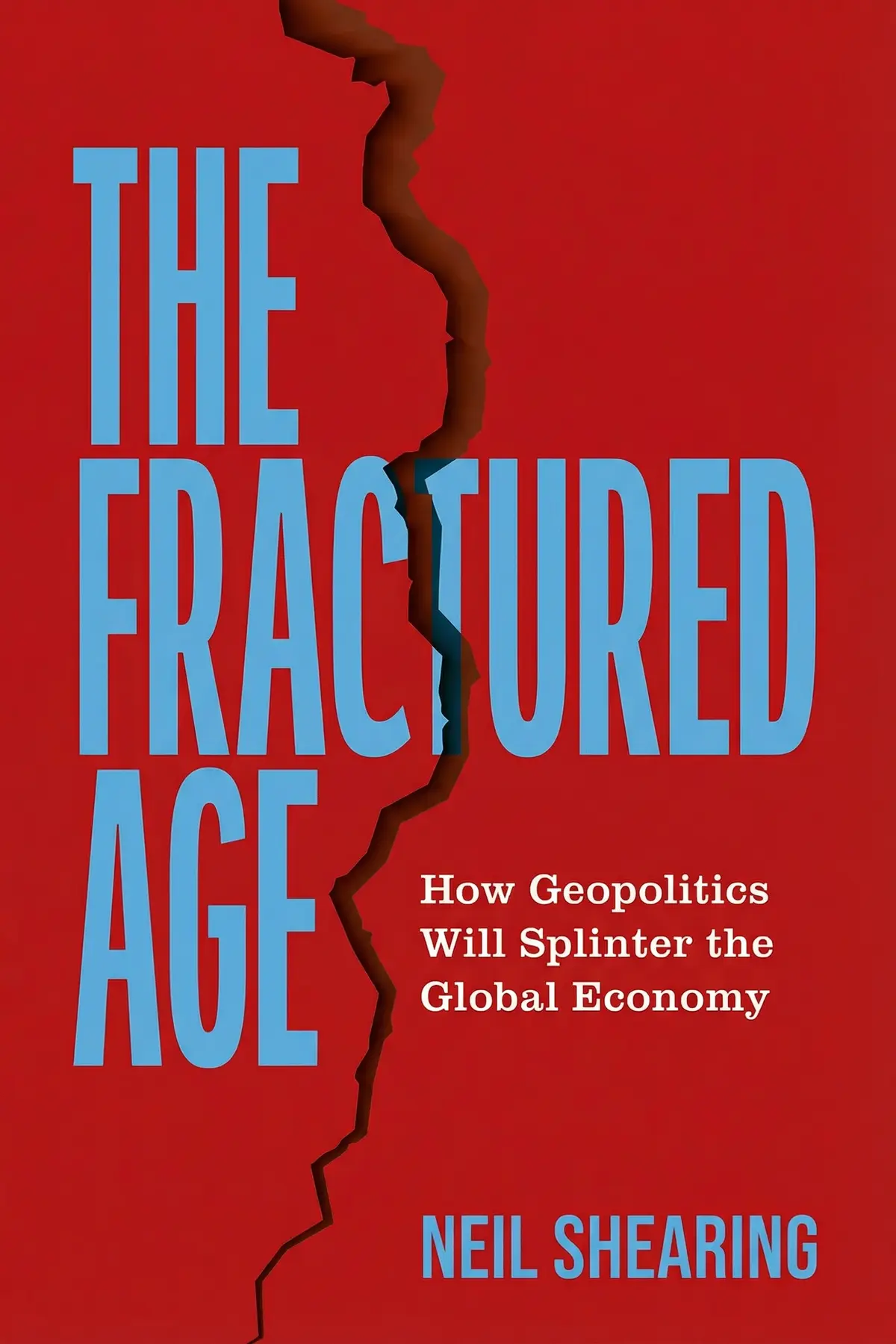
Table of Content
1. Introduction
1 min 45 sec
Think of the story of human commerce not as a steady climb toward unity, but as a pendulum that swings between periods of intense connection and sudden fragmentation. Long ago, the Roman Empire established a vast marketplace where goods from far-flung provinces moved freely across continents. When that system collapsed, the world retreated into localized fragments for centuries. We saw this cycle repeat with the rise and fall of the Silk Road and again during the era of European colonialism and the Industrial Revolution. Each time we build a web of interdependence, we eventually hit a breaking point where political tensions or sudden shocks force us to pull back.
We are currently living through one of these historic hinges. The era of seamless, hyper-efficient globalization that defined the last thirty years is fading. In its place, a new structure is emerging—one that is defined by friction, regional silos, and the prioritization of security over price. This isn’t just a temporary dip in trade; it is a fundamental restructuring of how the world works.
In the following sections, we will explore why the global system reached its limits and how it is now splitting into distinct blocs. We will look at the specific events that shattered the old consensus and examine the high cost of this new, divided reality. By understanding these shifts, you can better navigate a world where the primary question is no longer how to find the cheapest supplier, but which side of the geopolitical line you stand on. This is the story of how we moved from a world without borders to the fractured age.
2. The Rise and Fall of the Peace Dividend
2 min 27 sec
Explore the thirty-year era of unprecedented global integration that followed the Cold War and learn why the assumptions that fueled it eventually proved to be unsustainable.
3. The Shocks That Broke the Global Chain
2 min 20 sec
Discover how a global pandemic and the return of major conflict exposed the hidden dangers of modern supply chains, forcing a shift from efficiency to resilience.
4. The Emergence of the Three-Bloc System
2 min 22 sec
Learn about the new geopolitical map being drawn by world leaders, dividing the global economy into three distinct and often incompatible spheres of influence.
5. The Disappearing Middle Ground
2 min 13 sec
Understand why the space for neutrality is shrinking and how businesses and nations are being forced to make difficult, costly choices between rival powers.
6. A Split in Financial and Technical Infrastructure
2 min 24 sec
Go behind the scenes of the world’s payment and data systems to see how the ‘plumbing’ of the global economy is being redirected and separated.
7. Adapting to the Economic Landscape of 2035
2 min 20 sec
Peer into the future to see what a fully fractured world looks like and learn the strategies that will define the winners in this more expensive, regionalized era.
8. Conclusion
1 min 12 sec
The transition from a unified global economy to a fractured one is the defining shift of our time. We have moved from a thirty-year experiment in hyper-integration back to a more traditional historical state where geography and politics determine the path of commerce. The ‘peace dividend’ that followed the Cold War has been replaced by a ‘security tax,’ as we realize that the cheapest supply chain is often the most vulnerable one.
As you navigate this new landscape, remember that the three-bloc system—led by the U.S., China, and the multi-aligned nations—will dictate everything from the technology in your pocket to the way your retirement funds are invested. The middle ground is disappearing, and the costs of doing business are rising. However, with this friction comes a new kind of resilience. Success in the fractured age belongs to those who recognize that alignment now matters more than efficiency. By accepting that the global era has ended and a regional one has begun, you can stop mourning the past and start positioning yourself for the realities of the next decade.
About this book
What is this book about?
For decades, the world operated under the assumption that economic efficiency would always override political friction. Goods, capital, and data flowed across borders with unprecedented ease, creating a deeply integrated global marketplace. However, that era has reached its conclusion. In this analysis, the focus shifts toward a new reality where security, resilience, and political alignment take precedence over cost-savings and speed. The book explores the catalysts of this transition, from the fragility of just-in-time supply chains exposed during the pandemic to the weaponization of energy and technology in recent conflicts. It maps out the emergence of three distinct economic spheres: one centered around the United States and its allies, another around China and its partners, and a third group of multi-aligned nations trying to navigate the space between. Readers will gain an understanding of how these fractures are reshaping technical standards, financial payment systems, and corporate strategies. Ultimately, the promise of this work is to provide a roadmap for the coming decade, helping individuals and businesses position themselves in a world where the old rules of globalization no longer apply.
Book Information
About the Author
Neil Shearing
Neil Shearing is a prominent economist at Capital Economics, where he oversees the economic analysis utilized by more than 25,000 executives, policymakers, and investors on a weekly basis. His professional background includes serving as an economic adviser to HM Treasury and the UK Chancellor of the Exchequer. Additionally, he holds the position of associate fellow in the Global Economy Program at Chatham House. His expert commentary and analysis are frequently featured in major international media outlets, including the Financial Times, Bloomberg TV, CNBC, and the BBC.
Ratings & Reviews
Ratings at a glance
What people think
Listeners value *The Fractured Age* as a sharp and relevant examination of our changing geopolitical environment, commending its thorough breakdown of world trade and how economies rely on one another. Furthermore, listeners describe the writing style as sophisticated but easy to understand, observing that the author effectively links intricate financial theories with historical background and human emotion. They also point out the book's forward-thinking perspective; specifically, one listener emphasizes its "analytical depth" and striking metaphors, including the description of supply chains as “glass rivers.” Finally, listeners believe the text serves as a crucial guide for interpreting today's international divisions, making contemporary news clearer without oversimplifying the underlying issues.
Top reviews
Lena
As someone who follows international relations closely, I found this to be an exceptionally insightful look at the emerging US-China blocs. Shearing argues convincingly that the US bloc will maintain its edge through economic diversity and the continued dominance of the dollar, even as China weaponizes rare earths. The analysis of how middle powers like India and Brazil are navigating these fault lines is some of the best I’ve read in recent years. Truth is, the book clarified a lot of the chaos I see in the daily news without resorting to simplistic soundbites. It’s intellectually rich and provides a clear-eyed view of our shifting security environment. Every chapter feels like a masterclass in connecting the dots between history and future policy. Truly essential reading for anyone trying to navigate the volatile trade landscape of the 2020s.
Show moreTong
Wow, this reads like a dispatch from the near future. Shearing provides what I can only describe as a "geopolitical MRI," revealing the hairline fractures in our global system before they turn into total breaks. The way he discusses "friend-shoring" versus total decoupling is both brilliant and terrifying. I appreciated how he didn't shy away from the impacts of the current political climate, including the mercurial nature of US leadership. The book is dense, yes, but in a way that rewards your attention with genuine "aha!" moments. It’s rare to find a book that balances data-driven economics with such a compelling narrative flair. If you’re unsettled by the headlines regarding AI and energy security, this book will give you the framework to understand them. Definitely a five-star contribution.
Show moreIff
In my experience, most books on the global economy are either too academic or too populist, but this one hits the sweet spot perfectly. Neil Shearing has managed to take the "dismal science" and turn it into a gripping story about human ambition and the return of old-school power politics. The chapter on the US dollar's longevity was particularly enlightening, as it challenged some of my preconceived notions about the rise of alternative currencies. It’s a cerebral read that stays with you long after you’ve put it down. The technical aspects are there, but they never feel like they’re drowning out the human element of the story. If you’re an international relations buff, you need this on your shelf immediately. Thanks to the publisher for the ARC!
Show morePor
The chapter on semiconductor rivalries alone is worth the price of admission. Shearing maps out the conflict between the US and China with the precision of a surgeon, showing exactly where the pressure points are. I loved the way he connects the dots between energy weaponization and the future of EVs—it’s all part of the same fractured puzzle. The prose is surprisingly moving for a book about trade, largely because it focuses on the people and policies driving these massive shifts. My concentration didn't even flicker, which is a testament to how well-structured the arguments are. It feels prescient and urgent, like a warning we all need to heed before the cracks get any wider. A masterclass in modern geopolitics that clarifies the chaos of our current world.
Show morePete
Picked this up thinking it would be another dry economics textbook, but Neil Shearing actually manages to weave human emotion into the cold reality of global trade. I was particularly struck by his "glass rivers" analogy for supply chains—it perfectly captures how fragile our current system really is. To be fair, some of the deeper dives into monetary policy required a second read, but the payoff is worth the effort. The book feels incredibly prescient, almost like reading a headline from next year. It’s a smart, layered exploration of how we’re moving away from total interdependence toward something much more fractured and uncertain. While it can be a bit heavy on the technical side, the prose remains engaging enough to keep you turning the page. If you want to understand why your favorite tech or meds are getting more expensive, start here.
Show morePita
After hearing so much buzz about The Fractured Age, I was curious to see if it lived up to the hype. I came away feeling strangely more at ease despite the heavy subject matter. Seeing the broad arc of globalization over the last century helped me realize that what we’re experiencing now is part of a larger, albeit painful, cycle of change. Shearing does an excellent job of explaining how geopolitics has become a cudgel in modern trade wars. My only minor gripe is that the book leans heavily into the diagnosis of the problem without offering much in the way of actionable solutions. Still, the prose is vivid and the analogies are sharp enough to make complex ideas stick. It’s a thought-provoking journey through a world coming apart at the seams.
Show moreRyan
Finally got around to reading this NetGalley copy and it couldn't be more timely. With the global political landscape shifting almost weekly, Shearing’s analysis of how trade and security are merging is spot on. I particularly liked the sections on "economic cudgels"—it’s a vivid way to describe how semiconductors and rare earths are being used as leverage. The writing is polished and the pacing is generally good, though some of the math-heavy sections might alienate a casual reader. Gotta say, seeing the first impacts of a second Trump term reflected in the context of these theories makes the whole thing feel incredibly relevant. It’s a smart, contemporary reference that I’ll likely return to as the "fractured age" continues to unfold. Highly recommended for business leaders.
Show moreTippawan
Ever wonder why the global economy feels like it’s held together by duct tape lately? Shearing tries to answer that, though I must admit my concentration wandered during the more technical sections on finance and trade law. The material is undeniably deep, yet there were moments where the density felt like a barrier rather than a benefit. Frankly, I think it’s a worthwhile read for the themes alone, but it requires a level of focus I didn’t always have at the end of a long workday. It provides a good historical context for deglobalization, helping to demystify why we are seeing a return to great-power competition. I just wish the writing were a bit more streamlined in the middle chapters. It’s a solid effort for those who aren't already policy wonks.
Show moreEmma
Not what I expected in terms of tone, as it’s much more of a "doom and gloom" forecast than I was prepared for. While the research is clearly meticulous and the global scope is impressive, the lack of "actionable optimism" left me feeling a bit drained by the end. The author is a brilliant economist, no doubt, but the book spends 90% of its time telling you why the system is breaking and only 10% on how we might survive the transition. In my experience, these types of books are more useful when they provide a roadmap for the future. That being said, the "glass rivers" metaphor is one of the best descriptions of supply chain fragility I've ever encountered. It’s a worthwhile read for the information, just be prepared for a heavy dose of reality.
Show moreGoy
Look, if you stay reasonably informed by reading any major financial newspaper, you probably won't find much "new" analysis here. The book makes a lot of grand assertions about the return of geopolitics, but I found the analytical reasoning to be a bit thin in places. It feels like a collection of news summaries expanded into a full-length volume. While the writing is clear, it lacks the depth of original research I was hoping for from someone of Shearing’s caliber. To be honest, it’s probably a great primer for someone who hasn't paid attention to trade wars or the semiconductor crisis over the last five years. For the rest of us, it’s a bit repetitive and light on fresh perspectives. I expected more than just a well-written recap of the status quo.
Show moreReaders also enjoyed
Abolish Rent: How Tenants Can End the Housing Crisis
Tracy Rosenthal
Abortion: Our Bodies, Their Lies, and the Truths We Use to
Jessica Valenti
21 Lessons for the 21st Century
Yuval Noah Harari
Age of Anger: A History of the Present
Pankaj Mishra

A Different Kind of Power: A Memoir
Jacinda Ardern
Age of Propaganda: The Everyday Use and Abuse of Persuasion
Anthony Pratkanis
1929: Inside the Greatest Crash in Wall Street History--and How It
Andrew Ross Sorkin
AUDIO SUMMARY AVAILABLE
Listen to The Fractured Age in 15 minutes
Get the key ideas from The Fractured Age by Neil Shearing, plus 5,000+ more titles in English and Thai.
- 5,000+ titles
- Listen as much as you want
- 7-day free trial
- Cancel anytime







