
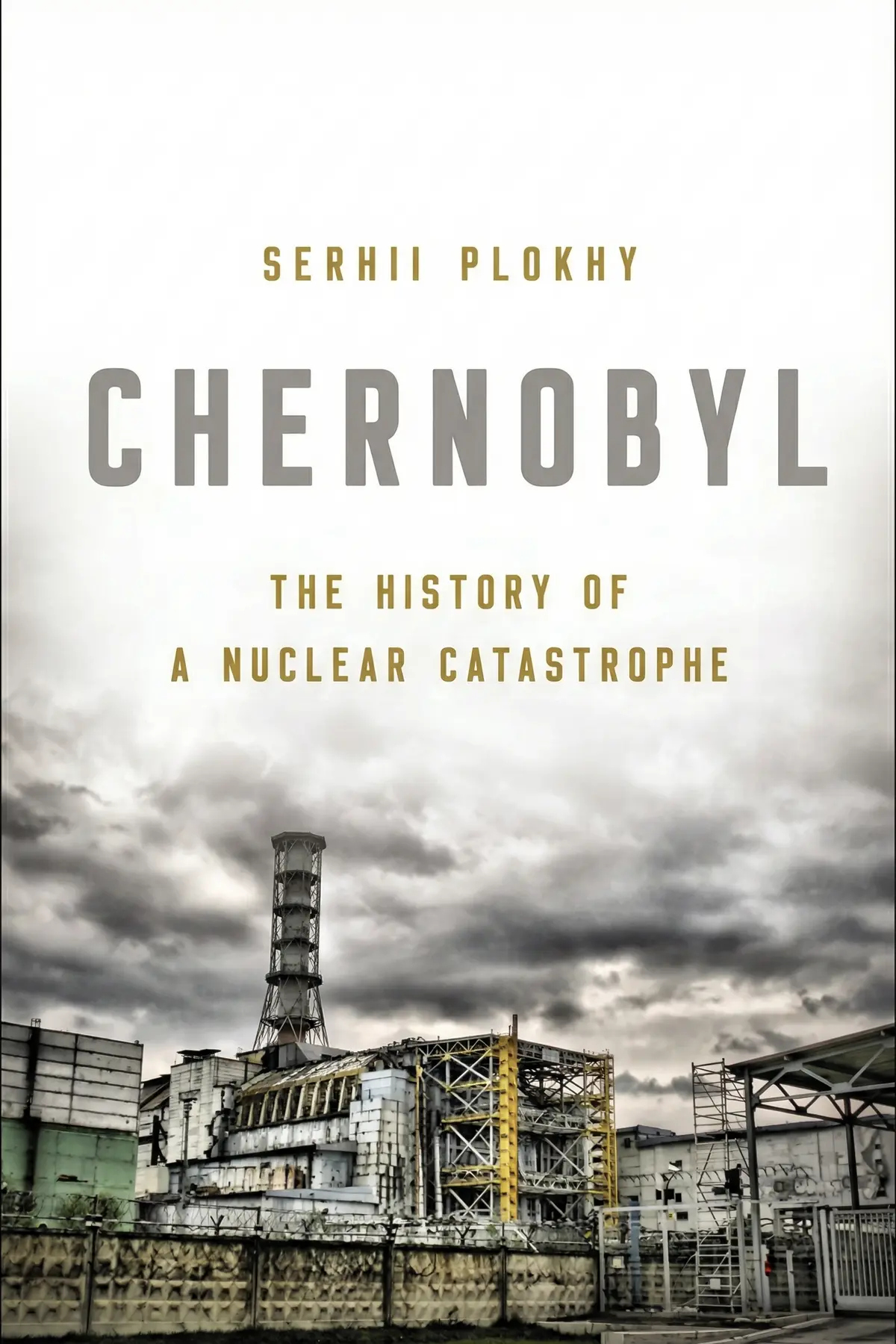
Chernobyl: The History of a Nuclear Catastrophe
Serhii Plokhy
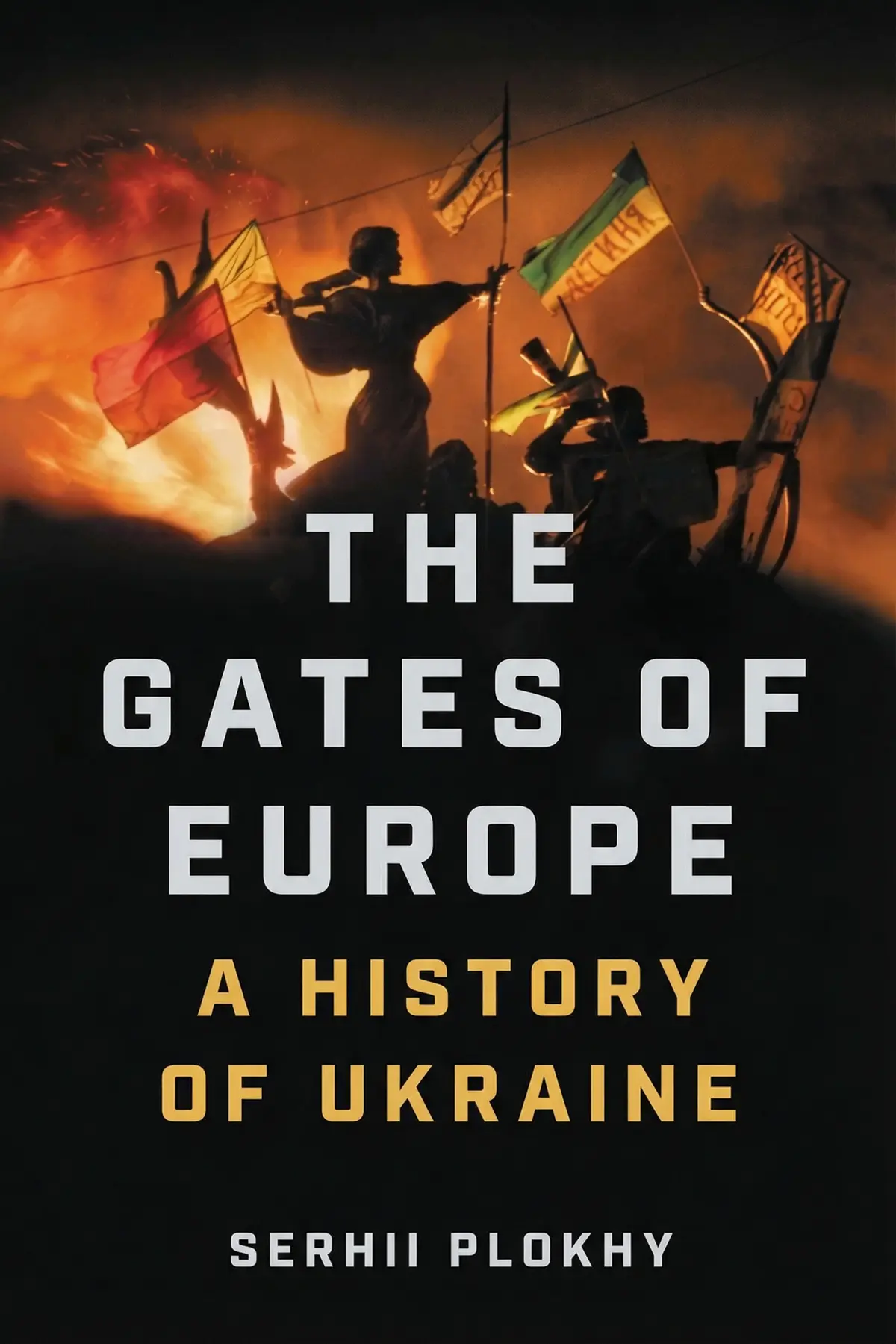
Explore the seismic transformation of Europe following the collapse of the Soviet Union. This summary details the political, economic, and social shifts that forged a new continental order and defined the modern era.
1 min 59 sec
The history of Europe is often told as a series of grand cycles, but few moments in that long timeline have carried the weight and the transformative power of the late twentieth century. When we consider the landscape of the modern world, it is impossible to separate our current reality from the seismic events that unfolded as the Soviet Union began its final descent. This period wasn’t just about the collapse of a single political entity; it was about the opening of a metaphorical gate—a transition that fundamentally altered the direction of an entire continent. Serhii Plokhy’s work invites us to look deeply at this transition, moving beyond the simple headlines of the era to understand the profound structural changes that followed.
To grasp the world we live in today, we have to recognize that the fall of the Soviet Union served as a massive reset button for the European order. It forced a total reconsideration of what it meant to be a nation, how people should participate in their own governance, and how wealth should be generated and distributed across borders that had once been iron-clad. This transformation didn’t happen in a vacuum, nor was it a smooth or linear process. Instead, it was a complex and multifaceted evolution that touched every corner of social, economic, and political life.
In this exploration, we will look at the various ways this ‘new order’ emerged from the ashes of the old. We will see how the political map was redrawn, not just with ink on paper, but through the lived experiences of millions of people who found themselves in a world without the overarching shadow of the Cold War. We will examine the economic shift from command-based systems to the vibrant, if sometimes volatile, market realities of the modern day. Finally, we will consider the social and cultural changes that allowed for a new European identity to take root. This is a story of a continent redefining itself at the crossroads of history, standing at the gates of a future that was being written in real-time.
2 min 44 sec
Discover how the sudden disintegration of the Soviet Union acted as a seismic event, forcing the entire European continent to rethink its boundaries and identity.
2 min 43 sec
Examine the shift from a world dominated by superpower rivalry to a complex landscape of emerging democracies and new international alliances.
2 min 34 sec
Follow the journey of European economies as they transitioned from state-controlled systems to the dynamic and interconnected market realities of today.
2 min 39 sec
Uncover the profound social changes that occurred as people across the continent reclaimed their cultural heritage and forged new identities in a post-Soviet world.
2 min 48 sec
Understand how the transformation of Europe had global ramifications, fundamentally altering the balance of power and the nature of international relations.
1 min 50 sec
As we look back on the incredible journey described in The Gates of Europe, we see a continent that has undergone a transformation of historic proportions. The fall of the Soviet Union was not just an end, but a beginning—the start of a complex and ongoing process of building a new order out of the remnants of the old. We have seen how this transition touched every aspect of life, from the highest levels of geopolitical strategy to the personal identities of millions of people. It was a period defined by the movement toward democracy, the integration of economies, and the reclamation of cultural heritage.
The ‘new order’ that emerged from this period is the foundation of the Europe we know today. It is a continent that is more integrated, more diverse, and more interconnected than at any other point in its history. However, as Serhii Plokhy’s work reminds us, this order is not a static destination but a dynamic and evolving project. The challenges that were unleashed during the transition—questions of sovereignty, the balance of economic power, and the nature of national identity—continue to be relevant in our modern world. Understanding the roots of these issues is essential for navigating the complexities of the present.
Ultimately, the story of this transformation is a testament to the resilience and the adaptability of the European people. It is a story of how a continent standing at the gates of change found the strength to reimagine itself and build a future based on cooperation and shared values. The lessons of this era serve as a powerful reminder that even the most rigid systems can change, and that out of the greatest upheavals, a new and better order can emerge. As we move forward, the history of this transformation continues to provide a vital lens through which we can understand our shared world and the ongoing effort to create a more stable, prosperous, and unified Europe.
The Gates of Europe examines the monumental historical shift that occurred when the Soviet Union fell, a period that fundamentally redrew the map and the soul of the European continent. Rather than seeing the end of the Cold War as a mere conclusion, the book presents it as a catalyst for a massive restructuring of how nations interact, how economies function, and how societies view themselves. Through this lens, readers will discover the complex process of moving from a world of rigid ideological divides to a more fluid, integrated, and often challenging modern order. The book provides essential context for understanding the current state of European politics and the deep historical roots of today's social and economic landscape, promising a clearer picture of the forces that continue to shape the continent.
Serhii Plokhy is a world-renowned expert on the Cold War and the history of nuclear proliferation. He is a professor of history at Harvard University and the author of the award-winning book Chernobyl.
Serhii Plokhy
Listeners find this work provides a thorough examination of Ukrainian history, making it essential reading for those interested in Eastern Europe. The prose is well-suited for American audiences, and listeners value how accessible the text is, noting it can be finished in one sitting. It earns high marks for information quality and relevance to modern affairs, as one listener highlights its value in understanding the Russia-Ukraine relationship. However, the sections regarding cultural identity and historical context receive a varied response from listeners.
After watching the news for months, I realized how little I actually knew about the historical friction between Kyiv and Moscow. Serhii Plokhy does a brilliant job of untangling this mess by taking us all the way back to the Greek colonies and the Vikings. It’s essentially a crash course on how Ukraine became the "frontier" of Europe. The writing is incredibly smooth, making what could have been a dry academic slog feel like a fast-paced narrative. Frankly, it’s a must-read for anyone trying to understand the current geopolitical landscape. My only minor gripe is that the modern era gets way more attention than the ancient stuff, but that's probably what most readers are looking for anyway.
Show morePicked this up on a whim and was surprised by how accessible the prose is for such a dense subject. Usually, history books covering 2,500 years are a nightmare to get through, but I finished this one in just a few sittings. Plokhy manages to humanize the massive shifts in power, from the Cossack uprisings to the horrors of the Holodomor. It really hits home how much this region has suffered under various empires. Truth is, I didn't expect to be so moved by a book about geopolitical boundaries. It’s informative, timely, and written with a clear passion for the subject matter. Definitely worth the time.
Show moreEver wonder why Ukraine is often described as the "gateway" of the European continent? Plokhy explains it by showing how the region has functioned as a literal and metaphorical gate between the Eurasian steppe and Central Europe for centuries. This isn't just a book about wars; it's a study of how cultures collide and merge. I found the sections on the Polish-Lithuanian Commonwealth especially eye-opening. Not gonna lie, I had no idea how much influence the West had on early Ukrainian identity before it was pulled into the Russian orbit. It’s a detailed analysis that manages to remain readable for a general audience. A vital piece of scholarship for our times.
Show moreWow, what an eye-opener regarding the Budapest Memorandum and the broken promises of the 90s. Reading about how Ukraine gave up the world's third-largest nuclear arsenal in exchange for security guarantees that were ultimately ignored is infuriating. Plokhy does a great job of contextualizing the 2014 annexation of Crimea within a much longer timeline of Russian imperialism. The book is timely, relevant, and helps clarify why the current conflict wasn't just inevitable, but has been brewing for centuries. It’s not an easy read emotionally, but it’s an essential one. Every chapter feels like a puzzle piece falling into place.
Show moreThe chapter on the Vikings and the origins of the "Rus" term was easily the highlight for me. I’ve always found the transition from nomadic tribes to a settled polity fascinating, and Plokhy captures that shift with great clarity. He explains the "borderland" identity perfectly, showing how the land was shaped by constant pressure from the Mongols, the Ottomans, and later the Russian Empire. To be fair, some of the terms like Ruthenian and Galician can get a bit confusing if you aren’t paying close attention. However, the author provides enough context to keep you from getting totally lost. It’s a solid, analytical look at a country that is too often ignored in Western classrooms.
Show moreAs someone with Ukrainian roots, I’ve always been curious about the factors that drove my ancestors to flee during the early 20th century. This book provided the historical backbone I was missing. Plokhy explores the multiethnic culture of the region and the constant struggle for a distinct national identity amidst the shadow of larger neighbors like Poland and Russia. I particularly appreciated the discussion on how the language survived despite systematic oppression. Some parts felt a bit rushed, especially the medieval section which seemed to gloss over some fascinating details, but as a general overview, it’s unparalleled. It gave me a much deeper appreciation for my heritage and the resilience of the Ukrainian people.
Show moreFinally got around to finishing this, and while the early chapters are a bit of a whirlwind, the depth increases significantly once you hit the 19th century. The transition from imperial Russian rule to the Soviet era is handled with extreme care. Plokhy doesn't pull his punches when describing the devastation of the Stalin years or the complicated legacy of the World Wars. It's heart-wrenching to read about the "Ruin" and the subsequent famines, yet it explains so much about the modern Ukrainian psyche. To be fair, it’s a lot of information to process at once. I had to take breaks just to look up maps and keep the shifting borders straight in my head.
Show moreThis book provides a masterclass in how to condense several millennia of complex border shifts into a narrative that doesn't feel like a dry textbook. Plokhy’s writing style is well-suited for American readers who might be coming to this topic with zero prior knowledge. He balances the religious intricacies of the Uniate Church with the brutal politics of the Cold War quite well. I did find some of his conclusions on Ukrainian identity to be a bit optimistic, but he backs them up with a wealth of evidence. It’s a comprehensive history that fills a massive gap in Western understanding of Eastern Europe. Highly recommended for history buffs and casual readers alike.
Show moreGotta say, Plokhy manages to weave together religious, cultural, and political threads without getting completely lost in the weeds. For a book that covers everything from Neanderthal hunters to modern oligarchs, it stays remarkably focused on the central theme of a nation struggling for sovereignty. The focus on the Cossacks as a unique social order was particularly interesting to me. While some might find the later chapters a bit politically charged, I think that’s unavoidable given the current state of the world. It’s an informative, well-researched, and ultimately necessary look at a country that has been at the center of world history more often than we realize.
Show moreLook, the scholarship here is clearly top-tier, but the pacing felt incredibly rushed during the classical and medieval sections. You spend a few pages on the Greeks and Scythians, and then suddenly you're thrust into the middle of the 17th century. It feels like the author had an axe to grind regarding the modern conflict and used the first half of the book just to set the stage. Personally, I would have loved more depth on the Crimean Tartars, who seem relegated to the background here. It’s a useful book for current events, but as a "complete" history, it leaves a lot on the cutting room floor. If you want a quick primer on why things are the way they are today, this is fine, but it’s not the deep dive I was hoping for.
Show more
Michael Axworthy
Tracy Rosenthal
Ishmael Beah
AUDIO SUMMARY AVAILABLE
Get the key ideas from The Gates of Europe by Serhii Plokhy — plus 5,000+ more titles. In English and Thai.
✓ 5,000+ titles
✓ Listen as much as you want
✓ English & Thai
✓ Cancel anytime







