

A Biography of Loneliness: The History of an Emotion
Fay Bound Alberti
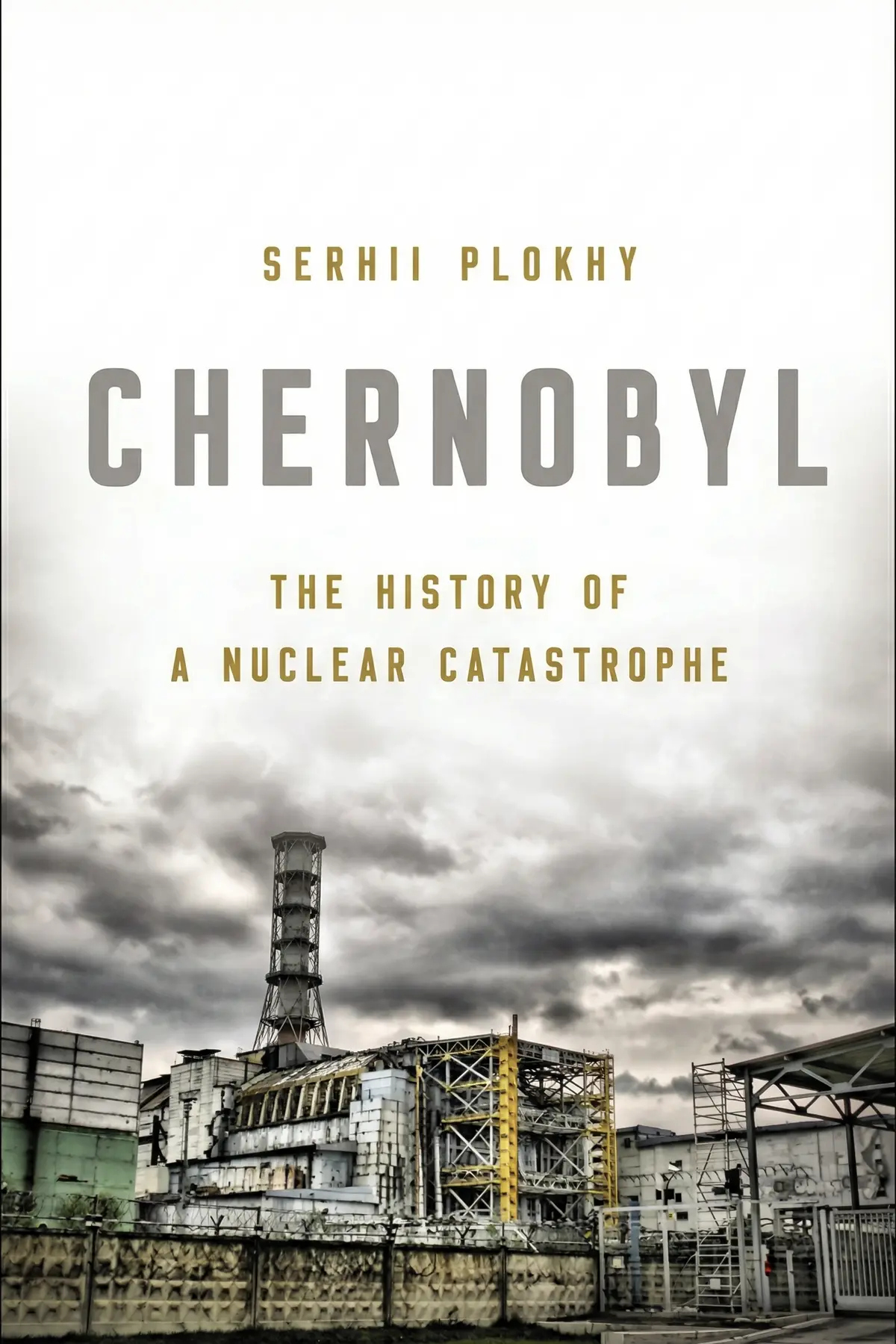
A comprehensive investigation into the 1986 nuclear disaster, examining the technical failures, human errors, and political consequences that led to the reactor's explosion and the eventual collapse of the Soviet Union.
1 min 42 sec
The early morning of April 26, 1986, marked a turning point in human history, though the world didn’t know it yet. In a quiet corner of Soviet Ukraine, the fourth unit of the Chernobyl nuclear station was about to be torn apart by a series of explosions. For decades, the narrative surrounding this event has been shrouded in a mix of myth, propaganda, and incomplete data. But the reality is a story of human bravery clashing against a system that was fundamentally broken.
What makes this disaster so compelling isn’t just the sheer scale of the radiation release—though it was massive—but the human drama that unfolded in the minutes, days, and years following the blast. It is a story of engineers working in the dark, firefighters facing an invisible enemy, and a government that was more concerned with its international reputation than the lives of its citizens. The explosion didn’t just scatter radioactive isotopes across the continent; it shattered the facade of Soviet efficiency and technological superiority.
In this summary, we are going to walk through the timeline of the catastrophe. We will look at the physics of the reactor and why it was essentially a ticking clock. We will explore the chain of command that allowed a routine test to turn into a nightmare, and we will examine the massive, grueling cleanup operation that involved hundreds of thousands of people. Finally, we will look at how this event acted as a catalyst for the end of an empire. This is the throughline of our journey: how a technical meltdown became a political one, and why the legacy of that night still resonates in the soil of Ukraine and the halls of global power today. By understanding the failures of the past, we can better grasp the responsibilities that come with managing the awesome and terrifying power of the atom.
2 min 17 sec
Explore the contrast between the idyllic lifestyle of the town of Prypiat and the volatile scientific processes occurring within the neighboring nuclear facility.
1 min 58 sec
Follow the tense hours leading up to the explosion as a series of human blunders and technical pressures pushed the reactor into an uncontrollable state.
1 min 56 sec
Uncover the technical secrets and design shortcuts that made the RBMK reactor a dangerous gamble for the Soviet nuclear program.
1 min 56 sec
Witness the critical hours following the blast where institutional denial and a lack of information led to a delayed and dangerous response.
1 min 50 sec
Relate the heroic and often sacrificial efforts of scientists, pilots, and miners who worked to prevent the disaster from escalating into a global extinction event.
1 min 43 sec
Learn about the army of ‘liquidators’ who performed the world’s most dangerous janitorial work to scrub the landscape of radiation.
1 min 52 sec
Examine the long-term health consequences and the tragic personal stories of those whose lives were forever altered by the invisible poison.
1 min 46 sec
Analyze how the disaster acted as a powerful force for political change, eventually leading to the dissolution of the Soviet Union.
1 min 44 sec
The story of Chernobyl is often framed as a cautionary tale about the dangers of nuclear power, but the deeper lesson lies in the dangers of a closed system. It was a catastrophe born from a perfect storm of technical shortcuts, institutional arrogance, and a political culture that feared the truth more than it feared disaster. While the RBMK reactors were flawed, it was the human and systemic failures—the suppression of safety data, the pressure to meet quotas, and the delay in warning the public—that turned a technical malfunction into a historic tragedy.
Today, the site of the disaster remains a haunting reminder of that night. A new, massive confinement structure now sits over the old sarcophagus, a multi-billion-dollar international effort to keep the ruins safe for another century. The exclusion zone has become a strange laboratory for nature’s resilience, even as it remains too contaminated for human habitation. But beyond the physical site, the legacy of the disaster lives on in the way we think about transparency and accountability in high-stakes technology.
We can take away several vital lessons from this history. First, that technical safety cannot be separated from political integrity. Second, that the courage of individuals can mitigate a disaster, but it cannot replace the need for a safe system. And finally, that the truth will always find its way out, even if it is carried on the wind in the form of radioactive dust. As we look toward a future that will undoubtedly involve complex technologies and high risks, the history of this nuclear catastrophe serves as a somber reminder that the cost of secrecy is always higher than the cost of the truth. It is a story of an empire that fell, a land that was scarred, and a lesson that the world must never forget.
This detailed narrative explores the complex layers of the 1986 nuclear disaster in Soviet Ukraine. It moves from the high-stakes environment of the power plant’s control room to the administrative halls of the Kremlin, revealing how a combination of flawed reactor design and a culture of secrecy created a global catastrophe. The book promises a definitive account of the event, looking beyond the immediate explosion to the long-term biological, environmental, and political fallout. It highlights the stories of those who sacrificed their lives during the cleanup and examines how the disaster fatally undermined the legitimacy of the Soviet state. Readers will gain a deep understanding of how technical hubris and political rigidity can intersect with devastating results.
Serhii Plokhy is an acclaimed historian and professor of Ukrainian history at Harvard University. A Ukrainian-American scholar, he is a leading expert on the history of Eastern Europe and the Cold War. He has written over twelve books, including the award-winning The Last Empire and The Gates of Europe.
Listeners consider this work to be extensively documented and expertly crafted, with one individual noting its ability to clarify a complicated sequence of occurrences. Furthermore, the storytelling is immersive, as one listener draws attention to the comprehensive chronological account of the catastrophe while another mentions how it illuminates Ukrainian resentment against Russia. Additionally, the account is lauded for being accessible and educational, with one listener describing it as a must-read to better understand the perils.
Plokhy manages to do something rare here by balancing high-level political maneuvering with the visceral, ground-level terror of the disaster. This book provides a masterclass in how institutional arrogance and the desperate need to meet production quotas can lead to total catastrophe. I was particularly gripped by the detailed timeline of the hours following the explosion, where the denial from Moscow was just as deadly as the radiation itself. It sheds light on the deep-seated Ukrainian resentment toward the Soviet central government, portraying the accident as a catalyst for the eventual collapse of the USSR. While the technical explanations are rigorous, the prose remains accessible and never feels like a dry textbook. If you want to understand the 'why' behind the meltdown rather than just the 'how,' this is the definitive account. It is a haunting reminder of what happens when ideology is prioritized over engineering safety.
Show moreThe chapter covering the trial of the three plant employees really drove home how much of a scapegoat operation the Soviet legal system was. Plokhy illustrates how the disaster wasn't just a localized accident but a symptom of a crumbling empire that relied on secrecy and fear. You get a real sense of the courage displayed by the workers and divers, contrasted against the cowardice of officials in Moscow who delayed evacuations for days. The writing style is sharp and authoritative, making complex nuclear physics understandable for a layperson like myself. I was fascinated by the argument that Chernobyl was the primary spark for Ukrainian independence, as the local population realized their lives were expendable to the central party. This isn't just a book about a meltdown; it’s a biography of a dying political system. Every page feels heavy with the weight of the tragedy, yet it’s impossible to put down.
Show moreFinally got around to this after hearing Plokhy speak on a podcast about the intersection of nuclear power and nationalism. This book is a hauntingly beautiful piece of non-fiction that captures the specific 'Soviet-ness' of the catastrophe—the blend of heroic sacrifice and systemic failure. I was stunned by the details regarding the 1985 opening of the fourth reactor and how it was essentially a disaster waiting to happen due to design flaws. The author doesn't just stop at the sarcophagus; he follows the story through to the final decommissioning in 2000, giving a complete picture of the site’s lifecycle. It’s clear that Plokhy has a deep personal and scholarly connection to the material, which makes the narrative feel authentic and urgent. Not gonna lie, some of the descriptions of radiation sickness are hard to stomach, but they are necessary to respect the victims. This should be required reading for anyone interested in the perils of technological isolationism.
Show morePicked this up because I wanted a more analytical look at the disaster than what the dramatized TV versions provide. Plokhy delivers exactly that, offering a comprehensive look at the environmental, social, and political consequences that rippled out from Pripyat. The way he ties the disaster to the rise of the Glasnost policy and Gorbachev’s loss of control is incredibly persuasive. I was also impressed by the coverage of the lesser-known aspects, like the specific history of the Polissia region before the plant was even built. The book is well-written and flows logically, even when it’s juggling multiple perspectives from scientists, firemen, and politicians. It’s a terrifyingly detailed timeline that proves truth is often much stranger and more horrific than fiction. This is easily the most authoritative book on the subject that I have come across so far. It’s a heavy read, but a necessary one for our times.
Show moreWhat struck me most was the terrifying realization that the plant operators didn't even know their reactor had exploded for several hours. Plokhy describes the confusion in the control room with such clarity that you can almost feel the heat and the panic. The book does a fantastic job of highlighting the individual heroism of the liquidators, many of whom were just ordinary young men thrown into a nightmare. It’s a story of incredible courage set against a backdrop of institutional cowardice and scientific arrogance. I liked that the author didn't just end the story in 1986 but showed how the disaster continued to shape Ukrainian identity for decades. The prose is elegant yet forceful, never shying away from the gruesome reality of the situation. It’s a definitive history that manages to be both a technical autopsy and a deeply moving tribute to those who suffered. Highly recommended for any history enthusiast.
Show moreAfter watching the HBO series, I needed a deeper dive into the actual science and the chain of events that led to the reactor 4 explosion. Plokhy delivers a meticulously researched history that starts way before the fatal night, covering the shoddy construction and the systemic defects inherent in the RBMK design. Truth is, the most infuriating part wasn't the mechanical failure, but the human one—the way party bosses suppressed information while children in Pripyat played in radioactive dust. The book is quite dense with names and acronyms, which can be a bit overwhelming if you aren't taking notes, but the payoff is a total understanding of the tragedy. I appreciated the focus on the political fallout, showing how Chernobyl effectively poisoned the Soviet Union's credibility beyond repair. It’s a sobering read that balances technical detail with genuine empathy for the first responders who were sent to their deaths without proper equipment.
Show moreIs it possible for a history book to feel like a ticking-clock thriller? This account of the 1986 disaster manages it by focusing on the frantic, mismatched responses from different levels of the Soviet hierarchy. I found the section on the construction of the plant especially enlightening because it highlights the culture of cutting corners to satisfy the state's demands. Frankly, the level of incompetence described is terrifying, from the lack of high-range dosimeters to the cutting of telephone lines to prevent 'panic.' My only minor complaint is that the middle section on international diplomacy drags just a little compared to the high-stakes drama of the initial cleanup. Still, the author’s ability to weave together the fates of individual liquidators with the grand arc of the Cold War is impressive. It is an essential companion to Svetlana Alexievich’s work, providing the structural context that her oral histories omit.
Show moreEver wonder how a civilization just... fails? This book answers that question by showing how a single point of failure in a nuclear reactor can expose the rot in an entire government. Plokhy is brilliant at explaining the 'positive void' effect and the graphite-tipped control rods without making me feel like I needed a degree in physics. The most striking part was the description of the May Day parades in Kyiv, where officials let people march in the streets despite knowing the radiation levels were skyrocketing. It makes your blood boil to read about the deliberate misinformation campaigns. The pacing is generally good, though the transition from the explosion to the political aftermath in the 90s felt a bit abrupt. Overall, it’s a vivid and disturbing account of a tragedy that the world is still trying to learn from. It really makes you question our current reliance on aging nuclear infrastructure.
Show moreTo be fair, the research here is undeniable, but I struggled with the heavy emphasis on administrative politics over the personal stories of the liquidators. I picked this up hoping for more focus on the human cost and the daily lives of those in the exclusion zone. Instead, about a third of the text is dedicated to the bureaucratic shifts within the Communist Party and the diplomatic fallout with the West. While I understand that these elements are crucial for a comprehensive history, they made for some rather dry reading in the latter half of the book. The sections describing the actual explosion and the immediate fire are excellent and read like a horror story, but the momentum stalls once the trial begins. It’s an informative volume for academics or hardcore history buffs, but casual readers might find it a bit too bogged down in Soviet policy minutiae.
Show moreLook, I know this is highly rated, but the sheer volume of names and technical jargon felt like wading through radioactive sludge at times. I found myself constantly flipping back to remember which party official was in charge of which committee, and it really disrupted the flow of the story. While the author is clearly an expert, the academic tone made it difficult for me to stay emotionally connected to the victims. I preferred 'Midnight in Chernobyl' because it felt more like a narrative, whereas this feels more like a political dissertation. If you are looking for a deeply personal account of the tragedy, you’re better off reading Alexievich. This one is just too dense for a weekend read and lacks the gripping prose I was expecting from the reviews. It’s definitely thorough, but it’s a slog to get through the sections on Soviet energy policy.
Show moreFay Bound Alberti

Ben Macintyre


Ron Chernow
Philip Freeman


Michael Axworthy

Tom Standage

Ishmael Beah
AUDIO SUMMARY AVAILABLE
Get the key ideas from Chernobyl by Serhii Plokhy, plus 5,000+ more titles in English and Thai.







