
22 min 05 sec
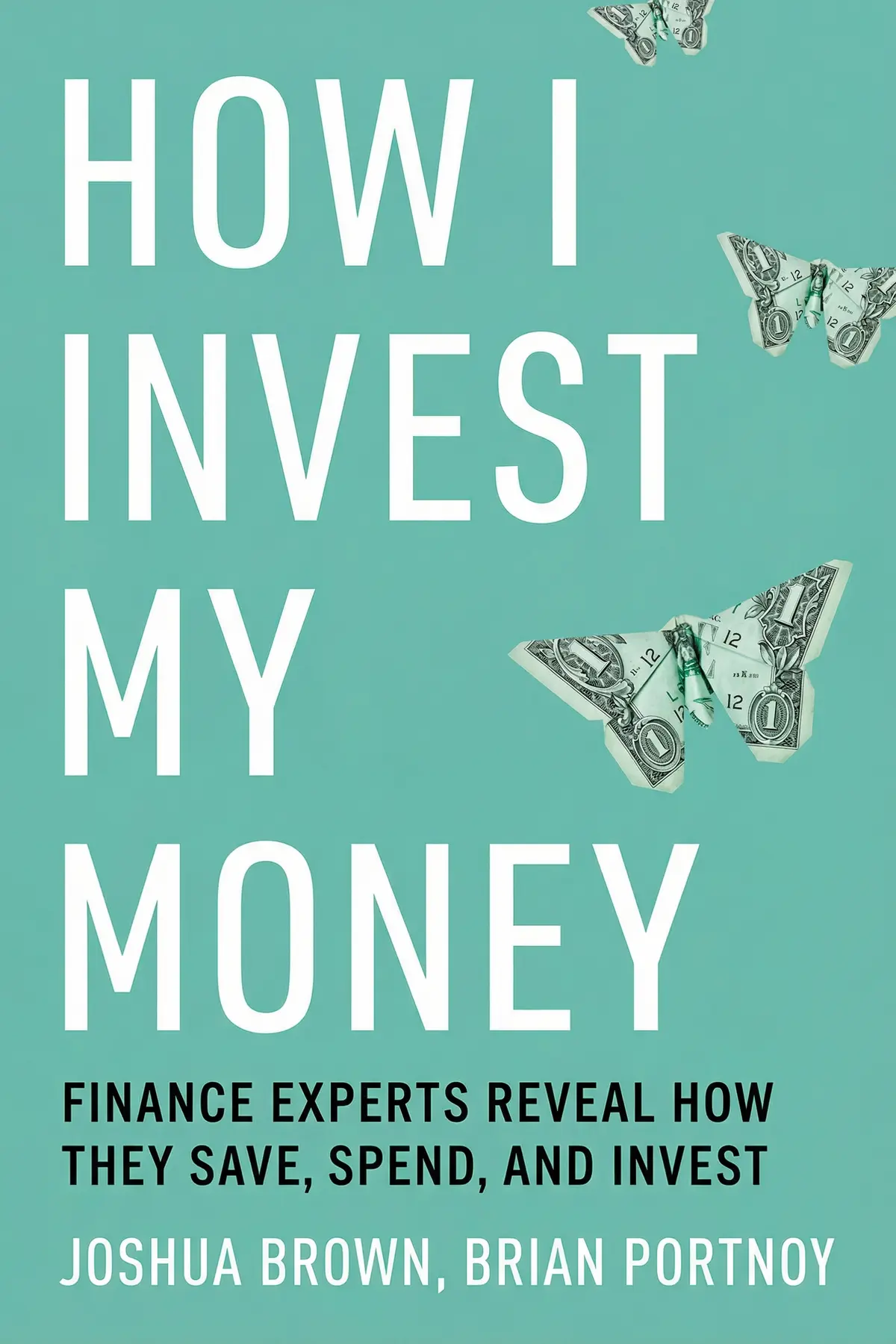
The Geometry of Wealth: How to Shape a Life of Money and Meaning
Discover a holistic approach to financial planning that prioritizes personal meaning over mere accumulation, blending behavioral science with practical strategies for long-term security and contentment.
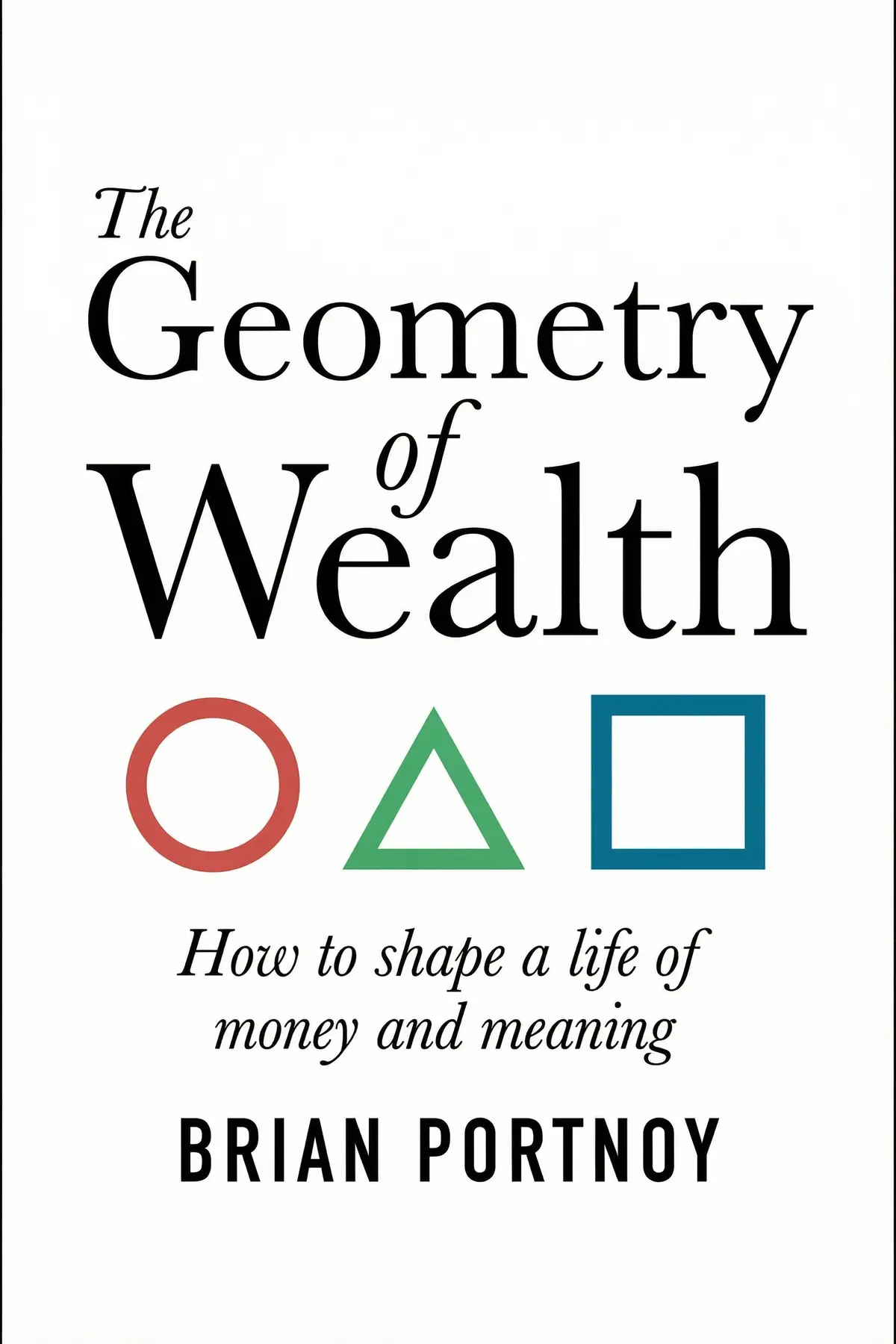
Table of Content
1. Introduction
1 min 38 sec
In the modern era, the very definition of financial success has undergone a radical transformation. For our grandparents, the path was often a straight line: you worked for a single company, contributed your time, and were eventually rewarded with a guaranteed pension that lasted a lifetime. That predictability has vanished. Today, the responsibility of funding our future has shifted almost entirely onto our own shoulders. This transition from institutional security to individual responsibility has left many of us feeling adrift in a sea of complex data and volatile markets.
But what if we are looking at wealth through the wrong lens? Many people treat money as the ultimate goal, a number to be maximized at all costs. However, true wealth is far more nuanced. It involves the integration of our financial resources with our deepest personal values and life goals. This is where the concept of the geometry of wealth comes into play. It’s not just about the arithmetic of interest rates; it’s about the shape and structure of a life well-lived.
In this exploration, we are going to look at how to navigate this new financial reality. We will examine why our own biological wiring often works against us when we try to invest, and how we can engage the rational parts of our minds to make better choices. We’ll delve into the importance of risk management, the power of simplicity, and the psychological benefits of gratitude. Ultimately, the goal is to provide a guide that helps you move past the anxiety of money and toward a state of grounded, meaningful prosperity. By the end, you’ll see that managing your finances isn’t just a chore—it’s an essential part of crafting a fulfilling human experience.
2. The Evolution of Financial Security
2 min 10 sec
Explore how the shift from corporate pensions to self-funded retirement has fundamentally changed our relationship with money and forced us to confront our own instincts.
3. The Power of Conscious Decision-Making
2 min 20 sec
Understand the difference between your fast-acting instincts and your rational mind to gain more agency over your financial choices and overall happiness.
4. Applying Philosophy to Risk Management
2 min 24 sec
Learn why minimizing potential losses is a far more effective strategy for long-term wealth than chasing the highest possible gains.
5. The Importance of Financial Inventory
2 min 20 sec
Discover how a simple calculation of your net worth and the setting of clear goals can transform your financial anxiety into a focused roadmap.
6. Gratitude as a Financial Strategy
2 min 16 sec
Learn how the psychological practice of thankfulness can curb impulsive spending and lead to a more profound sense of true wealth.
7. The Virtue of Simplicity
2 min 30 sec
Discover why the most effective financial plans are often the simplest ones and how to avoid the trap of unnecessary complexity.
8. Accepting the Role of Uncertainty
2 min 21 sec
Embrace the idea that investing is a game of probability rather than a precise science, and learn how humility can protect your portfolio.
9. Understanding the Spectrum of Returns
2 min 23 sec
Explore why the average rate of return on stocks can be misleading and why patience is your most valuable asset in a volatile market.
10. Conclusion
1 min 43 sec
As we have seen, true wealth is not a destination you reach simply by accumulating more money. It is a dynamic state of being that requires a careful balance of financial strategy and personal meaning. We began by acknowledging the monumental shift from the era of guaranteed pensions to the modern age of self-reliance, and we explored how our own biological wiring can lead us astray if we aren’t careful. By engaging our rational minds and prioritizing the prevention of loss over the pursuit of high gains, we can build a foundation that is resilient enough to withstand the inevitable storms of life.
We also discussed the practical steps of taking a financial inventory and setting clear, values-based goals. This clarity, combined with the psychological power of gratitude and the intentional choice of simplicity, allows us to escape the exhausting cycle of social comparison and endless desire. When we treat investing as a game of probability rather than a certain science, we cultivate the humility and patience necessary to let time and compounding do their work.
Ultimately, the geometry of wealth is about shaping your life in a way that provides both security and satisfaction. It’s about knowing what you need to be comfortable and what you need to feel purposeful. As you move forward, remember that you have more control over your financial destiny than you might think. By making conscious choices, staying disciplined, and keeping your eye on the long-term horizon, you can create a life of true abundance. Start by calculating your net worth today, and then take a moment to reflect on what a ‘wealthy’ life actually looks like to you. Your financial journey is not just about the numbers; it’s about the person you become along the way.
About this book
What is this book about?
The Geometry of Wealth moves beyond traditional financial advice to address the fundamental question of how money serves a meaningful life. Author Brian Portnoy explores the intersection of behavioral psychology, historical market trends, and personal values to provide a framework for true prosperity. Rather than focusing solely on picking the right stocks, the book emphasizes the importance of mindset, risk management, and clarity of purpose. Listeners will learn how to navigate the modern shift toward self-funded retirement and overcome the biological instincts that often lead to poor investment decisions. By applying concepts like Pascal’s Wager and the distinction between fast and slow thinking, the book offers a roadmap for creating a stable financial future. It promises to help you find the balance between material success and emotional well-being, proving that wealth is about the shape of your life as much as the size of your bank account.
Book Information
About the Author
Brian Portnoy
Brian Portnoy is a seasoned investment consultant at Virtus Investment Partners, where he specializes in helping clients navigate the complexities of financial planning and make informed investment decisions. He is recognized for his ability to translate complex market dynamics into actionable wisdom. Portnoy is also the author of The Investor’s Paradox, and The Geometry of Wealth marks his second significant contribution to the field of personal finance and behavioral economics.
Ratings & Reviews
Ratings at a glance
What people think
Listeners find this work a superb listen that acts as an excellent roadmap to behavioral finance. They admire the concise, high-quality writing and thought-provoking material, with one listener specifically praising its powerfully unique perspective. The content pushes people to examine wealth through a critical lens, and listeners appreciate the focus on well-being, as one review notes its deeper look at experienced happiness.
Top reviews
Jack
Finally got around to reading Portnoy’s work, and it’s a breath of fresh air compared to the usual dry investment manuals. This isn’t a book that will tell you exactly which index fund to buy or how to tax-loss harvest your portfolio. Instead, it dives deep into the 'why' behind our financial decisions, focusing on the concept of funded contentment. I loved how he framed wealth as a means to an end rather than the goal itself. The geometry analogy—circles, triangles, squares—provides a surprisingly solid structure for understanding purpose and strategy. To be fair, some sections on behavioral psychology felt a bit like a refresher course if you’ve already read Kahneman, but Portnoy weaves it all together into a very cohesive narrative. It's a powerfully unique perspective on what it actually means to be 'rich' in a world obsessed with more.
Show moreNang
Wow. This book hit me at exactly the right time in my life. I’ve always been someone who stresses about numbers and net worth, but Portnoy’s approach helped me reorient my focus toward experiences and purpose. He explains hedonic adaptation in a way that finally clicked for me—reminding us why we are always striving for more and why that cycle doesn't lead to happiness. The writing style is elegant and accessible, making complex behavioral concepts easy to digest for someone who isn't a finance pro. I particularly appreciated the emphasis on intrinsic motivations over extrinsic ones. It’s less of an investing guide and more of a manual for living a fulfilling life with the resources you have. Highly recommend to anyone who feels like they’re on a treadmill of earning without a clear destination.
Show moreSiraporn
Ever wonder why some people with millions are miserable while others with modest means seem totally at peace? This book answers that question with precision and heart. Brian Portnoy has crafted a masterpiece that transcends the typical finance genre. He doesn't just talk about money; he talks about the human condition and our search for meaning. I found the section on 'funded contentment' to be one of the most profound things I've read in years. It’s a roadmap for aligning your bank account with your soul. Some critics might say it’s unoriginal, but I think the way he synthesizes these disparate ideas into a coherent framework is a massive achievement. It’s a must-read for anyone who wants to be better with money but also wants to be a better person.
Show moreSaengdao
In a world where we are constantly bombarded with 'get rich quick' schemes, Portnoy offers a much-needed dose of reality and wisdom. He reminds us that money is merely a tool, not the end goal. I loved the focus on the four ingredients for a life well-lived: connection, control, context, and competence. These aren't just abstract ideas; he explains how each one contributes to our overall sense of security and joy. The book is succinct, insightful, and incredibly easy to read in a few sittings. It helped me reevaluate my own investment strategy, moving away from chasing returns and toward securing my own 'funded contentment.' It’s the kind of book that changes how you look at every dollar in your wallet. Absolutely fantastic and well worth the time.
Show moreIce
As someone who has spent years in the financial services industry, I found this to be a fantastic primer on the human side of money. Portnoy moves away from the spreadsheet-heavy advice that dominates the field and explores the delicate balance between our present needs and future goals. He uses the '4 Cs'—Connection, Control, Context, and Competence—to define what a life well-lived actually looks like. It’s succinct and insightful, though I’ll admit the connection between the geometry shapes and the financial planning felt a little forced at times. If you are looking for a 'How To' guide with specific stock picks, look elsewhere. However, if you want to understand the psychology of 'enough' and how to align your money with your values, this is an excellent resource.
Show morePan
After hearing Brian Portnoy on several podcasts, I was curious to see if his book lived up to the hype. It’s a very well-written look at how money interacts with our sense of wellbeing. He challenges readers to think critically about their own biases and the fast vs. slow thinking patterns that often lead to poor financial choices. My only real gripe is that it leans a bit too heavily on existing literature; if you’re a fan of Carol Dweck or Daniel Pink, you’ll recognize a lot of these arguments immediately. That said, having all these threads pulled together into one volume is incredibly helpful. It serves as a great bridge between philosophy and finance. It’s the kind of book you want to keep on your shelf and revisit whenever you start feeling anxious about the stock market.
Show moreJonathan
Picked this up on a whim and was pleasantly surprised by the depth of the content. Most money books are either too technical or too 'woo-woo,' but The Geometry of Wealth finds a nice middle ground. Portnoy expertly navigates the innate human desire for more while gently steering the reader toward the concept of presence. The way he breaks down the strategy into shapes—the circle of purpose, the triangle of priorities, and the square of tactics—is a helpful mental model, even if it feels a bit gimmicky at times. I wish there had been more concrete examples of how to apply these ideas to a mid-range budget, but the overall message is powerful. It’s an accessible primer for anyone who wants to stop worrying about the market and start focused on their own happiness.
Show morePia
The chapter on the three-step process of planning—defining purpose, setting priorities, and making decisions—was definitely the highlight for me. However, I struggled with the middle section where the author takes a long detour into the woods of general happiness research. While the synthesis of behavioral finance is well-written, it feels like a rehash of Thinking, Fast and Slow or various TED talks. Truth is, if you’ve read any of the major works by Thaler or Seligman, you might find a lot of this redundant. I was hoping for more original insights rather than an aggregation of existing theories wrapped in a flimsy 'geometry' metaphor. It’s a decent book for a beginner, but seasoned investors might find it a bit light on substance and heavy on the fluff. It’s okay, just not groundbreaking.
Show moreTee
Not what I expected given the title and the 'How to' marketing on the cover. I picked this up hoping for a practical guide to building wealth, but instead, I got a long-winded philosophical exploration of human behavior. Portnoy is clearly brilliant, and he name-drops plenty of famous psychologists, but he fails to bridge the gap between abstract concepts and actual financial tactics. For instance, he talks about 'funded contentment' but never really gives you the math to figure out how much is enough for your specific situation. Frankly, it felt like the book could have been a 20-page essay rather than a full-length publication. I stayed until the end hoping for a payoff that never really arrived. If you want actual investment advice, you're better off reading Bogle or Graham.
Show moreSomporn
This book was a total letdown. I was expecting a rigorous, mathematical approach to wealth building—you know, like the word 'Geometry' in the title suggests! Instead, it’s a collection of pop-psychology tropes and vague philosophical advice that you could find in any self-help blog. The author spends way too much time on 'side quests' regarding happiness and doesn't spend nearly enough time on actual portfolio management or asset allocation. In my experience, if you're writing a book about wealth, you should provide some actual tools or tactics, not just tell people to find their 'purpose.' It felt like a classic bait-and-switch. If I wanted to read Kahneman, I would have bought Kahneman. This was a redundant, tangential mess that didn't provide a single piece of actionable financial advice for me.
Show moreReaders also enjoyed
AUDIO SUMMARY AVAILABLE
Listen to The Geometry of Wealth in 15 minutes
Get the key ideas from The Geometry of Wealth by Brian Portnoy, plus 5,000+ more titles in English and Thai.
- 5,000+ titles
- Listen as much as you want
- 7-day free trial
- Cancel anytime







