
17 min 13 sec
How I Invest My Money: Finance Experts Reveal How They Save, Spend, and Invest
How I Invest My Money explores the personal financial strategies of top experts, revealing how individual values, history, and goals shape portfolios differently than traditional market advice suggests.
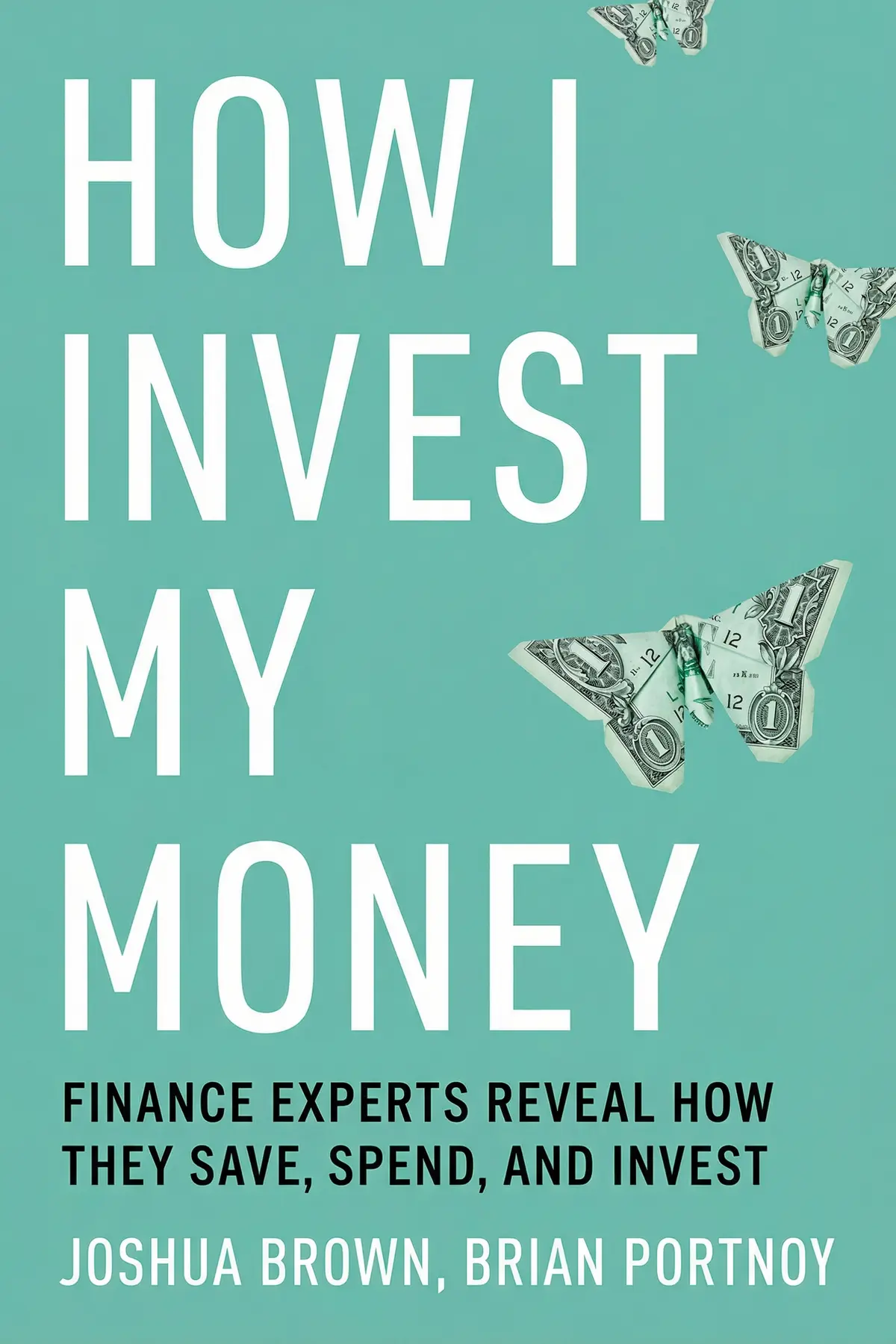
Table of Content
1. Introduction
1 min 36 sec
When we think about investing, our minds often jump straight to the technicalities. We think about spreadsheets, market charts, and the endless debate over which asset class will outperform the next. There is no shortage of experts willing to tell you exactly where to put your money for the highest return or how to structure a retirement plan that looks perfect on paper. But there is a massive difference between what works in a textbook and what works in the actual lives of human beings.
In this summary of How I Invest My Money, edited by Joshua Brown and Brian Portnoy, we are going to pull back the curtain on the people who give advice for a living. We aren’t looking at the models they build for their clients; we are looking at how they actually manage their own bank accounts. What you will find is that there is no single ‘right’ way to invest. There are only ways that are right for specific people at specific times.
The throughline of our exploration today is the realization that the ‘why’ of investing is just as critical as the ‘how.’ Why are you saving? Is it for the freedom to quit a job you hate? Is it to ensure your children have opportunities you didn’t? Or is it simply to sleep better at night? Once you understand your own motivations, the technical decisions—like whether to buy stocks, bonds, or real estate—start to fall into place. We will explore how different professionals navigate these waters, moving from the need for independence and stable income to the psychological discipline required to let go of market anxiety. By the end, you’ll have a clearer sense of how to build an investment strategy that is uniquely yours.
2. The Personal Nature of Wealth
2 min 23 sec
Financial experts often manage their own money differently than they advise their clients, highlighting that personal needs and emotional security are more important than universal rules.
3. The Strategy of Growing Income
2 min 31 sec
Learn how dividend-paying stocks can solve the puzzle of creating a stable income that keeps up with inflation, even for those who retire early.
4. Time as the Ultimate Asset
2 min 08 sec
Discover why some investors prioritize ‘equity in time’ over monetary returns, using their wealth to gain total control over their daily lives.
5. The Power of Simple Diversification
2 min 23 sec
Simplicity and patience often outperform complex strategies, especially when you understand the necessary trade-off between volatility and long-term gains.
6. The Educational Path of Hard Knocks
2 min 14 sec
Personal financial failure can be a powerful teacher, leading to a more resilient and informed approach to long-term wealth building.
7. The Psychology of Abundance
2 min 21 sec
Adopting a mindset of generosity and emotional detachment from market swings can prevent the ‘financial stagnation’ caused by fear and greed.
8. Conclusion
1 min 37 sec
As we have seen through the stories of these diverse experts, there is no single blueprint for financial success. The experts themselves don’t even agree on the best way to manage money. Some swear by the steady income of dividends, while others embrace the high-octane volatility of crypto or the simplicity of index funds. Some view their business as their primary investment, while others prioritize the ‘independence fund’ that allows them to live a quiet, unassuming life.
However, there is one common thread that connects all of them: they have each found a strategy that aligns with their personal values and their unique life circumstances. They have moved past the ‘how’ of investing and deeply explored the ‘why.’ They understand that money is not the end goal—it is a tool. Whether that tool is used to buy back time, to provide security for a family, or to foster a sense of generosity in the world, its value is determined by the person holding it.
The most important takeaway for you is to stop looking for the ‘perfect’ portfolio and start looking for the one that fits your life. Ask yourself the same question Sandy Gottesman asks his interviewees: ‘What do you own, and why?’ If you can answer that question with clarity and conviction, you are already ahead of most investors.
As you move forward, remember to keep things simple, be patient with the market’s inevitable ups and downs, and don’t be afraid to learn from your mistakes. Your financial journey is yours alone. By focusing on what truly matters to you, you can build a wealth strategy that provides not just a higher balance in your bank account, but a more meaningful and contented life. That is the true purpose of investing your money.
About this book
What is this book about?
While most financial guides focus on the technical 'how' of the market—identifying the best stocks or timing the perfect entry—How I Invest My Money takes a different approach by focusing on the 'why.' This summary explores the personal investment philosophies of diverse financial experts, showing that wealth management is rarely about following a universal set of rules. Instead, it is a deeply personal endeavor shaped by one's own history, fears, and aspirations. Through various narratives, you will see how seasoned professionals manage their own assets, from dividend-focused strategies to high-risk crypto investments. The promise of the book is to help you realize that your financial plan doesn't have to look like anyone else's to be successful. By aligning your money with your personal values—whether that means prioritizing time with family, seeking independence, or finding emotional peace—you can build a portfolio that serves your life rather than just your bank account.
Book Information
About the Author
Joshua Brown
Josh Brown is the co-founder and CEO of Ritholtz Wealth Management, a financial services firm that manages over $1 billion in assets for a range of individual, corporate, and institutional clients. He’s the author of Backstage Wall Street and Clash of the Financial Pundits. Brian Portnoy is the mind behind Shaping Wealth, a financial wellness platform that aims to help clients make better financial decisions. His previous books include The Investor’s Paradox and The Geometry of Wealth.
Ratings & Reviews
Ratings at a glance
What people think
Listeners find the content highly accessible and appreciate the varied viewpoints on investment strategies, with one listener highlighting that it provides a reflective series of dialogues concerning personal finance. Furthermore, the quality of the storytelling is well-received for including real-life accounts that offer a distinct vantage point, and listeners generally deem it an enjoyable experience. On the other hand, the cost-to-value ratio draws varied responses, as several listeners labeled the title a poor investment of both money and time.
Top reviews
Muk
Ever wonder what the pros actually do when the cameras are off and it's just their own bank accounts on the line? This book answers that question with startling honesty. I was particularly moved by the story of Perth Tolle and her focus on freedom-based investing, which adds a moral dimension to finance that we rarely see discussed. In my experience, most people overcomplicate their portfolios to feel smart, but these experts embrace simplicity. They talk about buying lake houses for family memories and the peace of mind that comes with being debt-free. It’s about 'money stories' and how our upbringing shapes our spending. I read it in one sitting and then went back to highlight the parts that resonated with my own family goals. Truly a gem.
Show moreSebastian
What a powerful reminder that there is no one 'right' way to manage your capital! This book is an absolute treasure trove of wisdom for those willing to look past the lack of spreadsheets. I found myself highlighting passages in almost every chapter, especially the parts about living below your means and the importance of a 'margin of safety.' It covers the whole gambit—from risk-averse planners to those into venture capital. The authentic stories of struggle and success make these 'experts' feel human. It’s not just about money; it’s about freedom, family, and being able to sleep at night. I’ve already recommended it to several friends who are stressed about their finances. This isn't about getting rich fast; it's about staying rich and being happy.
Show moreSupaporn
This book feels less like a dry textbook and more like a coffee shop conversation with people who actually know what they're doing with their wealth. Frankly, it’s a refreshing departure from the usual 'get rich quick' nonsense found in the finance aisle of most bookstores. Instead of complex algorithms, you get short essays about paying off mortgages, keeping cash reserves, and the importance of charitable giving. It’s like visiting the homes of professional chefs and seeing that they often just make simple, soul-warming meals for their own families. While the advice isn't always actionable in a technical sense, the psychological comfort it provides is immense. Not every chapter hit the mark for me, but the diversity of perspectives makes it a worthy addition to any investor's shelf.
Show moreEarn
Picked this up on a whim, and I found the diversity of life stories surprisingly grounding. As a new investor, I often feel overwhelmed by the lingo, but this book speaks a language I can actually understand: the language of life goals. The truth is, the contributors aren't all trying to beat the market; they are trying to fund their lives. I loved the analogy one reviewer used about a 12-step meeting—you listen to people doing what you want to do and take what works for you. From the ER physician who found a love for planning to the venture capitalists who still keep huge cash buffers, the range of risk tolerance is fascinating. It’s not a 'how-to' in the traditional sense, but it’s a great 'why-to' for the soul.
Show moreJoe
Finally got around to reading this, and it’s a refreshing departure from the usual ego-driven finance books. What struck me most was how many of these high-level advisors prioritize simplicity and family over 'alpha' or beating the S&P 500. It’s comforting to know that even those in the 'stratosphere' of wealth often just stick to ETFs and paying off their homes. The writing style is casual and accessible, making it a great gift for someone just starting their career. My only gripe is that it can feel repetitive. After the tenth person tells you they max out their 401(k), you start to wish for a bit more variety in the actual investment vehicles. Still, the focus on human relationships and 'compounding' memories is a message more people need to hear.
Show moreGiulia
Gotta say, the format of this book really worked for me. Each chapter is a quick hit from a different mind in the industry, which keeps things moving. It’s fascinating to see the gap between the complex advice these people might give clients and the simple strategies they use for themselves. Most of them are just trying to stay married, save for their kids, and avoid doing anything stupid. There is a lot of focus on 'money stories' and how childhood scarcity or abundance dictates our adult choices. While it’s true that some chapters feel like self-congratulatory blog posts, the overall impact is positive. It’s a realistic and pragmatic overview of what financial success actually looks like behind closed doors. Definitely worth the read.
Show moreBunyarit
I'll be blunt: if you are looking for a step-by-step guide on how to rebalance your 401k or pick the next hot stock, look elsewhere. This is a collection of personal philosophies rather than a manual. To be fair, the concept of seeing inside the portfolios of 25 experts is brilliant, but the execution feels a bit like a series of self-congratulatory blog posts that were compiled in a weekend. Many of the contributors end up saying the exact same thing—invest in low-cost index funds and stay disciplined. If you’ve already read Morgan Housel’s The Psychology of Money, you might find this a bit redundant. It’s an easy read, surely, but the value for the price point is questionable given how little 'new' information is actually presented.
Show moreWin
The truth is, most of us are looking for a secret formula, but this book exposes that there isn't one. I found the 'money stories' concept particularly interesting—the idea that our family history dictates our financial strategy. However, I have to agree with some of the more critical reviews that describe this as a bit thin. Some chapters are incredibly insightful, while others feel like filler. It’s an easy, breezy read that you can finish in an evening, but don't expect it to change your life if you've already got a basic grasp on long-term investing. It's a nice companion piece to Brian Portnoy's other work, but maybe not the definitive guide some were hoping for. I’d call it a solid 3-star effort for the inspiration alone.
Show moreKofi
As someone who has followed the 'Reformed Broker' for years, I had high hopes for this compilation. To be fair, it’s a decent read, but it lacks the 'meat' I was looking for. You get a lot of anecdotes about lifestyle choices—which are fine—but very little on the actual 'how' of their asset allocation. Why this percentage in international? Why that specific bond fund? Those questions remain largely unanswered. It’s a bit more emotional and psychological than analytical. If you want a feel-good book that validates your decision to be boring with your money, this is it. If you want to learn the mechanics of wealth building, you're better off reading something by Bogle or Malkiel. It’s a thoughtful collection, just a bit light on substance.
Show moreTim
Not what I expected at all, and frankly, I’m disappointed. I wanted to like this book because I follow Joshua Brown online, but it offers very little practical value for the average person trying to learn the ropes. The essays are too short to develop any real depth, and many of them run together after a while. It feels like a collection of emails that probably took about three hours to gather and publish. Look, I get that investing is personal, but I don't need to pay twenty bucks to be told that financial advisors also like index funds and saving for their kids' college. It’s a very quick read, but I felt like I gained zero new insights into actual portfolio allocation. Save your money and just read a few finance blogs instead.
Show more
Readers also enjoyed
AUDIO SUMMARY AVAILABLE
Listen to How I Invest My Money in 15 minutes
Get the key ideas from How I Invest My Money by Joshua Brown, plus 5,000+ more titles in English and Thai.
- 5,000+ titles
- Listen as much as you want
- 7-day free trial
- Cancel anytime







