

A Biography of Loneliness: The History of an Emotion
Fay Bound Alberti
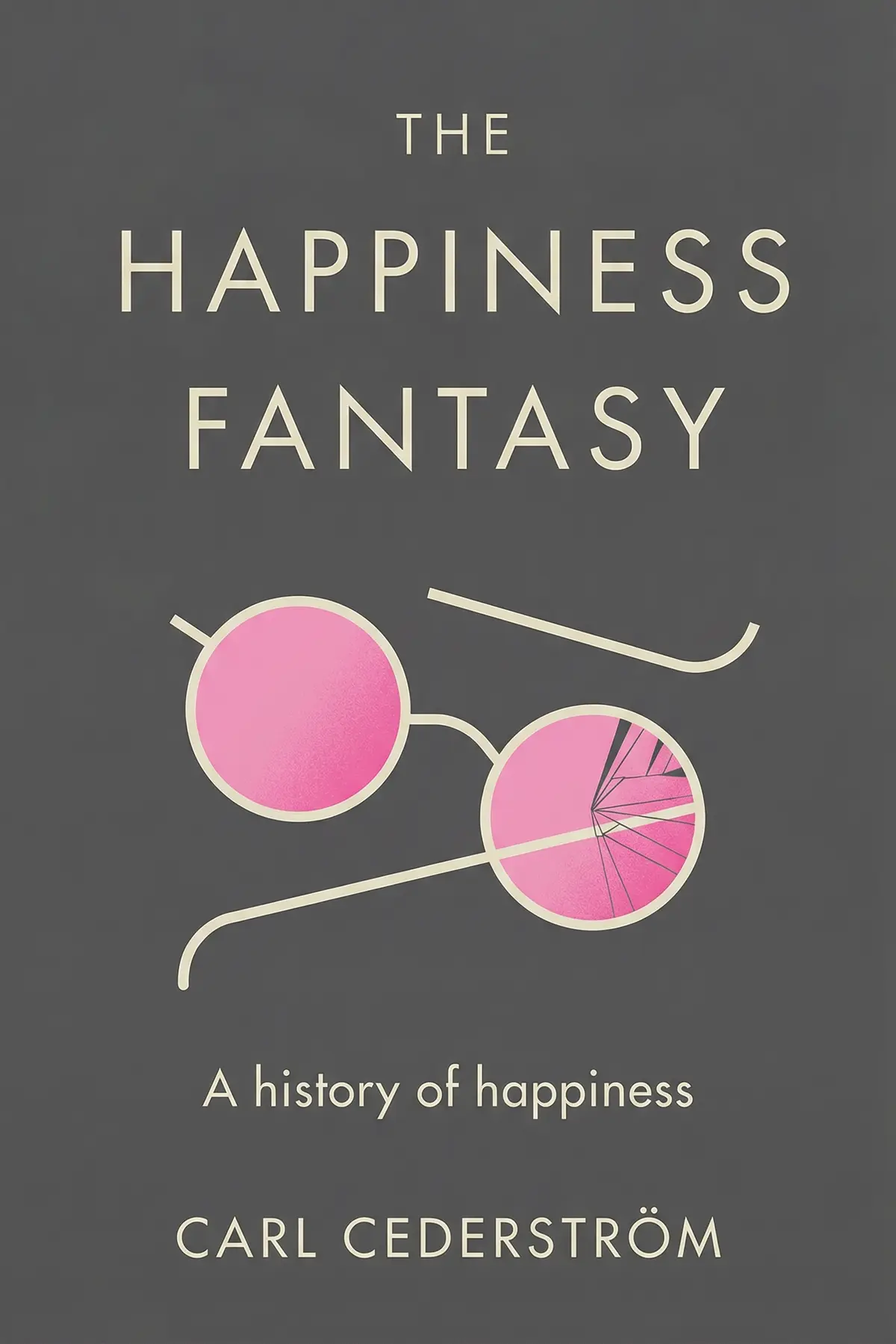
The Happiness Fantasy explores how the modern demand for joy became a tool of social and corporate control, tracing its history from radical psychoanalysis to the high-pressure world of modern self-optimization.
1 min 39 sec
We live in an era where the pursuit of happiness is no longer just a personal choice; it feels like a social command. Everywhere we look—from the self-help aisles of bookstores to the curated feeds of social media and even into our professional performance reviews—there is a constant, humming pressure to be our best, most joyful selves. But have you ever stopped to wonder where this specific version of the ‘good life’ actually came from? Why do we define happiness as ‘self-actualization’ and ‘authenticity’ rather than, say, communal duty or simple contentment?
In this exploration of The Happiness Fantasy, we are going to pull back the curtain on the cultural architecture of modern joy. We will see that our current ideals didn’t emerge from thin air; they were constructed over decades, through a strange and often contradictory history involving radical psychoanalysts, drug-fueled retreats in Big Sur, and high-intensity seminars that used verbal abuse to ‘break’ people into being happy.
This isn’t a guide on how to be happier. In fact, it’s quite the opposite. It is a critical look at how the ‘fantasy’ of happiness has become a template that we are all expected to follow—a template that often leaves us feeling more exhausted and isolated than ever before. We will trace the journey of these ideas from their origins as radical tools for political liberation to their eventual co-option by corporate interests. By the end, you’ll see how the very things we think make us free—like ‘being ourselves’ at work or pursuing ‘work-life integration’—might actually be the very things that keep us tied to an endless cycle of self-optimization. Let’s begin by looking at the blueprint of this fantasy and how it suggests we should live our lives.
2 min 22 sec
Explore how modern culture hands us a ready-made template for happiness, focusing on the concepts of self-actualization and shedding our inauthentic shells.
2 min 22 sec
The roots of our modern obsession with self-discovery can be traced back to a controversial Austrian psychoanalyst and his theories on sexuality.
2 min 15 sec
Discover how the radical, anti-authoritarian theories of Wilhelm Reich found a new home among the bohemian ‘hipsters’ of 1950s California.
2 min 14 sec
In the scenic cliffs of Big Sur, the quest for happiness evolved from sexual liberation into a drug-enhanced search for cosmic harmony.
2 min 12 sec
The Esalen Institute’s most influential figure used high-drama therapy to force participants into a state of ‘authentic’ self-awareness.
2 min 08 sec
Witness the transformation of self-liberation into a profitable business model as one man turned the human potential movement into a corporate machine.
2 min 08 sec
The ‘est’ seminars utilized sensory deprivation and verbal confrontation to ‘break’ participants, claiming this was the only way to reach the true self.
2 min 04 sec
The philosophy of the all-powerful self created a troubling worldview where individuals are blamed for their own tragedies and social failures.
2 min 05 sec
See how the ideas of total self-responsibility were polished and delivered to millions through the medium of daytime television.
2 min 09 sec
Learn how the business world co-opted the language of rebellion and authenticity to keep an increasingly unhappy workforce engaged.
2 min 07 sec
Modern ‘fun’ workplaces like Zappos reveal the hidden cost of blurring the boundaries between our personal and professional lives.
2 min 09 sec
The modern requirement to be ‘authentic’ has created a paradox where we must carefully curate our true selves to succeed in the job market.
1 min 53 sec
As economic inequality grows, the promise of finding happiness through individual self-optimization is beginning to feel increasingly hollow.
1 min 57 sec
As we reach the end of this journey through the history of the happiness fantasy, it’s clear that our modern ideas of joy are far more complicated than they appear. What began as a radical attempt to liberate the human spirit from the rigidity of post-war society has, over the decades, been transformed into a new kind of rigidity. The ‘inner core’ and the ‘authentic self’ were once tools for rebellion, but today, they are often used as tools for management and self-blame.
We have seen how the pursuit of pleasure became a commercial product, how the philosophy of total responsibility turned into a way to ignore social injustice, and how the ‘fun’ workplace erased the boundaries that once allowed us to have a life outside of our labor. The throughline of this history is a shift from the collective to the individual. By focusing so intensely on our own self-actualization, we have lost sight of the fact that human beings are social creatures who need more than just ‘mindset shifts’ to thrive.
The real danger of the happiness fantasy is that it keeps us looking inward for solutions that can only be found outward. It tells us that if we are struggling, the problem is in our heads, rather than in our environment. But the truth is that a life that is truly ‘good’ requires more than just authenticity; it requires security, community, and the freedom to experience the full range of human emotion—including sadness and frustration.
So, as an actionable closing thought: try to notice the next time you feel the ‘command’ to be happy or productive. When that internal voice tells you that you need to ‘work on yourself’ to be worthy of joy, take a moment to look at the world around you instead. Ask yourself: what do I need from my community right now, and what can I give back? Shift the focus from self-optimization to collective support. By letting go of the exhausting fantasy of the ‘perfect, actualized self,’ we might finally find the space to be real, complicated, and genuinely connected to one another.
This summary takes a deep dive into the cultural evolution of happiness, moving away from the idea that joy is a simple, natural state. Instead, it examines how our current version of happiness—a blend of self-actualization, constant pleasure, and authenticity—was manufactured over the last century. Starting with the eccentric theories of Wilhelm Reich in the 1920s, the narrative follows how these radical ideas about sexual and personal liberation were adopted by 1950s hipsters and 1960s countercultural movements at the Esalen Institute. The story then shifts to the 1970s and 80s, revealing the moment these liberation-focused ideas were commercialized and stripped of their political teeth. You will see how gurus like Werner Erhard turned self-improvement into a grueling, multi-million dollar industry and how major corporations eventually co-opted these concepts to blur the lines between work and life. The promise of the book is a critical awakening: it challenges the listener to see the happiness fantasy for what it is—an exhausting template that often ignores the realities of suffering and social inequality.
Carl Cederström serves as an associate professor of organization studies at the Stockholm Business School, which is part of Stockholm University. He has established himself as a keen observer of modern social trends through his writing. His bibliography includes works such as Dead Man Working, published in 2012, and The Wellness Syndrome from 2015. In 2018, he released Desperately Seeking Self-Improvement, a book detailing his year-long journey into the world of optimization. Cederström is also a frequent contributor to prominent outlets like the Guardian, the Washington Post, New Scientist, and the Harvard Business Review.
Listeners express mixed views regarding the writing's focus and profundity, as some feel the historical examination sometimes lacks scientific depth or feels underdeveloped. On the other hand, many value the engaging storyline that follows the progression of happiness, moving from the radical concepts of the 1920s into today's corporate commercial sphere. They also consider the investigation into the "happiness fantasy" quite educational, with one listener noting the book successfully illustrates how self-actualization was transformed into a tool for neoliberalism. Furthermore, listeners appreciate the author’s argument for a collective path to satisfaction, offering it as a persuasive substitute for the solitary pursuit of pleasure.
Finally, someone articulates why the modern obsession with 'authenticity' feels so hollow and exhausting in a capitalist framework. This book is a brilliant takedown of the happiness business that suggests we should look toward community care instead of individual profit. Cederström argues that we need a feminist, anticapitalist reorganization of society to find true fulfillment, which is a breath of fresh air. While he doesn't provide a step-by-step manual for this revolution, the historical context he provides is invaluable for understanding our current predicament. It’s a short, sharp shock to the system that makes you question every self-help book on your shelf. I highly recommend it to anyone who feels like the pursuit of happiness has become a second job.
Show moreWow, what a blistering critique of the contemporary 'happiness business' that permeates our social media feeds and corporate retreats. Cederström traces the evolution of these ideas from the 1920s through the sexual revolution with sharp wit and historical precision. It’s amazing to see how the radical concept of pleasure was eventually tamed and sold back to us as a productivity tool. The book’s call for communal solidarity and mutual aid as an alternative to individualistic hedonism is exactly what we need right now. It is a smart, well-argued 'grumble' against the pressure to be the 'best version of yourself' for the sake of a board of directors. Truly a thought-provoking read that I’ll be thinking about for a long time.
Show moreEver wonder how we went from radical 1920s psychoanalysis to mindless corporate mindfulness? This book provides a fascinating narrative that traces that exact trajectory. Cederström starts with Wilhelm Reich and moves through the sexual revolution, showing how radical ideas were eventually neutered for business consumption. It’s a thought-provoking look at how our desire for pleasure-seeking was transformed into a tool for neoliberalism. Truth is, seeing the history of the 'orgazmotron' alongside modern HR initiatives is both hilarious and depressing. My only real gripe is that the author doesn't spend enough time on what the alternative looks like in practice. Still, it’s a solid piece of social history that explains why we feel so pressured to be 'happy' all the time.
Show moreCederström manages to trace a fascinating line from Wilhelm Reich’s controversial theories through the hippie movement and straight into the boardroom. The book successfully illustrates how the 'Me Decade' of the 1970s paved the way for the soul-crushing 'pull yourself up by your bootstraps' attitude we see today. I found the discussion of how self-actualization became a corporate requirement particularly enlightening. To be fair, some of the historical detours felt a bit like filler, but the overall message remains strong. We have been sold a version of fulfillment that actually isolates us from one another. It’s a necessary critique for anyone tired of the 'positive vibes only' culture that dominates our current era.
Show moreThe way this book deconstructs the 'happiness fantasy' as a tool for neoliberalism is both eye-opening and deeply unsettling. It’s worrisome to think that entire generations have been manipulated into thinking about self-actualization in a way that only serves corporate interests. I particularly enjoyed the chapters on the 1980s commercialization of the counter-culture. Cederström shows how the quest for pleasure was co-opted by the very forces it was meant to subvert. Even though the prose can be a bit wandering at times, the core thesis is hard to ignore. We are living in a world where being 'unhappy' is treated like a personal failure rather than a systemic issue. This is essential reading for understanding the origins of our modern burnout.
Show moreThis felt more like an undergraduate thesis than a polished work of social philosophy. While the author makes some salient points about 'Happiness Inc.' and the commodification of our inner lives, the writing often feels underbaked and vague. There are unnecessary backstories about minor historical figures that don’t seem to add much to the core argument. Look, the connections to Donald Trump as a symbol of this era feel particularly dated now, which distracts from the broader, more timeless critique of individualism. It’s a decent starting point if you’ve never thought about how corporations use the concept of self-actualization. However, if you are looking for an in-depth exploration, you might find this to be a bit of a tired rehash of better books.
Show moreAfter hearing some buzz about this title, I was disappointed by the translation or perhaps just the author’s specific prose style. Cederström is a native Swedish speaker, and at times his English prose feels slightly out of focus and lacking a necessary punch. It wasn’t entirely clear until the very end whether he actually disapproves of the happiness fantasy or just its monetization. The chapters on the 1960s hippies were interesting, but the transition into modern corporate culture felt a bit rushed. In my experience, books that try to cover a century of thought in such a short page count often end up feeling superficial. It’s an okay read for a plane ride, but don’t expect it to change your worldview overnight.
Show moreNot what I expected from a book titled 'The Happiness Fantasy,' as it leans heavily into historical narrative rather than psychological study. Picked this up hoping for some scientific insights into well-being, but it’s really more of a cultural history of an idea. The segments on the Human Potential Movement were okay, but they felt like a rehash of things I’ve read elsewhere. Gotta say, the author’s tendency to drift into long-winded anecdotes about the 1920s didn't always serve the modern critique he was trying to build. It’s a fine broad intro to social theory, but it lacks the depth of a more academic text. If you want a quick overview of how happiness became a commodity, this will do the trick.
Show moreLook, I appreciate the effort to trace the history of happiness from Wilhelm Reich to the present, but the execution left me wanting more. The book feels a bit like a collection of essays that don't always hang together perfectly. Some sections are brilliant, like the critique of 'Happiness Inc.,' while others feel like vague filler that doesn't add much context. I also found the focus on Trump as the ultimate symbol of this movement to be a bit short-sighted and dated. It suggests that once the political landscape shifts, the problem might vanish, which simply isn't true. It's an interesting read for sure, but it lacks the 'punch' I was expecting from such a provocative title.
Show morePick up this book if you want a long-winded grievance against Werner Erhard, but don't expect any actual data. It feels less like a rigorous study and more like a winding complaint about the existence of specific self-help figures. Frankly, the lack of scientific backing makes the arguments feel hollow after a while. I was looking for a deep dive into the psychology of joy, yet what I got was a historical rant that never quite finds its footing. It’s a frustrating read because the premise is so promising. If you’re already familiar with social critique, you won’t find much new here besides a few anecdotes about the 1920s. Ultimately, it’s a missed opportunity to truly challenge the status quo with hard evidence.
Show moreFay Bound Alberti

Ben Macintyre

Tracy Rosenthal


Ron Chernow
Jessica Valenti

Philip Freeman

AUDIO SUMMARY AVAILABLE
Get the key ideas from The Happiness Fantasy by Carl Cederström, plus 5,000+ more titles in English and Thai.







