
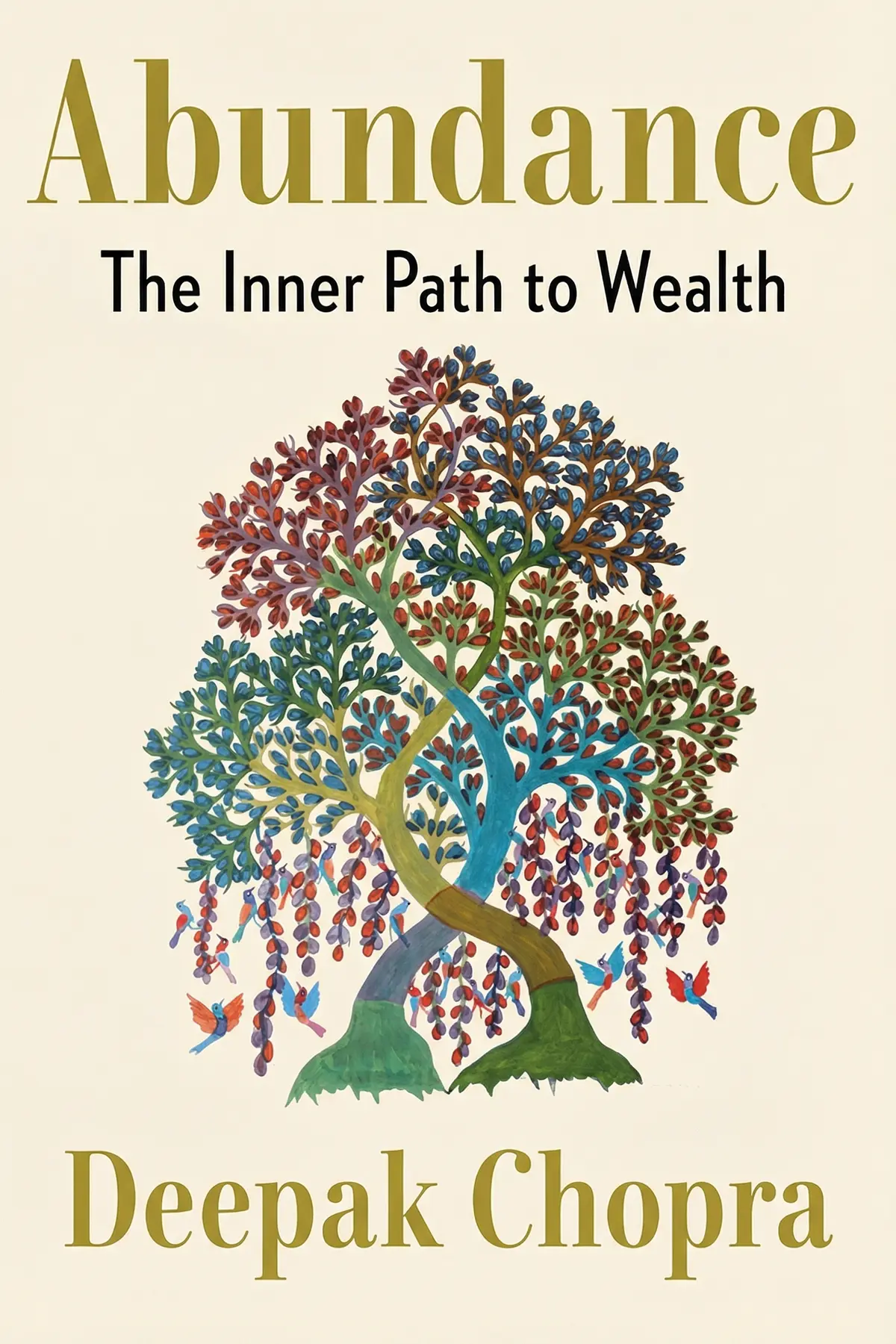
Abundance: The Inner Path to Wealth
Deepak Chopra
A research-based guide to achieving peak performance by prioritizing mental well-being over constant stress, proving that happiness is the ultimate driver of professional success rather than a distant reward for it.
1 min 49 sec
Have you ever found yourself thinking, “I’ll finally be happy once I get that promotion,” or “I’ll relax as soon as this big project is over”? Most of us live our lives according to a specific blueprint for success—one that suggests we must work ourselves to the bone, sacrifice our well-being, and endure constant stress today in exchange for a successful and happy tomorrow. We treat happiness like a finish line we might eventually cross if we just run fast enough. But what if we’ve had it backward the entire time?
In the following pages, we’re going to explore the core philosophy behind The Happiness Track. The central premise is both revolutionary and deeply intuitive: happiness isn’t the end goal of success; it’s actually the fuel that drives it. When we postpone our well-being, we aren’t just making ourselves miserable—we’re actually sabotaging our cognitive abilities, our creativity, and our health.
Throughout this summary, we will look at how the mind and body interact to create either a cycle of burnout or a spiral of thriving. We’ll examine why the modern obsession with multitasking is a productivity killer and how a simple shift in focus can change your entire workday. We will also dive into the physiological reality of stress, learning how to distinguish between the short bursts that help us perform and the chronic pressure that wears us down.
This isn’t just a book about feeling good; it’s a manual for applying hard science to your daily routine. From the way you breathe to the way you talk to yourself in moments of failure, every small habit plays a role in your overall trajectory. By the end of this journey, you’ll understand that the secret to achieving more isn’t to work harder or stress more—it’s to cultivate a state of mind that allows you to be your most resilient, creative, and connected self. Let’s get started on the path to discovering why being happy is the most productive thing you can do.
2 min 59 sec
Discover why our constant obsession with future goals actually hinders our current performance and how training the mind to stay present can unlock hidden levels of productivity.
2 min 47 sec
Learn the vital difference between the short-term adrenaline that boosts performance and the chronic stress that destroys health, and why we should look to nature to find a better balance.
2 min 35 sec
When your thoughts are racing, you can’t always think your way to calm, but you can use your physiology to signal your brain that it’s time to relax.
2 min 28 sec
Explore specific physical habits, from alternate nostril breathing to nature walks, that help rewire your nervous system for lasting calm.
2 min 24 sec
Burnout isn’t just about working too many hours; it’s about the emotional and mental drain caused by how we process our daily lives.
2 min 38 sec
While it may feel counter-productive, doing absolutely nothing is often the key to unlocking your most creative and innovative ideas.
2 min 09 sec
Our brains are hard-wired to focus on the negative, but learning to treat ourselves with the same kindness we show others is a secret weapon for success.
2 min 19 sec
Shifting your focus from what you lack to what you already have can improve everything from your sleep quality to your professional relationships.
2 min 23 sec
Contrary to the ‘survival of the fittest’ mentality, being kind and outward-focused is actually a more effective path to longevity and profit.
1 min 56 sec
As we reach the end of our exploration into the science of happiness and success, the central theme remains clear: the traditional path of ‘success through suffering’ is a dead end. We have seen how our obsession with the future, our misuse of stress, and our harsh self-criticism act as anchors, slowing us down and draining our vitality. But we have also discovered the tools to cut those anchors loose.
By learning to remain present, we unlock a level of focus and enjoyment that makes even the most difficult tasks more manageable. By using our breath and our bodies to manage our nervous systems, we gain the ability to stay calm in the eye of the storm. By embracing idleness, we give our creativity the space it needs to flourish. And by choosing self-compassion and gratitude over self-criticism and lack, we build an internal foundation that is truly unshakable.
The most important takeaway is that happiness is not a luxury; it is a prerequisite for your best work. When you prioritize your well-being, you aren’t being selfish—you are becoming a more capable, resilient, and effective version of yourself. This shift in perspective allows you to move from a life of constant, exhausting effort to a life of sustainable, joyful achievement.
As you move forward, try to implement one small change from today. Perhaps it’s taking five minutes for alternate nostril breathing before a big meeting, or deciding to be a bit more patient with yourself when you make a mistake. Notice how these small acts of self-care ripple out into your work and your relationships. Remember that the journey is just as important as the destination. By staying on the happiness track, you ensure that when you finally reach your goals, you’ll actually have the health and the joy to enjoy them. Success is wonderful, but success with happiness is the ultimate achievement.
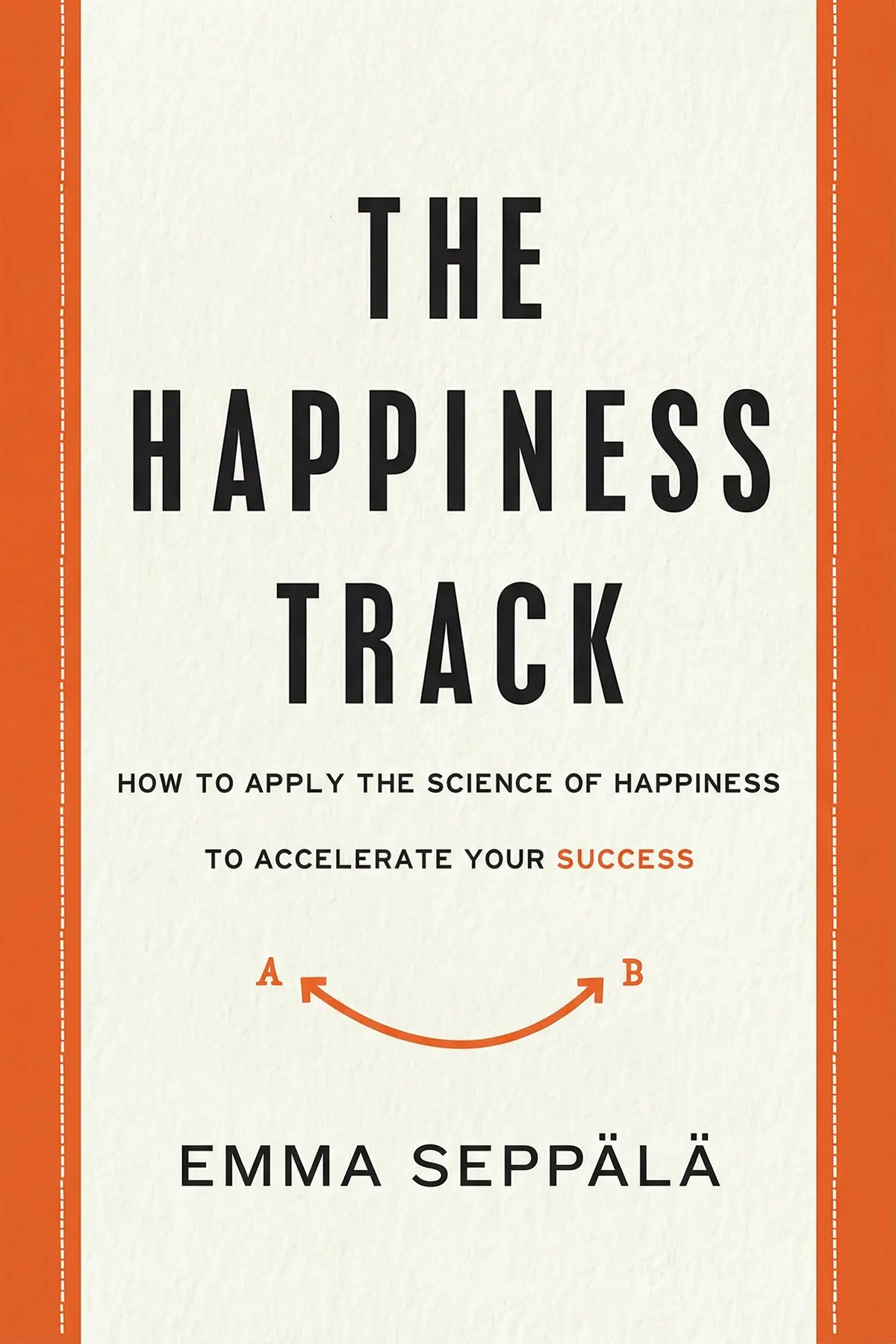
The Happiness Track challenges the pervasive cultural myth that extreme stress, exhaustion, and self-sacrifice are the necessary prices of success. Drawing on extensive psychological research, Emma Seppälä demonstrates that this 'success at all costs' mindset actually hampers productivity, stifles creativity, and leads to rapid burnout. Instead, she argues that cultivating happiness and emotional resilience is the most effective way to accelerate one’s career and personal growth. The book provides a roadmap for shifting from a state of constant 'doing' to a state of mindful 'being.' It explores practical techniques for staying present, managing the body’s stress response through breathing, and harnessing the power of self-compassion. By moving away from the negativity bias and embracing a life of gratitude and connection, readers are promised a more sustainable and fulfilling path to achievement. It is an essential guide for anyone looking to increase their impact while maintaining their health and joy.
Emma Seppälä serves as the science director for the Center for Compassion and Altruism Research and Education at Stanford University. She is a leading expert in the science of happiness, frequently sharing her research and insights through publications like the Harvard Business Review and Psychology Today. The Happiness Track represents her first major book on these topics.
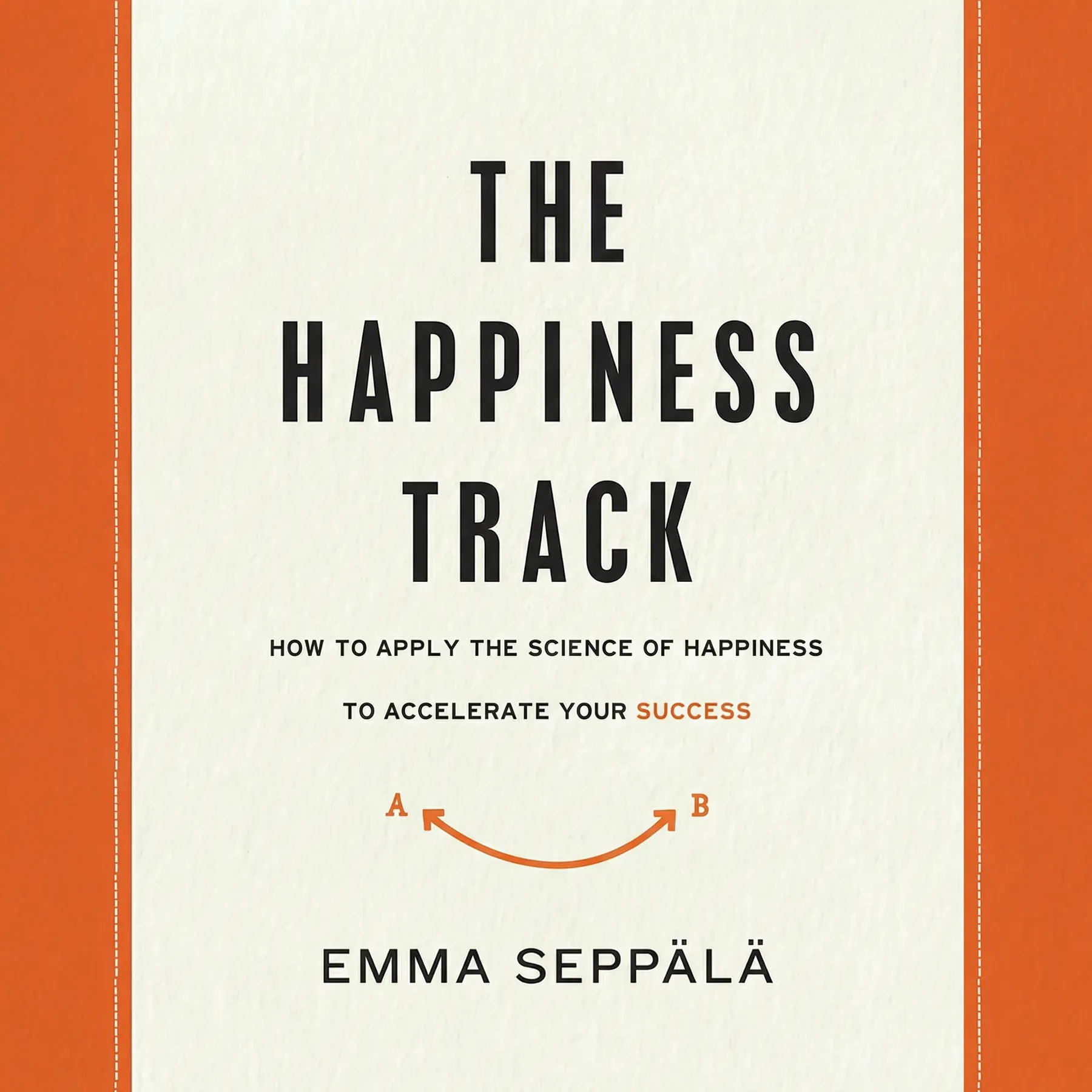
Listeners find this work to be thoroughly researched and scientifically supported, providing actionable guidance that promotes a more prosperous lifestyle. It offers valuable perspectives on achieving joy, and one listener specifically mentioned its beneficial effect on their general health. Listeners also praise the high caliber of writing, noting that the content is both accessible and easy to implement.
Emma Seppälä has crafted a remarkably grounded manual for navigating the burnout-prone landscape of today’s professional world. Instead of the usual fluff you find in the self-help aisle, this book relies heavily on psychological research to prove that happiness is actually a precursor to success. I especially appreciated her breakdown of the six myths that keep us stressed, particularly the idea that we must always be looking for what comes next. The writing is clear and engaging, making complex neurological concepts easy to digest and apply to a daily routine. Frankly, the practical exercises on mindfulness and building resilience have already started shifting my perspective on what it means to be productive. It is a must-read for anyone who thinks they have to sacrifice their mental health to get ahead in life. Truly an impactful piece of work that stays with you long after the final page.
Show moreWhat a refreshing change of pace from the hustle harder mentality that dominates the business section of most bookstores today! This book provides a beautiful argument for why being kinder to ourselves and others actually leads to better performance and more innovation. I loved the section on how idle time is when our best ideas actually surface, as it gave me permission to step away from my screen. The writing style is warm and encouraging, which makes the scientific data feel much more personal and less like a clinical report. It is rare to find a book that manages to be both emotionally resonant and intellectually stimulating at the same time. Since finishing it, I have been practicing the specific breathing techniques she suggests, and the difference in my stress levels is noticeable. This is definitely a book I will be gifting to all my colleagues who are struggling with their workloads.
Show morePicked this up after hitting a wall at work where the old habit of powering through just wasn't yielding results anymore. Seppälä does a fantastic job dismantling the cultural myth that we have to be constantly stressed to be successful. The advice about finding stillness and allowing your mind to wander felt incredibly validating for someone who usually feels guilty for taking a short lunch break. While some of the concepts—like the specific breathing techniques—felt a bit like common sense, seeing the actual data from her work at Stanford gave it the weight I needed. It is written in a very accessible way, so you do not need a PhD to appreciate the psychological insights. I did find a few sections a bit repetitive, yet the core message about self-compassion is absolutely worth the read. It is a solid, practical guide for anyone caught in the high-intensity trap of modern corporate culture.
Show moreFinally got around to reading this after seeing it recommended as a top pick for New Year’s resolutions, and I am quite glad I did. The central thesis—that we should stop equating high-intensity stress with success—is something our modern society desperately needs to hear more often. Seppälä uses her background in research to show how chilling out can actually make you more creative and productive in the long run. My favorite part was the discussion on how to foster a culture of compassion in the workplace, which is so often overlooked. Some of the anecdotes felt a little bit like standard self-help tropes, but the overall message is supported by enough science to make it credible. It is a quick, easy read that offers several gold nuggets for anyone looking to improve their quality of life. I would recommend it to anyone feeling stuck in a rut of constant overachievement.
Show moreAs a project manager constantly dealing with tight deadlines, I found the advice on avoiding over-focus to be surprisingly practical for my daily life. We are often taught that success comes from focusing solely on our professional field, but Seppälä argues that diverse interests actually fuel brilliance. The idea of screwing around at work to boost innovation is a tough sell for some bosses, yet the data she presents makes a case. I found the writing clear and the six myths framework helped me identify exactly where my own attitudes toward work were holding me back. There were moments where the be happy sentiment felt a little simplistic given the complexities of real-world stress and systemic issues. However, the actionable tips on staying level-headed during high-pressure situations are genuinely helpful and easy to implement immediately. This book offers a much more sustainable way of looking at a career.
Show moreLook, we all know that being stressed is bad for us, but this book actually explains the why and how to fix it. The author highlights how our cultural obsession with achievement often stands in the way of our actual success, which was a huge eye-opener. I really enjoyed the sections on empathy and how treating colleagues with kindness leads to better loyalty and overall team results. It is a very Western perspective on success, which might not resonate with everyone, but for someone in a corporate environment, it is spot on. The book is well-researched and grounded in science, providing a roadmap for a more sustainable way of living and working. It is an easy read that does not demand too much from the reader while still offering significant value for your time. I feel much more equipped to handle my daily stressors after finishing these chapters.
Show moreAfter hearing about the author’s work at the Stanford Center for Compassion, I had high expectations for this book, and it mostly delivered. It is a comprehensive look at how to maximize happiness through lifestyle changes that are actually backed by statistics rather than just wishful thinking. The suggestions to do things unrelated to your job—like salsa dancing or building with LEGOs—to spark creativity were both fun and insightful. I did feel like some of the research citations were a bit selective to fit the narrative, but the general advice remains sound. The book is easy to understand and the steps are doable, which is the most important thing for a self-help title. It provides great insights into happiness that have definitely had a positive impact on my overall well-being this month. If you want to feel more balanced, this is a great place to start your journey.
Show moreI’ve read a lot of positive psychology books over the last few years, so much of this felt like a retread of very familiar territory. The book covers essential topics like kindness, breathing, and the importance of taking breaks, which are undeniably important for leading a good life. However, if you are already familiar with the work of people like Carol Dweck, you probably won’t find many revolutionary moments here. The tone is quite pleasant, and the author's credentials at Stanford are certainly impressive, but the content often borders on being a bit too obvious. To be fair, it is a great introductory text for someone new to the genre who needs a nudge to stop being so hard on themselves. For me, it was just a bit too simple and lacked the unique spark I was hoping for based on the high praise. It is a nice overview, but perhaps not essential if you already follow this field.
Show moreThe chapter on breathing was probably the most useful part of the book for me, though the rest of the chapters felt a bit hit-or-miss. While I appreciate the scientific approach, the prose can be quite dry at times, almost feeling like a series of compiled research papers. It makes several very simple points over a large number of pages, which can feel a bit tedious if you are looking for fast-paced insights. That said, the emphasis on self-forgiveness and moving away from a power through mindset is a vital message for today's over-stressed workforce. It is a decent overview of positive psychology, even if it doesn't offer much that is truly groundbreaking for the average reader. It serves as a good reminder to slow down, but it is probably not a book I would feel the need to read twice. It is fine for a one-time browse on a long flight.
Show moreHonestly, I struggled to get through this one because the amount of filler was just completely overwhelming for a book with such a simple premise. The author spends dozens of pages explaining concepts that could easily be summarized in a short blog post or a single infographic. I also noticed some inconsistencies in the research cited, where different studies seemed to contradict each other without any real reconciliation from the author. One whole chapter is dedicated to breathing, and another to just slowing down, which felt like a waste of time for an experienced reader. It is not that the advice is bad—being kind to yourself is great—but the delivery is dry and incredibly repetitive. If you value your time, you might be better off just reading a summary of the key points online instead of buying the full volume. This was a disappointing experience given the hype surrounding the title.
Show moreDeepak Chopra
Alcoholics Anonymous World Services
Steven C. Hayes

Richard Wiseman
AUDIO SUMMARY AVAILABLE
Get the key ideas from The Happiness Track by Emma Seppälä, plus 5,000+ more titles in English and Thai.







