
16 min 18 sec
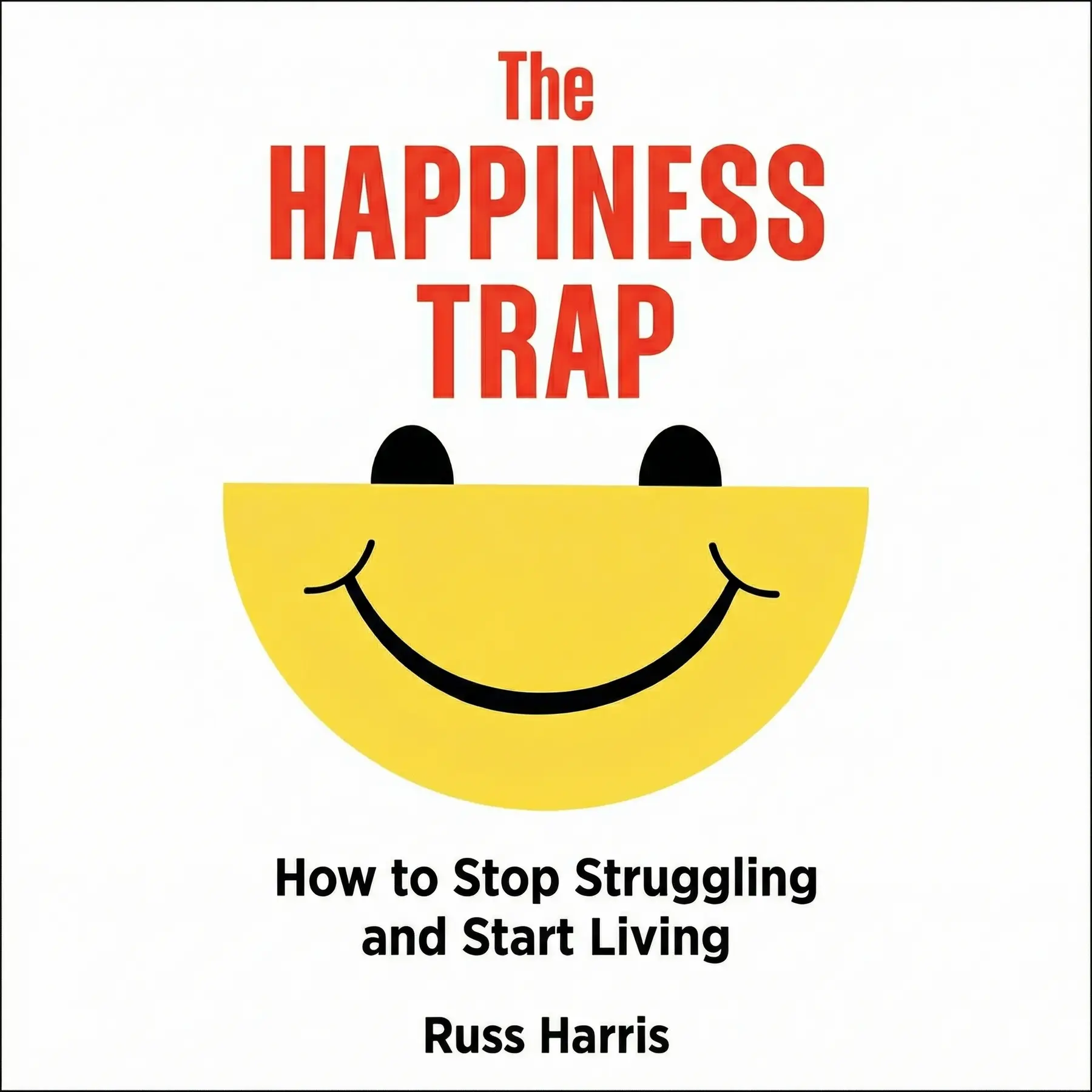
The Happiness Trap: How to Stop Struggling and Start Living
By Russ Harris
Discover how to break free from the cycle of chasing constant happiness. This summary explores Acceptance and Commitment Therapy techniques to help you embrace life's challenges and build a rich, meaningful existence.
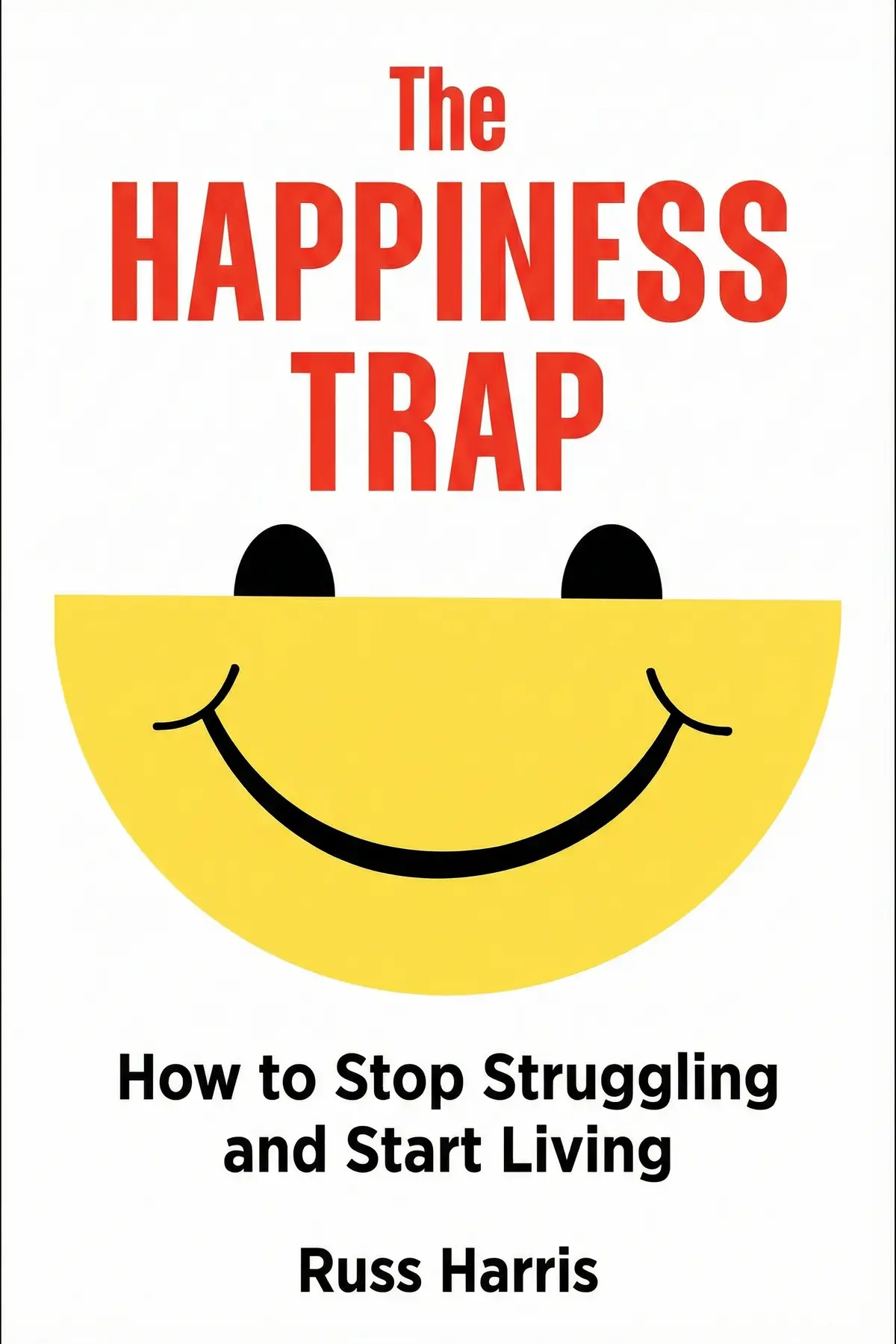
Table of Content
1. Introduction
2 min 18 sec
Think about the stories we grew up with, the movies we watch, and the television shows that capture our attention. There is a persistent theme that runs through almost all of them: the happy ending. Whether it’s a fairy tale like Cinderella finding her prince, a modern epic where a hero like Harry Potter defeats a dark villain, or a sitcom where the main characters finally settle into a perfect relationship, we are constantly fed the narrative that happiness is the ultimate destination. We are taught that once we solve our problems, we will reach a state of permanent bliss.
But here is the uncomfortable truth: life rarely follows that script. In the real world, problems don’t just vanish, and the feeling of happiness isn’t a permanent finish line. When we expect life to be nothing but sunshine and smiles, we inadvertently set ourselves up for a specific kind of suffering. This is what we call the happiness trap. It is a psychological loop where we try so hard to avoid or eliminate unpleasant thoughts and feelings that we actually end up more miserable than when we started.
Consider the way many of us handle stress or insecurity. If someone feels poorly about their physical health or weight, they might reach for comfort food, like a box of chocolates, to get a temporary hit of joy. For a few minutes, it works. But soon, the guilt creeps in. The negative thoughts return, often louder than before, making the person feel even worse. This leads to a cycle of seeking more temporary comfort, creating a never-ending loop of avoidance.
This BookBits summary explores a different path through Acceptance and Commitment Therapy, or ACT. Developed by Steven Hayes and popularized by practitioners like Russ Harris, ACT is a scientifically backed approach that has helped people dealing with everything from daily work stress to severe mental health challenges. The goal here isn’t to find some fleeting, temporary sense of pleasure. Instead, the goal is to learn how to handle life’s inevitable difficulties effectively, so you can build a life that actually means something. Over the next few sections, we will walk through the six core principles that can help you escape the trap and start living with true purpose.
2. The Duality of Self
2 min 06 sec
Explore the internal divide between the part of you that generates endless thoughts and the part that simply notices them.
3. The Art of Defusion
2 min 18 sec
Learn how to treat your intrusive thoughts as mere words rather than absolute truths that dictate your reality.
4. Expanding to Create Space
2 min 12 sec
Discover how to stop fighting your uncomfortable feelings and instead give them the room they need to exist.
5. Anchoring in the Present
1 min 48 sec
Find out why your mind constantly wanders to the past or future and how to pull it back to the here and now.
6. Defining Your Inner Compass
1 min 49 sec
Uncover the difference between goals and values to ensure you’re heading in a direction that truly matters.
7. Taking Committed Action
1 min 54 sec
Translate your values into a concrete plan and learn why persistence is the key to a meaningful journey.
8. Conclusion
1 min 53 sec
As we reach the end of this journey, let’s take a moment to reflect on the shift we’ve explored. The happiness trap is built on the false promise that we can—and should—eliminate all pain to be happy. We’ve seen how this struggle only leads to more suffering. But by embracing the six principles of Acceptance and Commitment Therapy, we find a much more sustainable way to live.
We started by discovering the observing self, that quiet witness within us that can watch our mental chatter without getting swept away. We learned how to defuse our thoughts, treating them as mere words rather than frightening truths. We explored how to expand and make room for our feelings, stopping the internal war against our own bodies. We looked at how to anchor ourselves in the present moment to truly experience our lives. We identified our values as a permanent compass and committed ourselves to taking action, regardless of the obstacles in our way.
Now, the real work begins. These principles aren’t just ideas to be understood; they are skills to be practiced. They are like muscles that get stronger the more you use them. The next time you feel a wave of stress, or a thought tells you that you aren’t good enough, don’t try to fight it or hide from it. Just notice it. Name it. Breathe into it. And then, ask yourself: ‘What is one small thing I can do right now that aligns with my values?’
Life won’t always be easy, and it won’t always be happy. But it can always be meaningful. By stepping out of the trap and into your values, you are choosing to stop struggling and start truly living. You have the tools to navigate the storms and the sunshine alike. The rich, full life you’ve been looking for doesn’t start when your problems are gone; it starts the moment you decide to engage with life exactly as it is.
About this book
What is this book about?
The Happiness Trap explores a counterintuitive reality: our relentless pursuit of feeling happy is exactly what makes us miserable. Drawing on the principles of Acceptance and Commitment Therapy, or ACT, the book challenges the cultural myth that we should always feel positive. Instead, it suggests that suffering and difficult emotions are inevitable parts of the human experience. The promise of this work is not to eliminate pain, but to change your relationship with it. By teaching you how to step back from your thoughts, make room for your feelings, and focus on your core values, the guide provides a roadmap for living a life of purpose. It moves away from the 'feel-good' temporary fixes of traditional self-help and toward a sustainable way of being. Readers learn how to stop the internal battle against anxiety and sadness, allowing those feelings to exist without letting them take the driver's seat. Ultimately, it is a guide for anyone looking to stop surviving their emotions and start thriving in alignment with what truly matters to them.
Book Information
About the Author
Russ Harris
Russ Harris is a medical doctor and therapist. He received specialized training directly from the creators of the Acceptance and Commitment Therapy framework. Today, he focuses on education by managing online training programs designed to help other healthcare professionals master and apply this specific therapeutic model in their own practices.
Ratings & Reviews
Ratings at a glance
What people think
Listeners find this work deeply beneficial, as it offers a wealth of hands-on guidance and effective drills. Furthermore, it delivers genuine wisdom for navigating life and presents useful methods for handling depression and anxiety. Listeners also value the fresh outlook on feelings it provides, which helps them become more aware of their mental processes, and they find the content simple to follow. The prose is highly approachable, and listeners appreciate that it functions as an excellent starting point for learning ACT principles.
Top reviews
Noppadol
Finally got around to reading this after hearing so much about it from friends. It’s a total game-changer for anyone stuck in that exhausting cycle of trying to 'fix' their messy internal feelings. Harris lays out the principles of Acceptance and Commitment Therapy in a way that feels doable, even when you're completely overwhelmed by life. I loved the section on values because it shifted my focus from just surviving the day to actually doing things that matter. While some parts felt a bit repetitive, the core message remains absolutely vital for modern living. It teaches you that you don’t have to get rid of the 'bad' stuff to have a rich, meaningful life. If you’re tired of the toxic positivity usually found in this genre, this is definitely the book for you.
Show moreCharlotte
This book completely reframed how I view my anxiety and my general mental state. I used to spend so much energy trying to push away 'bad' thoughts, only for them to return even stronger than before. Harris explains why that struggle is actually the trap itself and offers a way out that doesn't involve constant fighting. The exercises on 'Expansion' helped me make space for difficult emotions without letting them drown me in the process. I’m now focusing more on my values rather than just chasing a fleeting, impossible feeling of constant happiness. It’s not a magic cure, and you have to actually do the work for it to stick. For me, it was the exact perspective shift I needed to start living again.
Show morePrinya
Truth is, I was skeptical about another self-help book after being burned by so many others in the past. Most of them just tell you to think positive, which we all know doesn't work for very long. This is different because it focuses on committed action and acceptance rather than just changing your mindset. I started using the breathing techniques immediately, and they’ve helped me stay grounded during stressful work meetings. It's a quick read, but you'll want to take your time with the actual exercises to get the benefit. I don't agree with every single point he makes, but the overall framework is incredibly sturdy. Definitely worth a spot on your shelf for the long term.
Show moreYothaka
Picked this up on a whim after a recommendation from my therapist. It’s a fantastic resource for anyone struggling with the 'happiness trap' of modern life. We are taught that we should be happy all the time, and this book gives us permission to be human instead. The focus on committed action is what sets this apart from other mindfulness guides because it moves beyond passive observation into meaningful lifestyle changes. It’s not just about sitting still; it’s about moving toward what you truly value in your heart. I found the writing style to be very engaging and easy to digest over a single weekend. It's a life-changing perspective that I think everyone could benefit from reading at least once.
Show moreTeng
As someone who has spent years in CBT therapy, I found this approach refreshing. Instead of constantly arguing with my negative thoughts, which often feels like fighting a losing battle against my own brain, ACT taught me to just let them be. The 'demons on the boat' metaphor was particularly sticky for me and helps significantly when I feel myself starting to spiral. Harris manages to break down complex psychological principles into bite-sized, actionable steps that anyone can follow. My only real gripe is the constant use of exclamation marks and a somewhat shouting tone. It can feel like he’s trying too hard to be your personal cheerleader. Still, the strategies for sitting with discomfort have made a noticeable difference in my daily anxiety levels.
Show moreDarawan
Ever wonder why trying to be happy all the time actually makes you feel worse? This book tackles that head-on by dismantling four major myths about our emotional lives that keep us stuck. Harris argues persuasively that we aren't defective just because we feel pain, sadness, or fear. I found the distinction between the 'thinking mind' and the 'observing mind' to be the most useful takeaway from the text. It’s a very practical guide with worksheets that actually make sense in the context of a busy, real-world life. Though some of the metaphors are admittedly a bit goofy, they serve their purpose well enough. It’s a solid introduction to psychological flexibility for anyone feeling trapped in a rut.
Show moreTar
Harris writes in a way that is incredibly accessible, which is likely why this book has become such a staple. He takes the heavy lifting of clinical psychology and makes it feel like a simple, direct conversation. The 80th birthday exercise was a standout for me, forcing me to look at the big picture of my life. It’s a great primer for anyone curious about mindfulness but who doesn't want the spiritual fluff often attached to it. Sometimes the writing feels a little oversimplified for my taste, but that makes it easier to implement during a crisis. If you want a clear roadmap to a more meaningful existence, this is a fantastic starting point. It’s practical, grounded, and actually useful.
Show moreKevin
Look, the metaphors can be a bit cheesy at times, but they really do help the concepts stick in your head. I caught myself several times this week noticing a 'radio' playing in the back of my mind. Realizing that I don't have to listen to every single thought has been a massive relief for my mental health. The book is well-structured, moving from theory into very specific, manageable techniques that you can use anywhere. I do think he could have acknowledged the Buddhist roots of mindfulness more explicitly though. It feels a bit like cultural appropriation without the proper credit given to those ancient traditions. Despite that, the clinical application is solid and has helped me navigate some tough personal decisions.
Show moreSayan
The core concepts are solid, but I struggled with the presentation. It’s essentially a Westernized, secular version of Buddhist mindfulness, yet Harris doesn’t give much credit to those ancient roots at all. Frankly, I found the tone a bit patronizing at times, almost like he was explaining basic biology to a toddler. However, the defusion techniques—looking at thoughts as just words and pictures—are genuinely helpful in a pinch. It provides a decent alternative to standard talk therapy if you’re looking for action-oriented tools. I just wish the author showed a bit more empathy for people dealing with deep, complex trauma. It is fine for daily stress, but the writing feels too simple for the big stuff.
Show morePatcharaporn
I really wanted to like this, but the delivery was a major turn-off for me. To be fair, the ACT principles themselves are scientifically backed and quite interesting from a clinical perspective. However, the author’s voice frequently felt like an impatient parent lecturing a child. He makes huge assumptions about the reader's thought processes that didn't always land for me or my specific situation. For someone dealing with severe trauma, telling them to just 'make space' for their pain feels incredibly naive and potentially harmful. It might work for minor daily annoyances, but it lacks the depth required for deep-seated emotional wounds. I’ll stick to the core theories but find a much better source for them elsewhere.
Show more
Readers also enjoyed
A Liberated Mind: How to Pivot Toward What Matters
Steven C. Hayes
59 Seconds: Change Your Life in Under a Minute
Richard Wiseman
ADHD an A-Z: Figuring It Out Step by Step
Leanne Maskell
AUDIO SUMMARY AVAILABLE
Listen to The Happiness Trap in 15 minutes
Get the key ideas from The Happiness Trap by Russ Harris, plus 5,000+ more titles in English and Thai.
- 5,000+ titles
- Listen as much as you want
- 7-day free trial
- Cancel anytime







