
20 min 43 sec
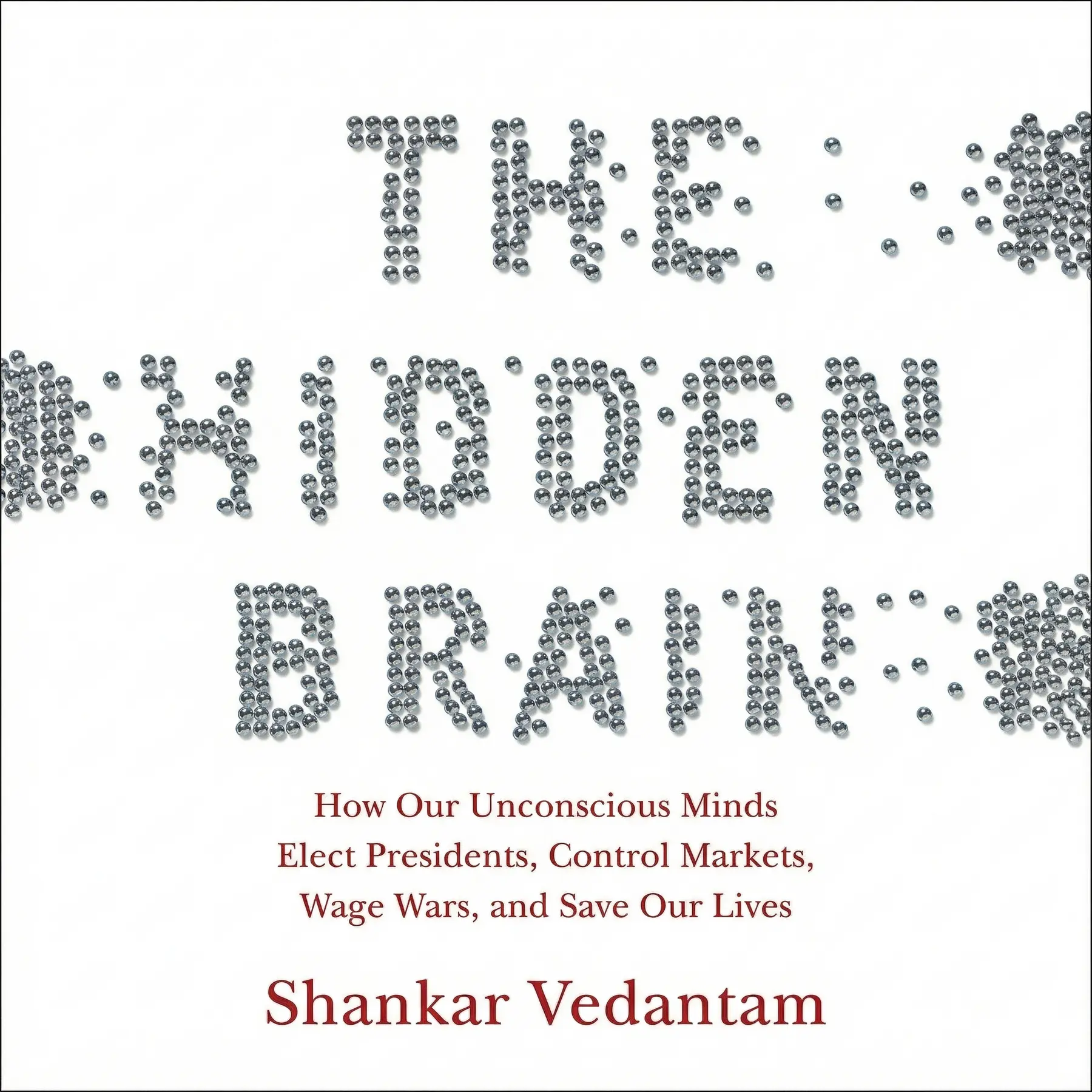
The Hidden Brain: How Our Unconscious Minds Elect Presidents, Control Markets, Wage Wars, and Save Our Lives
Explore the fascinating world of the unconscious mind. Discover how invisible biases influence everything from our social interactions and career paths to political elections and life-or-death decisions in times of crisis.
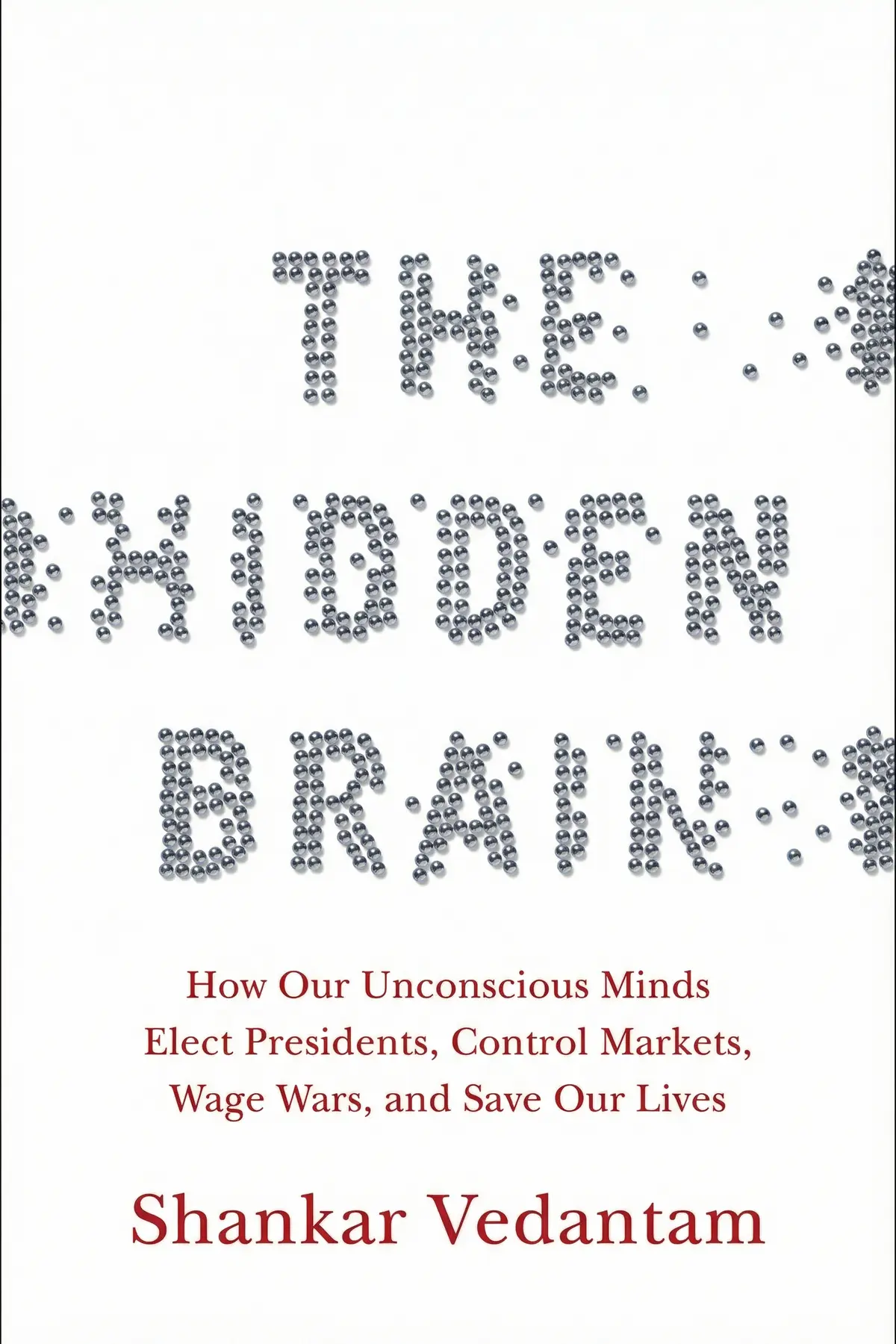
Table of Content
1. Introduction
2 min 07 sec
Think for a moment about the last major decision you made. Perhaps it was a career move, a political choice, or even something as simple as how much to tip a server at a restaurant. You likely feel that you weighed the facts, considered your values, and arrived at a logical conclusion. This is the story we tell ourselves: that we are the conscious drivers of our own lives, steering our behavior with intention and awareness. But what if that feeling of control is largely an illusion?
Science suggests that for much of our lives, we are actually operating on autopilot. Beneath the surface of our awareness, a complex web of cognitive machinery is constantly processing information, making judgments, and prompting actions without us ever realizing it. This is what we call the hidden brain. It is an ancient, efficient system designed to help us navigate a complex world quickly. It helps us recognize faces, sense danger, and follow social cues. In many ways, it is the secret to our survival as a species.
However, this efficiency comes with a significant trade-off. The same mechanisms that allow us to make split-second decisions also bake in errors and biases that we would never consciously endorse. These invisible forces influence our memories, distort our perceptions of others, and lead us toward judgments that can be unfair or even dangerous. In the following discussion, we are going to dive deep into the mechanics of this unconscious mind.
We will explore how something as small as an image on a wall can change our level of honesty, and why we might be more influenced by a person’s appearance than their character. We’ll look at the roots of racial and gender bias, seeing how they take hold even in the minds of the most well-meaning individuals and children. Most importantly, we will see how these hidden forces scale up to affect our entire society—from the way we elect our leaders to the way justice is administered in our courts. By understanding the hidden brain, we can begin to see the world as it truly is, rather than how our unconscious minds want us to see it.
2. The Invisible Mechanics of Everyday Life
2 min 18 sec
Discover how subtle, overlooked cues in our environment can drastically alter our behavior, from how much money we donate to how we tip our servers.
3. When the Social Compass Breaks
2 min 12 sec
What happens when the parts of our brain that regulate social behavior fail? The answers lie in the behavior of those with specific neurological conditions.
4. The Silent Curriculum of Childhood
2 min 03 sec
Even in households where tolerance is preached, children often develop deep racial biases. Learn how the world around them shapes their earliest views.
5. The Unseen Voter in the Booth
1 min 57 sec
Politics is often seen as a battle of ideas, but it may actually be a battle of unconscious associations that favor certain groups and identities.
6. Blind Justice and the Weight of Appearance
2 min 02 sec
The legal system is built on the ideal of impartiality, but studies show that the physical features of a defendant can literally be a matter of life and death.
7. Swimming Against the Unseen Current
2 min 03 sec
Gender bias in the workplace is often invisible to those it helps, but for those it hinders, it’s an exhausting struggle against a powerful tide.
8. The Dangerous Comfort of the Crowd
2 min 10 sec
In moments of extreme danger, our instinct to follow the group can either save us or lead us to disaster. Explore the psychology of the 9/11 evacuation.
9. The Social Gravity of Extremism
2 min 10 sec
Terrorism is often blamed on religious zealotry, but the underlying drive may be a much more common human need: the search for belonging and identity.
10. Conclusion
1 min 41 sec
As we have seen, the hidden brain is a powerful and often invisible architect of our lives. It is the silent partner in every conversation, the ghost in the voting booth, and the unconscious hand that steers our social institutions. From the way we tip our servers to the way we sentence defendants in our courts, these hidden mechanisms are constantly at work, often in direct opposition to the values we claim to hold dear. The primary takeaway here isn’t that we are helpless victims of our own biology, but rather that awareness is our only defense.
By acknowledging that we are prone to bias, we can begin to design systems that minimize its impact. We can implement blind recruitment processes to combat gender bias, we can explicitly teach our children about racial diversity to counter the patterns they see in media, and we can train ourselves to recognize the dangers of group conformity in times of crisis. We must move away from the myth of the perfectly rational actor and embrace the reality of our complex, imperfect cognitive machinery.
The hidden brain is not something to be feared; it is something to be understood. It is what allows us to love, to connect, and to navigate the world with incredible speed. But like any powerful tool, it requires a measure of oversight. When we shine a light on these unconscious processes, they lose their power to control us in secret. We can never fully escape the hidden brain, but we can learn to work with it, building a world that is more just, more equitable, and more reflective of our highest intentions. The journey toward a better society begins with a single, difficult step: looking inward and acknowledging the forces we cannot see.
About this book
What is this book about?
Most people believe they are the conscious masters of their own lives, making logical decisions based on facts and intent. However, this exploration of the human mind reveals that a powerful, invisible force—the hidden brain—is often the one pulling the strings. This unconscious system is responsible for our survival and social navigation, but it also carries deep-seated biases that we rarely notice. By examining a wide range of social science research, real-world tragedies, and psychological experiments, we see how these hidden mechanisms affect how we view race, gender, and authority. The book promises to pull back the curtain on why we behave the way we do, even when our actions contradict our stated values. It offers a profound look at how these unconscious patterns shape the largest institutions in our society, including the criminal justice system and the political landscape. Ultimately, the goal is to provide readers with the awareness needed to recognize these silent influences and reclaim a measure of control over their own choices and their impact on the world.
Book Information
About the Author
Shankar Vedantam
Shankar Vedantam is an accomplished American journalist and author who serves as a social-science correspondent for NPR. Between 2006 and 2009, he explored the nuances of human psychology through his Washington Post column titled Department of Human Behavior. He is widely recognized for his popular podcast, Hidden Brain, which attracts over two million downloads every week. Additionally, his Hidden Brain radio program reaches audiences across approximately 250 public radio stations, making him a leading voice in the public communication of social science.
Ratings & Reviews
Ratings at a glance
What people think
Listeners find the work highly accessible and expertly written, enjoying its intriguing investigation into the mechanics of the subconscious through engaging case studies. Furthermore, they value the author's gift for narrative and clear presentation, with one listener remarking that it explains complex ideas in regular everyday language. The text also gains positive remarks for its insights into cognitive power, as one review emphasizes its explanation of decision-making processes. Conversely, the book's rhythm receives a range of reactions, with one listener describing the structure as poorly assembled.
Top reviews
Ryan
Ever wonder why we make such illogical choices in our daily lives? Vedantam’s exploration into the unconscious is nothing short of eye-opening for the average reader. He breaks down complex psychological concepts into everyday language that doesn’t require a PhD to grasp. I was particularly struck by the way he illustrates how our autopilot mode handles everything from social interactions to major life decisions. The storytelling is vivid, making the data feel alive rather than just a dry recitation of lab results. While some might find the narrative detours a bit long, I thought they added necessary color to the underlying science. It really makes you question your own objectivity and the 'rational' choices you think you're making every day.
Show morePatcharaporn
The chapter on gender bias alone is worth the price of admission. Hearing the accounts of professors who transitioned and experienced the world from both sides of the gender divide was a revelation. It perfectly illustrates how the hidden brain influences our respect and attention levels without us even realizing it. Vedantam has a gift for taking these abstract 'subroutines' of the mind and making them visible through sharp, engaging case studies. I’ve read 'Influence' and other psych books, but this felt more grounded in modern social reality. It’s an essential read for anyone who wants to understand why our society is so polarized and how we can start to fix it. Absolutely fascinating stuff.
Show morePornpimon
Wow. This book should be required reading for anyone in a leadership position. It provides such a clear window into the decision-making processes that we think are rational but are actually driven by ancient biases. The way Vedantam explains the collective hidden brain of societies helped me understand current events in a much clearer way. It’s not just about individual quirks; it’s about the bedrock of our political and economic institutions. The writing is top-notch and kept me engaged from start to finish. Not gonna lie, it’s a bit humbling to realize how little control we actually have over our own perceptions, but knowing is the first step toward change. Truly brilliant work.
Show morePear
In my experience, books on the unconscious mind are either too dry or too 'self-help.' The Hidden Brain hits that sweet spot right in the middle. It’s incredibly well-written and uses fascinating case studies to prove its points. I especially liked the analysis of how crowds behave in disasters; it’s the kind of information that could actually save your life one day. Vedantam’s background as a journalist shines through in his ability to tell a compelling story while still keeping the focus on the underlying research. It’s a fantastic look at the 'epidemiology' of human behavior. I highly recommend pairing this with Leonard Mlodinow’s Subliminal for a full picture of our internal workings.
Show moreVimolwan
Picked this up after hearing Shankar on NPR and it didn't disappoint. The way he frames our 'hidden brain' as a passenger that occasionally grabs the steering wheel is a perfect metaphor. I found the sections on racial bias and the 'terrorist mind' to be exceptionally well-handled and thought-provoking. He manages to explain why we fail to react to global tragedies while obsessing over individual stories without sounding judgmental. My only gripe is that it relies heavily on anecdotes rather than hard neuroscience, which I was hoping for more of. Still, as a work of popular psychology, it's very readable and manages to distill complex institutional issues into something personal. It definitely changed how I view my own snap judgments.
Show moreSun
As someone who usually sticks to fiction, I found this remarkably easy to get through. The author uses regular everyday language to explain why we do the weird things we do. It’s a deep dive into the 'autopilot' settings of the human mind, and it's both terrifying and enlightening. I loved the variety of case studies, ranging from 9/11 survivor stories to how we perceive puppies versus human suffering. Look, the pacing can be a bit slow in the middle when he dives deep into the 'terrorist mind' chapters, but the payoff is usually worth it. It’s a great book for starting conversations about implicit bias without being overly academic or preachy. Definitely worth a spot on your shelf.
Show moreKasemsan
After hearing so many people recommend this, I finally gave it a go. The core idea—that we have a secret mental life dictating our choices—is explored through some truly gripping real-world experiences. Vedantam is a master at synthesizing disparate research into a narrative that flows well. I appreciated the discussion on how our hidden brain can be destructive on a global scale, like with climate change. However, I have to agree with some critics that he occasionally ignores evidence that doesn't fit his narrative, particularly regarding some aspects of sexism research. Despite that, it's a solid 4-star read because it forces you to confront your own mental shortcuts. Very informative for anyone interested in decision-making processes.
Show moreOmar
Frankly, the book felt more like a collection of long-form magazine articles than a cohesive scientific thesis. While the premise is fascinating, the author often gets lost in his own anecdotes. There were moments where the stories, like the one about the puppy on the oil tanker, went on for pages and I actually forgot what psychological bias he was trying to illustrate. To be fair, Vedantam is a journalist, so the writing is smooth and accessible, but it lacks the scientific rigor I was expecting. If you’ve already taken a 101 course in social psychology, a lot of this material will feel like a recap of things you've heard elsewhere. It’s a decent entry point for beginners, though the pacing is definitely uneven and poorly assembled in spots.
Show moreCha
The content is interesting, but the presentation is a bit of a slog. I found myself skimming through the 50-page sections on disaster survival just to find the actual psychological takeaway. Every story seemed to be about 100 words too long with unnecessary details about lunch bags and car colors. To be fair, the research on how we value one life over millions (the puppy on the tanker example) was incredibly poignant. I just wish there was more 'brain' and less 'journalism' in the mix. It feels like it was written for people who have never read a psychology book before. If you're well-versed in the field, you might find it a bit repetitive and lacking in new revelations.
Show moreMaria
Not what I expected from a book about the brain. I was looking for deep neurological insights, but instead, I got a lot of fluff and South Philadelphia atmosphere. The author spends way too much time describing what people were wearing or what the weather was like before getting to the actual point. For instance, the story about Raymond Fiss felt like it belonged in a true crime novel rather than a science book. Truth is, the analysis feels average at best and many of his points are just common sense wrapped in flowery prose. It’s poorly assembled and feels like a series of disjointed anecdotes that don't always lead to a satisfying conclusion. Disappointing for those seeking depth.
Show moreReaders also enjoyed
A Liberated Mind: How to Pivot Toward What Matters
Steven C. Hayes

Acting with Power: Why We Are More Powerful Than We Believe
Deborah Gruenfeld
Age of Propaganda: The Everyday Use and Abuse of Persuasion
Anthony Pratkanis
AUDIO SUMMARY AVAILABLE
Listen to The Hidden Brain in 15 minutes
Get the key ideas from The Hidden Brain by Shankar Vedantam, plus 5,000+ more titles in English and Thai.
- 5,000+ titles
- Listen as much as you want
- 7-day free trial
- Cancel anytime







