
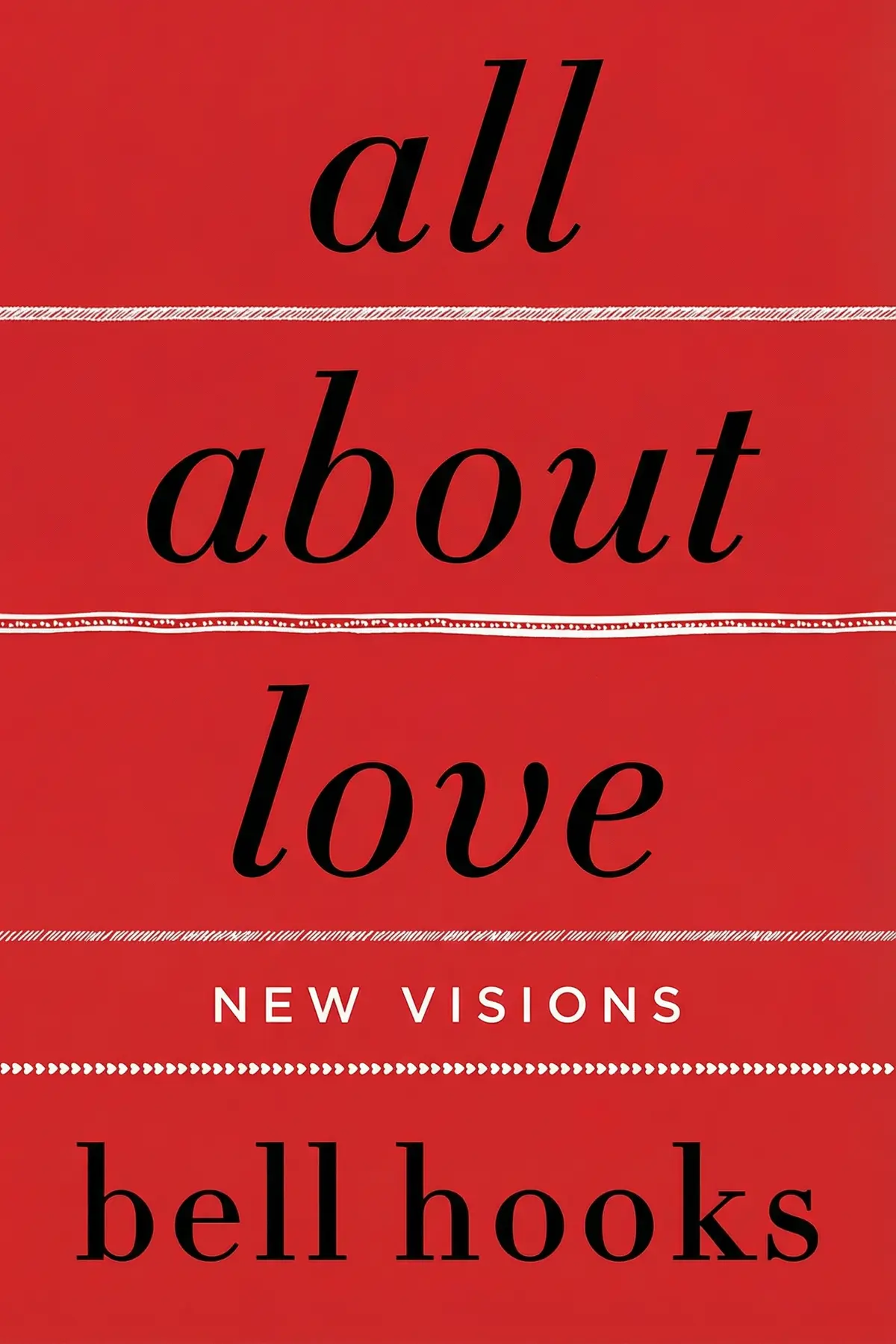
All About Love: New Visions
bell hooks
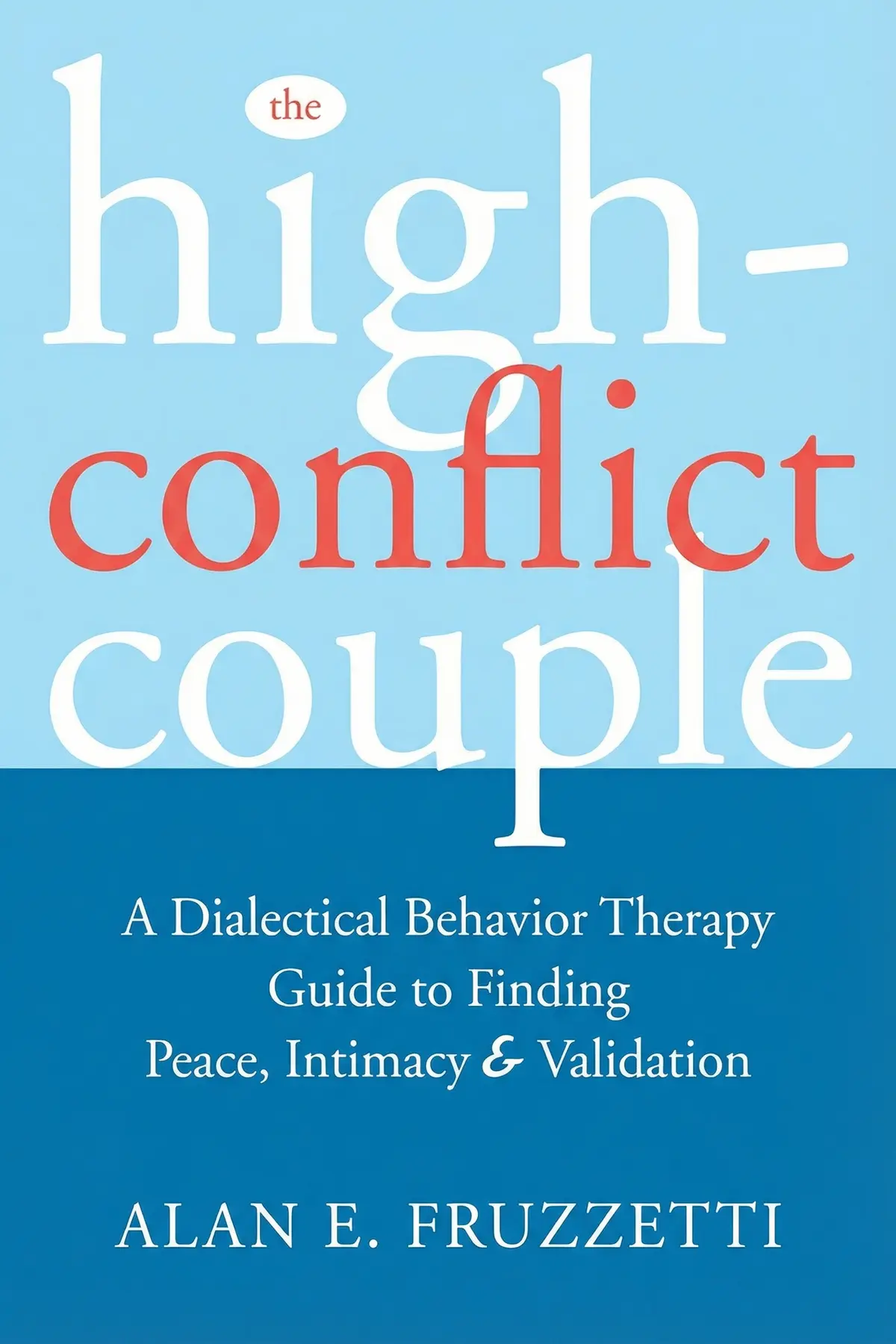
The High-Conflict Couple provides a practical roadmap for partners caught in cycles of intense emotion, offering Dialectical Behavior Therapy techniques to restore calm, improve communication, and build lasting intimacy.
1 min 40 sec
Every couple faces disagreements, but for some, conflict feels less like a hurdle and more like a recurring storm. In these high-conflict dynamics, even small misunderstandings can quickly escalate into intense, emotionally charged battles that leave both partners feeling exhausted, misunderstood, and distant. It can feel as though you are trapped in a cycle where the harder you try to explain yourself, the more the situation deteriorates. But there is a way to break this pattern.
Alan E. Fruzzetti offers a specialized approach rooted in Dialectical Behavior Therapy to help couples navigate these turbulent waters. The core idea is that relationship peace isn’t found by eliminating every difference of opinion, but by changing how we handle the emotions those differences trigger. When we learn to manage our own internal states, we become better equipped to connect with our partners rather than reacting against them.
Throughout this summary, we will explore the fundamental skills required to transform a high-conflict partnership into a supportive, validating sanctuary. We will look at why our brains sometimes sabotage our communication during stress and how mindfulness can act as a circuit breaker for escalating tempers. We will also delve into the difference between simply being in the same room and truly being together, and how the simple act of validation can act as a powerful lubricant for intimacy.
By the end, you will understand that the throughline of a healthy relationship is not the absence of problems, but the presence of emotional regulation and mutual acceptance. Whether you are currently in the midst of a difficult period or simply want to strengthen your bond, these insights provide a roadmap for moving from high conflict to high connection.
2 min 42 sec
Discover why your brain stops functioning logically when tempers flare and how to identify the subtle warning signs of emotional arousal before an argument spirals out of control.
2 min 35 sec
Proximity doesn’t always equal connection; learn how to shift from ‘passive time’ to ‘active togetherness’ to foster true emotional intimacy and reduce feelings of loneliness.
2 min 49 sec
Learn to stop the guessing games by communicating your needs clearly and choosing the right moments to speak, ensuring your message is heard rather than fought against.
2 min 46 sec
Validation is the secret to de-escalating tension; discover how acknowledging your partner’s perspective, even when you disagree, can build a bridge back to intimacy.
2 min 42 sec
Stop trying to ‘fix’ everything forever and learn to manage recurring issues with a team-based approach that identifies root causes and creates flexible solutions.
2 min 37 sec
Some things about your partner may never change; learn how radical acceptance and reframing annoying traits can eliminate suffering and lead to lasting peace.
1 min 33 sec
The journey from a high-conflict relationship to one characterized by peace and intimacy is not about achieving perfection. It is about building a set of skills that allow you to navigate the inevitable ups and downs of life together without losing your connection. As we have seen, the foundation of this change is emotional regulation. By staying mindful of your internal state and keeping your arousal within a manageable range, you prevent the ‘brain fog’ that turns disagreements into disasters.
We have explored how being actively present with one another can bridge the gap created by years of conflict, and how simple acts of direct communication and validation can act as powerful tools for reconciliation. We have also learned that many problems are better ‘managed’ as a team than ‘fixed’ in isolation, and that sometimes, the most profound act of love is simply accepting our partners exactly as they are.
As you move forward, remember that change takes time and practice. There will still be moments of frustration and days when your baseline is hard to find. But by consistently applying these principles—noticing your emotions, validating your partner’s reality, and choosing togetherness—you can break the cycle of high conflict. You have the power to transform your relationship from a source of stress into a source of strength, creating a shared life built on a foundation of mutual understanding, respect, and deep, lasting validation.
In this insightful guide, readers explore the dynamics of high-conflict relationships and learn why emotional reactivity often derails even the best intentions. The book promises to equip couples with the tools of Dialectical Behavior Therapy, or DBT, focusing on how to regulate individual emotional responses before they turn into joint explosions. Through a series of actionable strategies, the text explains how to cultivate mindfulness, master the art of validation, and move from a state of constant defensiveness to one of mutual support. By shifting the focus from blame to understanding, partners can learn to manage their differences and find peace, even when certain problems remain unsolved. It is a journey from chaotic arguments to a relationship built on acceptance and shared joy.
Alan E. Fruzzetti, PhD, is an associate professor of psychology and the director of the Dialectical Behavior Therapy and Research Program at the University of Nevada, Reno. He provides extensive training, supervision, and consultation for DBT treatment programs and research both in the United States and internationally. Dr. Fruzzetti is also the research director and a board member of the National Educational Alliance for Borderline Personality Disorder and a co-developer of the Family Connections Program.
Listeners find this book helpful as a functional resource for implementing DBT methods and value its approachable style, particularly for those reading alongside a partner. Additionally, the content successfully forestalls relationship friction and works for every kind of bond, with one listener emphasizing its utility for emotional regulation. The language is uncomplicated, and listeners feel it provides deep insight, with one remarking that it is backed by research and experience. However, there are varied opinions concerning the exercises' difficulty and overall effectiveness.
As someone who has spent years navigating the complexities of interpersonal relationships, I find Fruzzetti’s approach to be one of the most accessible adaptations of Dialectical Behavior Therapy available today. The book doesn't get bogged down in dense psychological jargon or endless theorizing about childhood trauma, which is a breath of fresh air. Instead, it jumps straight into actionable strategies like chain analysis to help you understand why your arguments spiral out of control so quickly. I appreciated how the author focuses on emotional regulation as a skill that can be practiced rather than a personality trait you're born with. To be fair, some of the exercises require a level of vulnerability that can be quite daunting if you’re already feeling defensive. However, if both partners are willing to commit to the process, the transformation in communication is nothing short of remarkable. It’s a grounded, research-backed guide that provides a clear roadmap for anyone feeling lost in a cycle of constant bickering.
Show moreIncredible. Fruzzetti manages to take complex clinical concepts and turn them into something you can actually use while standing in your kitchen during an argument. I’ve read a lot of self-help, but this is the first one that actually explained the 'why' behind my emotional triggers without making me feel like a broken person. The focus on reducing emotional arousal before trying to solve problems is a total game-changer for my husband and me. We used to try to talk through things while we were both seeing red, which obviously never worked and only led to more hurt feelings. Now, we have a shared language and a set of tools to help us cool down first. The text is simple and engaging, making it a very quick read for how much information it contains. I’ve already recommended this to several friends who are struggling with their own communication hurdles. It’s a must-read for any couple that feels like they’re constantly walking on eggshells.
Show moreFinally got around to reading this after hearing so much about the author's work with the Linehan Institute, and it exceeded my expectations. What I love most is that it doesn't rely on diagnosing one partner as the 'problem' or the 'person with the disorder.' It treats conflict as a systemic issue that both people contribute to, which makes it much easier to digest without feeling attacked. The skills are presented in such a straightforward way that you can start using them immediately after finishing the first few chapters. I’ve seen a lot of people criticize the focus on validation, but in my experience, most couples fail because they simply don't know how to make each other feel heard. This book provides a literal script for how to do that effectively without losing your own voice in the process. It’s a powerful tool for de-escalation that every couple should have in their arsenal. I'm honestly thinking about giving copies to everyone I know who's getting married soon.
Show moreFrankly, the title 'High-Conflict' might scare some people off, but these skills are universal for any two people trying to live together. I’ve started using these techniques with my coworkers and even my parents, and the difference in my overall stress level is huge. The book teaches you how to be mindful of your own reactions so you don't accidentally pour gasoline on a small spark of an argument. It’s written in a way that is incredibly easy to follow, with clear steps and summaries at the end of each section. I was worried it would be too 'touchy-feely,' but it’s actually very logical and focuses on what works rather than what feels good in the moment. If you’re tired of the constant drama and want a relationship based on mutual respect and calm communication, this is the book for you. It’s one of the few self-help books that I think actually delivers on its promises. I genuinely feel more equipped to handle disagreements now than I ever have before.
Show morePicked this up during a particularly rocky month, and I was pleasantly surprised by how grounding the exercises felt in the heat of the moment. The writing style is simple and direct, which is exactly what you need when your brain is too fried from stress to process anything complex. I especially liked the focus on how one person changing their reaction can shift the entire dynamic of the relationship. Truth is, I used to think validation was just about agreeing with everything, but this book taught me it’s more about acknowledging the other person’s reality. My only real gripe is that some of the sections felt a bit like 'Common Sense 101'—stuff you probably already know but just forget to do when you're angry. Still, having it all laid out in such a structured format makes it much easier to implement during a crisis. It’s a solid, practical manual for anyone looking to lower the temperature in their home.
Show moreEver wonder why the smallest disagreement about the dishes turns into a full-scale World War III in your living room? This book explains that cycle perfectly and gives you the tools to break it before it destroys everything you’ve built. The chapters on validation are particularly insightful, though I do worry that some people might use validation as a way to avoid being honest about their own needs. It’s a delicate balance to strike, and while the book tries to address it, I think more emphasis on clear boundaries would have been helpful. That said, the pragmatic nature of the advice is excellent for couples who are tired of 'talking about their feelings' and just want to stop fighting. It’s backed by real research and years of clinical experience, which gives the advice a lot more weight than your typical relationship blog. Even if you aren't in a high-conflict situation, there are plenty of 'life hacks' here for better listening. Just be prepared to actually do the work, as the exercises aren't always easy.
Show moreThe section on emotional arousal and the biology of anger was worth the price of the book alone. Most relationship guides tell you to 'just be nice,' but Fruzzetti explains why your brain literally won't let you be nice when you're triggered. Understanding that physiological response has helped me realize when I need to step away from a conversation before I say something I'll regret. I did find some of the repetitive nature of the writing a bit tedious, but perhaps that’s intentional to help the concepts sink in. My partner and I read this together, and while some of the role-playing exercises felt a bit cheesy, they actually helped us practice new ways of speaking. It’s not a magic wand, and we still have our moments, but the 'peaks' of our arguments are much lower than they used to be. It’s a very practical, user-friendly guide for anyone who wants to stop the cycle of reactivity. Just don't skip the exercises if you actually want to see results.
Show moreLook, it’s not going to turn a toxic person into a saint, but it will give you a fighting chance at a peaceful home. The book is very clear that validation does not mean agreement, which is a distinction that many people struggle with when they first start DBT. I appreciated the emphasis on small, daily interactions rather than just focusing on the big blowouts. It’s those tiny moments of connection or rejection that really build the foundation of a relationship over time. Some of the language is a bit clinical, which might put off readers looking for a more 'heartfelt' or spiritual approach to marriage. Personally, I prefer the scientific grounding because it makes the advice feel more reliable and less like guesswork. It’s a great resource for anyone who feels like their relationship has become a minefield of triggers and past hurts. It won't fix everything, but it gives you a very solid place to start rebuilding trust.
Show moreNot exactly what I expected, but useful nonetheless for understanding the basics of emotional regulation within a partnership. I found the tone a bit dry at times, and some of the examples felt a little too 'perfect' to be entirely relatable to my own messy life. To be honest, I felt like the book assumes both partners are equally motivated to change, which isn't always the case in the real world. If you're the only one reading it, you might end up feeling a bit resentful that you're doing all the emotional heavy lifting. However, the section on how easily we trigger each other's fight-or-flight responses was eye-opening and helped me be a bit more patient. It’s a decent introduction to DBT skills, but it didn't quite provide the 'aha' moment I was hoping for. It’s a good addition to the library if you like structured, behavioral approaches, but don't expect it to solve everything overnight. It's more of a slow-burn improvement than a quick fix.
Show moreThis book feels like an instruction manual for staying in a relationship that has clearly run its course and should probably just end. While the DBT skills are technically sound, there is a disturbing lack of guidance on how to distinguish between 'high conflict' and actual emotional abuse. It encourages you to keep validating and opening yourself up, which could be incredibly dangerous if your partner is someone who uses that vulnerability as a weapon. Frankly, I felt like the author was pushing the idea that you must save the relationship at all costs, even if you're the only one doing the work. If you’re in a situation where you’re taking on all the responsibility for your partner’s outbursts, this book might actually make you feel more trapped. It needs a much stronger disclaimer about toxic dynamics and when it's time to pack your bags. I'm sure it helps some people, but for others, it’s just a recipe for more misery.
Show morebell hooks
Katherine Woodward Thomas
AUDIO SUMMARY AVAILABLE
Get the key ideas from The High-Conflict Couple by Alan E. Fruzzetti, plus 5,000+ more titles in English and Thai.







