
Abortion: Our Bodies, Their Lies, and the Truths We Use to
Jessica Valenti
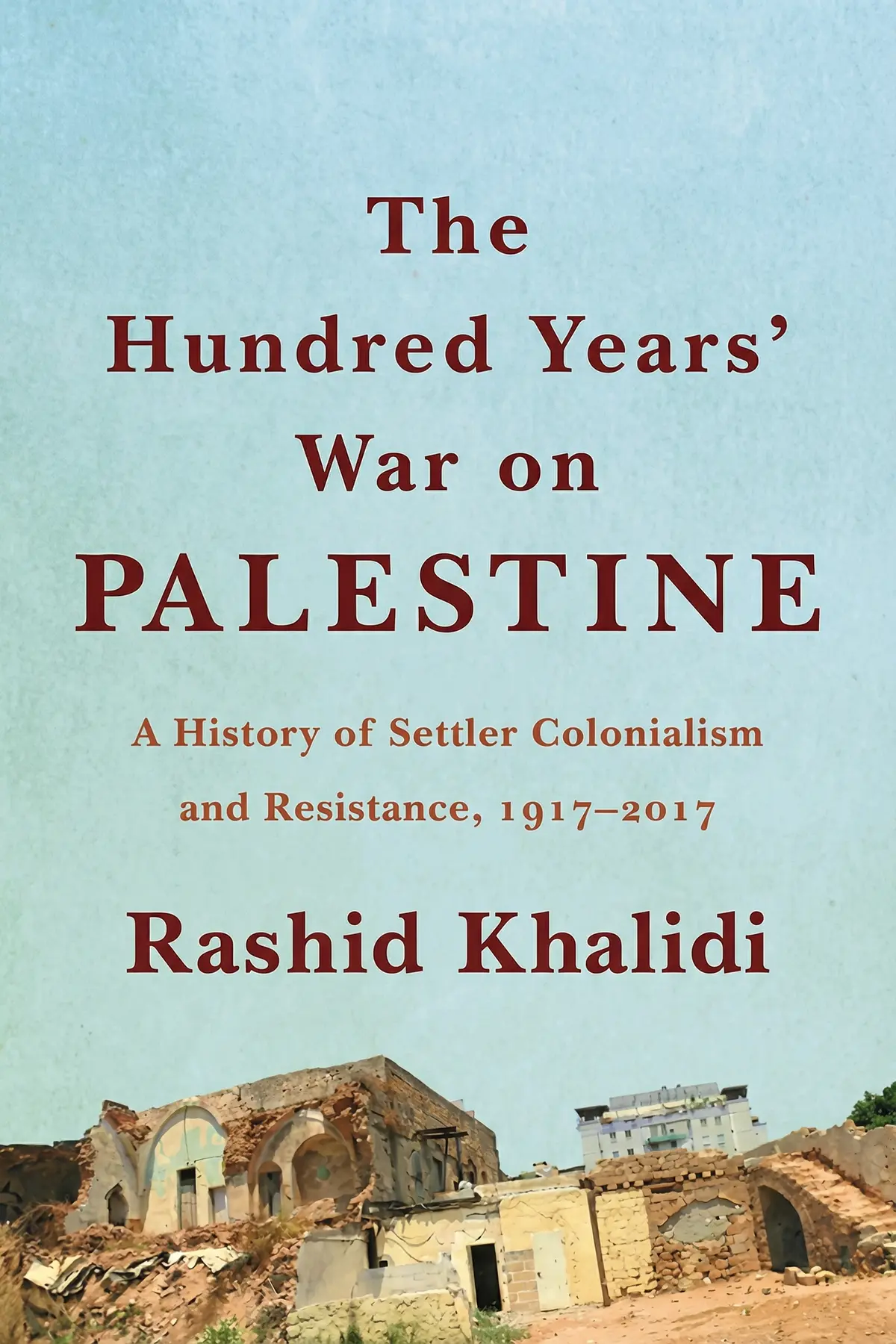
Explore a century of Palestinian history through the lens of settler-colonialism. This summary examines the impact of global powers, the resilience of local resistance, and the ongoing struggle for national self-determination.
1 min 49 sec
For many people watching the news today, the situation in the Middle East feels like a permanent fixture of the global landscape—a cycle of tension and violence that seems both heartbreaking and impossibly complex. We often hear it described as a clash between two ancient peoples or a tragic dispute over a small piece of land. But what if there is a different way to view this history? What if the events of the last hundred years aren’t just a series of unfortunate collisions, but rather a deliberate, sustained colonial campaign?
In this exploration of the work of historian Rashid Khalidi, we are invited to look at the history of Palestine through a specific lens: that of a hundred-year war waged against an indigenous population. This isn’t just a dry recitation of dates and treaties. It is a story told with the depth of archival research and the intimacy of personal and family accounts. Khalidi, a Palestinian-American scholar, brings a perspective that is often missing from mainstream Western narratives, framing the conflict not as a struggle between two equal national movements, but as a settler-colonial project that has been consistently supported by the world’s greatest powers.
Over the next several sections, we will trace the arc of this conflict from its early seeds in the late nineteenth century through the seismic shifts of the two World Wars, the founding of the State of Israel, and the various Palestinian uprisings that have defined the modern era. We will see how British interests, American policy, and regional power struggles have all converged on this small territory. Most importantly, we will seek to understand the throughline of this history: the enduring resistance of a people who, despite a century of pressure, continue to assert their right to exist and thrive on their own land. Let’s begin by looking back at a letter written over a century ago—a document that, in many ways, predicted the entire century to come.
2 min 41 sec
Discover how a single letter from 1899 and the subsequent British Mandate set the stage for a century of upheaval in the Middle East.
2 min 48 sec
Explore the pivotal events of 1948, known as the Catastrophe, which resulted in the displacement of hundreds of thousands of Palestinians.
2 min 42 sec
See how the brief but transformative conflict of 1967 solidified Israeli control while simultaneously sparking a new wave of Palestinian national identity.
2 min 30 sec
Examine the brutal Lebanon War of 1982 and its role in reshaping the Palestinian resistance and its international standing.
2 min 41 sec
Learn how the grassroots First Intifada forced Israel to the negotiating table, only to result in the deeply flawed Oslo Accords.
2 min 42 sec
Trace the path from the failure of the peace process to the Second Intifada and the emergence of Hamas as a dominant political force.
3 min 03 sec
Analyze the contemporary challenges facing Palestine, from shifting US policies to new laws that challenge the possibility of a two-state solution.
1 min 35 sec
As we reflect on the century of conflict we’ve just traced, it becomes clear that the story of Palestine is not merely a tragedy of two sides who cannot agree. It is a chronicle of a people who have been subjected to a sustained, systemic colonial campaign—one that has been facilitated by the shifting interests of global superpowers. From the early British promises to the modern-day siege of Gaza, the throughline has been the consistent attempt to erase or ignore the political existence of the Palestinian nation.
However, there is another throughline that is just as powerful: the persistence of the Palestinian people. Despite the Nakba, the occupation, and the failures of diplomacy, the Palestinian identity has not only survived but has grown stronger. The resistance has taken many forms—from the poetry of exile to the stones of the intifada to the modern-day calls for international sanctions. Each phase of this war has been met with a new generation that refuses to accept subjugation as their permanent fate.
What this history teaches us is that there are no shortcuts to peace. A lasting resolution cannot be built on the denial of rights or the fragmentation of a people. It cannot be brokered by outside powers who ignore the indigenous population. Real progress will only come when the colonial framework is finally dismantled and replaced by a commitment to justice, equality, and the recognition of the fundamental rights of every person between the Jordan River and the Mediterranean Sea. The hundred years’ war has taken a staggering toll, but the possibility for a different kind of future remains—one where the plea for Palestine to be left in peace is finally answered.
The Hundred Years' War on Palestine provides a profound re-evaluation of the conflict in the Middle East, moving away from the typical narrative of two equal sides in a tragic misunderstanding. Instead, it frames the last century as a systematic colonial war waged against the indigenous population of Palestine, backed by various global superpowers. By following the historical trajectory from the late Ottoman period through the British Mandate, the creation of the State of Israel, and the various uprisings that followed, this summary illuminates the structural forces at play. It promises a deeper understanding of how international declarations, military incursions, and failed diplomatic accords have shaped the current reality. Ultimately, it offers a sobering yet necessary look at the Palestinian experience and what might be required to achieve a just and lasting peace in the region.
Rashid Khalidi is a prominent Palestinian-American historian and the Edward Said Professor of Modern Arab Studies at Columbia University. In addition to his academic role, he serves as the editor of the Journal of Palestine Studies. Throughout his distinguished career, he has authored several influential books, including Palestinian Identity, Brokers of Deceit, and The Iron Cage.
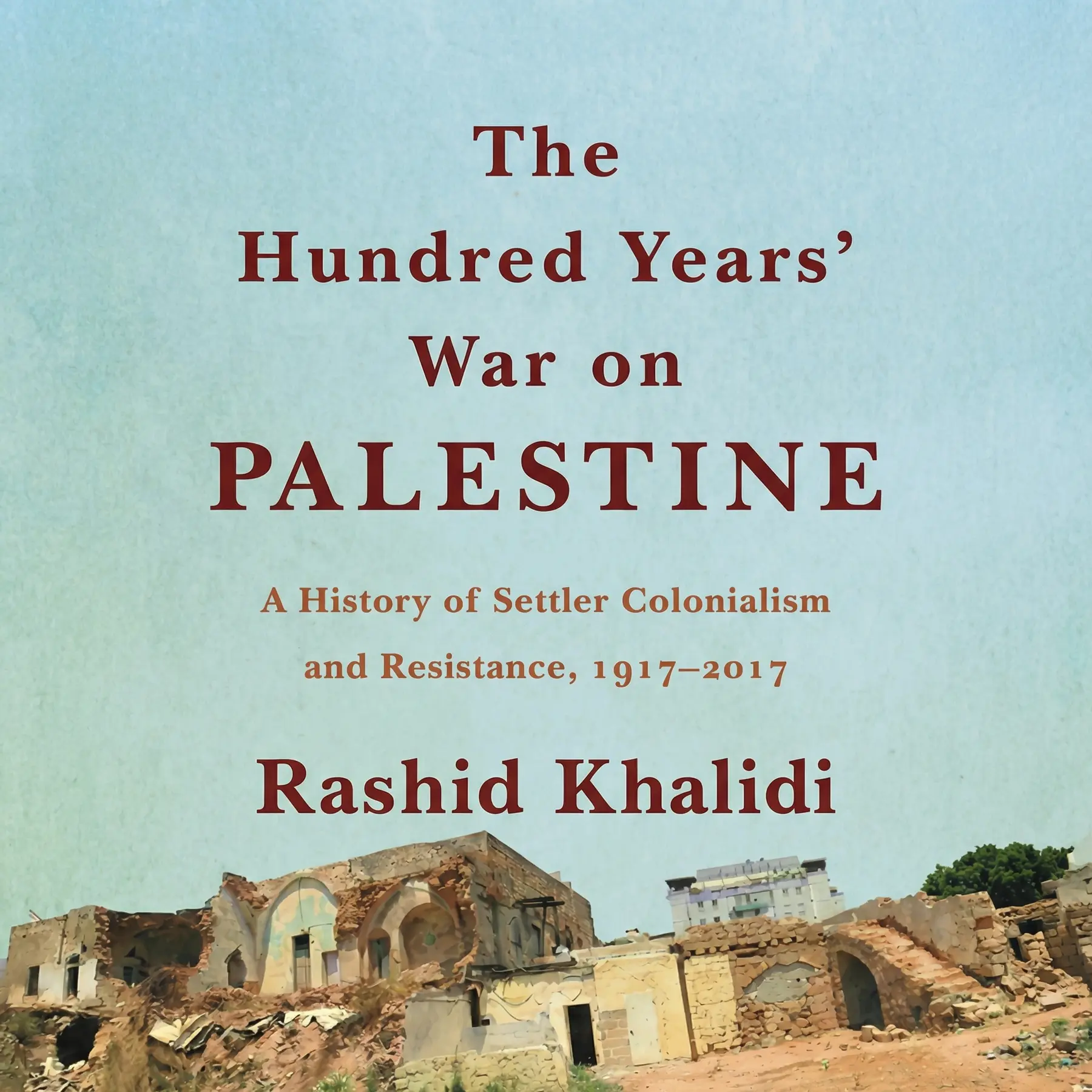
Listeners find this work to be meticulously documented and excellently composed, offering historical details that are impartial and grounded in facts. They characterize it as a compelling story that is accessible and highly enlightening, with one listener mentioning that it offers a Palestinian viewpoint. The title earns praise for its momentum, with one review emphasizing its lucid delivery, and listeners value the fair-minded way it treats every side of the conflict.
Rashid Khalidi provides a deeply necessary counter-narrative to the standard Western accounts of this conflict. By framing the struggle as a series of six "declarations of war" rather than just a sequence of tragic misunderstandings, he brings a sharp clarity to the historical record. The scholarship here is undeniably meticulous, drawing on both official archives and unique family documents that span generations. It’s a dense read at times, but the way he dismantles the "land without a people" myth is absolute masterclass. Frankly, the book feels like a missing piece of a puzzle I’ve been trying to solve for years. It doesn't shy away from the hard truths about British imperialism or the strategic failures of Palestinian leadership either. The pacing is excellent for such a broad history.
Show morePicked this up after seeing it on several recommended lists, and I wasn't prepared for how personal it would feel. Khalidi doesn't just recite dates and treaties; he weaves his own family’s history into the broader tapestry of Palestinian resistance. Seeing the Balfour Declaration through the eyes of those who actually lived in Jerusalem at the time changes everything. The writing is passionate yet grounded in fact, making it accessible for someone who isn't a history buff. Not gonna lie, some of the chapters on the 1982 Lebanon war were genuinely hard to get through because the imagery of the siege is so vivid. It’s a powerful, eye-opening account that demands you rethink the entire 20th century. Truly an essential read.
Show moreThe concept of "settler-colonialism" is central to this work, and Khalidi defends it with a level of rigor that is hard to ignore. He traces the timeline from 1917 to the present, showing how the Great Powers consistently prioritized Zionist goals over the indigenous population. I found the chapter on the 1967 war particularly enlightening, especially the discussion regarding how the US began to act as Israel’s primary patron. This isn't just a book about war; it’s a book about the erasure of a people’s history and their refusal to be forgotten. Every chapter feels like a lecture from a world-class professor who also happens to have a personal stake in the subject. Essential reading for anyone interested in geopolitics or international relations.
Show moreAs someone who has mostly read histories from a pro-Israel or "neutral" Western perspective, this book was a total paradigm shift. Khalidi doesn't pretend to be an impartial observer, and that honesty is actually what makes the book so effective. He describes the Nakba not just as a military defeat, but as a total collapse of a society that had been thriving for centuries. The footnotes alone are a goldmine for further research, linking to documents that prove how calculated many of these policies were. It’s a heavy, somber read that will probably leave you feeling quite frustrated with international diplomacy. I think it’s a necessary counterweight to the traditional education many of us received in school. Highly recommended for a deeper understanding.
Show moreWow, what a punch to the gut. This isn't just a history book; it's a testament to survival in the face of overwhelming odds. Khalidi’s description of the 1948 catastrophe and the subsequent displacement of his family is some of the most moving non-fiction I’ve read all year. He perfectly captures the betrayal felt by Palestinians as the world looked the other way for decades. The analysis of the First Intifada was especially eye-opening, showing the grassroots nature of the resistance before it was co-opted by various political factions. If you want to understand the modern Middle East, you have to read this. It’s fact-based, unapologetic, and brilliantly structured. I couldn't put it down once I started.
Show moreThis book should be mandatory reading for anyone who thinks they understand the Israeli-Palestinian conflict from news snippets. Khalidi uses his family’s archival letters to show that Palestinian intellectuals were warning about the consequences of the Balfour Declaration almost as soon as it was signed. The "Hundred Years" framework is genius because it shows that the current situation didn't happen in a vacuum. It was built brick by brick through colonial policy and military force over several generations. Personally, I found the section on the 1936 Arab Revolt to be the most fascinating part of the history. It’s a sobering look at how the powerful can dictate the fate of millions while ignoring their basic rights for over a century.
Show moreFinally got around to the audiobook version of this, and I’m glad I did because the prose can be quite academic and dense in places. The author does a fantastic job explaining the structural inequalities baked into the British Mandate from the very beginning. However, I did find myself wishing for more detail on the internal divisions within the Arab leadership during the 1930s. Look, it’s a brilliant overview, but it definitely assumes you have a baseline knowledge of Middle Eastern geography. I’d recommend keeping a map and a timeline handy while you go through the later chapters on the Intifadas. A solid four stars for the sheer amount of research and the unique perspective it offers to the reader.
Show moreTo be fair, I went into this expecting a very dry history book, but it’s actually quite fast-paced for a scholarly work. Khalidi’s writing is sharp, opinionated, and frequently vibrates with a sense of righteous anger. He spends a lot of time analyzing how the US has effectively subsidized the occupation, which is a perspective we rarely get in mainstream media. One minor critique is that the ending felt a bit rushed compared to the deeply detailed opening chapters on the British Mandate. Still, the way he connects the dots between 19th-century European imperialism and 21st-century "settlements" is incredibly persuasive. It’s a refreshing change of pace from the usual "both-sidesism" that often obscures more than it explains for the general public.
Show moreEver wonder why this conflict seems so intractable? This book provides a lot of the "why" from the Palestinian side, though it's definitely not a complete picture. I appreciated the deep dive into the 1982 siege of Beirut, as that's an era I didn't know much about. However, the author’s tendency to frame every single action as a "declaration of war" against Palestinians felt a bit repetitive at times. It’s a well-written book with a clear thesis, but I struggled with the lack of empathy shown toward Jewish history and trauma throughout the text. It’s a 3-star read for me—valuable for its specific viewpoint and family archives, but perhaps too narrow to be your only source on the topic.
Show moreWhile I appreciate the effort to bring a Palestinian voice to the forefront, I found this narrative to be incredibly one-sided. Khalidi relies heavily on personal anecdotes while conveniently omitting major events that complicate his "settler-colonial" framework. For instance, the 1929 Hebron massacre is barely a footnote, and the Grand Mufti’s problematic ties to Nazi Germany are essentially brushed aside. Truth is, a historian shouldn't be able to just "curate" the facts that fit their specific agenda while ignoring the trauma of the other side. By the time I got to the section on the Oslo Accords, I felt like I was reading a political manifesto rather than an objective history. It's an interesting perspective, but I can't call it balanced or fully researched.
Show moreJessica Valenti

Yanis Varoufakis
Yuval Noah Harari

Jacinda Ardern
Pankaj Mishra
Michael Axworthy
AUDIO SUMMARY AVAILABLE
Get the key ideas from The Hundred Years’ War on Palestine by Rashid Khalidi, plus 5,000+ more titles in English and Thai.







