

A Life Decoded: My Genome: My Life
J. Craig Venter
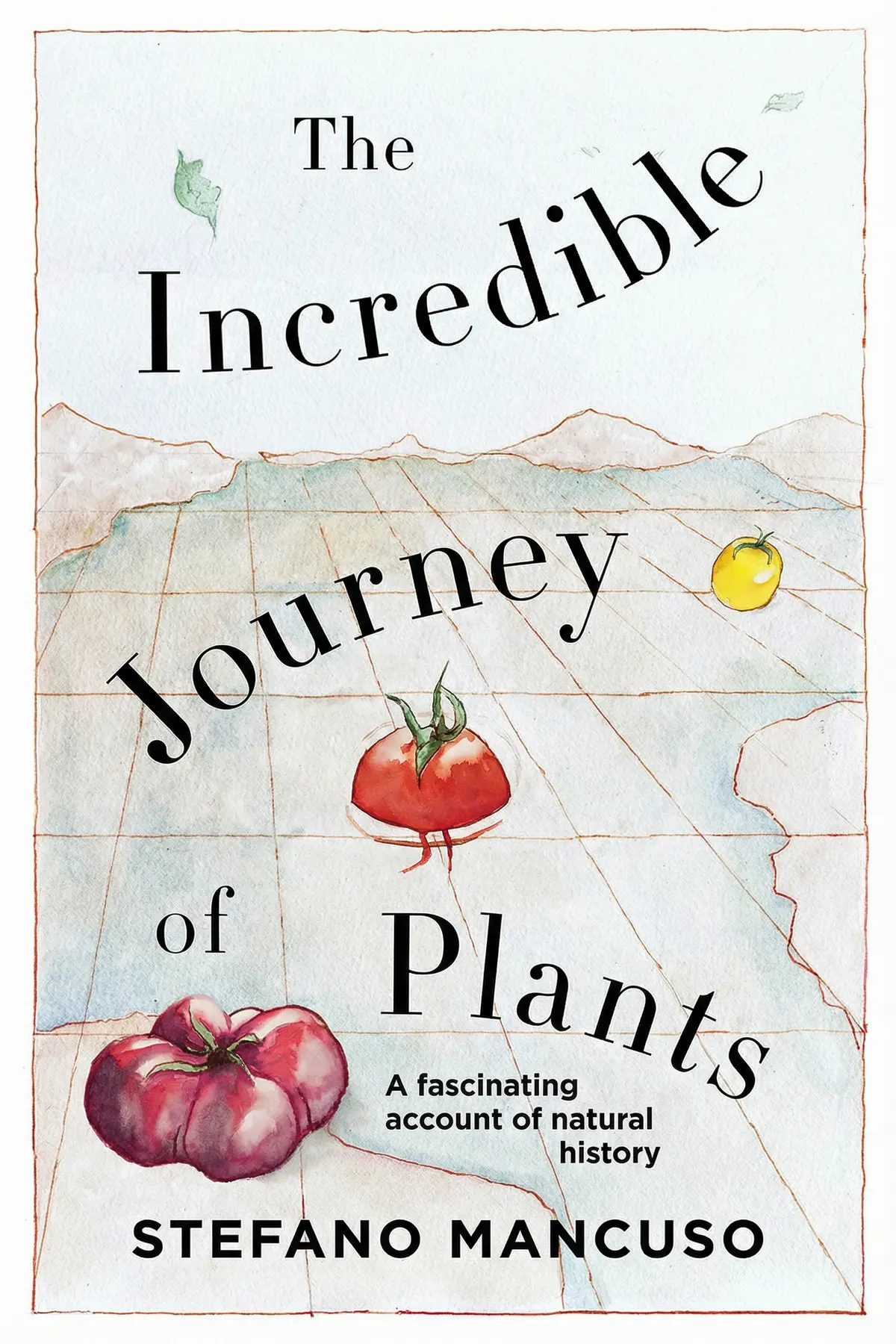
Explore the secret, mobile lives of plants in this fascinating account. Discover how vegetation colonizes new lands, survives nuclear disasters, and travels across oceans through ingenious evolutionary adaptations and human history.
1 min 49 sec
When we think about the great explorers of history, our minds usually drift toward names like Magellan, Cook, or Columbus. We think of wooden ships, vast maps, and the restless human spirit. But there is another group of travelers—far more ancient and arguably more successful—that we often overlook simply because they don’t have legs. These are the plants.
From the towering oaks in the forest to the weeds pushing through cracks in a city sidewalk, every green thing you see has a story of arrival. We often fall into the trap of seeing plants as static, rooted objects that stay exactly where they were born. However, a closer look at natural history reveals a different reality. Plants are in a state of constant, slow-motion migration. They cross oceans, climb mountains, and even follow human pioneers into new territories.
In this exploration of the botanical world, we are going to look at the mechanics behind this movement. We will see how evolution has equipped seeds with the tools to fly, float, and hitchhike. We will uncover how plants survive some of the most hostile conditions imaginable, from volcanic eruptions to nuclear fallout. Along the way, we will discover that the history of our favorite foods and landscapes is a tangled web of biology, economics, and sheer luck.
This is not just a study of botany; it is an account of life’s incredible drive to expand. By understanding how plants travel, we gain a new perspective on the world around us. We begin to see a planet that is vibrant, shifting, and deeply interconnected. So, let’s begin this journey and find out how our photosynthesizing friends have managed to make themselves at home in every corner of the globe.
2 min 31 sec
Discover how plants are the ultimate pioneers, capable of colonizing brand-new islands and surviving the most extreme conditions on Earth, including radiation and high-intensity nuclear blasts.
2 min 08 sec
Uncover the surprising origins of ‘native’ plants and learn how human infrastructure, like the global railroad system, has acted as a highway for botanical expansion.
2 min 12 sec
Explore the contrasting survival tactics of coconut species, from the ocean-faring traveler that conquered the tropics to the heavy-seeded specialist of the Indian Ocean.
2 min 09 sec
Learn about the incredible longevity of plants and their seeds, which can remain dormant for thousands of years before returning to life in the modern world.
2 min 08 sec
Examine how lonely, out-of-place trees serve as living evidence of the Anthropocene, revealing the far-reaching impact of human activity and technology.
2 min 02 sec
Explore the complex relationships between plants and the creatures that help them spread, including how the loss of ancient giants changed the fate of the avocado.
1 min 28 sec
The journey of plants is a story of incredible persistence, ingenuity, and constant movement. We have seen how they can conquer new volcanic islands, survive the devastating effects of radiation, and even outlast the civilizations that first planted them. From the floating coconut to the radioactive rings of a lonely pine tree, plants are far more than just stationary scenery; they are active participants in the history of our planet.
What this really means is that our own human story is deeply entwined with the botanical world. Our travels have been their travels. Our wars and technological advances have left their mark on their very cells. But as we move forward, we must consider the nature of our stewardship. As we breed plants to be more convenient for our consumption—sometimes at the cost of their own reproductive health—we are changing the course of an evolutionary journey that has lasted for millions of years.
The next time you walk through a park or prepare a meal, take a moment to look at the greenery around you. Consider the thousands of miles a species may have traveled to get there, or the thousands of years a seed may have waited to sprout. Plants remind us that life is always looking for a way to expand, to adapt, and to survive. By paying attention to their incredible journeys, we can learn to better appreciate the complex, beautiful, and resilient world that we all share. Their history is our history, and their future is our own.
The Incredible Journey of Plants invites listeners to reconsider everything they think they know about the botanical world. While we often view trees and flowers as sedentary background players in the theater of life, Stefano Mancuso reveals them to be daring explorers and resilient survivors. This account moves from the volcanic birth of islands to the radioactive ruins of modern disasters, illustrating how plants use wind, water, and animals to conquer the globe. The book promises a deep dive into the intersection of natural history, human migration, and evolutionary biology. You will learn about the strategic brilliance of seeds that can wait thousands of years to sprout and trees that have witnessed the rise and fall of entire civilizations. By the end of this journey, the greenery in your local park or on your dinner plate will no longer seem quite so stationary. It is a story of movement, persistence, and the profound ways in which plant life is inextricably linked to our own human narrative.
Stefano Mancuso is a professor of botany at the University of Florence and the world’s leading expert in plant neurobiology. He has published more than 250 scientific papers and popular titles such as Brilliant Green: The Surprising History and Science of Plant Intelligence and The Revolutionary Genius of Plants: A New Understanding of Plant Intelligence and Behavior.
Listeners find the quality of information in this book highly positive, with one review highlighting how it simplifies science for general audiences while tracing botanical history through time. The text also earns praise for its coverage of radiation; specifically, one listener notes the remarkable way plants can absorb nuclear radiation that would be lethal to humans. Furthermore, the material is considered very engaging, as one listener calls it fascinating while another describes it as a welcome distraction from the pandemic. Nevertheless, reactions to the illustrations remain mixed among listeners.
Ever wonder how a seed can survive for centuries before finally deciding to sprout? Stefano Mancuso turns what could be a dry subject into a series of captivating stories about movement and survival. He manages to make complex plant science accessible to the average reader without losing the sense of wonder. I was particularly struck by how he tracks botanical journeys across vast expanses of time and geography. The prose flows easily, making it a perfect companion for a quiet afternoon. Some might find his personification of plants a bit much, but I found it helped me relate to them as living beings. It is an eye-opening look at the 'intelligence' of the natural world. This book is a true gem for anyone who loves nature.
Show moreThe section detailing how certain species manage to thrive in radioactive zones like Chernobyl is absolutely mind-blowing. Mancuso does a brilliant job of explaining how plants adapt to extreme environments over centuries. I love how he challenges the idea that plants are passive organisms, instead presenting them as active, intelligent voyagers. The book feels like a collection of adventures where the protagonists happen to be rooted in the ground. I appreciated the accessible tone which never felt like it was talking down to me. It is rare to find a book that combines rigorous botanical knowledge with such poetic prose. This is essential reading for anyone interested in how life persists against all odds. Truly a masterpiece of nature writing.
Show moreTo be fair, I never expected a book about botany to feel so much like an epic historical adventure. The way Mancuso describes the movement of plants across continents is nothing short of cinematic. He captures the essence of their 'intelligence' by showing how they solve complex problems of survival and expansion. I found the anecdotes about plants as time travelers particularly moving, especially those that live for thousands of years. It really puts our short human lives into perspective. The writing is elegant and the translation is smooth, making for a very enjoyable experience. Despite some of the criticisms I have seen regarding his language, I think his passion for the subject shines through. It is a beautiful tribute to the green world that sustains us all.
Show moreAfter hearing Mancuso speak on a podcast, I knew I had to grab his latest work on plant migration. He has this incredible ability to make you feel like you are discovering a secret world right beneath your feet. The book is filled with 'did you know' moments that I kept sharing with my family. His exploration of how plants interact with human history—for better or worse—is thought-provoking and deeply researched. I actually enjoyed the artistic illustrations, as they gave the book a more whimsical, classic naturalist feel. It is not just a book about plants; it is a book about the tenacity of life itself. I feel much more connected to my surroundings after finishing it. Highly recommended for curious minds.
Show morePlants are far more resilient than we give them credit for, often absorbing toxins and radiation that would kill us instantly. This book serves as a brilliant testament to their strength and adaptability across human history. I loved the variety of stories, from the deep past to the modern day, and how they all connect. Mancuso writes with a clarity that is rare in the scientific community. It is a fascinating, quick read that left me wanting to learn even more about botanical intelligence. The book is beautifully produced and makes a great addition to any coffee table. If you want to understand the true masters of our environment, look no further. It is simply a wonderful, insightful journey through the green world.
Show moreWow, the chapter on the Hibakujimoku trees in Japan really stayed with me long after I closed the cover. Learning about plants that survived the atomic bomb and continued to thrive is both humbling and inspiring. Mancuso highlights their incredible ability to absorb radiation that would be instantly lethal to humans. The book serves as a beautiful reminder of the resilience of the natural world during these difficult times. I did find the watercolor illustrations a bit hit-or-miss, as I often found myself reaching for my phone to see real photos of the species described. However, the storytelling is top-notch. It is a fascinating exploration of how plants are the true masters of our planet. A solid four stars for the unique perspective.
Show moreAs a casual gardener, I found Mancuso’s storytelling to be quite refreshing compared to dry academic texts. He weaves together history, travel, and biology in a way that makes you look at the weeds in your backyard differently. I was especially intrigued by the section on the coconut-eating cult; it was a bizarre but entertaining historical detour. My only real gripe is the lack of detailed scientific diagrams. While the watercolors are artistic, they do not quite satisfy the urge to see the actual botanical structures being discussed. To be fair, the book is intended more as popular science than a textbook. It is a light, engaging read that offers a much-needed break from the stresses of the world. Definitely worth a spot on your shelf.
Show moreFinally got around to reading this and I must say the vignettes are punchy and well-researched. I was fascinated by the story of the avocado and its 'deal with the devil' regarding human intervention. Mancuso has a knack for finding the most interesting angle in every botanical story he tells. While I do agree that some of the terminology leans a bit too heavily into colonial metaphors, the core science remains compelling. The book is organized into short, digestible chapters that make it easy to pick up and put down. I would have liked more on the actual signaling and neurobiology he is famous for. Still, it is a very solid piece of science communication for the general public. A great gift for the plant lover in your life.
Show moreThis book left me with such conflicting feelings throughout the entire reading experience. While the scientific descriptions of seed dispersal and survival are genuinely fascinating, the author’s choice of language is frequently jarring. He uses terms like 'conquest' and 'colonizing' in a way that feels uncomfortably aligned with colonial philosophies. Mentioning figures like Frederick Russell Burnham as a hero felt completely out of place in a nature book. Truth be told, I expected a more intersectional approach to the history of land and indigenous people. The illustrations are quite lovely, though they do not always help identify the species being discussed. It is a decent read for the botanical facts, but the sociological framing is questionable at best. I would have appreciated a deeper dive into how plants interact with modern ecosystems today rather than just historical anecdotes.
Show morePicked this up expecting hard science but found myself frustrated by the constant personification of botanical processes. Mancuso attributes human-like 'courageous choices' and 'parenting decisions' to organisms that are simply following evolutionary paths. While I understand the desire to make the subject engaging, this level of anthropomorphism obscures the actual biology. Furthermore, the glorification of invasive species as 'conquerors' ignores the devastating impact they have on local biodiversity today. Frankly, it felt like the author was more interested in telling romanticized stories than providing rigorous neurobiological insights. The watercolor illustrations are aesthetically pleasing but lack the detail necessary for a true enthusiast. It was a disappointing read for someone looking for a more objective look at plant behavior. Hard pass if you prefer facts over metaphors.
Show moreJ. Craig Venter
Carl Zimmer

Bill Bryson

Jeff Hawkins

Lisa Kaltenegger
AUDIO SUMMARY AVAILABLE
Get the key ideas from The Incredible Journey of Plants by Stefano Mancuso, plus 5,000+ more titles in English and Thai.







