

16 min 41 sec
The Invisible Orientation: An Introduction to Asexuality
The Invisible Orientation provides a deep dive into asexuality, exploring what it means to live without sexual attraction while navigating a society that often refuses to acknowledge this valid identity exists.
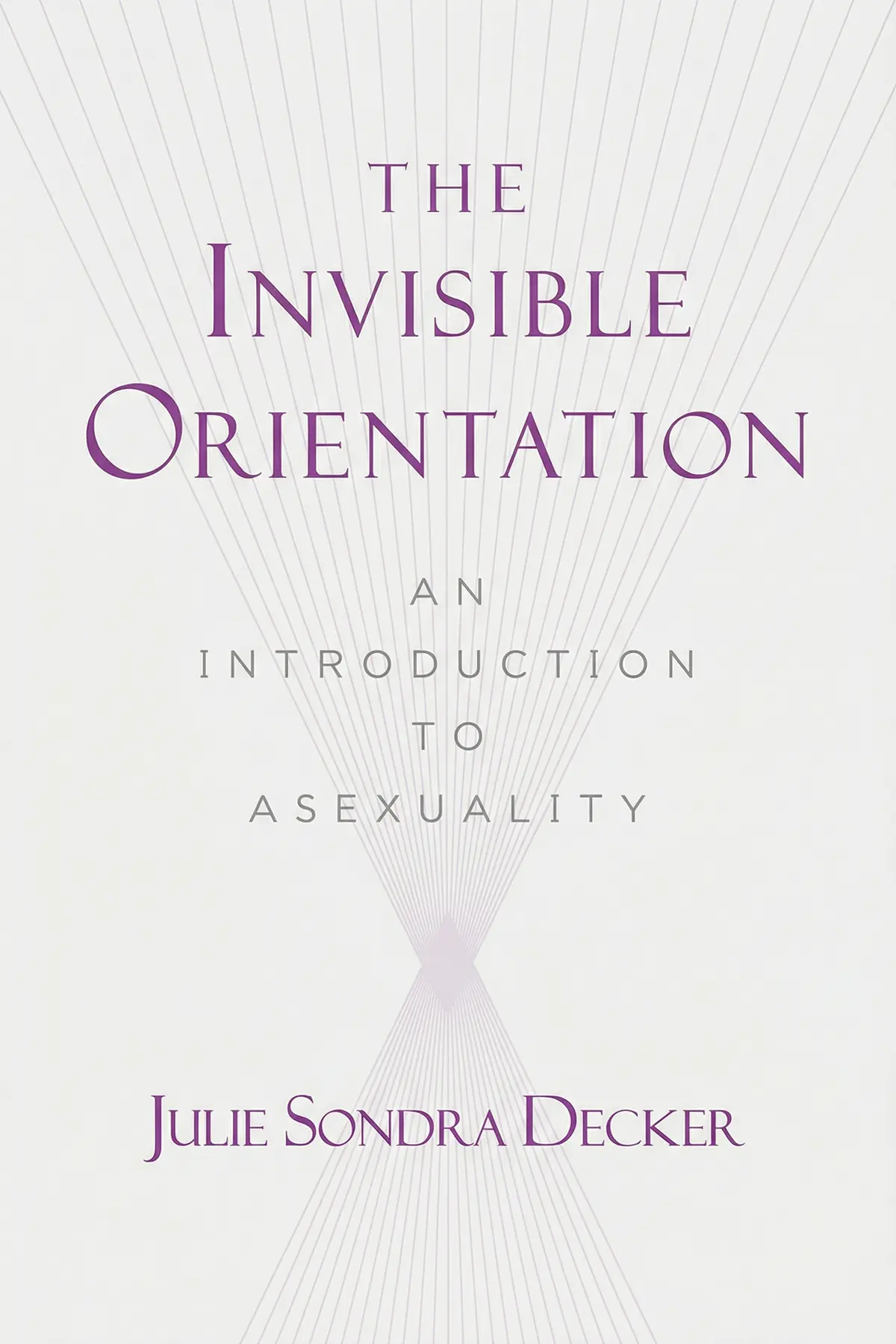
Table of Content
1. Introduction
1 min 59 sec
In recent decades, our collective understanding of the human heart and its many desires has undergone a massive transformation. We have moved toward a world where various sexual orientations are increasingly recognized, respected, and protected. From the hard-won rights of the LGBTQ community to the growing visibility of diverse identities in media, it seems as though we are on the cusp of an era where no way of loving is considered ‘wrong.’ However, in the middle of this progress, a significant group of people still feels as though they are standing in the shadows. These are the individuals who identify as asexual—people who simply do not experience sexual attraction toward others.
Imagine moving through a world that is saturated with sexual imagery, expectations, and conversations, yet finding that none of it resonates with you on a personal level. For many, this can be a lonely and confusing experience, especially when society suggests that a lack of sexual interest is a problem to be solved rather than a natural variation of the human experience. This is why understanding this orientation is so critical. It isn’t just about learning a new vocabulary; it’s about acknowledging the full spectrum of human existence and ensuring that everyone has the space to be seen and understood.
In this exploration, we are going to pull back the curtain on what it really means to be asexual. We will look at the internal experiences of attraction versus physical drive and how those two things are not always linked. We will also explore the profound ways that romance and intimacy can flourish entirely outside the realm of sex. Beyond the personal, we will address the external pressures—the myths, the medicalization, and the social stigmas—that asexual people face every day. By the end of this journey, the goal is to move past the ‘invisible’ nature of this orientation and move toward a more inclusive, empathetic perspective that celebrates the many different ways people find fulfillment and connection.
2. Defining the Asexual Experience
2 min 32 sec
Discover the fundamental distinctions between physical drive, bodily arousal, and the emotional pull of attraction that define the asexual spectrum.
3. Romance Beyond the Bedroom
2 min 41 sec
Explore how intimacy and deep partnership can thrive through the ‘split attraction model,’ separating romantic feelings from sexual ones.
4. Challenging the Myths of Invisibility
2 min 23 sec
Address the social stigmas that label asexuality as a phase or a medical issue, and learn why these characterizations are so harmful.
5. The Pressure to Conform
2 min 27 sec
Examine the harmful societal expectation that everyone must be sexual to be healthy, and the risks of the ‘fix-it’ mentality.
6. Finding Community and Visibility
2 min 27 sec
See how the digital age has empowered asexual individuals to build support networks and establish symbols of their unique identity.
7. Conclusion
2 min 12 sec
As we wrap up our exploration of asexuality, the most important lesson to take away is that the human experience is far more diverse than our social scripts often allow for. Asexuality is not a problem to be solved, a medical condition to be treated, or a phase to be grown out of. It is a stable, healthy, and legitimate sexual orientation that describes a lack of sexual attraction to others. Whether someone is romantic, aromantic, or somewhere in between, their identity is defined by their internal experience, not by their adherence to societal norms.
The ‘invisible orientation’ remains invisible only as long as we refuse to look. By distinguishing between attraction, drive, and behavior, we can begin to see the world through the eyes of those who don’t prioritize sex, and in doing so, we might even learn something about the nature of our own connections. We see that intimacy can be built on many foundations—on trust, on shared intellectual passions, on physical affection that doesn’t lead to the bedroom, and on the simple, profound commitment of two people walking through life together.
The best way to be an ally to the asexual community is quite simple: believe people when they tell you who they are. If someone shares their asexual identity with you, they aren’t asking for a diagnosis, a list of suggestions, or a debate. They are asking for acknowledgment. They are asking to be seen as a whole, capable, and happy adult whose life is not ‘missing’ a piece.
Moving forward, we can all contribute to a more inclusive world by challenging our own assumptions. When you hear people making jokes about ‘late bloomers’ or ‘frigidity,’ or when you see media that suggests sex is the only way to find true happiness, take a moment to remember the spectrum we’ve discussed today. Acknowledge that a person’s value is not tied to their sexual activity. By fostering an environment where every orientation is treated with dignity, we create a richer, more compassionate society for everyone. Remember, the goal isn’t just to tolerate difference, but to understand that every way of being—including the quiet, non-sexual ones—adds its own unique and necessary color to the tapestry of human life.
About this book
What is this book about?
This exploration into asexuality offers a comprehensive look at a frequently misunderstood and overlooked corner of the human experience. While modern conversations about identity have expanded to include many different sexualities, those who experience little to no sexual attraction often find themselves on the sidelines, facing confusion or pressure to change. The book serves as both an educational resource for the general public and a validating guide for those who identify as asexual. Through its pages, you will learn the crucial differences between biological drives, physical arousal, and the emotional pull of attraction. It breaks down the 'split attraction model,' explaining how someone can deeply desire a romantic partnership while having no interest in the physical acts typically associated with it. By dismantling common myths—such as the idea that asexuality is a medical condition or a result of past trauma—the work promises to provide clarity and foster empathy. Ultimately, it is a call for inclusion, asking us to broaden our definition of a healthy, fulfilling life beyond the narrow lens of sexual activity.
Book Information
About the Author
Julie Sondra Decker
Julie Sondra Decker is a dedicated advocate for the asexual community who has been active in raising awareness since 1998. Her expertise has been featured in major publications like The New York Times and Marie Claire. Beyond her advocacy, Decker is a creative professional, working as a webcomic artist and a writer of science fiction and fantasy. Identifying as both aromantic and asexual, she currently resides in Florida, where she enjoys her life as a single individual.
Ratings & Reviews
Ratings at a glance
What people think
Listeners find this work both educational and thoroughly researched, tackling inquiries regarding asexuality with a straightforward, matter-of-fact tone. It also functions as an excellent primer on the subject; one listener mentioned that it offers an all-encompassing examination of this neglected sexual orientation. Furthermore, the structure of the writing is carefully considered, and listeners value the clear, easy-to-comprehend delivery. The content is regarded as a vital resource for asexual people and their supporters alike, as one review emphasizes that the author speaks with kindness and empathy towards various affinity groups.
Top reviews
Fatima
Picked this up because I wanted a solid foundation to understand the ace spectrum without getting lost in academic jargon. Decker does a fantastic job of breaking down complex terms like demisexual and demiromantic with real empathy. It feels like a long-overdue conversation that treats the reader with kindness, whether they are ace themselves or an ally looking to learn. To be fair, some of the sections regarding labels get a bit dense, but the overall matter-of-fact approach makes it an essential resource. I especially appreciated the chapter on debunking myths, which felt very grounded in reality rather than just theory. It’s the kind of book you’ll want to keep on your shelf to reference whenever someone asks a question you can't quite articulate.
Show moreSomrutai
Finally got around to reading this, and I genuinely wish I had found it ten years ago when I was struggling to understand my own lack of attraction. The way Decker explains that asexuality is a valid orientation and not something to be 'fixed' provided such a profound sense of relief. Look, the internet has a lot of information, but having it all compiled here in such a compassionate, well-researched format is invaluable. I loved the section on how to handle difficult conversations with family or doctors, even if some of the scripts felt a bit intense for my personality. It speaks with a level of kindness and empathy that you don't always find in nonfiction. This is definitely a must-read for anyone who has ever felt like they were broken just because they didn't fit the sexualized norm.
Show moreHassan
The chapter on myths and misconceptions alone makes this book worth the price of admission. Decker systematically dismantles the idea that asexuality is just a 'phase' or a medical problem, doing so with a calm, matter-of-fact logic. I’ve been trying to find a way to explain my identity to my family, and this book gave me the scripts and the confidence I needed to start those conversations. It’s written with a lot of kindness toward different affinity groups, making it a safe entry point for anyone who is curious. Personally, I found the breakdown of the 'attraction vs. desire' distinction to be the most helpful part of the entire book. Every library should have a copy of this because it addresses questions that people are often too afraid to ask out loud.
Show moreNannapat
This book is a vital resource for anyone navigating the complex world of human orientation. It provides a comprehensive look at asexuality that is both well-researched and deeply empathetic. Decker manages to speak to both the asexual reader and the curious ally without making either feel excluded from the conversation. Truth is, the way she normalizes different levels of interest in sex and romance is exactly what the world needs right now. Even though some parts felt a little dry or repetitive, the overall impact of the book is undeniably positive. It gives a voice to the invisible and offers a measured, sensible path toward better understanding. I’m giving it five stars for its historical significance and its ability to change how people think about 'normal' attraction.
Show moreVipawan
As someone who writes romance and wants to be inclusive, I found this to be an excellent primer on the asexual spectrum. It’s well-researched and addresses common misconceptions in a way that’s very easy to comprehend for those of us outside the community. While it does get a bit repetitive toward the middle—I felt like I was reading the same definitions twice—the 'how-to' guides for allies are really practical. Not gonna lie, I learned quite a bit about the distinction between romantic and sexual attraction that I hadn't fully grasped before. It serves as a great bridge for understanding why the world looks so different to someone who is ace. Definitely a solid resource that achieves its goal of making an invisible orientation visible.
Show moreRosa
Wow, what a relief it was to see my own experiences mirrored on these pages with such clarity. I actually got chills when Decker mentioned labels like demiromantic because I had never seen them explained in a 'real' book before. Truth is, society is so saturated with sex that you start to feel like an alien if you don't experience attraction the way everyone else seems to. The writing style is very accessible and speaks to you like a supportive friend rather than a clinical researcher. I did find the sections on 'allosexual etiquette' a bit long-winded, but I understand why they are necessary given how much misinformation is out there. It’s a comprehensive look at a neglected orientation that finally gives us a seat at the table.
Show moreAndrew
Ever wonder why sex is the only thing people seem to care about? This book finally offers a different perspective that feels both modern and necessary. Decker’s writing is well thought out and super easy to comprehend, even when she’s tackling some of the darker parts of the ace experience. Got to say, I didn't agree with every single point she made about queer privilege, but the bulk of the information is just solid gold. It’s a little long-winded in the middle—prepare yourself for some serious repetition—but the message is too important to ignore. If you want to stop being an accidental jerk to your ace friends, just read this and take notes. It’s a great introduction to a topic that has been ignored for way too long.
Show moreFrida
After hearing so much buzz about this being the definitive text on asexuality, I was excited to dive in, though my reaction is a bit mixed. On one hand, it’s an incredibly informative introduction that uses a matter-of-fact tone to dispel harmful myths. On the other hand, the organization feels a little clunky, and the author often flip-flops on whether asexuals are 'queer enough' for LGBTQ+ spaces. In my experience, nonfiction works best when they have a strong, consistent thesis, but this felt more like a collection of blog posts stitched together. To be fair, the historical context provided is excellent, and it's a great starting point for beginners. I just think it could have benefited from a much tighter edit to remove the long-winded sections that didn't add much new info.
Show moreDream
Not what I expected for a book that's supposed to be for the asexual community. Most of the content felt like it was actually written for allosexuals, telling them all the things they 'shouldn't' say or do. It felt quite prescriptive and a bit defensive at times, which made the reading experience feel a bit heavy and adversarial. Look, I get that advocacy requires a certain level of persuasion, but I wanted more depth regarding the actual internal ace experience rather than just a list of 'how not to be a dick.' It’s still a 3-star read because the research is clearly there and it fills a massive gap in literature. However, the tone was a bit too dry and repetitive for me to really love it as a personal guide.
Show moreKenji
This book covers important ground, but I found the writing incredibly dry and the structure far too repetitive for a single sitting. Decker keeps circling back to the same few points, using slightly different phrasing to say what could have been condensed into a few punchy chapters. More concerning was the way the author handled the intersection of asexuality and the broader LGBTQ+ community. It felt like she was pandering to allosexuals by suggesting that ace exclusion from queer spaces is somehow justifiable or that we hold 'heterosexual privilege.' Frankly, erasure is not a privilege, and being told to just 'sit and take' exclusion felt very counterproductive for an advocacy book. I wanted to like this more, but the internal contradictions and the instructional, prescriptive tone for allies made it a difficult read.
Show moreReaders also enjoyed

Afropean: Notes From Black Europe
Johny Pitts
All About Love: New Visions
bell hooks

A Biography of Loneliness: The History of an Emotion
Fay Bound Alberti

A Force for Good: The Dalai Lama's Vision for Our World
Daniel Goleman


A Room of One’s Own
Virginia Woolf

Abolish Rent: How Tenants Can End the Housing Crisis
Tracy Rosenthal
AUDIO SUMMARY AVAILABLE
Listen to The Invisible Orientation in 15 minutes
Get the key ideas from The Invisible Orientation by Julie Sondra Decker, plus 5,000+ more titles in English and Thai.
- 5,000+ titles
- Listen as much as you want
- 7-day free trial
- Cancel anytime







