
16 min 45 sec
The Janus Point: A New Theory of Time
The Janus Point redefines our understanding of time, arguing it is an illusion and that the universe is governed by a growth in complexity rather than a slow slide into chaos.
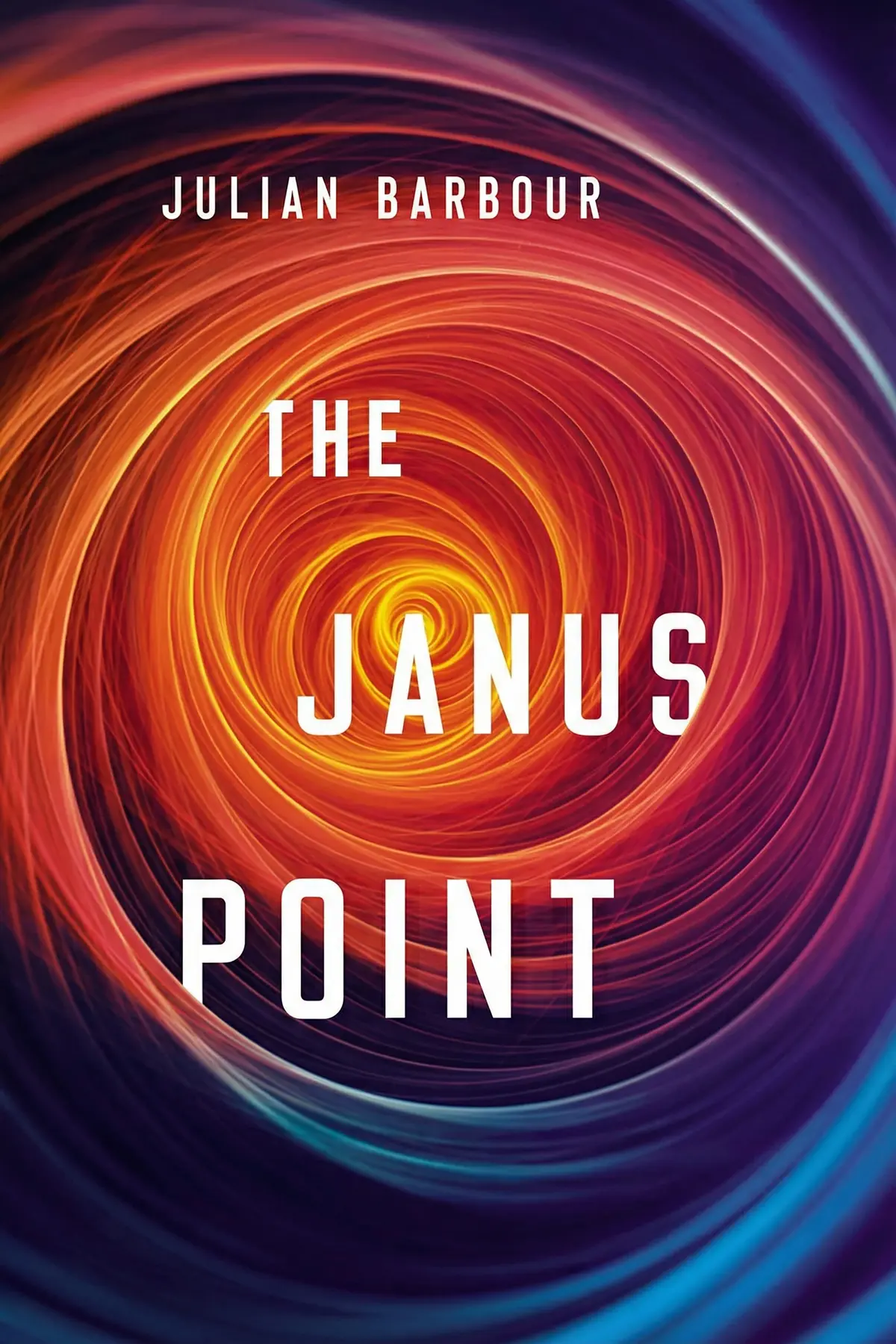
Table of Content
1. Introduction
1 min 58 sec
Imagine for a moment that everything you think you know about the flow of time is a misunderstanding. We often picture time as a river, flowing relentlessly from a past we can no longer reach toward a future that hasn’t yet happened. We feel the weight of every passing second, and we see the world around us aging and decaying. In the world of physics, this is often explained through the lens of entropy—the idea that the universe started in a highly organized state and is slowly falling apart into total chaos. It’s a bit of a grim story, one that paints us as inhabitants of a dying machine that will eventually run out of steam.
But what if that story is backwards? This is the starting point for Julian Barbour’s work in The Janus Point. Barbour invites us to reconsider the very fabric of reality, proposing that time isn’t a fundamental part of the universe at all. Instead, he suggests that what we perceive as time is actually a consequence of the way the universe changes its shape. In this view, the Big Bang wasn’t a singular explosion that started a clock; it was a unique state of symmetry and simplicity that he calls the Janus Point—named after the Roman god who looks in two directions at once.
As we journey through this summary, we are going to look at why the traditional laws of thermodynamics might not be the final word on the fate of the cosmos. We will explore how gravity acts as a master architect, creating order and complexity where we once expected to find only disorder. We’ll delve into a theory where the universe doesn’t end in a cold void, but continues to grow richer and more detailed forever. By the end of this exploration, you’ll see how Barbour’s vision transforms our understanding of history, the future, and the very moment we are living in right now. It’s a shift from a universe of decay to a universe of creation, where the arrow of time isn’t a death sentence, but a map of increasing beauty.
2. The Misconception of Universal Decay
2 min 18 sec
Explore why the traditional scientific belief in inevitable cosmic chaos might be fundamentally flawed and how we have misinterpreted the laws of thermodynamics.
3. The Janus Point and the Two Arrows of Time
2 min 17 sec
Discover a new model of the Big Bang that functions as a central hub, sending time and structure moving outward in two opposite directions.
4. Gravity as the Creator of Order
1 min 57 sec
Learn how the force of gravity works in direct opposition to the chaos of entropy, building a universe that is constantly becoming more structured.
5. A World Without an External Clock
2 min 05 sec
Reflect on the idea that time does not exist independently of the things in the universe, but is merely a measure of how shapes change.
6. Complexity as the New Cosmic Goal
2 min 01 sec
Shift your perspective from a universe that is fading away to one that is engaged in an eternal process of creative expansion.
7. The Meaning of Our Moment in the Timeless
2 min 14 sec
Contemplate how living in a timeless, shape-driven universe changes our personal experience of life, memory, and our connection to the cosmos.
8. Conclusion
1 min 55 sec
The journey through Julian Barbour’s The Janus Point brings us to a destination that is both scientifically rigorous and deeply hopeful. We started with the traditional, somewhat bleak view of a universe destined for a disorganized heat death—a world where time is a destructive force and everything eventually fades into a uniform soup. But through the lens of the Janus Point, we’ve seen that this narrative is based on an incomplete understanding of how the universe works, especially regarding the power of gravity and the nature of expansion.
Barbour’s theory offers us a new ‘throughline’ for the history of the cosmos: the story of increasing complexity. By reimagining the Big Bang as a central point of maximum simplicity looking out toward two futures, he provides a logical framework for why time seems to flow and why the world around us is so rich with structure. We’ve learned that time isn’t an external master we must obey, but a byproduct of the changing relationships between things. This transforms the ‘arrow of time’ from a harbinger of decay into a record of creation.
The actionable takeaway from this shift in perspective is a change in how we relate to our own existence. If the universe is not a dying machine but an expanding canvas of increasing variety, then our role as conscious beings is to be the most complex and varied part of that canvas. We can find peace in the idea that every moment is a permanent piece of a timeless whole. Barbour invites us to stop mourning the passage of time and start celebrating the growth of structure. In this new physics, the future is not a dark void, but an infinite landscape of potential, where the universe continues to discover new and more beautiful ways to exist.
About this book
What is this book about?
This exploration dives into the revolutionary theories of physicist Julian Barbour, who challenges the traditional scientific view of time and entropy. Most of us are taught that the universe began with a Big Bang and is now slowly running out of energy, destined for a cold, dark state of total disorder known as heat death. Barbour turns this narrative on its head by suggesting that the Big Bang was not the beginning of time, but a central point—a Janus Point—from which time flows outward in two different directions. Through a blend of rigorous physics and deep philosophy, the book promises to replace the bleak vision of a decaying cosmos with a much more creative one. It argues that gravity doesn't just pull things together; it builds structure and complexity. By looking at the universe through the lens of shape and relationship rather than clocks and measurements, Barbour offers a new way to see our place in a timeless reality where everything is constantly becoming more, not less, interesting.
Book Information
About the Author
Julian Barbour
Julian Barbour is a renowned theoretical physicist who has spent decades investigating the fundamental laws of the universe. He has served as a visiting professor at the University of Oxford and is widely recognized for his unconventional and influential ideas regarding the nature of reality. Barbour is also the author of the acclaimed book The End of Time, which established his reputation for arguing that time is an illusion. His work focuses on relational physics and the way the universe's structure defines our perception of existence.
Ratings & Reviews
Ratings at a glance
What people think
Listeners describe Julian Barbour’s investigation of theoretical physics as a demanding intellectual trek, and although views are split on whether the specialized language is too dense for the general public, most appreciate his remarkably original reasoning. They also point to the writer's exceptional talent for weaving together high-level cosmology, literature, and philosophy to create a deep outlook on the mechanics of time. Additionally, the narrative is praised for being "quippy and quotable," with one listener mentioning that the book delivers a fulfilling and greatly enhanced grasp of cosmic history. Finally, the primary concept of the "Janus point" is singled out as a captivating premise that defies traditional thoughts on entropy and the Big Bang.
Top reviews
Kung
Theoretical astrophysics doesn't get much more original or daring than Julian Barbour’s latest work. He takes the established laws of physics and re-examines them through a lens of 'shape space' and relational motion. I was stunned by his critique of background independence in standard quantum mechanics. The book is a valiant effort to keep the cutting edge of research readable, even when the concepts are inherently difficult. It’s a deep conceptual dive. You get a real glimpse of research in progress, including papers from as recently as 2018. If you have any interest in how order emerges from chaos, this is a must-read. It’s the kind of book that makes you rethink the very nature of motion.
Show moreTang
After years of reading popular science that just rehashes the same old Einstein and Hawking tropes, this felt like a breath of fresh air. Barbour’s argument that time's arrow is driven by the growth of structure, rather than a slide into disorder, is a total game changer for me. I love how he connects physics to literature and myth. It makes the cold vacuum of space feel a bit more like home. To be fair, it is a challenging text that demands your full attention. But why shouldn't the nature of time be a difficult subject? If you want a Wikipedia-level summary, look elsewhere. If you want a profound new worldview, buy this book.
Show moreTun
What a rewarding and greatly expanded look at the nature of time. Barbour is a master of the subject, and his ability to rethink the Big Bang as a Janus point is nothing short of revolutionary. I found the sections on the N-body problem and Kepler pairs to be particularly illuminating for understanding how structure actually forms in an expanding space. The book is beautifully written and filled with memorable aphorisms. While it is certainly intellectually rigorous, it doesn't repel the curious reader with sheer elitism. Instead, it invites you into a complex celebration of all that is. Order—the stuff of life—might just be the true driver of our clock. Simply magnificent.
Show moreGoy
Finally, a physicist who dares to challenge the depressing 'heat death' narrative of our universe's future. I am always bothered by the implication that disorder is our only destiny, and Barbour offers a radical alternative where order grows without bound. It is a project. Make no mistake about that. It took me a long time to digest the arguments, as the author presupposes a significant amount of background knowledge from the reader. Yet, the rewards are there if you are willing to fall down a few rabbit holes. The writing is surprisingly quippy at times, which lightens the load of the advanced cosmology. It is a demanding but deeply absorbing investment in your own brain's expansion.
Show morePot
Picked this up after hearing about the 'two-headed' time theory, and it has genuinely shifted my perspective on existence. The idea that the Big Bang is a 'Janus point'—a moment of minimal order from which time flows in two opposite directions—is simply brilliant. Barbour manages to bridge the gap between hard physics and philosophical inquiry with remarkable skill. While some of the math-heavy sections on shape spaces were a struggle, the qualitative descriptions of cosmic structure kept me engaged. It isn't a quick read, nor is it a simple one. It is, however, an incredibly informative and rich narrative that challenges the standard second law of thermodynamics in a way that feels long overdue.
Show moreBenjamin
The Janus Point is a dense, black-hole-level heavy read that somehow manages to be both thrilling and completely exhausting. Barbour is clearly a polymath, blending references to Shakespeare and Wagner with advanced thermodynamics. His insights are original. That much is certain. However, the density of the prose is staggering. Unless you are prepared to wrestle with Kepler pairs and invariant variations, you will find very little to hold onto here. It is a celebratory look at the universe, yet it’s like attending an Oxford graduation where the entire ceremony is conducted in Latin. You catch snippets of beauty, but the core remains largely locked away from the uninitiated.
Show moreSarocha
Is time really just the growth of complexity rather than the inevitable slide into entropy? This is the question Barbour poses, and it is a fascinating one to ponder. Personally, I found the concept of 'entaxy'—measured in shape-complexity—to be a brilliant pivot away from the standard 'heat death' narrative of the universe. But the reading experience was an uphill battle. The book is full of novel definitions and jargon coined specifically by the author’s own circle. It’s a mess of great ideas and impenetrable structure. I’m still not sure I understand time any better than I did before, which is a heavy burden for a reader to carry after such effort.
Show moreChai
Beware: unless you hold a PhD in mathematics or theoretical physics, this book is essentially impenetrable. I thought I could power through the difficult sections, but it felt like 60% of the content was written for experts rather than the general public. Boltzmann brains, phase spaces, and Abelian gauge theories fly by with little mercy for the reader. To be fair, I took away some interesting thoughts on relativity and ratios. However, those same conclusions could have been communicated in half the page count. It is far too esoteric for a popular science book. I wanted to learn, but I mostly just felt excluded by the academic jargon.
Show moreKae
I really wanted to love the central thesis about the Big Bang being a point where time flows in two directions. Unfortunately, the execution is overly esoteric and exhausting. I ended up giving up about 70% of the way through because the author spends more time trying to prove his theory via complex 3-body models than actually explaining the vision. It feels like a peer-reviewed paper that was bloated into a 400-page book. Frankly, I couldn't see what this hypothesis offers that classical physics doesn't already cover. While his explanation of entropy was quite good, the rest was like reading a foreign language without a dictionary. DNF for me.
Show moreEleni
This was an exercise in pure frustration, despite my deep interest in the subject matter. One of the primary issues is the writing style, which feels jagged and repetitive. The incessant auto cross-references within the text made it practically unreadable for me, as every other page seemed to point back to a previous chapter or ahead to a future one. It’s simply poorly constructed. While the central topic is fascinating, the delivery is insufferable. I’ve read a great deal of Penrose and other complex physicists, but Barbour fails to make his own ideas accessible or even coherent here. It is a pity because the core concept of time's arrow deserves better than this disorganized treatment.
Show moreReaders also enjoyed

A Life Decoded: My Genome: My Life
J. Craig Venter
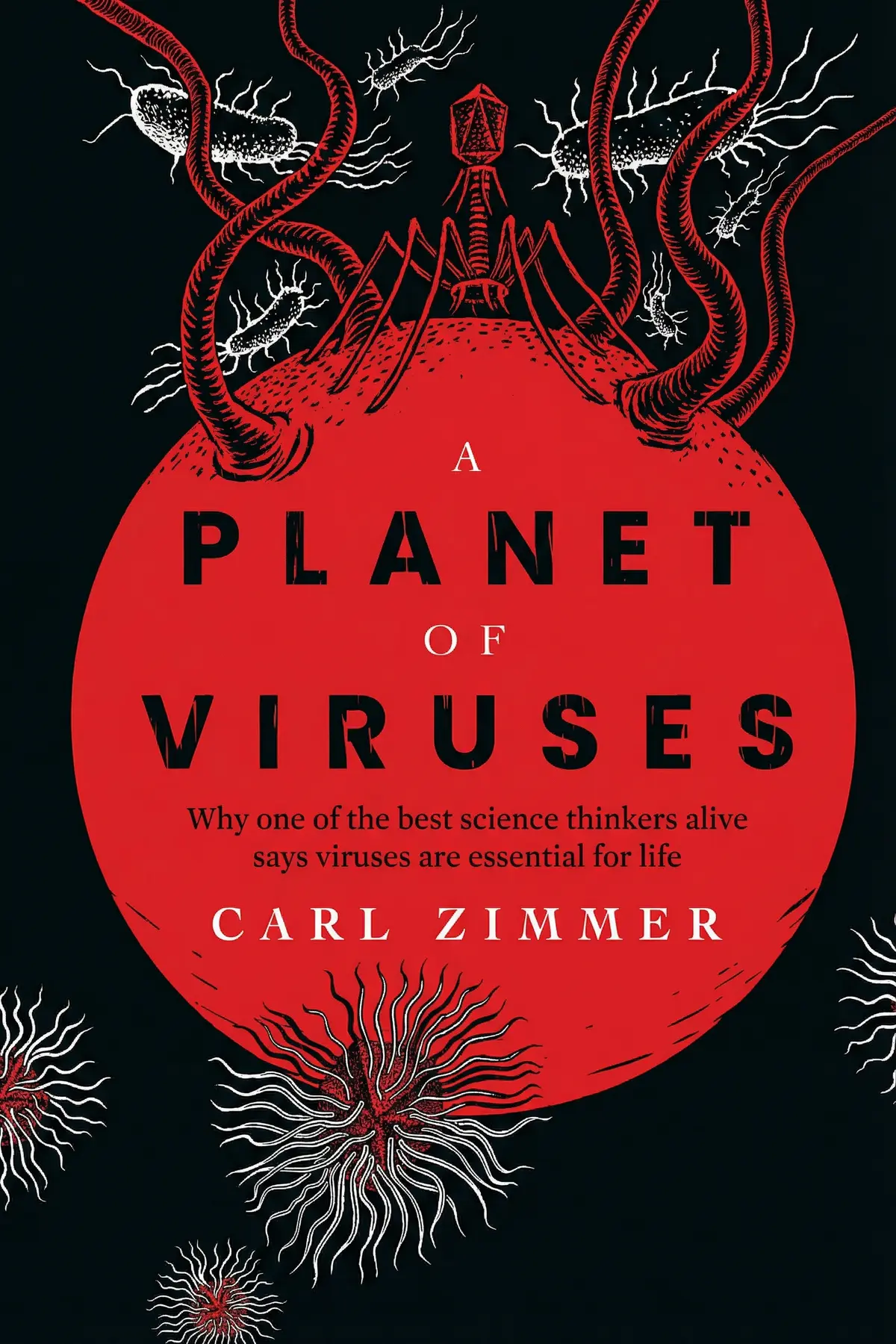
A Planet of Viruses
Carl Zimmer
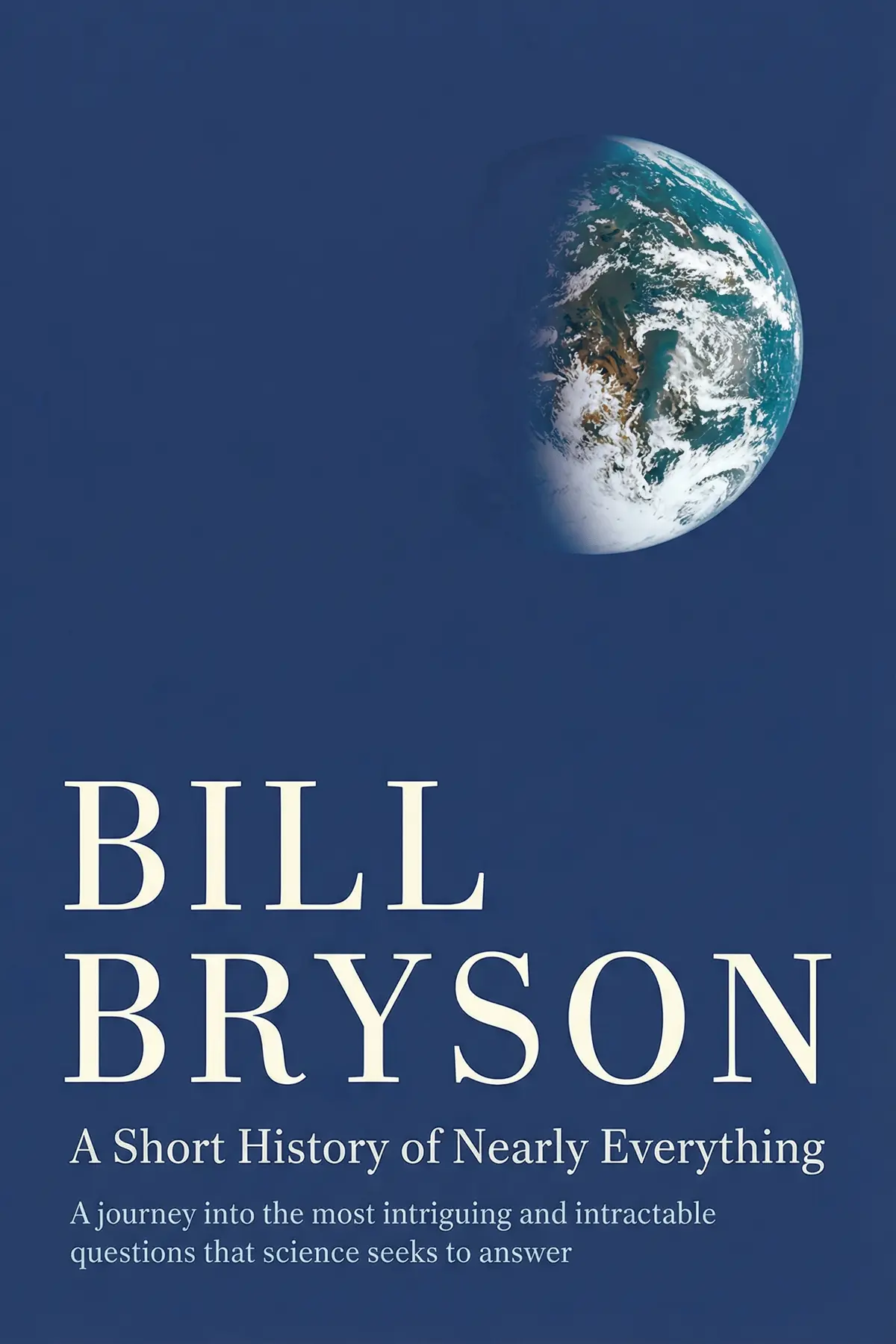
A Short History of Nearly Everything
Bill Bryson
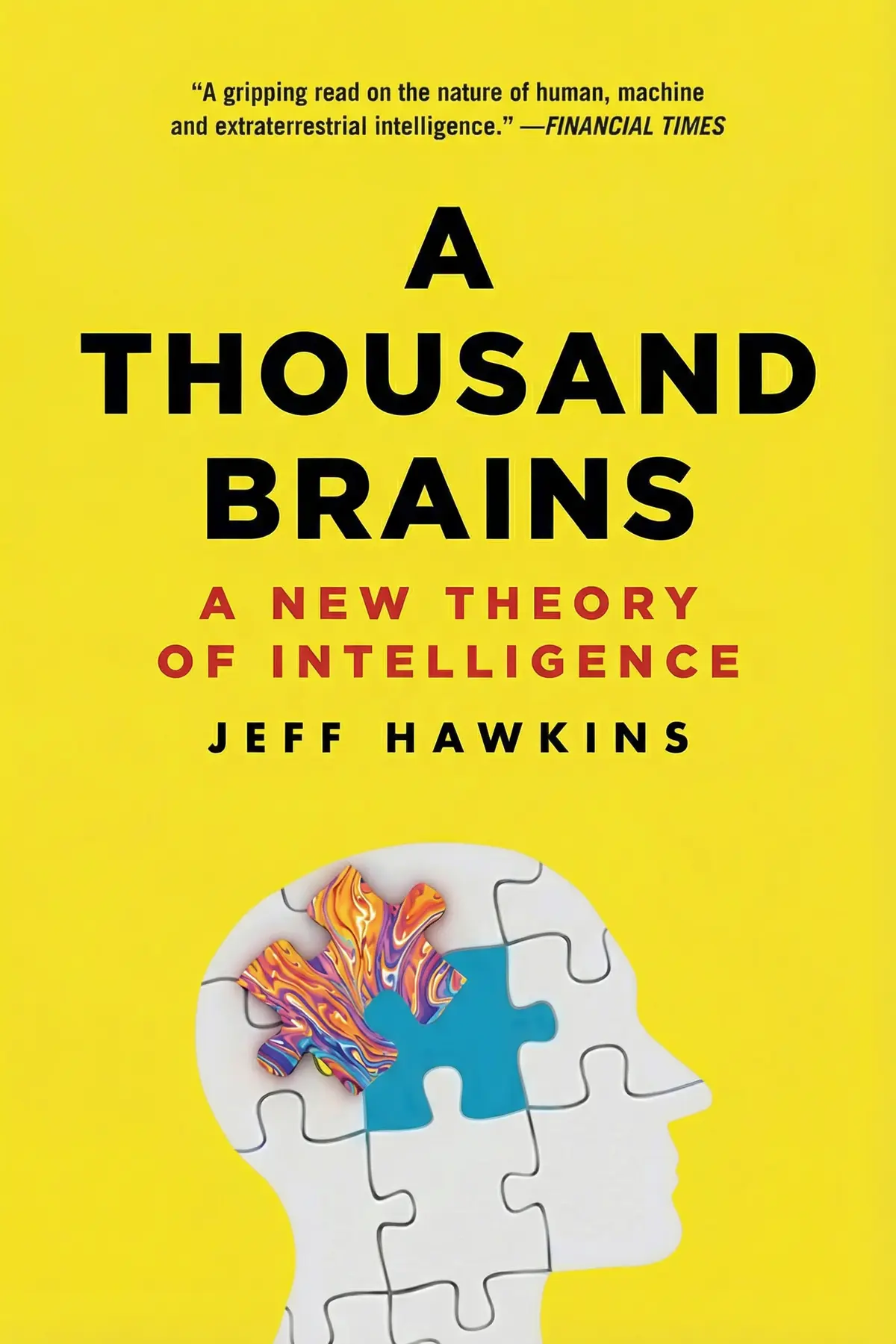
A Thousand Brains: A New Theory of Intelligence
Jeff Hawkins

Alien Earths: The New Science of Planet Hunting in the Cosmos
Lisa Kaltenegger
AUDIO SUMMARY AVAILABLE
Listen to The Janus Point in 15 minutes
Get the key ideas from The Janus Point by Julian Barbour, plus 5,000+ more titles in English and Thai.
- 5,000+ titles
- Listen as much as you want
- 7-day free trial
- Cancel anytime







