
25 min 31 sec
Available in:English
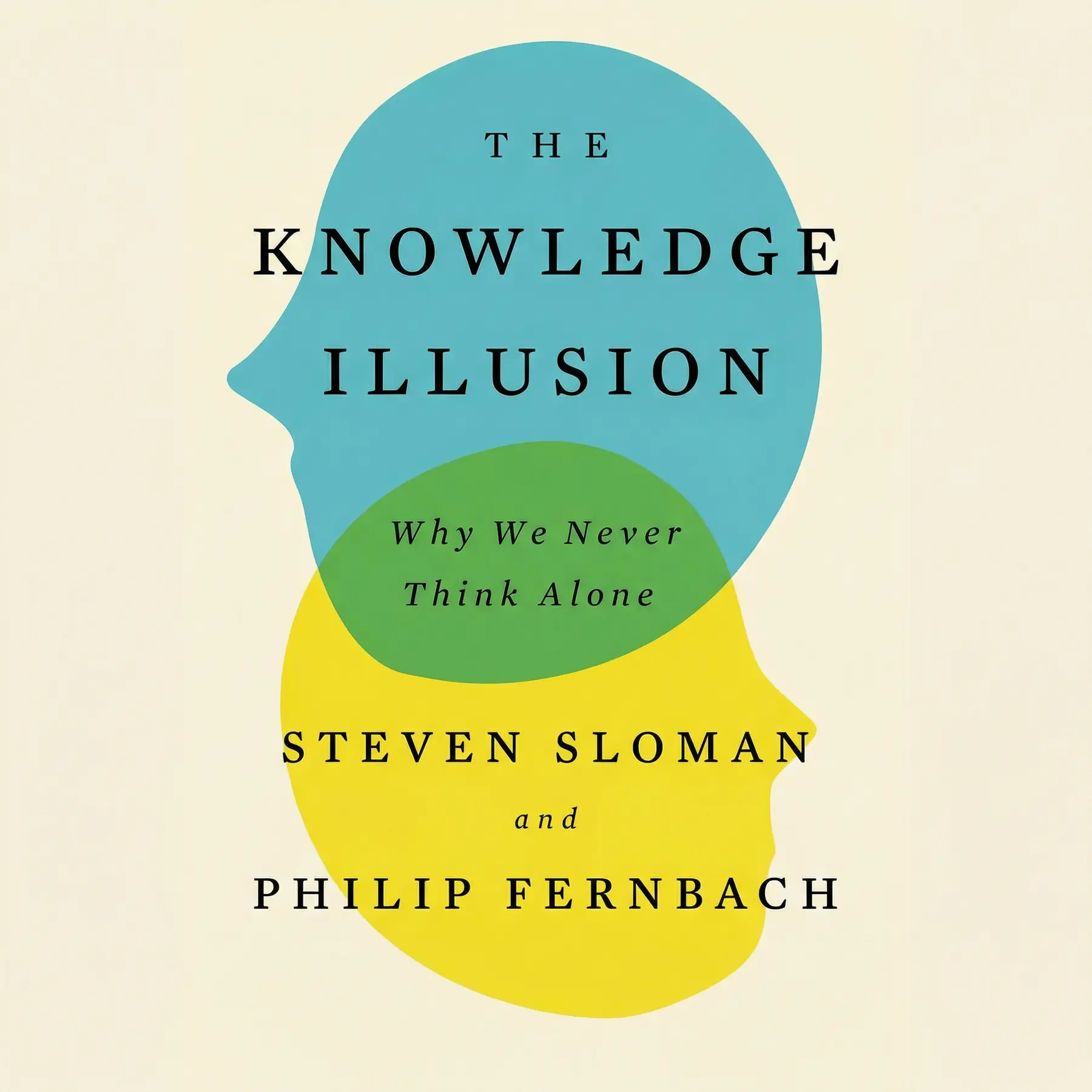
The Knowledge Illusion: Why We Never Think Alone
The Knowledge Illusion explores the fascinating gap between what we think we know and our actual understanding. It reveals that human intelligence is a collective effort, relying on shared expertise rather than individual mastery.
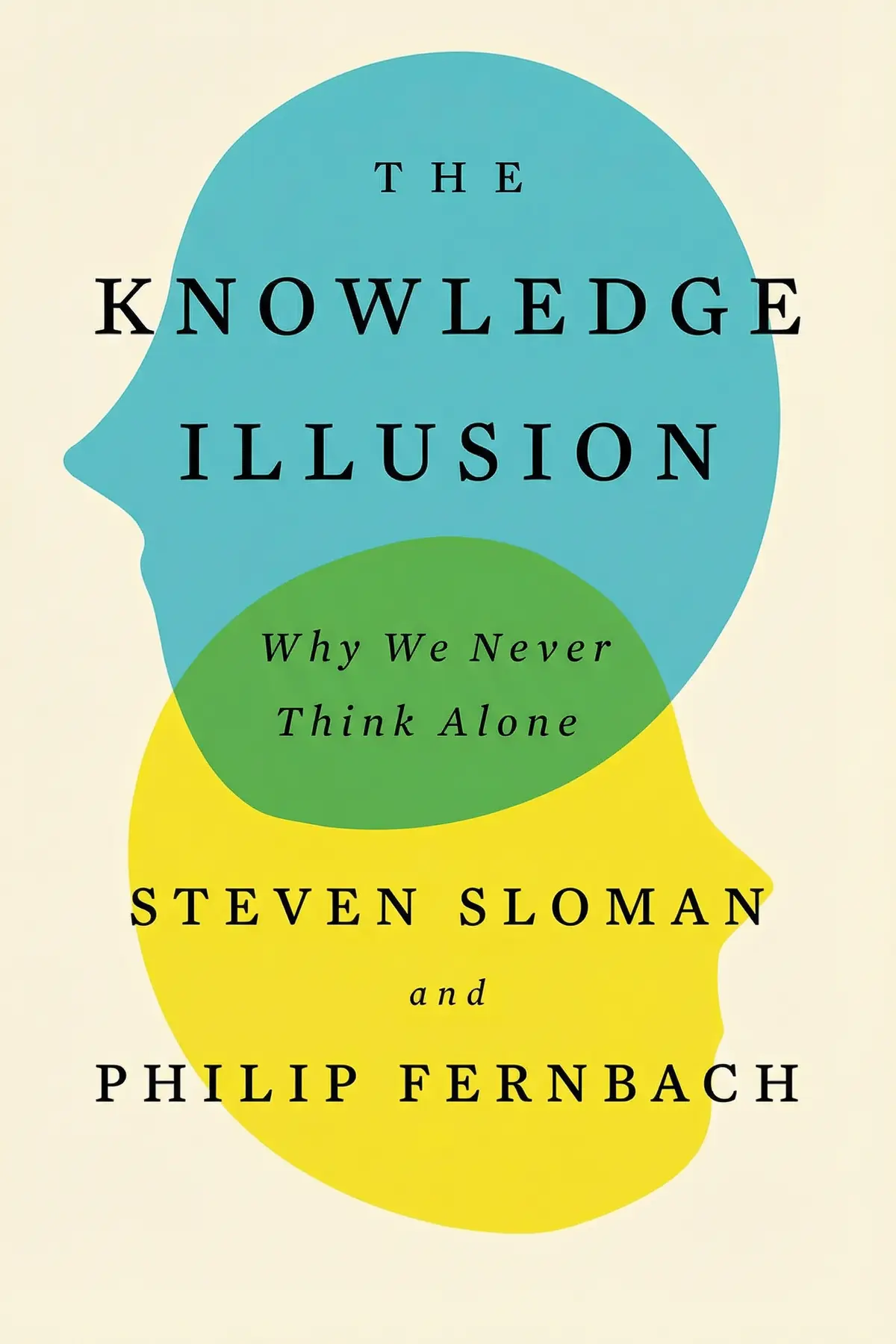
Table of Content
1. Introduction
1 min 49 sec
In the history of human achievement, we often center our stories on the image of the solitary genius. We picture Isaac Newton sitting under an apple tree, or Albert Einstein scribbling equations in a quiet office, and we conclude that progress is the result of single, exceptionally large brains working in isolation. This narrative suggests that if we just study enough or have a high enough IQ, we can master the world around us. But what if that entire concept is a fundamental misunderstanding of how the human mind actually functions?
What if our brilliance doesn’t come from what is inside our own heads, but from how we connect with the heads of others? This is the central provocation of the work by Steven Sloman and Philip Fernbach. They argue that we are all living in a state of cognitive deception, a phenomenon they call the knowledge illusion. We feel like we understand the world with great depth, but in reality, our individual understanding is incredibly thin. We are, essentially, passengers on a ship where we don’t know how the engines work, yet we feel like expert sailors because we are part of a crew that does.
This summary will take you on a journey through the architecture of the human mind. We will explore why our brains are actually terrible at storing facts but incredible at making choices, how our bodies and the physical world act as extensions of our thoughts, and why the most important thing we can learn is how to admit what we don’t know. We’ll see that from the way we vote to the way we use technology, our lives are defined by a community of knowledge that we often take for granted. By the end, you’ll see why the phrase ‘I think’ might be less accurate than ‘we think.’ Let’s dive into why we never truly think alone and how acknowledging our ignorance might be the smartest thing we ever do.
2. The Deception of Explanatory Depth
2 min 04 sec
Discover why you probably can’t explain the mechanics of a bicycle as well as you think, and what this reveals about our hidden ignorance.
3. The Brain as an Action Engine, Not a Computer
2 min 06 sec
Uncover why the metaphor of the brain as a hard drive is fundamentally flawed and what our minds were actually designed to do.
4. The Evolution of Shared Intelligence
2 min 00 sec
Explore the ‘social brain hypothesis’ and learn how communal living physically shaped the human mind.
5. Reasoning Through the Power of Story
2 min 03 sec
Understand why humans struggle with logic but excel at storytelling, and how narratives help us navigate cause and effect.
6. Intuition Versus Deliberation
1 min 56 sec
Learn about the two distinct ways your brain processes information and why your ‘gut feeling’ often leads to the knowledge illusion.
7. Thinking with the Physical World
1 min 44 sec
Discover how your body and your surroundings aren’t just where you think, but actually part of how you think.
8. The Community of Knowledge
1 min 48 sec
Understand how the division of cognitive labor allows us to build civilizations while remaining individually uninformed.
9. The Limits of Artificial Intelligence
2 min 00 sec
Why the fear of a ‘superintelligent’ AI might be missing the point about what truly makes humans smart.
10. The Deficit Model and Why Facts Fail
2 min 06 sec
Explore why giving people more information often fails to change their minds about controversial scientific topics.
11. Breaking the Cycle of Groupthink
1 min 51 sec
Learn a simple cognitive trick to reduce political polarization and encourage more humble, productive conversations.
12. Redefining Intelligence for a Collaborative World
1 min 54 sec
Why our education systems need to move away from memorization and toward the mastery of teamwork and ignorance.
13. Conclusion
2 min 10 sec
As we wrap up our exploration of the ideas in The Knowledge Illusion, the most important takeaway is a shift in perspective. We’ve seen that the sense of deep understanding we carry around is largely a fabrication of our minds—a necessary shortcut that allows us to function in a world that is far too complex for any one person to master. We’ve learned that our brains are built for action and collaboration, not for data storage, and that our intelligence is something we share with our bodies, our tools, and our community.
This realization shouldn’t make us feel small; it should make us feel connected. It reminds us that we are part of a vast, ancient, and incredibly successful network of human thought. The true power of humanity doesn’t lie in the brilliance of a few individuals, but in our collective ability to divide the labor of thinking. Whether we are building a skyscraper, navigating a global economy, or trying to solve the challenges of climate change, we succeed only when we acknowledge our individual limitations and lean into our shared strengths.
For a final, actionable thought, consider how this illusion affects your daily life—even your finances. Many of us fall for the knowledge illusion when it comes to money. We think we understand interest rates and debt because we use money every day. But consider a $10,000 loan at 12% interest. Our intuition might tell us to pay as little as possible each month to save cash. If you pay $110 a month, you’ll be in debt for over twenty years and pay a fortune in interest. If you increase that by just $10 to $120 a month, you’ll be debt-free five years sooner and save thousands. This is a perfect example of where our ‘intuitive’ understanding of money fails us. To make better decisions, we must slow down, engage our deliberative minds, and look at the actual causal mechanics.
In every part of your life, from your bank account to your ballot, remember that you don’t know as much as you think you do. And that’s okay. By embracing your own ignorance and seeking out the expertise of others, you can finally stop trying to think alone and start benefiting from the incredible community of knowledge that surrounds us all.
About this book
What is this book about?
Have you ever tried to explain exactly how a zipper works or how a toilet flushes? Most people believe they understand these everyday items perfectly until they are asked to describe the mechanics in detail. This book explores this phenomenon, known as the illusion of explanatory depth, to show that individuals actually possess very little information. Instead, we live in a community of knowledge where we rely on the expertise of others to navigate a complex world. Steven Sloman and Philip Fernbach argue that our intelligence isn't just tucked away inside our skulls; it's distributed across our bodies, our tools, and our social networks. By understanding that we never think alone, we can better appreciate the power of collaboration and the necessity of intellectual humility. This summary promises to change the way you view your own mind, moving from the myth of the lone genius to the reality of the social brain, and offering insights into why we struggle with complex political and scientific issues.
Book Information
About the Author
Steven Sloman
Steven Sloman is a distinguished professor of cognitive linguistics at Brown University. Beyond his teaching and research, he serves as the editor of Cognition, a leading scientific journal in the field of cognitive science. Philip Fernbach is an assistant professor at the University of Colorado, where he specializes in marketing and the study of consumer behavior. Their joint research and insights into human cognition have gained widespread recognition, appearing in prominent publications such as the New York Times, the Atlantic, and Slate.
Ratings & Reviews
Ratings at a glance
What people think
Listeners find that this work offers excellent perspectives on the mechanics of our minds and the collective nature of knowledge, with one listener highlighting its benefit in refining research skills. The writing is highly regarded for being clear, leading one listener to label it an "amazing plain-English book," while others describe the content as eye-opening with truly reflective segments. Furthermore, the text is easy to digest for students and casual audiences alike, who value its readability. Nevertheless, opinions on the delivery are varied; while some listeners enjoy the illustrative examples, one listener observes a significant repetition of simple ideas.
Top reviews
Anong
Finally got around to reading this, and it has completely shifted my perspective on what it means to be "smart." We spend so much time praising lone geniuses like Einstein or Martin Luther King Jr., but this book argues that their achievements were only possible because of the vast web of communal knowledge supporting them. It’s a beautiful take on human intelligence that emphasizes our interconnectedness over our individuality. The writing is incredibly clear and avoids the dense jargon that usually plagues these types of books, making it a perfect recommendation for non-experts. I was particularly struck by the "zipper" experiment—it’s a simple but effective way to prove how little we actually understand about the mundane objects we use daily. Not gonna lie, I felt a little embarrassed by my own ignorance after finishing this, but also strangely relieved. We don't have to know everything ourselves because we have each other.
Show moreDimitri
Wow. I wasn't expecting a book about cognitive science to be this engrossing. The authors take the concept of "individual intelligence" and completely deconstruct it, showing that our true strength lies in our ability to collaborate and share intentionality. This isn't just a book about why we're dumb; it's a book about why we're brilliant as a species. The way they explain how we use our bodies, our tools, and our friends as extensions of our own minds is absolutely fascinating. Frankly, it’s one of those books that you finish and immediately want to discuss with everyone you know. It helps improve your research abilities by making you more aware of the boundaries of your own understanding and the importance of expertise. Highly recommended for anyone who wants to understand the social machinery of the human mind and how we navigate an increasingly complex world.
Show morePairot
Ever wonder why you feel like an expert on how a toilet works until you actually have to fix one? Sloman and Fernbach dive deep into this "illusion of explanatory depth," revealing that most of what we think we know is actually stored in the people and objects around us. It’s a humbling realization that our brains aren’t solo computers but rather nodes in a massive, communal network. To be fair, the book can get a bit repetitive when it hammers home the same point across different chapters, but the core message is incredibly powerful. I found the sections on how we outsource our thinking to technology especially relevant in the age of AI. It’s written in a very accessible, plain-English style that makes complex cognitive science feel like a conversation over coffee. If you’ve ever felt overwhelmed by the amount of information in the world, this book explains why that feeling is both natural and necessary for our survival as a species.
Show morePim
After hearing so much about the "post-truth" era, I picked this up to understand why people hold so tightly to their illusions. Sloman and Fernbach provide a brilliant explanation: our beliefs aren't just in our heads; they are badges of identity that tie us to our social groups. This makes changing someone's mind nearly impossible through facts alone, because you're asking them to leave their community. The book is well-structured and uses great analogies to explain why we mistake the knowledge of others for our own. My only real gripe is that it occasionally feels a bit too descriptive without offering a clear path forward for those of us wanting to be more mindful. Still, the insight that we are "cognitive hunter-gatherers" who rely on our environment to function is a game-changer. It’s an essential read for anyone trying to navigate the polarized landscape of modern politics.
Show moreNannapat
Human knowledge is far more fragile than we care to admit, and this text does an excellent job of illustrating why. This book offers a much-needed reality check for our ego-driven culture. Most of us go through life thinking we are the masters of our own domain, but Sloman and Fernbach prove we are more like bees in a hive. Our intelligence is a shared resource, not a personal possession. The authors do a great job of showing how this communal knowledge allows us to build civilizations while simultaneously making us vulnerable to collective delusions. I found the discussion on "groupthink" particularly sobering, though I wish they had spent more time exploring how to mitigate its dangers in our daily lives. The prose is engaging and the examples—from toilets to zippers to sophisticated military tech—are relatable and well-chosen. It’s a thought-provoking read that will make you rethink your own expertise.
Show moreLayla
Personally, I think the most important takeaway here is the need for intellectual humility. We are all prone to the "knowledge illusion," and recognizing that fact is the first step toward better decision-making. The book is very well-written and flows smoothly, though it does get a bit repetitive in the middle sections. I liked the focus on how technology has further blurred the lines between what we know and what we have access to. It's a bit scary to think about how dependent we are on systems we don't understand, but the authors argue that this has always been the human condition. While I would have liked more exploration of the negative side of hive-mentality beyond a few paragraphs, the overall message is one of optimism about human cooperation. It’s an amazing, accessible book that sheds light on the invisible networks that shape our lives.
Show moreRatchanee
As someone who has always been fascinated by how the mind works, I found "The Knowledge Illusion" to be a refreshing change of pace from other pop-psychology books. Instead of focusing on individual quirks or logical fallacies, it looks at the bigger picture of how we function as a collective. The authors argue that we are designed to be part of a community, and that our "ignorance" as individuals is actually a feature, not a bug. It allows us to specialize and achieve things that no single person could ever hope to accomplish alone. The chapter on how to talk to people with opposing viewpoints was particularly helpful and provided some genuine "aha" moments about the futility of arguing with pure facts. It’s a clear, concise, and deeply insightful book that deserves a spot on any curious person’s bookshelf, even if it meanders a bit near the end.
Show moreJune
The central premise here—that individuals know far less than they believe—is fascinating, but I can't help feeling the authors stretched a 30-page essay into a full-length book. Truth is, once you grasp the concept of the "hive mind" in the first few chapters, the rest of the text feels like a series of case studies that don't always add much new depth. They meander into topics like personal finance and climate change, which are interesting but sometimes felt like filler to justify the page count. I appreciated the discussion on why providing more facts doesn't actually change people's minds, as it challenges the "information deficit" model we usually rely on. However, the lack of concrete advice on how to improve our individual decision-making was a bit of a letdown. It’s a decent introductory text for those new to social psychology, but seasoned readers might find it a bit too shallow.
Show moreElias
Truth be told, I initially grabbed this for a college course but found it to be a bit of a mixed bag. On one hand, the "illusion of explanatory depth" is a fantastic concept that everyone should be aware of, especially in an age where everyone has an opinion on everything. On the other hand, the authors tend to lean on generalities and vague directives rather than providing rigorous analysis. Look, the book is definitely readable and the "plain-English" approach makes it accessible, but I wanted more data and fewer anecdotes. The section on how we should rely on experts while remaining aware of their biases was particularly confusing, as it seemed to contradict the book's earlier stance on the wisdom of crowds. It’s a good starting point for a discussion on cognitive bias, but it doesn't quite go deep enough to be truly enlightening for someone already familiar with the field.
Show moreAlejandra
Picking this up after reading many positive reviews, I was ultimately quite underwhelmed. This book starts with a reasonably simple idea and then repeats it ad nauseam for nearly three hundred pages. While the authors admit late in the game that their conclusions might seem commonplace, that doesn't excuse the lack of substantive new insights for anyone who has read even a bit of pop psychology. The claim that teams are responsible for almost every major human achievement feels like a massive oversimplification that requires way more evidence than the brief assertions provided here. Furthermore, the chapters on technology and AI felt incredibly naive, brushing aside complex concepts like the Singularity in just a page or two without engaging with the actual arguments. If you’re looking for a deep dive into cognitive science, look elsewhere; this is strictly for beginners.
Show moreReaders also enjoyed

Acting with Power: Why We Are More Powerful Than We Believe
Deborah Gruenfeld
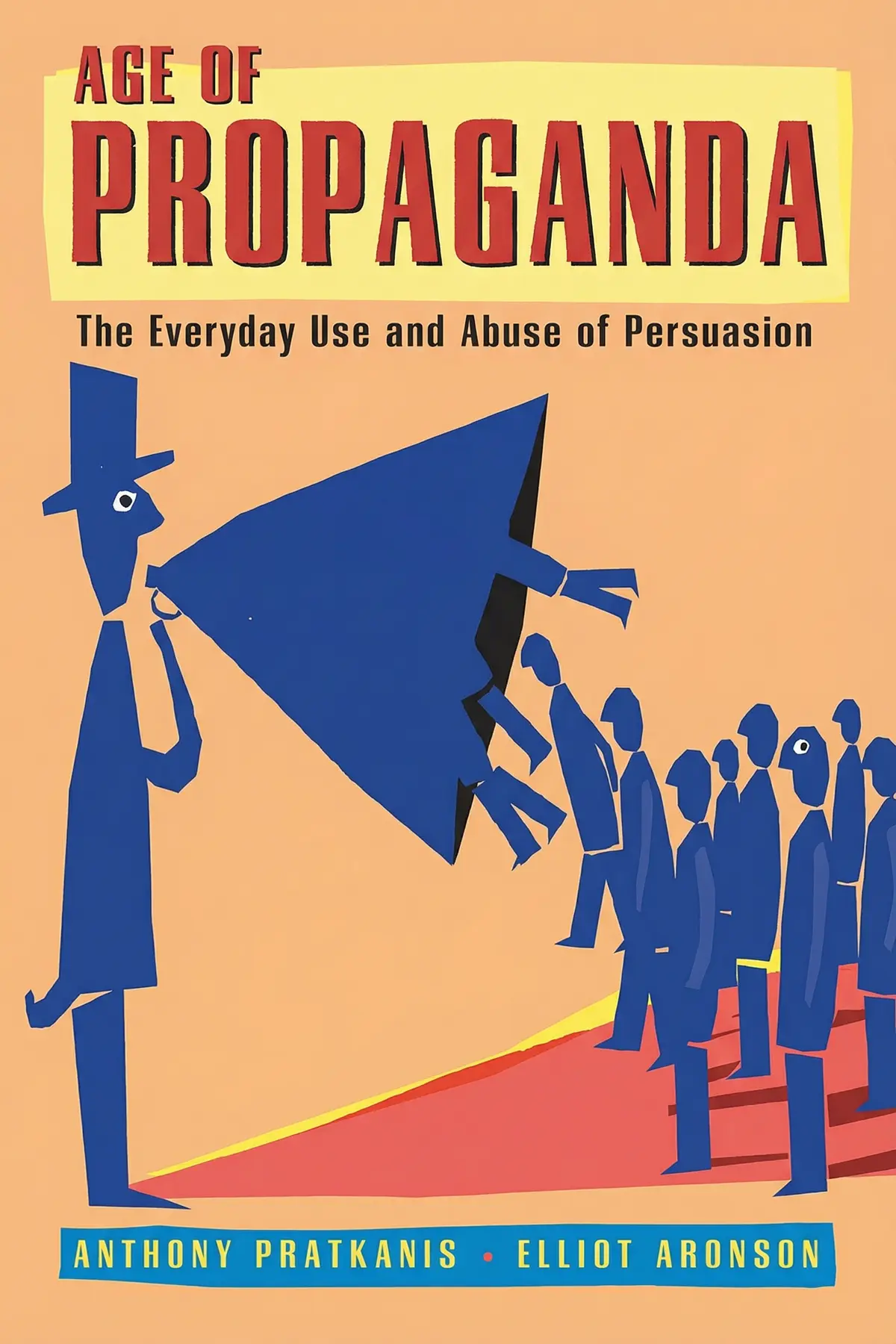
Age of Propaganda: The Everyday Use and Abuse of Persuasion
Anthony Pratkanis


59 Seconds: Change Your Life in Under a Minute
Richard Wiseman
AUDIO SUMMARY AVAILABLE
Listen to The Knowledge Illusion in 15 minutes
Get the key ideas from The Knowledge Illusion by Steven Sloman, plus 5,000+ more titles in English and Thai.
- 5,000+ titles
- Listen as much as you want
- 7-day free trial
- Cancel anytime







