
15 min 08 sec
The Knowledge: How to Rebuild Civilization in the Aftermath of a Cataclysm
Discover the essential scientific principles and technological foundations required to restart human civilization from the ground up after a global catastrophe, covering everything from basic agriculture to primitive medicine.
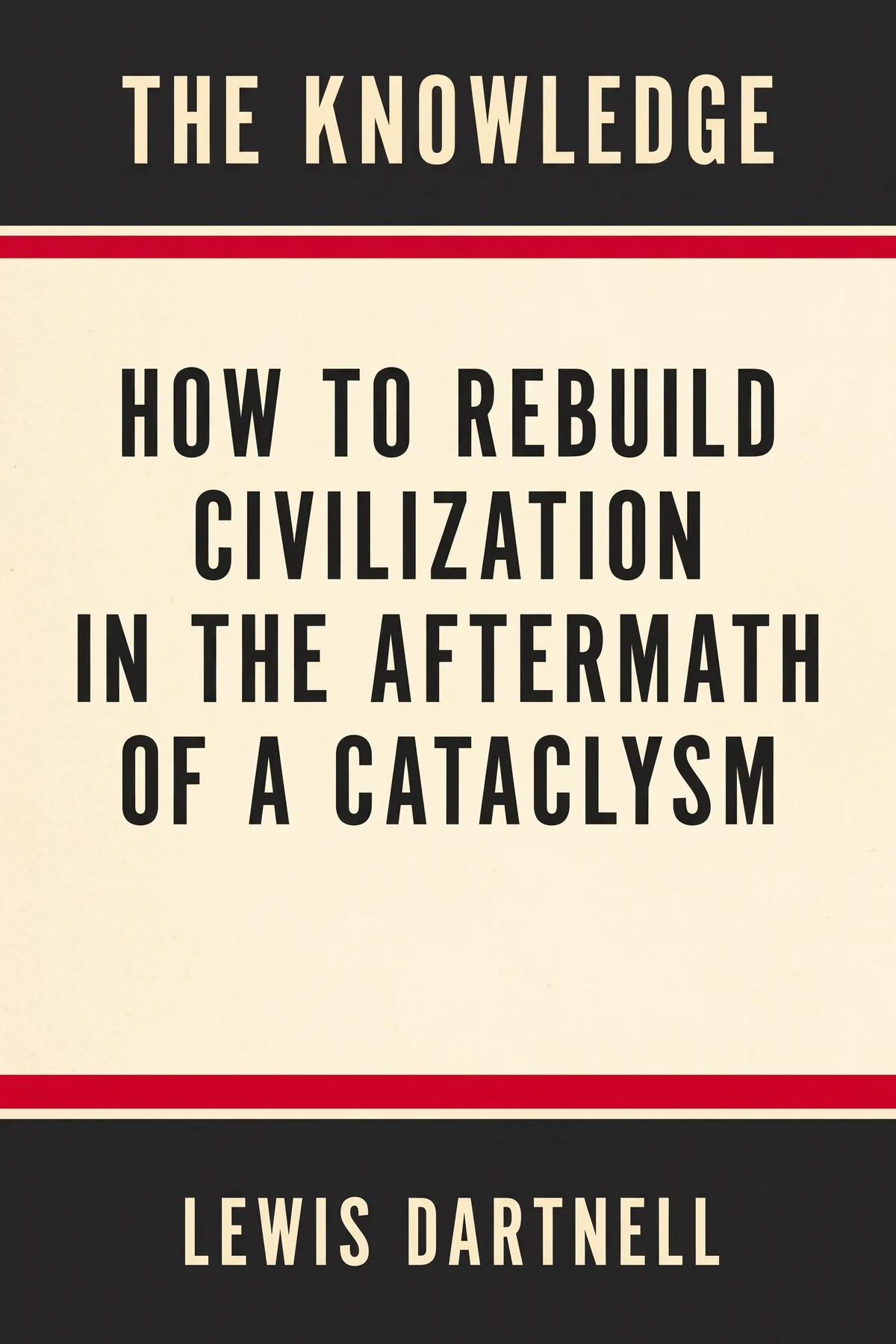
Table of Content
1. Introduction
1 min 24 sec
Imagine, for a moment, that the complex machinery of modern life simply stops. Whether through a global pandemic, an environmental shift, or a sudden astronomical event, the infrastructure we rely on—power grids, logistics, global trade—vanishes overnight. We live in a world where most of us are consumers of technology we don’t truly understand. We turn a tap for water and flip a switch for light, but few of us could recreate those systems from scratch.
This is the starting point for a fascinating exploration into the foundations of our civilization. It isn’t just a survival guide for the first few weeks of an apocalypse; it is a blueprint for the long-term recovery of human society. The central throughline here is the ‘grace period’—that brief window of time when the remnants of the old world can still support us while we race to relearn the fundamental sciences of the past.
By understanding the core principles of chemistry, agriculture, and physics, we can avoid a descent into a new Dark Age. We’re going to look at the immediate priorities of survival, how to transition from scavenging to sustainable farming, and how to jumpstart the industrial processes that allow for medicine, energy, and communication. This journey is about recognizing that our world isn’t just built on gadgets, but on a deep, collective knowledge that we must preserve at all costs.
2. The Initial Survival Phase and Resource Management
2 min 17 sec
When the grid goes down, your first hours determine your long-term fate. Learn why your local mall is a fortress and how to secure life’s most basic requirement.
3. Transitioning from Scavenging to Self-Sufficiency
2 min 04 sec
A typical supermarket contains decades of nutrition, but the clock is ticking on perishables. Discover how to manage a dwindling inventory while planning for your first harvest.
4. The Science of Sustainable Agriculture
2 min 04 sec
Farming is more than just burying seeds; it’s a delicate dance of chemistry and labor. Learn the secrets of crop rotation and soil preparation.
5. Reclaiming Industrial Heat and Energy
1 min 53 sec
Wood fires are great for warmth, but they won’t forge steel or bake bread on a grand scale. Discover the essential role of charcoal in industrial rebirth.
6. Basic Chemistry for Health and Hygiene
2 min 05 sec
In a world without doctors, the best medicine is prevention. Learn how to manufacture soap from ashes and treat deadly diseases with kitchen staples.
7. The Foundations of Time and Navigation
2 min 03 sec
GPS and digital clocks will eventually fail. Learn how to use the stars, shadows, and simple physics to find your way and keep track of the years.
8. Conclusion
1 min 18 sec
The journey through the fundamentals of rebuilding society reveals a profound truth: our modern world is a marvel of interconnected systems, but those systems are built on basic scientific principles that are accessible to us all. We’ve seen how the ‘grace period’ of leftover resources can provide the breathing room needed to establish a new agricultural foundation, and how simple chemistry can provide the heat, hygiene, and medicine necessary to sustain a growing population.
Rebuilding isn’t just about hard work; it’s about the preservation and application of ‘the knowledge.’ It’s about moving from the role of a consumer to a creator. The most important tool you can possess in the face of a catastrophe isn’t a weapon or a hoard of supplies, but an understanding of the ‘why’ behind the ‘how.’ By mastering the science of soil, the chemistry of energy, and the mechanics of time, humanity can ensure that a collapse is merely a temporary setback rather than a final end. The takeaway is clear: the bridge to the future is built with the wisdom of the past. If we keep that knowledge alive, we can weather any storm and build a world that is perhaps even more resilient than the one we have today.
About this book
What is this book about?
The Knowledge presents a thought-provoking thought experiment: if modern society were to vanish tomorrow, how would we survive and eventually rebuild? It moves beyond simple survivalist tactics to explore the fundamental scientific knowledge that underpins our world. The book provides a roadmap for humanity's recovery, focusing on the most critical skills needed to sustain life and re-establish industry. From identifying fertile soil and securing clean water to manufacturing soap and understanding the chemistry of energy, it offers a fascinating look at the 'grace period' following a collapse and the long-term steps toward technical rebirth.
Book Information
About the Author
Lewis Dartnell
Lewis Dartnell is a prominent UK Space Agency Research Fellow based at the University of Leicester. His professional focus lies in the field of astrobiology, where he investigates the potential for microbial life on the planet Mars. In addition to his research, Dartnell is a decorated science communicator and writer. The Knowledge is his third book.
Ratings & Reviews
Ratings at a glance
What people think
Listeners find this book engaging and straightforward to follow, offering well-documented information that delivers core principles alongside enough complexity for further investigation. They value its stimulating perspective on how to reconstruct civilization and its thorough list of references. The prose is of high quality, and listeners deem it helpful, with one mentioning it acts as a guidebook for survivors.
Top reviews
Somsri
Picked this up at an airport and ended up finishing it in two days because the concept is just so gripping. Dartnell does a fantastic job of illustrating just how fragile our modern world really is by showing us the complex foundations we've built it on. The chapter on the 'grace period'—that short window where we can scavenge before things truly decay—was particularly eye-opening for me. I love how he breaks down the history of science, making things like the internal combustion engine feel like something a motivated group could actually replicate. It’s an empowering read that makes you appreciate every light switch you flip and every meal you eat. While some might find the lack of 'action' boring, I think the focus on the scientific method as the ultimate tool for recovery is brilliant. This is a must-have for anyone who likes thinking about the 'how' behind our daily lives. Truly entertaining stuff.
Show morePear
Look, if you’re looking for a zombie survival guide, you’re in the wrong place, but if you want to understand the bones of our world, buy this. I’ve always been a humanities guy, so the chemistry and physics of our civilization usually go right over my head. Dartnell somehow made the history of chemicals and foundries accessible and even exciting to read about. I found myself looking at random objects in my house and thinking about the centuries of trial and error required to produce them. The book is less about the apocalypse and more about the incredible story of how we climbed out of the dark ages. The diagrams are helpful, and the way he explains the shift from scavenging to true production is masterfully done. It’s one of those rare books that completely changes your perspective on the mundane things around you. I’ll be keeping this on my shelf for a long time. It’s simply brilliant.
Show moreBank
Ever wonder how you'd actually make soap or glass if the world ended tomorrow? Dartnell takes an incredibly ambitious premise—rebuilding civilization from the ground up—and distills it into a readable, scientific primer. The book shines when it explains the fundamental chemical processes we take for granted, like the Haber-Bosch process for fertilizer or basic metallurgy. I’ll admit, the prose can lean toward the dry side, feeling like a high school chemistry textbook during the more technical chapters. However, the sheer breadth of research makes it an invaluable reference for any 'what if' enthusiast. It’s less of a 'prepper' manual for immediate survival and more of a long-term blueprint for a secondary industrial revolution. If you enjoy deconstructing how things work, you'll find plenty to chew on here, even if the social aspects of a collapse are largely ignored. It makes you realize how much we rely on others.
Show moreViolet
After hearing about this on a podcast, I was curious to see if it actually provided a viable roadmap for a fallen society. What I found was a beautifully written love letter to human ingenuity and the scientific method. Dartnell avoids the usual 'prepper' tropes of hoarding ammo and instead focuses on the critical, enabling technologies like agriculture and basic medicine. The section on how we are essentially dependent on artificial fertilizers to feed the billions of people on Earth was genuinely chilling. It’s a dense read at times, and I certainly couldn't build a metal lathe just from reading this, but it points you in the right direction. I appreciate the way he links different technologies together, showing how one invention inevitably leads to the next. It’s a great companion piece for anyone who enjoys speculative fiction or history. It feels like a genuine survivor's guidebook for the thinking person.
Show moreSomsak
Finally got around to reading this, and I was pleasantly surprised by how much I learned about basic industrial processes. Most of us are so disconnected from how our food is grown or how our clothes are made that we’d be helpless without a supermarket. Dartnell bridges that gap by explaining the fundamental cycles of production in a way that feels achievable. I particularly liked the focus on the 'scientific method' in the final chapter, which acts as a safety net for all the knowledge we might lose. The book is clearly a labor of love, and the research into historical techniques is top-notch. My only gripe is that it feels a bit UK-centric in its assumptions about population density and available resources. Still, it’s a brilliant conceptual exercise that makes you think deeply about the sustainability of our current way of life. It’s foundational concepts explained with real clarity.
Show moreRung
As someone who loves deconstructing modern technology, I found this to be a fantastic deep dive into the 'operating system' of our world. It’s fascinating to see how something as simple as limestone is actually the key to so many different industrial applications. Dartnell doesn't just give you facts; he shows you the logical progression of how one discovery facilitates another. While I agree with other reviewers that the social aspects are missing, I think that’s outside the scope of what he was trying to achieve. He wanted to provide the technical 'seed' for a new world, and in that regard, he succeeded. The writing is clear, the examples are well-chosen, and the overall message is one of hope in the face of catastrophe. It’s a thought-provoking read that will make you look at a pile of scrap metal or a field of grain in a whole new light. Definitely worth the time for the curious mind.
Show moreChaiwat
To be fair, 'The Knowledge' is a fascinating thought experiment, but it’s a bit of a slog to get through if you aren't a science nerd. The author’s premise—that a tiny population would want to recreate our exact technological path—is a major leap of faith that I couldn't quite get past. While the descriptions of making lime or basic photography are interesting, the writing often feels a bit too much like a lecture. I was hoping for more practical survival tips, but instead, I got a lot of historical context on industrial development. It’s well-researched and the reference section is genuinely impressive for anyone wanting to do a deep dive into specific topics. Ultimately, it’s a decent 'bathroom book' where you can read a few pages at a time without losing the thread. It’s good, but it didn't quite live up to the hype for me. A bit too clinical for my tastes.
Show moreParichat
Not what I expected, but it was still an interesting read for a lazy Sunday afternoon. I thought this would be more of a 'how-to' guide, but it’s really more of a 'why-it-works' book. Dartnell covers everything from communication to transport, but the instructions are often too vague to actually follow if you were starting from scratch. For example, he mentions using certain stars for navigation without giving the level of detail a beginner would actually need. It’s great for sparking curiosity, and the bibliography is a goldmine of information for further research. However, the tone can be a bit dry, and the pacing slows down significantly in the middle chapters. It’s a solid 3-star read—educational and thought-provoking, but perhaps a bit too ambitious for its own good. It’s better as a piece of speculative non-fiction than an actual survival manual. Useful as a starting point, nothing more.
Show moreArthit
Frankly, this book misses the forest for the trees by focusing entirely on gears and chemicals while ignoring the humans using them. Dartnell assumes that survivors would immediately prioritize rebuilding a 21st-century lifestyle, but he doesn't address the social structures required to make that happen. Why should I care about the specifications for a horse-drawn wagon if I don't know the first thing about keeping a horse alive in a post-collapse environment? The 'reboot' concept is a great hook, yet the execution feels like a collection of Wikipedia entries on basic technology rather than a cohesive survival strategy. It’s disappointing because the author clearly possesses a deep well of knowledge, but he fails to apply it to a realistic human scenario. Without discussing psychology or governance, this just feels like an academic exercise for people who want to feel smart about the apocalypse. I wanted more grit and less grit-smelting instructions.
Show moreAim
The biggest problem with this book is the glaring omission of any mention of defense or weaponry in a post-collapse world. Dartnell presents this weirdly utopian view where everyone just cooperates peacefully to rebuild the steam engine while ignoring the reality of human conflict. He goes into painstaking detail about making paper from rags but won't touch the subject of how to protect your community from predators. This ideological blind spot makes the whole 'manual for rebuilding' feel like a fantasy rather than a serious guide. Even if you aren't a 'gun person,' ignoring the history of metallurgy as it relates to tools for defense is a massive oversight. The technical info is accurate enough, but the lack of realism regarding human nature makes the advice feel useless. I wanted a gritty look at survival, but I got a sanitized science fair project instead. It’s technically sound but practically naive.
Show moreReaders also enjoyed
A Life Decoded: My Genome: My Life
J. Craig Venter
A Planet of Viruses
Carl Zimmer
A Short History of Nearly Everything
Bill Bryson
A Thousand Brains: A New Theory of Intelligence
Jeff Hawkins

Alien Earths: The New Science of Planet Hunting in the Cosmos
Lisa Kaltenegger
AUDIO SUMMARY AVAILABLE
Listen to The Knowledge in 15 minutes
Get the key ideas from The Knowledge by Lewis Dartnell, plus 5,000+ more titles in English and Thai.
- 5,000+ titles
- Listen as much as you want
- 7-day free trial
- Cancel anytime







