

25 min 10 sec
The Lives of the Artists: Lives of the Most Eminent Painters, Sculptors, and Architects
A foundational exploration of the Renaissance through the biographies of its most influential creators. Giorgio Vasari chronicles the evolution of art from its humble medieval rebirth to the height of Michelangelo’s genius.
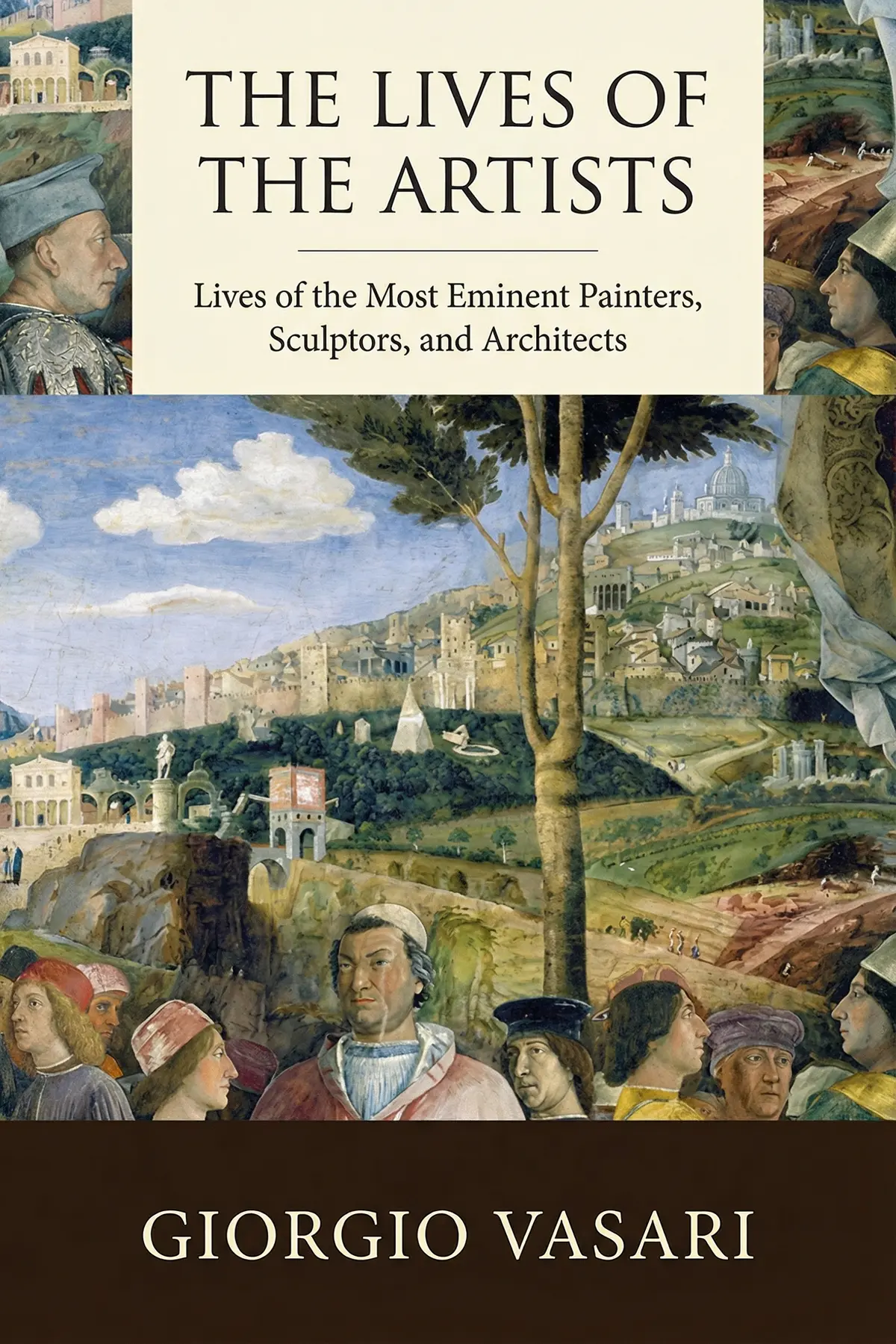
Table of Content
1. Introduction
1 min 39 sec
Imagine stepping back into a world where the very concept of artistic genius was being born. In the mid-sixteenth century, Giorgio Vasari sat down to record the history of a movement that was still unfolding around him—a movement we now call the Renaissance. His work, The Lives of the Artists, isn’t just a dry historical record; it is a vibrant, first-hand account of the individuals who dragged art out of the shadows of the Middle Ages and into the light of the modern world. Vasari’s throughline is simple yet profound: he believes that art is a living, breathing progression, a ladder of improvement where each generation stands on the shoulders of the masters who came before.
As we journey through this summary, we will follow the trajectory of this creative explosion. We start with the early pioneers who first noticed that human figures should have weight and emotion, and we conclude with the giants like Michelangelo, whom Vasari believed reached a level of perfection that could never be surpassed. Along the way, we’ll see how the discovery of mathematical perspective changed how we view space, how the study of anatomy brought bronze and marble to life, and how the competitive spirit of cities like Florence fueled a race for beauty. This is a story about the transition from craftsman to creator, and how a few dedicated individuals changed the visual language of humanity forever. By the end of this exploration, you’ll see the Renaissance not as a collection of static museum pieces, but as a series of bold, often risky experiments carried out by people who were obsessed with capturing the essence of life itself.
2. The Birth of Naturalism with Cimabue
2 min 11 sec
Discover how a single artist began to break away from centuries of rigid tradition to find the human form.
3. Giotto and the Humanization of the Divine
2 min 26 sec
See how a shepherd boy turned master revolutionized storytelling by painting emotions that viewers could finally feel.
4. The Architectural Vision of Arnolfo di Cambio
2 min 17 sec
Explore how the physical face of Florence was transformed by a man who balanced strength with newfound elegance.
5. Donatello and the Psychological Power of Sculpture
2 min 23 sec
Witness the moment when cold stone and bronze began to breathe with individuality and raw human vulnerability.
6. Brunelleschi and the Logic of Space
2 min 33 sec
Learn how a persistent architect used mathematics to solve an ‘impossible’ engineering mystery and invent a new way of seeing.
7. The Infinite Curiosity of Leonardo da Vinci
2 min 38 sec
Step into the mind of a polymath who believed that truly understanding a subject required seeing beneath its skin.
8. Michelangelo and the Divine Struggle for Perfection
2 min 28 sec
Witness the intensity of an artist who pushed the human form to its absolute limit, carving spirit out of stone.
9. The Engine of Innovation: Rivalry and Collaboration
2 min 27 sec
Discover why the Renaissance happened where and when it did, fueled by a fierce desire to outdo the masters of the past.
10. The Paragone: The Great Debate Between Art Forms
2 min 28 sec
Uncover the intellectual battle that asked the ultimate question: which is superior, the brush or the chisel?
11. Conclusion
1 min 40 sec
In tracing the journey from Cimabue’s first stirrings of naturalism to Michelangelo’s towering masterpieces, we see more than just a history of art. We see the birth of the modern individual. Giorgio Vasari’s The Lives of the Artists shows us that the Renaissance was a period defined by the belief that humans could, through study, discipline, and passion, achieve a level of greatness that approached the divine. This wasn’t just a change in style; it was a change in the human soul.
Vasari’s throughline of progress reminds us that no genius exists in a vacuum. Every breakthrough—whether it was Brunelleschi’s perspective or Leonardo’s sfumato—was built on the experiments of those who came before. The lesson of the Renaissance is one of relentless curiosity and the courage to look at the world with fresh eyes. It teaches us that competition can be a force for good when it pushes us toward excellence, and that the marriage of art and science is where true innovation lives.
As you think back on these lives, consider the legacy they left behind. The cathedrals, statues, and paintings of the Renaissance aren’t just artifacts of a bygone age; they are reminders of what is possible when human ambition is directed toward the pursuit of beauty and truth. Vasari’s work ensures that these artists aren’t just names in a textbook, but living examples of the heights the human spirit can reach. Whether you are a creator yourself or simply an observer of the world, the story of the Renaissance invites you to look a little closer, think a little deeper, and never stop striving for your own version of perfection.
About this book
What is this book about?
The Lives of the Artists serves as the bedrock of modern art history, offering a vivid and personal look at the giants of the Italian Renaissance. Giorgio Vasari, an artist and architect himself, captures the stories behind the masterpieces, detailing the technical breakthroughs and personal rivalries that defined the era. From the early innovations of Cimabue and Giotto to the divine mastery of Michelangelo, the book tracks a movement that shifted from rigid, symbolic representations to a profound celebration of human anatomy, emotion, and perspective. Beyond mere biography, this work explores the philosophical and cultural shifts that allowed art to flourish in Florence and beyond. It promises a deep dive into the minds of the people who designed the cathedrals, carved the marble, and painted the frescoes that still define Western beauty today. By examining the progression of style through three distinct ages, readers gain an understanding of how individual ambition and collective competition combined to create a legacy of timeless creativity and intellectual rigor.
Book Information
About the Author
Giorgio Vasari
Giorgio Vasari was an Italian painter, architect, and writer. He worked on commissions for the Medici family and designed Florence’s Uffizi Gallery. His detailed biographies of Renaissance artists laid the foundation for modern art history.
Ratings & Reviews
Ratings at a glance
What people think
Listeners view this work as a significant historical asset, with one listener emphasizing it as essential reading for budding artists and historians. Nevertheless, opinions on the writing style are varied, as several listeners found the material difficult to get through.
Top reviews
Rafael
Wow, reading about the masters from someone who actually knew them is a surreal experience. Vasari was a student of Michelangelo, and that personal connection shines through in every word of that specific biography. It’s easily the highlight of the collection. The book bridges the gap between the human and the divine, showing these icons as real people with eccentricities and rivalries. Personally, I loved the bits of conversation and the letters included toward the end. It makes the history feel alive. While some chapters are definitely more interesting than others, the overall impact of the book is undeniable. It’s more than just a list of paintings; it’s a manifesto on the power of human creativity. Any serious artist should have this on their shelf, even if they only dip into it occasionally for inspiration.
Show morePhimwan
Finally got around to this cornerstone of art history, and it's clear why it remains a fundamental text. Vasari essentially invented the way we talk about art today. He coined terms like 'Gothic' and defined the progression of styles that we still teach in schools. To be fair, he is incredibly biased toward his fellow Florentines, but his enthusiasm is hard to resist. The writing is conversational and almost chatty, which I didn't expect from a 500-year-old book. It feels like you're sitting in a piazza listening to an old master tell stories about his peers. Some people find the lack of context difficult, but I think the raw, first-hand nature of the text is its greatest strength. It is a masterpiece of biographical writing that has stood the test of time for a reason.
Show moreKavya
The chapter on Botticelli alone is worth the price of admission, even if Vasari seems to overlook masterpieces like the 'Birth of Venus' in favor of smaller works. It’s fascinating to see what a contemporary actually valued. In his eyes, the 'Primavera' was just a nice allegory, not the monumental icon it is today. This shift in perspective is exactly why the book is so important. It challenges our modern assumptions about what makes art 'great.' I found the writing to be quite easygoing once you get into the rhythm of his sentences. He captures the competitive spirit of the age perfectly. You can feel the tension as Brunelleschi fights for his dome or as young artists try to outdo their masters. It’s a vivid, colorful, and essential record of a golden age.
Show moreKasemsan
After hearing about this book for years, I finally dove into a selected edition and found it surprisingly conversational and full of life. It’s basically the 16th-century version of a 'Behind the Scenes' documentary. Vasari captures the shift when observation of the human form began to replace mere devotion to the divine. His description of Michelangelo’s Pieta as a work where nature is 'scarcely able to create' such perfection in the flesh is a peak moment in the text. It signifies a massive turning point in human thought. Yes, he’s judgmental and often inaccurate, but his voice is so distinct that you don't really mind. This is an essential bridge to the past. It turns cold marble and old oil into the works of living, breathing men.
Show moreEarn
Ever wonder where our modern concept of the 'artistic genius' actually comes from? This book is the source. Vasari doesn't just record dates; he crafts a narrative of art progressing from 'Gothic' barbarism toward the perfection of his own era. I've gotta say, his passion for the subject is infectious, even when he's being a total hagiographer for Michelangelo. The way he describes the Pieta as a miracle of stone is genuinely moving and helps you see the work through 16th-century eyes. It isn't always accurate—half the stories about Giotto and Cimabue are probably myths—but that’s part of the charm. It reads like a collection of gossip and legends from the workshops of Florence. Just be warned that the style is very dated and can be quite dense in the unabridged versions.
Show moreBella
Personally, I found the gossip and personal anecdotes far more compelling than the actual descriptions of the paintings. Vasari has a real eye for a good story, like Botticelli neglecting his work to illustrate Dante or painters staying up all night to obsess over perspective. These 'Lives' help to humanize the giants of the Renaissance. You realize that these weren't just names in a museum; they were whimsical, messy, and sometimes lazy people. The book can be a slog when he starts listing every minor commission in every obscure church, though. I think an abridged version is the way to go for most readers. It keeps the momentum going without getting bogged down in the administrative details of 1500s art commissions. It’s a fascinating, if occasionally frustrating, look into a bygone world.
Show moreJib
Frankly, the lack of pictures is a massive hurdle for the modern reader, but the text itself is surprisingly rewarding. You have to approach this as a historical document rather than a modern biography. Vasari wasn't trying to be an objective scientist; he was an artist celebrating his craft and his friends. I've gotta say, the shorter chapters on the less famous painters were actually my favorite. They provide a sense of the sheer scale of the artistic output during the 15th and 16th centuries. It wasn't just four famous ninjas; it was an entire culture obsessed with beauty. The lists of works can be tedious, but they serve as a valuable inventory for anyone traveling to Italy. It’s a book that demands patience but pays off in small, insightful dividends.
Show moreLadawan
As someone who appreciates the Renaissance, I found this to be a mixed bag of historical gold and absolute boredom. Look, the book is a vital piece of history because it's essentially the first art history text ever written. However, the lack of illustrations makes it a very difficult read for a modern audience. Vasari spends pages describing frescoes and sculptures in excruciating detail, but without pictures, your mind just wanders. I had to keep my phone next to me to Google every painting he mentioned. It’s also clearly biased toward Florentine artists, which makes the perspective feel a bit narrow. It’s a valuable reference for scholars, but if you’re reading for pleasure, be prepared to skim the long lists of minor works. Some of the anecdotes are funny, but they are buried under a lot of dry cataloging.
Show moreOksana
Not what I expected, especially given how much art historians rave about it. The truth is that Vasari is a bit of a repetitive writer. He uses 'extraordinary grace' so often that the phrase loses all meaning by the middle of the book. I also struggled with the way he dismisses everything before the Renaissance as 'barbaric' or 'clumsy.' It’s a very one-sided history. On the positive side, the biographical sketches are often very entertaining. We get to see the artists’ personalities, their squabbles with patrons, and their struggles with their craft. It’s just a shame that the actual art analysis is so elementary and repetitive. If you aren't a hardcore history buff, you might find yourself checking how many pages are left in each chapter. It’s a great reference, but a difficult cover-to-cover read.
Show moreOrathai
Trying to get through this was more painful than studying for a statistics exam or reading a dry manual on political theory. The truth is, the writing style is practically non-existent because Vasari uses the same flowery phrases to describe every single artist. Everyone is a child prodigy who eventually surpasses their teacher by working in an 'extraordinarily beautiful manner.' It gets incredibly repetitive after the third or fourth biography. He gives the same amount of space to minor figures as he does to masters, unless they happened to be his personal friends. My previous knowledge of the Renaissance feels clouded now by these monotonous descriptions and endless lists of works. I honestly don't understand why this is considered a must-read for art lovers when it is so uninspiringly tedious. If you are looking for an engaging narrative, you will not find it here.
Show moreReaders also enjoyed

Agent Sonya: The Spy Next Door
Ben Macintyre
A History of Iran: Empire of the Mind
Michael Axworthy
A History of the World in 6 Glasses
Tom Standage

A Different Kind of Power: A Memoir
Jacinda Ardern
Alexander Hamilton
Ron Chernow
A Higher Loyalty: Truth, Lies and Leadership
James Comey
AUDIO SUMMARY AVAILABLE
Listen to The Lives of the Artists in 15 minutes
Get the key ideas from The Lives of the Artists by Giorgio Vasari, plus 5,000+ more titles in English and Thai.
- 5,000+ titles
- Listen as much as you want
- 7-day free trial
- Cancel anytime







