

Adults in The Room: My Battle With Europe’s Deep Establishment
Yanis Varoufakis
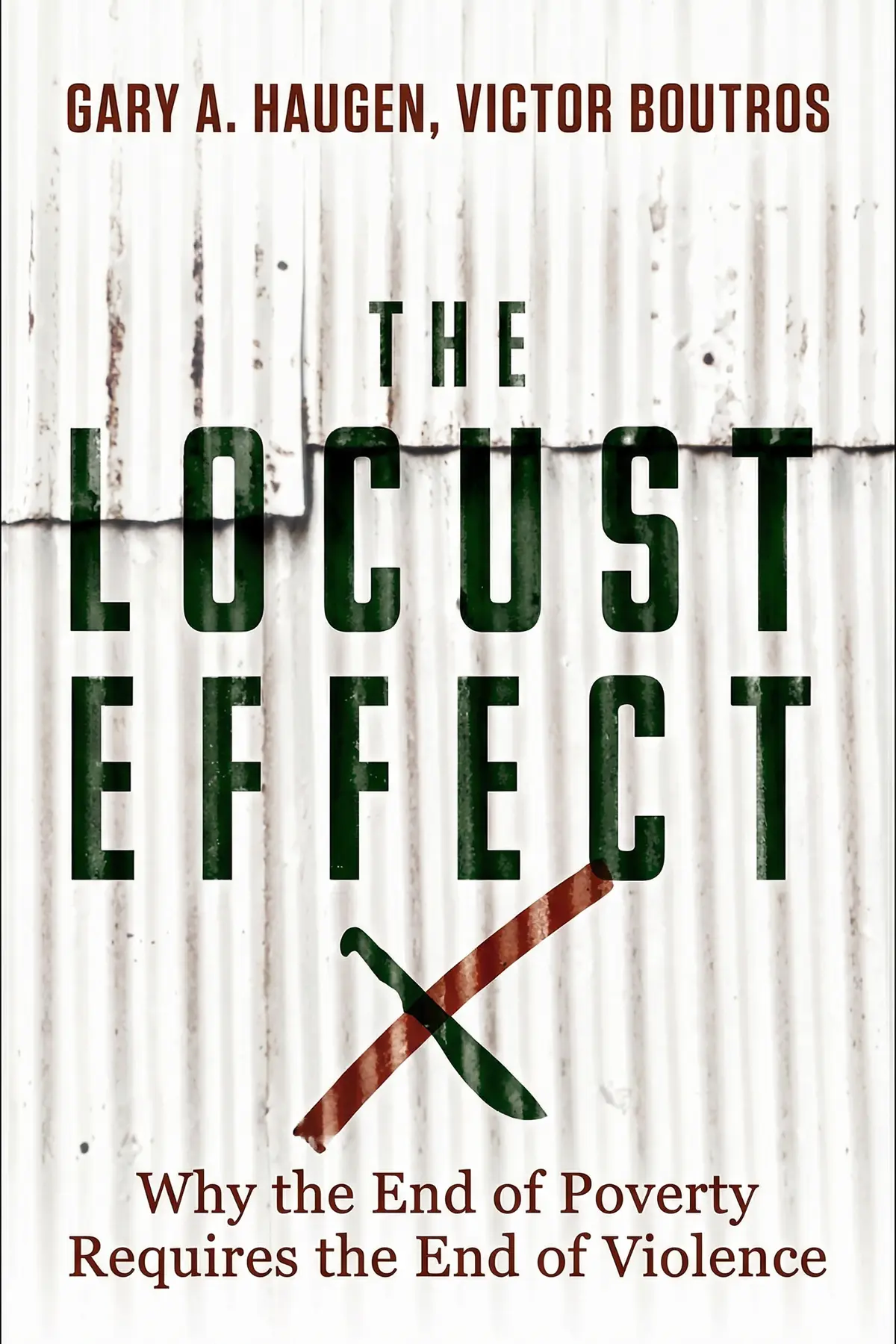
The Locust Effect explores the hidden plague of predatory violence that keeps the world’s poorest people trapped in poverty, arguing that justice reform is the essential foundation for any meaningful international development.
1 min 33 sec
Imagine a world where you’ve worked tirelessly to build a small life for your family. You’ve benefited from international aid—perhaps a new well for clean water, a local school for your children, or improved seeds for your farm. But then, in a single night of terror, a local predator or a corrupt official takes everything away through violence or coercion. There is no one to call, no court to hear your case, and no police officer who will stand on your side. In fact, the authorities might even be the ones holding the weapon.
This is the reality for billions of people living in the world’s most vulnerable communities. We often view poverty through the lens of scarcity—a lack of food, money, or medicine. But Gary A. Haugen and Victor Boutros argue in The Locust Effect that there is a far more predatory force at work. They describe violence as a ‘locust’ that descends upon the hard-won gains of the poor, devouring their progress and leaving them in a state of permanent insecurity.
The core message we’re exploring today is that the end of poverty is impossible without the end of violence. We will look at why our current models of foreign aid often fail to address this crisis and how the historical legacy of colonialism continues to leave the world’s most vulnerable people outside the protection of the law. Most importantly, we’ll see how transforming broken justice systems isn’t just a humanitarian ideal—it’s the fundamental prerequisite for economic survival and human dignity. By the end of this journey, you’ll understand why the fight for global justice is the most urgent, yet overlooked, battle in the war on poverty.
2 min 28 sec
Explore how the constant threat of violence functions like a permanent economic depression, siphoning away more wealth from developing nations than the most devastating natural disasters.
2 min 10 sec
In many parts of the world, the law doesn’t just fail the poor—it often actively works against them, leaving them in a state of total vulnerability.
2 min 03 sec
Beneath the surface of failed states lies a structural collapse of law enforcement, where a lack of training and resources makes justice an impossibility.
1 min 54 sec
The dysfunctions we see today in many countries aren’t accidental; they are the intentional design of colonial-era systems that were never meant to protect the public.
1 min 58 sec
When the public system fails, the wealthy buy their own protection, creating a divided society where safety is a luxury product rather than a right.
1 min 57 sec
Foreign aid has long ignored the issue of violence, viewing it as too political or outside their scope, but this omission is proving fatal to development goals.
2 min 06 sec
Success stories from around the globe show that broken systems can be fixed through partnership, specialized training, and a focus on victim safety.
1 min 23 sec
As we conclude our look at The Locust Effect, the central truth is impossible to ignore: we cannot simply ‘aid’ our way out of poverty if the poor are left to the mercy of predators. The ‘locusts’ of violence will continue to devour every well we dig, every school we build, and every loan we grant until we address the fundamental collapse of the rule of law.
Gary A. Haugen and Victor Boutros have shown us that the fight against global poverty is, at its heart, a fight for justice. It requires us to look past the symptoms of destitution and address the underlying cause: a world where the most vulnerable are also the most unprotected. We have seen how the legacy of colonialism and the rise of private security have created a divided planet, but we have also seen that through targeted, systemic reform, change is possible.
The throughline of this journey is hope through action. When we prioritize the protection of the poor, we aren’t just stopping crimes; we are unlocking human potential. We are creating a world where a mother can walk to her fields without fear, where a child can go to school without being trafficked, and where a small business owner can keep what they earn. This is the foundation of dignity. By insisting that justice belongs to everyone—not just the elite—we can finally turn the tide and ensure that the progress we build is never again devoured by the swarm.
For decades, the global community has poured billions into food aid, medical supplies, and educational initiatives to combat extreme poverty. Yet, despite these efforts, millions remain stuck in a cycle of desperation. The Locust Effect reveals the missing piece of the puzzle: the rampant, unchecked violence that terrorizes the poor. Authors Gary A. Haugen and Victor Boutros argue that without a functional criminal justice system to protect the vulnerable, any progress made through traditional aid is quickly devoured by predators. This book provides a sobering look at how dysfunctional police and court systems in the developing world serve the elite while leaving the impoverished at the mercy of traffickers, rapists, and corrupt officials. It offers a powerful promise: that by prioritizing the rule of law and transforming broken justice systems, we can finally create a stable environment where the poor can flourish and escape the grip of poverty for good.
Gary A. Haugen is a lawyer and the CEO of International Justice Mission, an NGO that supports local authorities in protecting the poor against crime. Victor Boutros is a US Department of Justice prosecutor who investigates human trafficking and hate crimes. Haugen and Boutros also co-authored And Justice for All: Enforcing Human Rights for the World’s Poor.
Listeners find the work very accessible and believe it is essential for the socially conscious, highlighting its meticulous research and lucid breakdown of complex themes. They describe the experience as enlightening and profound, with one listener pointing out how it skillfully merges narrative accounts with data. The prose is well-regarded for being both articulate and brief. The book's exploration of violence and poverty elicits a range of responses, as some find the information convicting while others find it disturbing.
Wow. The Locust Effect isn’t just another dry academic text about international development; it’s a punch to the gut that demands a total rethink of how we view global poverty. Haugen and Boutros make a compelling case that we can provide all the food and medicine in the world, but it won’t matter if the recipient is robbed or beaten the next day. The stories of girls in Kenya and the total breakdown of police systems are horrifying, yet they are essential to hear if we want to actually help. It’s a gut-wrenching read, but the research is so thorough that you can't ignore the data behind the trauma. I found myself highlighting nearly every page because the insights were just that profound. This is required reading for anyone who thinks they understand the complexities of the developing world.
Show moreThe chapter on the 'Locust attack' in the 19th century was the moment everything clicked for me. Comparing a swarm of insects to the way localized violence wipes out a family's economic gains is a brilliant, terrifying analogy. Growing up in the West, I definitely took for granted that I could call the police without expecting to be beaten or extorted for a bribe. This book provides a stark reminder that for millions, the law is the predator rather than the protector. It’s a dense read because of the emotional weight, but the structure keeps you moving through the darkness toward a sliver of hope. I was particularly impressed by how the authors weave stories with data from the World Bank to prove their point.
Show moreEver wonder why global aid often feels like pouring water into a leaky bucket? This book provides the answer: we are ignoring the "locusts" of violence that eat every crop of progress. The authors do a masterclass job of weaving devastating personal anecdotes with hard statistics. It’s sobering to realize that 27 million people are currently living in slavery, often right under the noses of corrupt local officials. This should be required reading for anyone who cares about human rights. It’s not just about giving money; it’s about demanding justice. I’ve recommended this to my entire church group because it changes the way you pray for the world.
Show moreFinally got around to this after hearing Gary Haugen speak, and the book is even more impactful than his presentations. He and Boutros have a way of taking complex legal concepts and making them accessible to the average person. I was particularly struck by the discussion of "Freedom from Want" versus "Freedom from Fear" and how the latter is often neglected. The success stories from places like Cebu and Brazil provide a much-needed light at the end of the tunnel. It’s rare to find a book that is both this deeply researched and this readable. If you think poverty is just about a lack of food, prepare to have your worldview shattered.
Show moreThis book completely dismantled my understanding of what it means to be poor. I used to think poverty was just a lack of resources like clean water or schools, but now I see it’s a state of constant vulnerability. When you have no property rights and your local police are more likely to rob you than help you, you can't build a future. The historical context about how Western cities like New York were once just as corrupt was incredibly helpful for perspective. It proves that change is possible, even if the road is long and incredibly difficult. Every page contains a revelation that makes you stop and think.
Show moreI'll admit, some of the statistics about sexual violence in schools were almost too much to bear. It is absolutely revolting that for so many girls, the place meant for their advancement is the place where they are most at risk. The authors don't shy away from the dark humiliation that defines the lives of the global poor. While the book is heavy on the tragedy, the final chapters on the catalyst for change were genuinely inspiring. If you want to broaden your perspective on the world and move beyond simple charity, you need to read this. It’s a profound, eye-opening account of a hidden epidemic.
Show morePicked this up after a recommendation from a friend, and I found the writing surprisingly concise for such a heavy topic. The authors focus heavily on the "Rule of Law," arguing that the lack of a functioning justice system is the hidden plague devouring the progress made by NGOs. While I appreciated the analytical approach, some chapters felt a bit repetitive in their emphasis on IJM’s specific successes. Truth is, it’s a necessary perspective even if the tone leans towards a sales pitch for their organization at times. The data regarding "Freedom from Fear" as a precursor to economic stability is logically sound and very well-presented. It definitely changed my perspective on where my charitable donations should be going.
Show moreAs someone who has spent time working in international development, I can say this is a paradigm-shifting read. We often talk about Maslow's pyramid, but we forget that "safety" is right there at the base, and without it, self-actualization is a pipe dream. Haugen’s experience with IJM shines through in every chapter, providing a practical, albeit difficult, roadmap for reform. The critique of how the World Bank and other large institutions ignore criminal violence is spot-on and long overdue. Gotta say, it’s a bit of a dense read, but the information is too vital to skim. My only complaint is that I wish it addressed the role of technology more in policing reform.
Show moreTo be fair, while the authors are incredibly well-informed, I found the solutions offered a bit too idealistic for the complexities of post-colonial governance. They make a great point about how colonial systems were designed to protect the elite, but the path to fixing that seems much more murky than they suggest. The stories are tragic and definitely eye-opening, yet I wanted more depth on how to actually implement these reforms in places like India without it feeling like Western imposition. It’s an important book for awareness, but I finished it feeling like the scale of the problem is still insurmountable. The writing is good, but the optimism feels slightly misplaced given the depth of corruption described.
Show moreNot what I expected, and frankly, it left me feeling more hollow than hopeful. The descriptions of child exploitation and the utter depravity of the justice systems in the developing world are so graphic they felt almost voyeuristic at points. I understand the need to shock the reader into action, but the sheer volume of "devastating quotes" and trauma became overwhelming for me. It’s well-written, but the authors' belief that Western-style legal reform is the magic bullet feels a bit myopic given the cultural history of these regions. I struggled to finish it because it was just so relentlessly depressing without offering enough practical steps for the average individual.
Show moreYanis Varoufakis

Fay Bound Alberti
Daniel Goleman
Andrew Ross Sorkin

Virginia Woolf
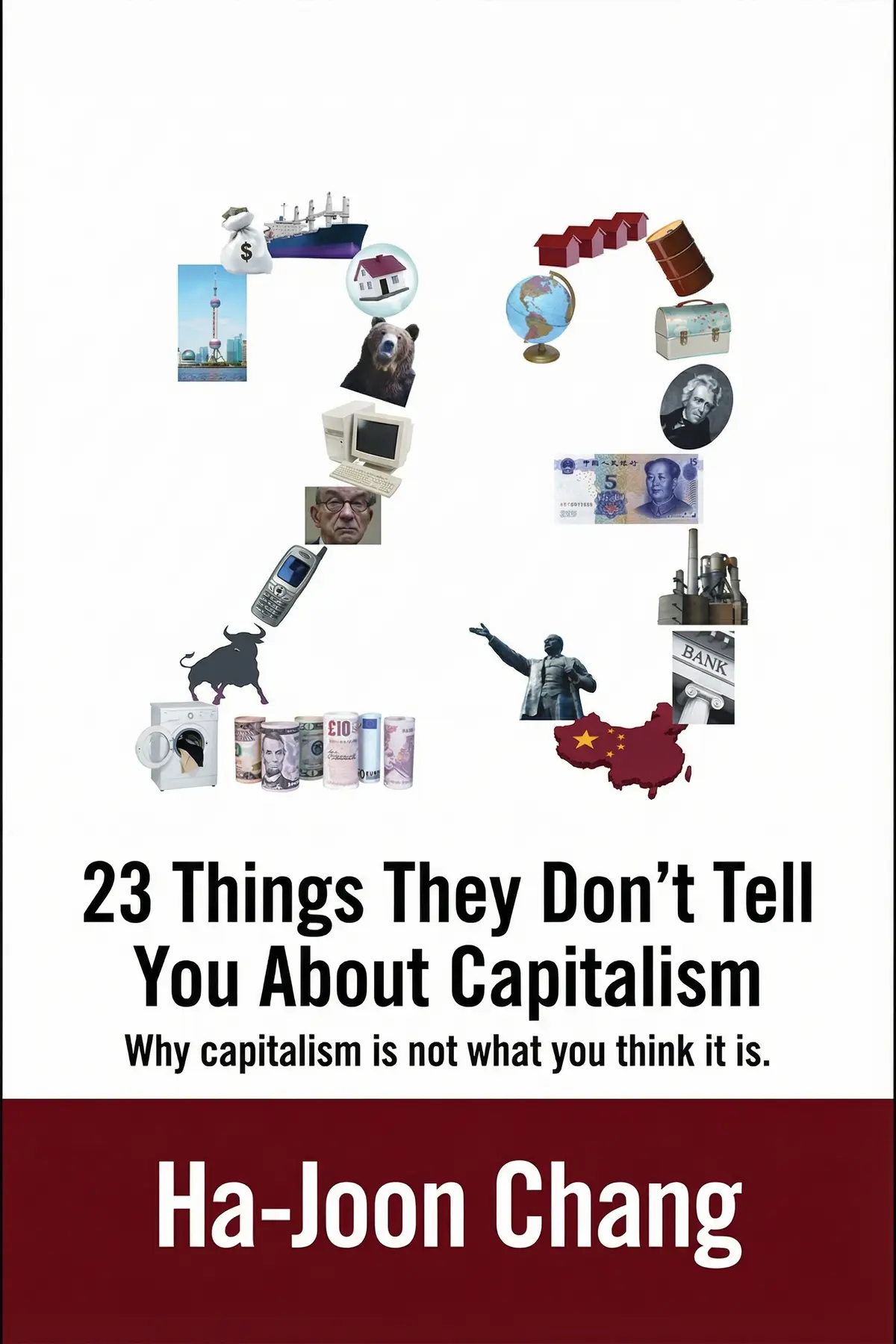
Ha-Joon Chang
AUDIO SUMMARY AVAILABLE
Get the key ideas from The Locust Effect by Gary A. Haugen, plus 5,000+ more titles in English and Thai.







