
33 min 13 sec
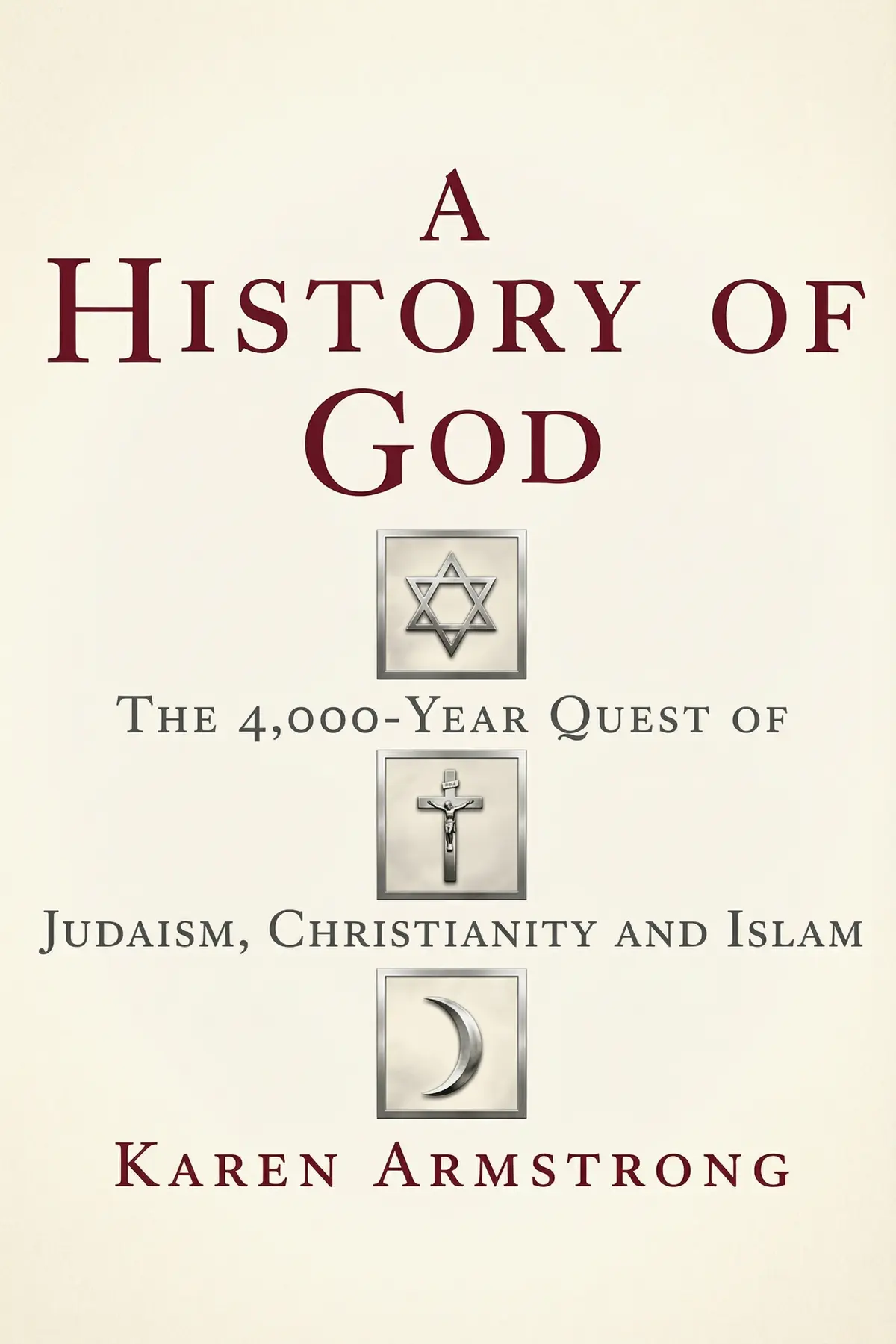
The Lost Art of Scripture: Rescuing the Sacred Texts
Karen Armstrong redefines our relationship with holy texts, moving away from modern literalism toward an ancient tradition of ritual, poetry, and compassionate practice that once helped humanity navigate crisis and find meaning.
Table of Content
1. Introduction
1 min 38 sec
When most people in the modern Western world think of scripture, they imagine a stagnant object—perhaps a dusty, heavy book sitting on a shelf, or a collection of rigid rules meant to be followed to the letter. We often approach these texts as if they were scientific manuals or historical accounts, judging them based on their factual accuracy or their logical consistency. But what if this entire perspective is a relatively new invention? What if the way we read these books today is actually a total departure from how they were experienced for thousands of years?
In this exploration of the sacred word, we are going to look at how scripture was once a living, breathing art form. For the vast majority of human history, holy texts were not meant to be read silently in isolation. Instead, they were part of a performative, communal ritual. They were sung, chanted, and danced. They were tools designed to crack open the human heart, bypass the ego, and foster a deep, visceral sense of compassion for others.
We will travel across centuries and continents, from the ancient ruins of Mesopotamia to the meditative forests of India, and from the courts of China to the revolutionary printing presses of Europe. Along the way, we will see how these texts evolved in response to war, displacement, and social upheaval. We’ll discover that the core purpose of scripture was never about proving a set of facts, but about providing a map for a more ethical and empathetic way of life. By understanding how we lost this art, we might just find a way to rescue the sacred for the modern age, turning these ancient insights into a force for pluralism and peace.
2. Scripture as a Tool for Resilience
2 min 26 sec
Ancient communities didn’t just write stories; they crafted myths to survive economic hardship and the trauma of exile, transforming their suffering into a vision of justice.
3. The Sacred Power of Sound
2 min 23 sec
In ancient India, the written word was often viewed with suspicion, as the true essence of the divine was believed to reside in the sensory experience of chanting.
4. Governing with the Mandate of Heaven
2 min 15 sec
In early China, the purpose of scripture was deeply political, designed to teach rulers that their power depended on moral integrity and the welfare of the people.
5. Finding a Communal Self in Times of Chaos
2 min 33 sec
As the world faced unprecedented violence, thinkers like Confucius and the Buddha looked inward, finding that scripture could provide a path to inner peace.
6. The Fluidity of the Sacred Canon
2 min 25 sec
Ancient scriptures were never meant to be static; they were continuously adapted and reinterpreted to meet the needs of each new generation facing unique challenges.
7. A Radical Message of Egalitarianism
2 min 25 sec
The early Christian movement was born out of a desire for social justice, offering an alternative to the violence of empire through the practice of non-violence.
8. The Quran as a Recitation of Harmony
2 min 14 sec
In the deserts of Arabia, a new scripture emerged that emphasized poetry and social welfare, calling for a total surrender of the ego to a communal vision of God.
9. Adapting Ancient Wisdom for New Empires
2 min 38 sec
As religious communities expanded into vast empires, scholars had to find new ways to interpret old texts, turning them into practical guides for law and governance.
10. The Heartbeat of the Mystic
2 min 38 sec
Beyond the realm of logic and law, a mystical tradition emerged in every major faith, using scripture as a gateway to a direct, wordless experience of the divine.
11. The Reformation and the Power of the Individual
2 min 28 sec
The invention of the printing press and the rise of the Protestant Reformation shattered the old religious order, placing the burden of interpretation on the individual.
12. Faith in the Age of Evidence
2 min 29 sec
As the Enlightenment dawned, the Western world began to judge scripture by the standards of scientific proof, a move that fundamentally altered the nature of belief.
13. Rescuing Compassion from Literalism
2 min 33 sec
Modern fundamentalism is often a defensive reaction to crisis, but the future of faith may lie in reclaiming scripture’s original purpose: the cultivation of empathy.
14. Conclusion
2 min 08 sec
As we reflect on this long and winding journey through the history of the sacred word, one central theme emerges with striking clarity: scripture was never intended to be an end in itself. It was always a means to a greater end—the transformation of the human heart. From the very first myths of the Mesopotamian serfs to the ecstatic poems of the Sufis, these texts functioned as a form of spiritual technology. They were designed to help us navigate the inevitable pain of life, to transcend the narrow walls of our own egos, and to reach out to the world with a sense of profound empathy and justice.
The modern crisis of faith—the rise of fundamentalism on one hand and the drift toward secular alienation on the other—stems largely from our loss of this performative, artistic perspective. When we turn scripture into a dry list of facts or a rigid set of laws, we strip it of its lifeblood. We forget that these texts were meant to be lived, not just read. They were meant to be part of a physical, communal, and emotional practice that connects us to something larger than ourselves.
Rescuing the lost art of scripture doesn’t require us to ignore modern science or return to a primitive worldview. Instead, it invites us to change the *way* we engage with our traditions. It calls us to look at our sacred stories not as claims about the physical past, but as poems about the human present. If we can approach these texts with the same reverence and creativity that our ancestors did, we can find in them a powerful antidote to the indifference and cruelty of our time. The ultimate lesson of Karen Armstrong’s exploration is a hopeful one: the capacity for compassion is built into our very nature, and the ancient art of scripture remains one of our most effective tools for bringing that compassion to life. By practicing the sacred, we can learn to see the divine spark in every human being, turning the word into a living force for a more just and pluralistic world.
About this book
What is this book about?
The Lost Art of Scripture is an expansive exploration of how religious texts were intended to be experienced throughout history. Rather than being viewed as sets of rules or factual manuals, scriptures across the globe—from the Hebrew Bible to the Quran and the Upanishads—were originally treated as transformative art forms. These texts were inseparable from physical ritual, music, and performance, serving as tools to cultivate deep empathy and social justice. In this summary, we trace the evolution of the sacred word from its origins in Mesopotamia and India to its confrontation with modern rationalism. Karen Armstrong illustrates how the shift toward literal interpretation has led to a rise in fundamentalism and a loss of the texts’ original purpose: to help us transcend the ego and connect with the suffering of others. By rediscovering this lost art, we can find a more inclusive and compassionate spiritual path in the contemporary world.
Book Information
About the Author
Karen Armstrong
Karen Armstrong is a renowned author who has written dozens of books focusing on the field of comparative religion. She is a former nun who now identifies with a mystical version of Christianity. Her contributions to the understanding of faith have earned her dozens of awards and honorary degrees from prestigious institutions, including McGill University and the University of Saint Andrews.
Islam: A Short History
Karen Armstrong
Ratings & Reviews
Ratings at a glance
What people think
Listeners find this work to be deeply researched and educational, with one listener specifically praising its thorough exploration of Jewish scriptural history. They also value how it provides a transparent perspective on holy texts, and one listener observes that it functions as a strong successor to "History of God." Additionally, the pacing earns positive remarks, with one listener noting how the divine message reaches all people.
Top reviews
Alice
After finishing 'A History of God' years ago, I felt compelled to see where Armstrong would take this narrative next. This book serves as a masterful companion, diving deep into the evolution of how we actually use sacred texts rather than just what they say. Her prose remains remarkably clear even when she is navigating the dense theological thickets of the Vedas or the early Christian letters. Truth is, the sheer volume of information can be overwhelming, yet the way she crafts a clear understanding of the divine message reaching all people is genuinely inspiring. I appreciated the detailed history of Jewish scriptural traditions, which helped ground her broader arguments about the loss of mystical interpretation. It is a dense, well-researched volume that demands your full attention.
Show morePriya
This sweeping history of human devotion manages to turn the dry dust of ancient manuscripts into a living, breathing testament of our search for meaning. Armstrong’s writing style is academic yet accessible, making the complex transitions from oral tradition to written canon feel like a grand adventure. Not gonna lie, I was surprised by how much I enjoyed the sections on Chinese philosophy and the role of the Greek plays in teaching morality. She successfully demonstrates how scripture once acted as a tool for internal transformation rather than a weapon for exclusion. While the sheer density of the historical data might intimidate some readers, the narrative remains focused on a powerful central message. This is a profound and deeply informative piece of scholarship.
Show moreZoey
Picked this up because I wanted to understand why modern religion feels so hollow compared to the ancient rituals described in history books. Armstrong explains that we have forgotten how to read our holy books as poetry and myth, instead treating them like instruction manuals or science textbooks. I especially loved the descriptions of how the Vedas were preserved through intricate oral traditions that involved the whole body. It makes you realize how much we have lost in our silent, solitary reading habits. In my experience, this is one of those books that changes the way you look at any religious service you attend. It’s a brilliant, if long, exploration of how the divine message reaches all people through diverse cultural expressions.
Show moreAnchalee
Armstrong’s central thesis—that scripture is a performance art requiring active, creative participation—is nothing short of a revelation for the modern reader. She traces the shift from a time when texts were meant to be 'done' to our current age where they are merely believed or rejected. The way she contrasts the mystical approach of the past with the literalism of today is both enlightening and deeply convicting. While the book covers a massive amount of ground, from the Analects of Confucius to the letters of St. Paul, it never loses its grip on the importance of compassion. There were moments where the narrative slowed down, particularly in the later chapters, but the overall impact is undeniable. It’s an essential read for anyone interested in the history of worship.
Show moreKek
The integration of Iain McGilchrist’s brain hemisphere theories provides a fascinating, if sometimes muddled, lens through which to view our sacred traditions. Armstrong argues that we’ve lost the 'art' of scripture by prioritizing the literal, analytical left brain over the metaphoric, connected right brain. Personally, I found the chapter on the Upanishads and the early Buddhist traditions to be a refreshing change from typical Western-centric religious histories. While some might find the neuroscience elements a bit reductive, they provide a necessary framework for understanding why modern fundamentalism feels so sterile. The book is definitely well-researched, though the pacing is occasionally uneven. It’s a worthy follow-up for anyone who enjoyed her previous work on the history of faith.
Show morePreeda
Ever wonder why we've traded mystical, transformative engagement with holy texts for rigid, literalistic shouting matches? Armstrong tackles this head-on, suggesting that scripture was never meant to be a set of scientific facts but an art form requiring creative participation. I was particularly struck by her detailed exploration of how the Quran and the Hebrew Bible were meant to be recited aloud rather than read silently. This communal aspect of worship is something we’ve largely lost in our modern, individualized world. To be fair, the book is quite long and requires a significant time investment to fully digest the arguments. Nevertheless, the insight into how sacred texts were once used to foster empathy is well worth the effort.
Show morePaiboon
The section detailing Jewish scriptural traditions and the development of the Hebrew Bible stands out as particularly meticulously researched and informative. Armstrong shows how these texts were constantly revised and reinterpreted to meet the needs of each new generation, which contradicts the modern 'closed canon' mindset. I arrived here after watching her on TV, and while the book is much more demanding than a short interview, it offers a much richer experience. Some of the talk regarding neuroscience felt a bit like a tangent that didn't always land, but her historical expertise is undeniable. It’s a great resource for anyone looking for a clear understanding of how our sacred texts came to be. It’s certainly a lengthy journey, but one that offers plenty of rewards along the way.
Show morePear
Is it possible for a book to be both brilliant and agonizingly repetitive at the exact same time? Armstrong’s central argument about the shift from a right-brain, holistic engagement with scripture to a literalist left-brain 'dogged' approach is vital for our times. However, she takes over 400 pages to hammer home points that could have been distilled into a much sharper, shorter volume. Truth be told, you could probably read the introduction and the epilogue and walk away with 80% of the value. The historical deep dives into the Axial Age are fascinating, but the narrative often slows to a crawl when she veers into overly specific religious minutiae. It’s a solid 3-star read that feels like a bit of a slog to finish.
Show moreHang
Look, if you want a deep dive into the Axial Age and the evolution of the Quran, you’re in the right place, but be prepared for a slog. This book is easily twice as long as it needs to be, with many of the examples feeling recycled from Armstrong’s earlier works. I found myself agreeing with her thesis about the loss of premodern spirituality, yet I was often frustrated by the pacing. Some chapters feel like a fragmented survey of world religions rather than a focused argument about the 'art' of scripture. If you're short on time, you could honestly skip to the epilogue and get the gist of the entire 600-page volume. It’s informative, but it lacks the punch of her more concise writings.
Show moreRay
Frankly, the author’s attempt to find commonalities among the world’s faiths feels more like an exercise in political correctness than rigorous scholarship. While Armstrong is clearly an expert on the Abrahamic traditions, her analysis of Hinduism in Chapter 2 falls frustratingly short of the mark. She lacks a comprehensive competence in the vast field of the Vedas and Puranas, reducing a complex system to a few simplistic comparisons. Furthermore, the constant application of a left/right brain metaphor felt forced and didn't really clear anything up for me. There is a lot of talk about compassion, but it often feels like she is ignoring the darker, more violent realities of how these texts were used historically. This was a disappointing mishmash for me.
Show moreReaders also enjoyed

1491: New Revelations of the Americas Before Columbus
Charles C. Mann
A Year in the Life of William Shakespeare: 1599
James Shapiro
A Force for Good: The Dalai Lama's Vision for Our World
Daniel Goleman
1929: Inside the Greatest Crash in Wall Street History--and How It
Andrew Ross Sorkin
Age of Anger: A History of the Present
Pankaj Mishra
A New Earth: Awakening to Your Life’s Purpose
Eckhart Tolle
A Biography of Loneliness: The History of an Emotion
Fay Bound Alberti

Agent Sonya: The Spy Next Door
Ben Macintyre
AUDIO SUMMARY AVAILABLE
Listen to The Lost Art of Scripture in 15 minutes
Get the key ideas from The Lost Art of Scripture by Karen Armstrong, plus 5,000+ more titles in English and Thai.
- 5,000+ titles
- Listen as much as you want
- 7-day free trial
- Cancel anytime







