
30 min 13 sec
Islam: A Short History
A comprehensive exploration of Islam’s history, theological evolution, and political development. This summary traces the faith from its seventh-century origins in Arabia to its complex interactions with the modern Western world.
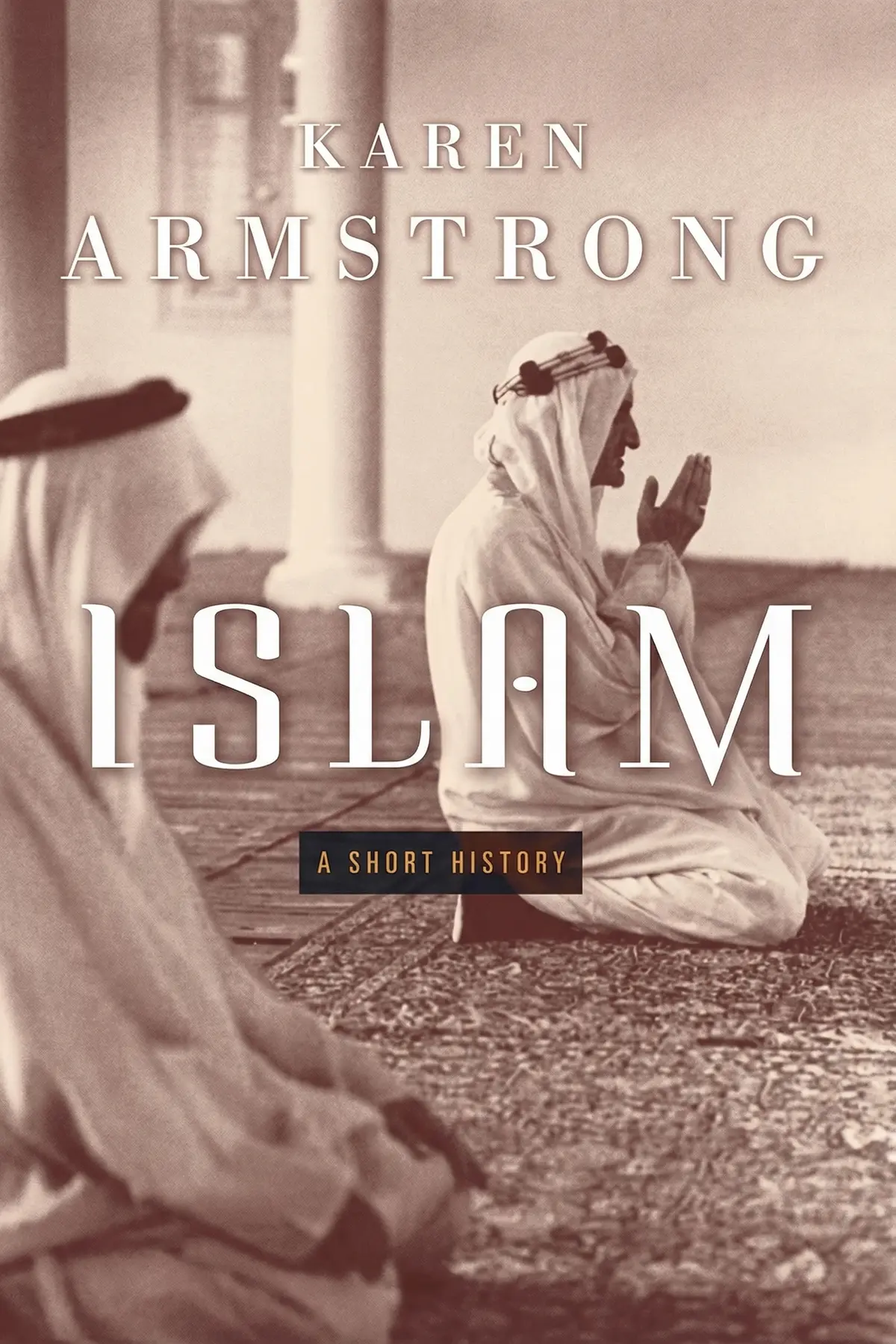
Table of Content
1. Introduction
2 min 13 sec
When we look at the world today, Islam is a force that is impossible to ignore. With nearly two billion adherents globally, its influence spans continents and cultures. Yet, despite its massive presence, it remains one of the most frequently misunderstood and oversimplified religions in the contemporary mind. Too often, the conversation is dominated by narrow imagery or modern political conflicts, leaving the vast, fifteen-hundred-year history of the faith in the shadows. To truly understand Islam, we must move past the headlines and look at it as a living, breathing civilization that has navigated immense triumphs and profound challenges.
Our journey begins in the seventh century, in the rugged landscape of the Arabian Peninsula. From its humble beginnings as a small movement advocating for the marginalized, Islam grew into a sprawling empire that led the world in science, philosophy, and art during the medieval period. However, history is rarely a straight line of progress. The rise of Western power and the era of colonialism introduced a traumatic shift that forced Islamic societies to confront a new and often alien version of modernity. This experience fundamentally reshaped the religion’s internal and external dynamics.
In this exploration, we will trace the arc of Islamic history from the first revelations received by the Prophet Muhammad to the complexities of the current era. We will see how the faith’s deep commitment to social justice guided its early development and how the struggle to maintain those ideals in the face of political power created a unique religious law. We will also examine why the concept of a ‘just society’ is so central to the Muslim experience and how the religion has attempted to reconcile its traditional values with the demands of the secular modern world.
By the end of this narrative, you will have a clearer sense of the spiritual and political throughlines that connect the earliest Muslims in Medina to the diverse global community of the twenty-first century. This is not just a story of dates and battles, but a story of a people seeking to live in accordance with the divine in a world that is constantly changing. Let’s begin by looking at the specific nature of Islamic belief and why it places such a high premium on the affairs of this world.
2. A Faith Rooted in Social Action
2 min 31 sec
Discover why Islam views political involvement and social justice not as distractions from the divine, but as essential spiritual acts for creating a righteous community.
3. The Spiritual Vacuum of Seventh-Century Arabia
2 min 32 sec
Explore the social and economic tensions in ancient Mecca that paved the way for a revolutionary message of equality and compassion.
4. A Message of Resistance and the Cost of Change
2 min 30 sec
See how the early Muslim community survived intense persecution and economic boycotts as they challenged the status quo of the Meccan elite.
5. The Birth of a New Community in Medina
2 min 42 sec
Follow the pivotal move to Medina that redefined identity through faith rather than blood, creating the blueprint for the first Islamic state.
6. Governance and Expansion Beyond the Peninsula
2 min 51 sec
Witness the unexpected growth of an empire after the Prophet’s death and the pragmatic policies that allowed different faiths to coexist under Muslim rule.
7. The Struggle Between Monarchy and Piety
2 min 37 sec
Analyze the internal conflicts that arose as the Islamic world transitioned from a simple community to a vast, wealthy empire led by powerful dynasties.
8. A Decentralized Golden Age of Thought
2 min 39 sec
Learn how the fragmentation of political power led to a transnational network of scholars and an explosion of cultural and scientific achievements.
9. The Impact of the Great Western Transformation
2 min 25 sec
Analyze the shift in global power as a modernizing Europe surpassed Islamic civilization and the devastating consequences of colonialism.
10. The Struggle for an Islamic Modernity
2 min 37 sec
Examine the difficult choices faced by Muslim leaders in the 20th century as they attempted to modernize their nations while preserving religious identity.
11. Fundamentalism as a Modern Reaction
2 min 46 sec
Deconstruct the rise of fundamentalist movements, revealing them as contemporary backlashes against secularism rather than ancient relics.
12. Conclusion
1 min 50 sec
As we conclude our journey through fifteen hundred years of Islamic history, the throughline that emerges is one of a people constantly striving to find the divine through the pursuit of a just and moral society. From the very first recitations in Mecca, Islam has been a faith that refuses to separate the spiritual life from the material needs of the community. We have seen how this commitment fueled a magnificent golden age of science and philosophy, and how it provided a bedrock of identity during the dark centuries of colonial rule.
The challenges facing the Islamic world today are immense. The struggle to reconcile ancient traditions with a modernity that often feels alien or hostile has created deep internal divisions and gave rise to movements that have sometimes obscured the Prophet’s message of compassion. Yet, history shows that Islam is a tradition of incredible resilience and diversity. It is not a monolith, but a collection of voices—mystics, scholars, reformers, and ordinary believers—all seeking to live authentically in a rapidly changing world.
For those of us looking in from the outside, the lesson of this history is the importance of looking past the simplistic clichés. Islam is not just a religion of rules or a series of political conflicts; it is a profound human effort to build a world where everyone is treated with dignity and equality. By understanding the historical context of the ‘ummah’ and its long struggle for justice, we can begin to appreciate the true depth and complexity of this global faith. The story of Islam is far from over, and its future will be shaped by the same questions that have guided it since the beginning: how to remain faithful to God’s will while meeting the urgent needs of the present world. In an era of global interconnection, our ability to understand this journey is not just an academic exercise, but a vital step toward a more peaceful and empathetic shared future.
About this book
What is this book about?
This overview provides a deep dive into the history of Islam, moving far beyond common stereotypes to explain the religion's core motivations and its historical journey. It begins with the life of the Prophet Muhammad and the spiritual crisis of seventh-century Arabia, illustrating how the faith was built on a foundation of social justice and communal responsibility. The narrative then follows the expansion of Islamic civilization through the caliphates and into a glorious golden age of scholarship and science. It examines the profound impact of Western colonialism and the subsequent struggle of Muslim societies to reconcile their religious identity with modern secularism and nationalism. Ultimately, the book promises a clearer understanding of how Islam’s internal theological struggles and external political history are inextricably linked, offering a nuanced perspective on the rise of fundamentalism and the quest for an authentic Islamic modernity.
Book Information
About the Author
Karen Armstrong
Karen Armstrong is a highly respected expert on the history of major world religions. She spent seven years as a Catholic nun before pursuing a career as a writer and scholar. Armstrong is the author of several bestsellers, including A History of God, Jerusalem, The Battle for God, Buddha, and Through the Narrow Gate. She currently holds a teaching position at Leo Baeck College in London.
The Lost Art of Scripture: Rescuing the Sacred Texts
Karen Armstrong
Ratings & Reviews
Ratings at a glance
What people think
Listeners find the text deeply researched and educational, with one listener mentioning that academic particulars can be skimmed. Furthermore, the writing is expertly executed, and listeners enjoy the succinct, approachable style and brisk tempo. The book also offers a thorough historical account and significant religious insights. Nevertheless, perspectives on the author's objectivity are varied.
Top reviews
Ratthapong
As someone who only knew the basics of Islamic history, this book was an absolute revelation. Karen Armstrong manages to condense fourteen centuries into fewer than two hundred pages without making it feel like a dry list of dates. I was particularly struck by her focus on the 'ummah' and the early Muslim community's deep commitment to social justice. To be fair, the speed of the narrative is blistering, moving from the life of Muhammad to the Abbasid dynasty in the blink of an eye. However, the way she explains the Shii and Sunni split helped me finally understand the roots of modern theological divides. It is an authoritative and masterfully written introduction that challenges many common Western misconceptions. Truly, this is an essential read for anyone seeking to understand the cultural renaissance that once flourished in places like Baghdad and Istanbul.
Show moreWoravit
This serves as a powerful corrective to the typical Western narrative regarding the spread of Islam across the globe. We are often taught that the religion was spread solely by the sword, but Armstrong clarifies how the 'ahl al-kitab' were actually treated with relative tolerance. I appreciated the specific details about 'dhimmis' and the poll tax system which allowed for a pluralistic society long before Europe managed anything similar. The book is incredibly well-researched and informative, providing a comprehensive overview of the rise and fall of various dynasties. Truth is, I had no idea about the depth of the cultural renaissance during the eighth century. Her writing is accessible and helps bridge the gap between academic history and the general reader. It makes you realize how much of our global history has been filtered through a very narrow lens.
Show moreJack
Karen Armstrong has a way of humanizing vast historical shifts that usually feel cold and distant to Western readers. I was fascinated by the descriptions of the cultural renaissance in Istanbul and the architectural wonders produced under the Ottomans. This book highlights the strong concern for social equity that drove the early 'ummah' and how that ideal was often betrayed by later political leaders. The way she handles the split between Sunni and Shii branches is the clearest explanation I have ever read. Truth is, we rarely get to see Islamic history from this perspective, and it is incredibly illuminating. The book is concise yet provides a comprehensive look at the various schools of thought and religious developments. It left me wanting to explore more of her work on the history of myth and religion. High-quality writing throughout.
Show moreBig
Finally got around to reading Armstrong after seeing her work referenced in so many history podcasts. The writing is masterfully done, though I must warn you that it feels like a verbal machine gun fire of names and places at times. You really have to pay attention or you will miss the significance of figures like Harun al-Rashid or the impact of the Mongol invasions. Personally, I found the chapters on the Ottoman Empire and Suleiman the Magnificent to be the strongest parts of the book. She provides a much-needed perspective on how the West was viewed during the Crusades and colonial periods. While some might find her tone a bit too sympathetic, I think it works well as a corrective to the negative bias we usually see. It is a concise, quick-paced journey through a complex history.
Show moreNang
Ever wonder why the tension between the West and Islamic societies feels so deeply rooted in the past? Armstrong traces these conflicts from the early Caliphates through to modern fundamentalism with remarkable clarity and insight. The book is masterfully written, though it is quite short for such a massive subject. I loved the inclusion of a glossary for Arabic terms, as it kept me from getting lost in the terminology. To be fair, she does skim over some of the more violent aspects of the conquests to focus on the ideal of social justice. This makes the book feel a bit lopsided at times, but as a summary of the faith's evolution, it is brilliant. The pace is fast, and you can easily finish it in a few sittings. It is a great starting point for further study.
Show moreSavannah
The pace of this book is blistering, almost like a crash course in a long weekend. In just under two hundred pages, you get a bird’s-eye view of everything from the flight to Medina to the fall of the Ottoman Empire. Karen Armstrong has a gift for making complex theological shifts, like the emergence of Sufism, feel accessible to a layperson. Not gonna lie, I had to keep flipping to the back to keep all the different Caliphs and dynasties straight in my head. Some of the scholarly details are a bit dense, but you can skim those and still get the main points. It is a valuable resource for anyone who feels like they missed out on this part of world history. The book successfully humanizes a faith that is often unfairly maligned in the news. Definitely worth the time for the perspective alone.
Show moreValentina
Picked this up to fill some gaps in my knowledge regarding the Middle East and was pleasantly surprised by the depth. Even though it's a short history, it doesn't feel like it's missing the major milestones of the faith. Armstrong covers the Crusades and the Mongol invasions with a focus on how these events shaped the Muslim psyche. Gotta say, the section on the secularization of Turkey in the 1920s was particularly interesting and well-explained. The book is masterfully done, balancing historical facts with religious philosophy in a way that feels seamless. My only minor criticism is that she occasionally repeats her main thesis about social justice a bit too often. Still, it provides valuable insights into why the relationship with the West remains so fraught today. It’s a quick, informative read that I’d recommend to anyone.
Show moreWillow
After hearing so many conflicting things about this book, I decided to see for myself if it lived up to the hype. In my experience, it is a very solid introductory text that manages to be both concise and comprehensive. Armstrong is clearly an expert, and her grip on the subject matter is evident in every chapter. She does a great job of explaining the importance of the Quran and the Prophet’s life without getting bogged down in too much jargon. While I agree with other reviewers that she can be quite sympathetic, it’s a necessary balance to the usual negativity. The book flows well and moves quickly through the centuries, making it a perfect starting point for students. To be fair, some sections on the Abbasid decline were a bit dry, but the overall impact is very positive. A masterfully written overview of a complex world religion.
Show moreLuckana
Not what I expected given the 'popular history' label, as it often feels more like a dense textbook. While I agree that it is well-researched and informative, I suffered from a bit of academic PTSD while trying to track the endless succession of rulers. The names and dates come at you so fast that it’s hard to form an emotional connection to the history. Armstrong’s writing is masterfully done in a technical sense, but the tone is quite impersonal for most of the middle chapters. To be fair, she picks up the energy when discussing modern fundamentalism and the challenges of Westernization. It is a useful book for those who already have a baseline knowledge of the region. However, for a complete beginner, it might feel like a dry list of impersonal facts. It’s a decent introduction but not exactly a page-turner.
Show moreSirirat
Look, I appreciate the research that went into this, but the bias is impossible to ignore throughout the text. Armstrong is a talented writer, yet she seems determined to paint every historical event in the most apologetic light possible. She claims the Battle of Poitiers was exaggerated by Westerners, which feels like a strange dismissal of a massive military turning point. I've read the primary sources, and her interpretation that Islam has always been a religion of peace and feminism feels like modern propaganda. Frankly, the book ignores the harsher realities of the early conquests and the lived experiences of those who were conquered. It is a blitzkrieg of facts that tries to convince you of a very specific, modern political viewpoint. If you want an unbiased history of the Middle East, you might want to look elsewhere. I don't have the patience for this level of historical revisionism.
Show moreReaders also enjoyed
A Splendid Exchange: How Trade Shaped the World
William J. Bernstein

A Spy Among Friends: Philby and the Great Betrayal
Ben Macintyre

1491: New Revelations of the Americas Before Columbus
Charles C. Mann
A Year in the Life of William Shakespeare: 1599
James Shapiro
AUDIO SUMMARY AVAILABLE
Listen to Islam in 15 minutes
Get the key ideas from Islam by Karen Armstrong, plus 5,000+ more titles in English and Thai.
- 5,000+ titles
- Listen as much as you want
- 7-day free trial
- Cancel anytime







