Strangers in Their Own Land: Anger and Mourning on the American Right
Arlie Russell Hochschild
This study investigates the commercialization of human emotions, exploring how workers in service industries manage their feelings to meet professional demands and the psychological toll this emotional labor takes on individuals.
1 min 42 sec
Have you ever found yourself in a checkout line, watching a cashier handle a difficult customer with a level of grace that seemed almost superhuman? Or perhaps you’ve been on a long-haul flight and marveled at the flight attendant’s ability to stay cheery and attentive at three o’clock in the morning. On the surface, we often dismiss this as just being good at the job. We might call it ‘people skills’ or simply a friendly personality. But there is something much more complex happening beneath those practiced smiles.
What we are actually witnessing is a specific type of work that is rarely listed in a job description: the management of human feeling. In our modern service-driven economy, emotions have become more than just private internal states; they have become professional tools. This concept, known as emotional labor, is at the core of our exploration today. It involves the active effort to conjure up, suppress, or modify our feelings to make them fit into a specific commercial or social framework.
As we move through this summary, we will look at how our hearts have become managed for profit. We will see how society sets ‘feeling rules’ that tell us what is appropriate to feel and when. We will also uncover the ways in which these expectations are not shared equally. You will see how power, status, and gender play a massive role in deciding who has to work the hardest to keep a pleasant face. By the end of this journey, you’ll likely view every ‘service with a smile’ through a completely different lens, recognizing the invisible labor that keeps our social and economic wheels turning.
2 min 19 sec
Discover how the modern workplace has transformed our internal emotions into a professional requirement, shifting the boundary between our private selves and our public personas.
2 min 28 sec
Explore how our feelings act as internal barometers for our relationships and why we feel a sense of guilt when our hearts don’t follow social scripts.
2 min 33 sec
Understand how emotional displays function like money in a hierarchy, where those with more power receive ’emotional gifts’ while those with less must pay with their feelings.
2 min 19 sec
Analyze why women are often the primary providers of emotional labor, and how this work serves as a substitute for traditional forms of power and status.
2 min 32 sec
Examine the double standard where women’s emotions are often dismissed as irrational while their professional authority is undermined by the very service they are required to provide.
1 min 37 sec
As we wrap up our look at the commercialization of human feeling, it’s worth reflecting on the throughline we’ve followed. We have seen that the smiles we encounter in the service industry are often the result of intense internal work. We’ve discovered that our society runs on ‘feeling rules’ that dictate the appropriate emotional responses for every occasion, and that these rules are often used to maintain social hierarchies. Most importantly, we’ve seen how the burden of this emotional labor falls disproportionately on those with less power, particularly women.
So, what can we take away from this? The goal isn’t necessarily to stop performing emotional labor altogether—it is, in many ways, the glue that holds society together. However, the first step toward a healthier relationship with our emotions is recognition. We must acknowledge that managing feelings is, in fact, labor. It is a skill that requires energy, and like any other form of work, it can lead to burnout if it’s not respected.
The next time you find yourself frustrated by a minor inconvenience—perhaps a late delivery or a slow server—take a moment to pause. Before you launch into a complaint, consider the person on the receiving end. Are they already performing the emotional labor of managing your frustration along with their own? By becoming more aware of the invisible work happening all around us, we can move toward a more empathetic way of interacting. We can start to value the heart not just as a commercial tool, but as a vital, authentic part of our human experience.
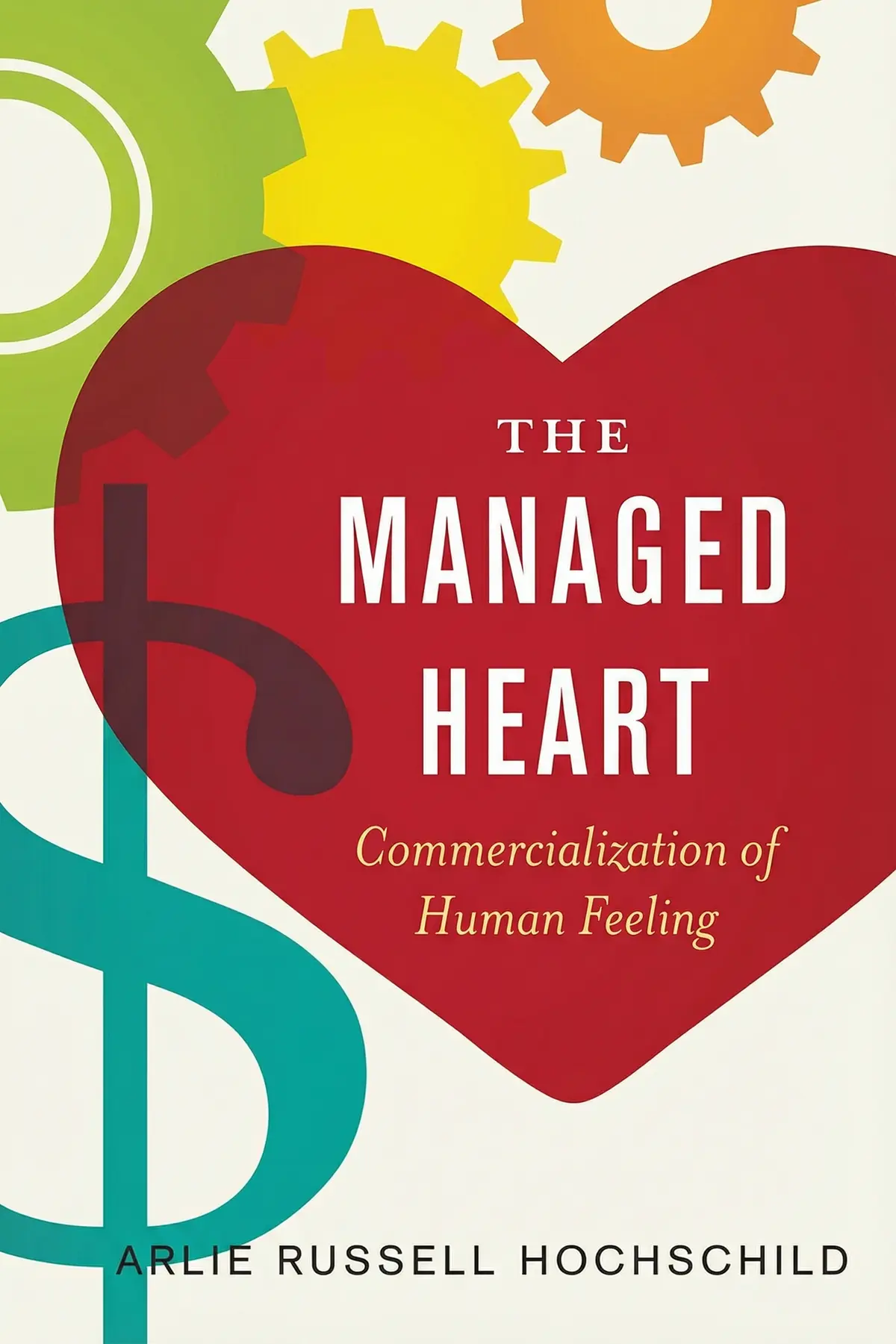
Have you ever wondered what lies behind the persistent smile of a flight attendant or the cheerful greeting of a cashier? This exploration delves into the concept of emotional labor—the effort required to suppress or induce certain feelings to fit a professional or social mold. It moves beyond physical or mental work to examine how our inner lives have become a commodity in the modern economy. The book uncovers the hidden rules that dictate how we should feel in various situations and reveals how these expectations are unevenly distributed across society. It specifically looks at how power dynamics and gender roles influence who is expected to perform the most emotional heavy lifting. Readers will gain a profound understanding of the managed heart, learning how the commercialization of human feeling leads to burnout, alienation, and a disconnect from one's authentic self. Ultimately, it offers a lens to view our daily interactions not just as simple social exchanges, but as complex performances governed by a growing service industry.
Arlie Russell Hochschild is a Professor Emerita of Sociology at the University of California, Berkeley. A renowned author, Hochschild has written three New York Times Book Review Notable Books of the Year: The Second Shift, The Managed Heart, and The Time Bind. Her more recent books include Strangers In Their Own Land: Anger and Mourning on the American Right and Stolen Pride: Loss, Shame, and the Rise of the Right.
Arlie Russell Hochschild
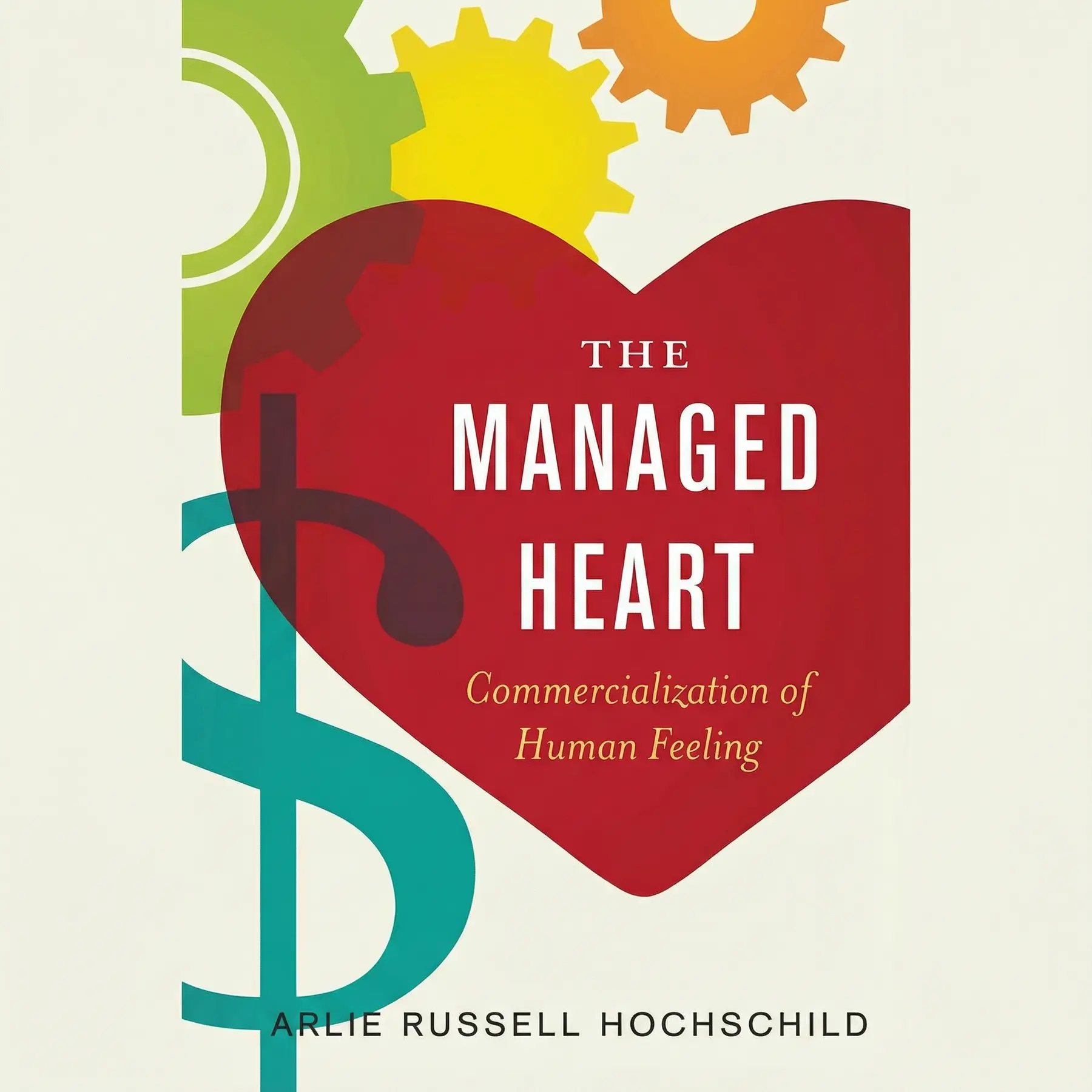
Listeners find this essential book to be a profoundly perceptive look at "emotional labor" and the ways human sentiments are commodified. Listeners value the detailed study of how service-oriented roles require the management of emotions, with one listener highlighting the intriguing parallel drawn between professional behavior and method acting. Although perspectives differ regarding the complex, scholarly prose, many believe the book's investigation into alienation and burnout is still incredibly pertinent. Furthermore, they point to the gripping examples of bill collectors and flight attendants as powerful demonstrations of the ways "feeling rules" are applied within the workplace.
Hochschild’s comparison between service work and method acting is absolutely mind-blowing. She explores how workers are trained to perform 'deep acting,' where they don't just fake a smile but actually try to force themselves to feel the emotions the company demands. This isn't just about being polite; it's about a fundamental alienation from one's own internal state. As a retail worker, I felt seen. The way she describes the burnout that comes from this 'emotive dissonance' is chillingly accurate to the modern economy. While the book focuses heavily on 'stewardesses' of the 80s, the theory applies perfectly to the influencer and gig economy of today. Essential reading for anyone interested in labor rights.
Show moreAs someone who worked in retail for a decade, this book felt like a personal attack in the best way possible. Wow. Hochschild perfectly captures that specific type of exhaustion that comes from being 'on' all day. She describes how the commercialization of human feeling leads to a loss of the signal function of our emotions. We stop knowing what we actually feel because we’ve sold our reactions to an employer. The concept of 'guilt as a promissory note' really hit home for me. It is a dense academic text, but the payoff is worth the effort. It completely changed the way I view my interactions with service workers and my own professional persona.
Show moreGotta say, it is chilling how a book written in 1983 still perfectly diagnoses the modern service economy. We live in a world where 'authenticity' is a product, and Hochschild saw it coming decades ago. Her analysis of how we manage our hearts for a paycheck is both heartbreaking and enlightening. The way she breaks down the 'feeling rules' of different social classes is masterclass sociology. It’s not an easy, breezy read, but it’s an essential one if you want to understand the psychological cost of capitalism. The distinction between private emotion work and commercial emotional labor is a tool I’ll use for the rest of my life.
Show moreFinally got around to reading the source material for 'emotional labor' after hearing the term misused online for years. Hochschild’s 1983 study of Delta flight attendants remains a fascinating deep dive into how companies don’t just buy our time, but our very smiles. The concept of 'feeling rules' is incredibly helpful for understanding why customer service is so draining. I found the academic tone a bit dry in the middle sections, but the insights into the 'managed heart' are undeniable. It’s a foundational text that explains why we feel so alienated when our private emotions are commodified for a paycheck. Definitely a must-read for sociology nerds, even if some of the airline history feels a bit dated.
Show moreThe chapter on bill collectors was a total revelation for me. Most people associate emotional labor with smiling, but Hochschild shows the dark side: how workers are forced to manufacture anger and suspicion to perform their jobs. It’s a brilliant look at how corporations institutionalize human feeling across the spectrum. I loved the references to Erving Goffman; the balance between psychology and sociology is handled with great care. My only minor gripe is that it leans so heavily on the airline industry. I would have loved more diverse case studies from other sectors. Still, it’s a brilliant, thoughtful analysis of how capitalism creeps into our inner lives.
Show moreEver wonder why you're so exhausted after a 'simple' day of customer service? This book provides the answer through the lens of gender and class. Hochschild demonstrates how women are often tasked with more emotional management than men, both at home and in the office. The research is incredibly thorough, though the 1980s context means some of the specific examples feel like a time capsule. I particularly liked the discussion on 'surface acting' versus 'deep acting.' It made me realize how often I’ve been guilty of the latter just to survive a shift. It’s a bit dry, but the theoretical framework is still the gold standard for understanding workplace psychology.
Show moreLook, if you're a social worker or a psych major, you absolutely need this on your shelf. Hochschild’s definition of emotional labor as requiring one to induce or suppress feeling is a vital concept for understanding professional burnout. I found her exploration of how status affects emotional expectations to be particularly stinging. When you have lower status, you’re expected to contribute more emotional rewards to those above you. It’s a heavy read, and the sentence structure can be a bit 'obtuse' as other reviewers have noted, but the intellectual value is immense. It’s a sobering look at how the 'managed heart' eventually leads to a fractured sense of self.
Show moreThe truth is, while the concept is revolutionary, the prose itself is a bit of a slog. Hochschild is clearly a brilliant researcher, but her writing style can be obtuse and repetitive at times. I felt like I was reading a very long history of Delta Airlines employee training manuals rather than a cohesive social theory. I appreciate her inventing the term 'emotional labor,' but I found myself skimming the dense sections on methodology. To be fair, her analysis of how we manage feelings in private life versus the workplace is insightful. However, unless you have a specific academic interest in the development of sociology, you might find a more recent summary of these ideas more engaging.
Show moreI'll be honest: I picked this up thinking it was about household chores, but it's strictly a sociological study of the workplace. The term 'emotional labor' has been co-opted by social media to mean 'doing the dishes,' but that's not what Hochschild is talking about here. She's focused on the alienation of the self in the service economy. While the theory is strong, the book is very dated. I found the endless details about 1980s airline culture to be more than I ever needed to know. It’s a foundational text, sure, but it feels like it could have been half the length and still made the same point.
Show moreNot what I expected given how much this book is cited in feminist circles. Frankly, the work felt incredibly limited by its era and demographic focus. Hochschild almost entirely overlooks the experiences of Black and racialized communities, whose emotional labor is often tied to survival rather than just 'service.' She focuses so much on middle-class flight attendants that she misses the nuances of domestic workers, caregivers, or sex workers. The writing is also quite dense and academic, making it a difficult read for a casual audience. I appreciate the core idea, but the execution feels like a product of its time that hasn't aged particularly well in terms of intersectionality.
Show more

Johny Pitts
bell hooks

Margaret Heffernan

Fay Bound Alberti

Daniel Goleman
AUDIO SUMMARY AVAILABLE
Get the key ideas from The Managed Heart by Arlie Russell Hochschild, plus 5,000+ more titles in English and Thai.