
14 min 13 sec
The Meaning of Life: A Very Short Introduction
Explore the profound philosophical inquiry into whether life’s meaning is a hidden truth to be discovered or a linguistic construct we create through our actions, language, and social connections.
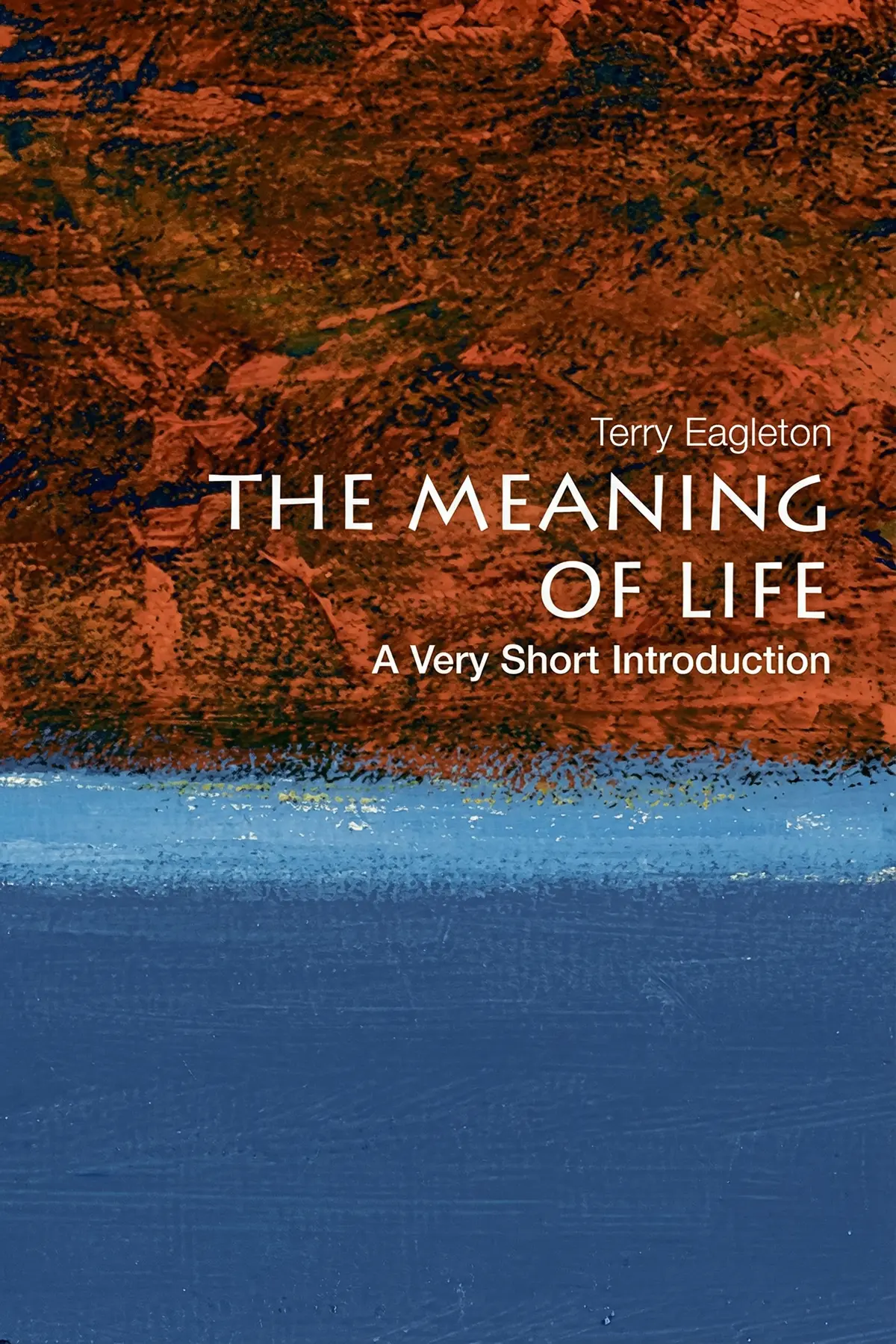
Table of Content
1. Introduction
1 min 49 sec
Have you ever found yourself staring at the stars or sitting in a quiet room, wondering what the point of it all really is? It’s a question that has haunted humanity since we first developed the capacity for deep thought. We often treat ‘the meaning of life’ as if it were a lost treasure waiting to be unearthed, or a secret code that, once cracked, will suddenly make everything fall into place. But what if the very way we ask the question is part of the problem? What if ‘meaning’ isn’t a thing you find, but something you do?
In this exploration of Terry Eagleton’s insights, we are invited to take a step back and look at the tools we use to build our sense of purpose. We often assume that because we can form a sentence like ‘What is the meaning of life?’, there must be a definitive answer out there, much like there is an answer to ‘What is the capital of France?’ However, as we will see, philosophers and cultural critics have spent centuries arguing that the answer might be far more elusive—and far more interesting—than a simple definition.
Over the course of this summary, we will navigate through the shifting landscapes of human thought. We’ll look at how language can sometimes play tricks on us, leading us down rabbit holes of our own making. We’ll trace the journey from ancient times, when meaning felt woven into the very fabric of the universe, to the modern age, where that fabric seems to have unraveled. We’ll also look at the postmodern perspective, which suggests that instead of mourning the loss of a grand, universal purpose, we should find freedom in the ability to create our own meanings. By the end, you may find that the search for meaning is less about finding a destination and more about understanding the journey we are already on. Let’s begin by looking at the very words we use to talk about our existence.
2. The Linguistic Mirage of the Question
2 min 17 sec
Could the biggest question in human history actually be a grammatical misunderstanding? Explore how language shapes our perception of what meaning really is.
3. Intentionality Versus Signification
2 min 09 sec
Does meaning require a ‘meaner,’ or can it exist on its own? This segment examines the crucial difference between what we intend and what things signify.
4. From Grand Narratives to Modern Despair
2 min 09 sec
The history of meaning is a story of loss and transformation. Discover how the shift from religious certainty to modern doubt changed everything.
5. The Freedom of Postmodern Fragmentation
2 min 02 sec
What if the lack of a single meaning isn’t a tragedy, but a form of liberation? Explore the postmodern perspective on living without a script.
6. Meaning as a Social Practice
2 min 05 sec
Forget the abstract theories—maybe meaning is found in how we treat each other. Discover the ethical dimension of a life well-lived.
7. Conclusion
1 min 42 sec
As we reach the end of this journey through the landscape of existence, it becomes clear that ‘the meaning of life’ is less like a solid object and more like a moving target. We’ve seen how our language can trick us into looking for answers in the wrong places, and how the history of human thought has moved from the comfort of grand narratives to the challenging freedom of the modern and postmodern eras.
The most important takeaway is that the absence of a single, cosmic answer isn’t a failure—it’s an invitation. It’s an invitation to stop looking for a ‘why’ that comes from outside ourselves and to start building a ‘why’ through our actions and our connections. We have transitioned from being spectators of a divine drama to being the directors of our own complex, often messy, but deeply rich stories.
Meaning is not a hidden treasure, but a way of moving through the world. It is found in the integrity of our relationships, the depth of our curiosity, and the kindness we extend to those around us. It is a performance, a practice, and a process. The ‘meaning’ of a dance isn’t the final position the dancers take when the music stops; it’s every step they took while the music was playing.
So, as you step back into your daily life, perhaps you can let go of the pressure to find one grand purpose. Instead, look for the small significance in the present moment. Engage with the people around you, contribute to the flourishing of your community, and embrace the fragmented, beautiful reality of your own experience. Life doesn’t have a meaning waiting to be found; it has a meaning waiting to be lived. And in that living, you will find all the answers you truly need.
About this book
What is this book about?
This summary delves into the deep existential questions surrounding our search for purpose. Rather than providing a simple answer, it investigates how the way we frame the question of life’s meaning often dictates the answers we find. By examining various historical and philosophical movements, the book explains the transition from a world of religious and absolute certainty to the modern era of doubt and the postmodern era of fragmented reality. Readers will explore the ideas of thinkers like Wittgenstein and Nietzsche to understand how language can both reveal and obscure our sense of purpose. The text moves beyond abstract theory to suggest that meaning might not be a mysterious object hidden away, but rather a way of living—a social and ethical practice found in our relationships and the narrative we build from our experiences. Ultimately, it offers a guide to embracing the complexity and ambiguity of existence while finding fulfillment in the act of living itself.
Book Information
About the Author
Terry Eagleton
Terry Eagleton is a highly respected literary theorist, philosopher, and critic, best known for his insightful examinations of culture and the written word. He has produced influential works such as Literary Theory and After Theory, which have become staple texts in contemporary academic studies. Throughout his career, Eagleton has focused on the complex intersections where literature, culture, and ideology meet, often challenging traditional perspectives with his sharp analytical style.
Ratings & Reviews
Ratings at a glance
What people think
Listeners find this work both well-written and highly enjoyable, with one review emphasizing its excellent job summarizing modern philosophy answers. They also appreciate its substance, as one listener mentions how it provides additional nuance and depth to the subject. Conversely, the book’s length gets mixed reviews, and one listener notes that the font size is very small.
Top reviews
Pridi
As someone who has spent years dipping in and out of existentialist texts, I found Eagleton's approach refreshing and deeply insightful. He avoids the typical self-help traps that many modern writers fall into when discussing purpose and value. Instead, he provides a sophisticated analysis of how our understanding of "life" has shifted through the lens of history and literature. The way he bridges the gap between the Christian concept of agape and Aristotelian ethics adds a layer of depth that you wouldn't expect from such a slim volume. Not gonna lie, I had to reread a few sections on Schopenhauer to really grasp the nuance, but the effort was rewarded. It’s a brilliant summary of modern philosophical answers that doesn't sacrifice intellectual rigor for the sake of brevity.
Show moreLincoln
Wow. I didn’t expect a "Very Short Introduction" to be this provocative and deeply moving. Eagleton manages to pack more wisdom into these few pages than most massive hardcovers I’ve read on the subject. He does a great job summarizing modern philosophy’s various attempts to find a goal for existence, eventually landing on a vision of love and community that feels both radical and ancient. The way he handles the hokie-pokie joke is a masterclass in using humor to highlight the existential dread of modernism. It’s rare to find a book that is this intellectually dense while still being a page-turner. To be fair, you have to be comfortable with a lot of literary references, but even if you haven't read Sophocles, the core arguments remain clear and powerful.
Show moreLuckana
This book is an absolute delight if you're looking for an intellectual romp that doesn't get bogged down in stuffy academic jargon. Eagleton manages to weave a thread through Aristotle, Nietzsche, and even Jesus with a surprising amount of wit and irony. My favorite part had to be the t-shirt joke about the hokie-pokie; it perfectly encapsulates the playful yet profound tone he strikes throughout the text. To be fair, some might find the "Very Short Introduction" format a bit too fleeting for such a massive topic. You won't find a single definitive answer here, but the journey through aesthetics and theology is well worth the quick read. It is clear that he prioritizes clarity over exhaustive detail. If you want a deep dive, look elsewhere, but for a witty overview, this hits the spot.
Show moreSai
After hearing several people recommend Eagleton's literary criticism, I decided to see how he handled the ultimate philosophical question. The result is a surprisingly accessible and often humorous look at a topic that usually feels quite heavy. He uses examples from Joyce and Conrad to illustrate his points, which makes the philosophy feel more grounded in human experience rather than just abstract theory. While the pace is excellent, there are moments where the transition between topics feels a bit like a free-flow stream of consciousness. Gotta say, the focus on the "shared character of human life" toward the end was a beautiful way to wrap things up. It’s not a life-changing manifesto, but it’s a smart, engaging piece of writing that clarifies why we keep asking the question in the first place.
Show moreMeen
Ever wonder why the most profound questions in human history are often relegated to the smallest font sizes imaginable? I really enjoyed the content of Eagleton's essay, but the physical print in this OUP edition is tiny enough to give anyone a headache after twenty pages. Content-wise, he does a fantastic job summarizing how modern philosophy has grappled with existence, moving from the religious certainties of the past into the murky waters of modernism. I appreciated the nuance he brought to the table regarding the word "meaning" itself—it’s not a simple label. However, the book feels like it ends just as it starts getting into the meat of the ethical arguments. It’s a bit of a tease. I'm left feeling like I need to read three more books just to finish the thought he started here.
Show moreSomsak
Picked this up on a whim at a bookstore because the title seemed like a bold claim for such a tiny spine. Eagleton’s style is definitely peppery, as some other reviewers have noted, and he isn't afraid to poke fun at the absurdity of the human condition. I found his discussion on the contingency of human existence in the modernist era to be the most compelling part of the book. He argues that we are now in an epoch where agreement on fundamental issues is impossible, which is a sobering thought. In my experience, I would have liked more on the postmodern rejection of the question entirely, as that felt a bit rushed. The book serves as a solid primer, but its brevity is a double-edged sword. It’s great for a weekend read but leaves you wanting a lot more substance.
Show moreNum
Look, if you are coming to this book expecting a "42" style answer or a spiritual awakening, you are going to be disappointed. This is an analytical look at the semantics of the question itself, which Eagleton deconstructs with surgical precision. He points out how "meaning" usually applies to propositions, not objects—asking for the meaning of life is as weird as asking for the meaning of an apple. This kind of linguistic analysis is fascinating but might feel a bit dry to those who aren't into Wittgenstein or analytic philosophy. The book is thoroughly enjoyable in its wit, though the small print is a genuine struggle. It’s a 3-star experience because while the writing is top-tier, the structure is a bit too loose to leave a lasting impact.
Show moreTee
Frankly, I found this to be a bit of a mixed bag despite the elegant prose. On one hand, Eagleton is incredibly clear and manages to make Kant and Nietzsche feel like neighbors you’re having a chat with over coffee. On the other hand, the book’s brevity often works against it, leaving some of the more complex ideas feeling a bit thin. It’s a fun read, especially with the jokes scattered throughout, but it functions more as a map of where others have gone rather than a guide for where you should go yourself. The font size is also quite small, which made the reading experience a bit more tedious than it needed to be. It’s a decent enough introduction for a complete novice, but seasoned philosophy readers might find it a bit too light.
Show moreZoey
Terry Eagleton has a knack for taking high-concept ideas and making them feel relevant to the average person. In this volume, he tackles the big question by looking at it through the lens of ethics and social sharedness. I particularly liked his move away from individualistic, "make your own meaning" answers, which feel a bit hollow in today’s world. He draws heavily on Aristotle’s concept of the good life, which provides a nice historical anchor for the more modern discussions. However, the book's structure is somewhat disorganized, jumping from history to theory without much warning. It’s a very quick read, but the lack of a definitive conclusion might frustrate those who are genuinely searching for a goal. It’s an interesting intellectual exercise, if nothing else.
Show morePatcharaporn
The chapter on Wittgenstein was probably the only part of this book that felt like it had any solid ground to stand on. Truth is, I found the rest of the text to be a frustrating exercise in circular reasoning and literary diversions. Eagleton is clearly more of a literary critic than a philosopher, and it shows in his constant reliance on Beckett and Shakespeare to make his points. For a book titled "The Meaning of Life," it feels remarkably short on actual conclusions or even a cohesive framework. Personally, I expected more than just a paradoxical introduction that essentially tells you the question might not even make sense. It’s well-written in terms of prose, but the substance felt airy and disconnected from the urgency that usually drives people to ask about their purpose.
Show moreReaders also enjoyed
A Guide to the Good Life: The Ancient Art of Stoic Joy
William B. Irvine
A Little History of Philosophy
Nigel Warburton
A Theory of Justice
John Rawls
Anarchism: A Very Short Introduction
Colin Ward
Anarchy, State, and Utopia
Robert Nozick
Antifragile: Things That Gain from Disorder
Nassim Nicholas Taleb
AUDIO SUMMARY AVAILABLE
Listen to The Meaning of Life in 15 minutes
Get the key ideas from The Meaning of Life by Terry Eagleton, plus 5,000+ more titles in English and Thai.
- 5,000+ titles
- Listen as much as you want
- 7-day free trial
- Cancel anytime







