
15 min 58 sec
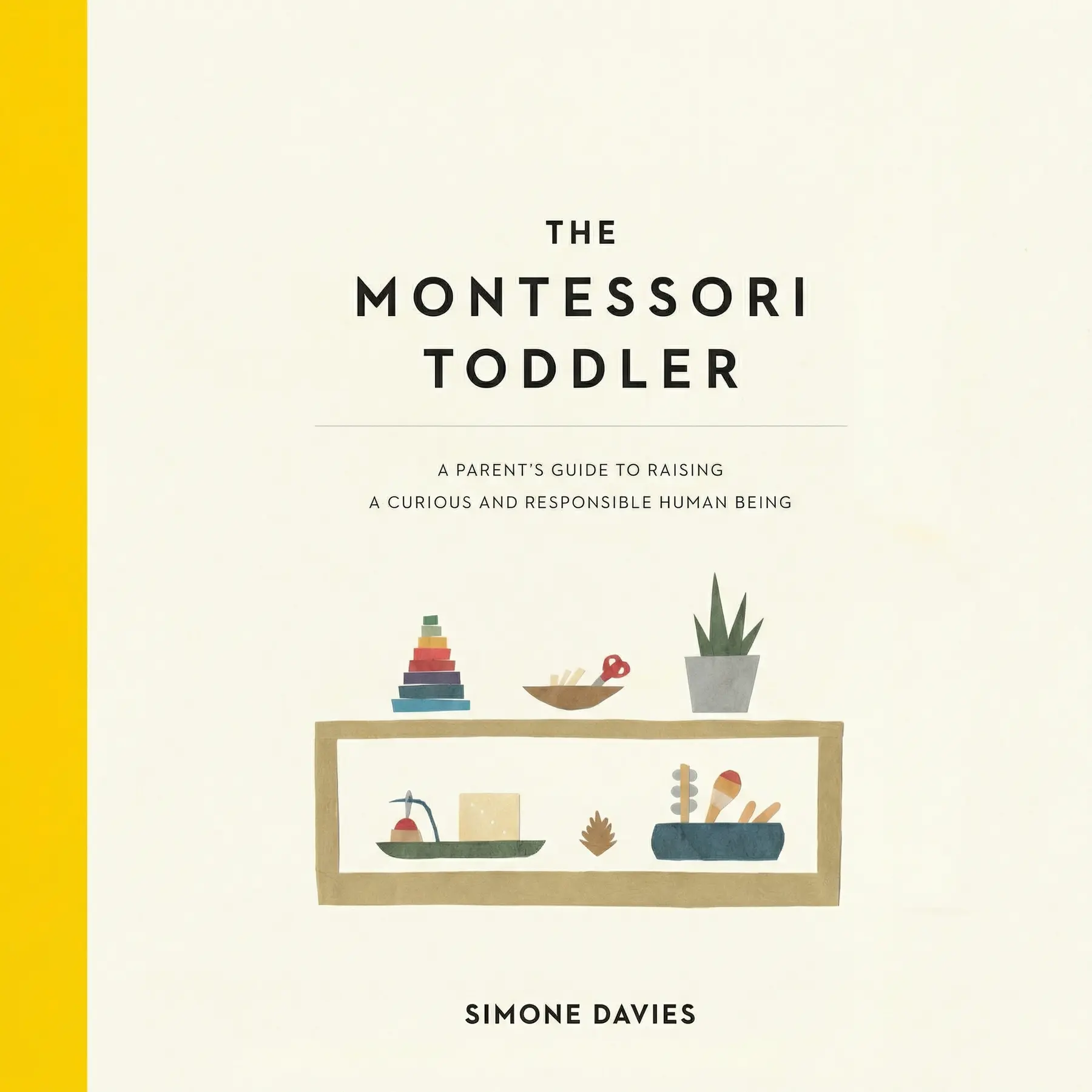
The Montessori Toddler: A Parent's Guide to Raising a Curious and Responsible Human Being
This guide transforms the chaotic toddler years into a journey of discovery. By applying Montessori principles, parents can foster independence, responsibility, and a deeper connection with their growing children.
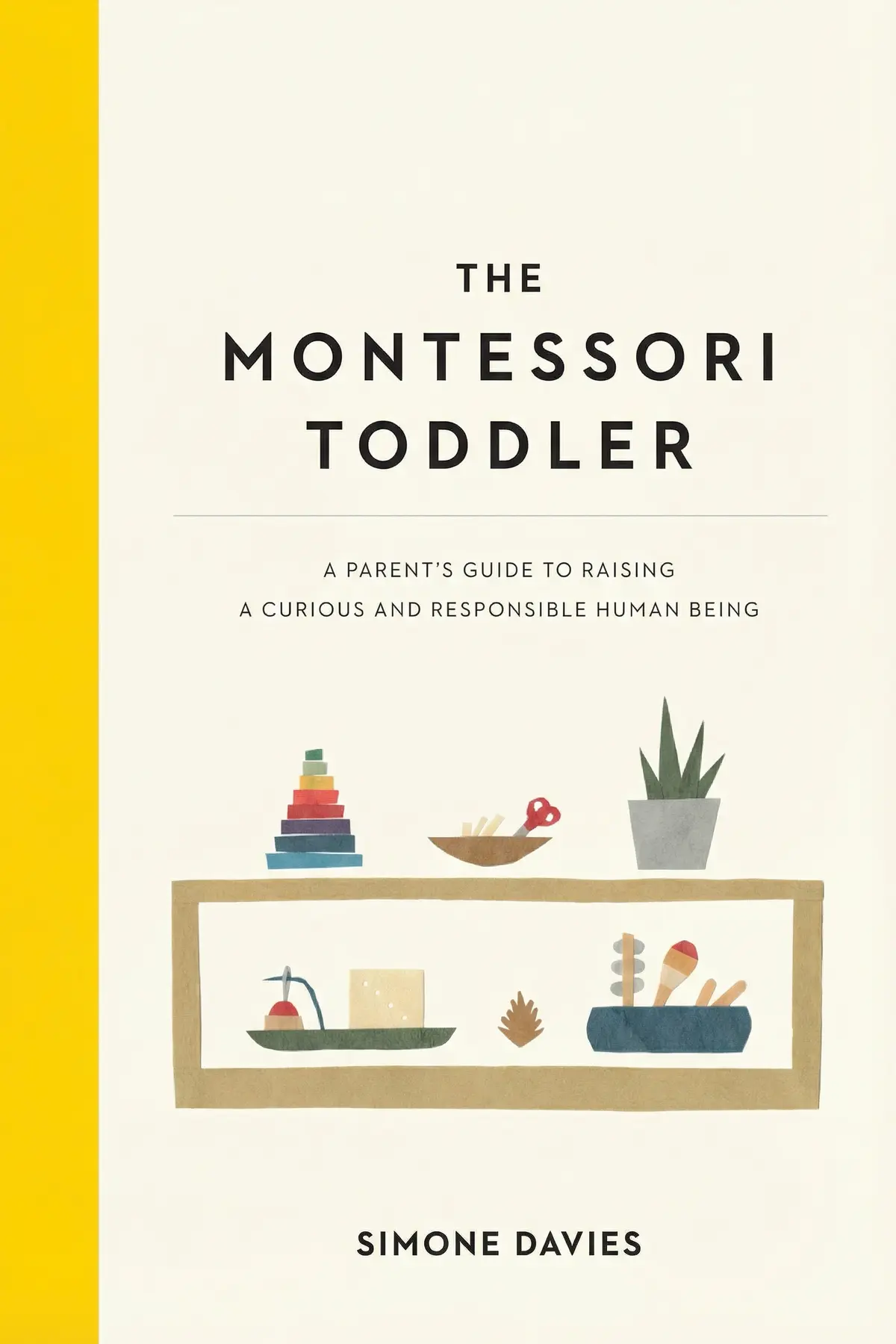
Table of Content
1. Introduction
1 min 38 sec
Parenting a toddler can often feel like navigating a storm without a compass. We’ve all been there: the sudden outbursts, the repetitive demands, and the feeling that no matter what we say, our child just isn’t listening. It’s easy to fall into the trap of labeling these years as the “terrible twos,” a phase of life we simply need to survive until the child becomes more rational. But what if we’re looking at it all wrong? What if the behaviors that frustrate us most are actually signs of a brilliant, burgeoning mind trying to make sense of a complex world?
In this exploration of Simone Davies’s work, we shift the lens from managing a difficult child to supporting a developing human. The Montessori approach isn’t just an educational method for the classroom; it’s a way of being that respects the toddler’s innate drive for independence. This journey is about understanding the “why” behind the “what.” Why do they insist on doing everything themselves? Why do they get so upset when a routine changes?
Over the next few minutes, we will look at how to transform your home and your communication style to align with your child’s natural developmental needs. We’ll move away from power struggles and toward a partnership. By the end, you’ll see that toddlers aren’t trying to push your buttons; they are trying to discover their own capabilities. The goal here is to provide a smooth, spoken guide to raising a curious, responsible, and most importantly, understood human being. Let’s dive into how we can stop being the obstacles in our children’s paths and start being their most effective guides.
2. Self-Mastery through Exploration
2 min 09 sec
Discover why repetitive behaviors and boundary-pushing are actually vital steps toward independence, rather than signs of defiance or stubbornness in your child.
3. Harnessing the Absorbent Mind
2 min 09 sec
Explore the biological window of opportunity during the first six years when a child’s brain is uniquely wired to soak up information effortlessly.
4. Practical Life and the Dignity of Work
2 min 04 sec
Learn how involving your toddler in everyday household chores can build their self-esteem and refine their motor skills through meaningful contribution.
5. The Power of a Prepared Environment
2 min 02 sec
See how small, thoughtful changes to your home’s layout can reduce conflict and empower your toddler to take charge of their own needs.
6. Order, Routine, and the Comfort of Consistency
2 min 04 sec
Understand why toddlers are so sensitive to changes in their schedule and how you can use clear ground rules to provide a sense of safety.
7. The Art of Guiding through Acceptance
2 min 14 sec
Learn to view tantrums as communication struggles and discover the transformative power of specific feedback over generic praise.
8. Conclusion
1 min 38 sec
As we wrap up our journey through the Montessori approach to the toddler years, it’s important to remember the central throughline: respect. We’ve explored how shifting our perspective can turn a period of frustration into a period of profound connection. By viewing our children as capable explorers rather than problems to be solved, we open the door to a more peaceful household and a more confident child.
We’ve looked at the importance of the environment—how a stool or a low shelf can be a tool for liberation. We’ve discussed the value of practical work and how involving our children in the rhythm of daily life gives them a sense of purpose. We’ve also tackled the difficult moments, learning to see tantrums as cries for help and communication rather than acts of defiance.
The takeaway is clear: your toddler is a worker in the middle of the most important job of their life—the job of creating themselves. Your role isn’t to do the work for them, but to provide the tools, the safety, and the understanding they need to succeed.
In the coming days, try to pick one small area of your home to “toddler-proof” for independence. Perhaps it’s a low drawer in the kitchen with their own snacks, or a small basket for their shoes by the door. Observe the spark in their eyes when they realize they can do it themselves. This is the heart of the Montessori method. By trusting the child, you aren’t just making the toddler years easier; you are raising a human being who knows they are capable, valued, and loved. Thank you for listening, and may your journey with your toddler be one of shared discovery and mutual respect.
About this book
What is this book about?
The Montessori Toddler is a comprehensive roadmap for navigating the often-misunderstood period between ages one and three. Instead of viewing this stage as a series of power struggles to be won, Simone Davies invites parents to see it as a vital phase of self-discovery and skill acquisition. The book bridges the gap between abstract educational philosophy and the messy reality of daily life with a young child. Readers will learn how to organize their living spaces to encourage autonomy and how to communicate in ways that respect the child’s burgeoning sense of self. It promises a shift in perspective: from being a director who controls behavior to being a guide who supports natural development. By the end, the goal is to raise a child who is not just compliant, but truly curious and responsible.
Book Information
About the Author
Simone Davies
Simone Davies is a teacher certified by the Association Montessori Internationale. She shares her extensive expertise through her popular blog, The Montessori Notebook. With over fifteen years of experience as a professional Montessori educator, she first became passionate about the method after witnessing its transformative impact on her own children.
Ratings & Reviews
Ratings at a glance
What people think
Listeners find this Montessori guide to be an outstanding resource, filled with actionable tips and written in easy-to-digest, bite-sized chunks. It functions as an ideal starting point for parents, providing reviews of essential Montessori philosophical principles. They value the book’s lovely layout and deem it life-changing, noting that it alters their mindset and grants them confidence.
Top reviews
Gun
Wow. This guide completely reshaped how I view my two-year-old’s daily tantrums and endless energy. It’s not just about toys; it’s a total mindset shift that gives you the confidence to step back and let them explore. I loved the emphasis on seeing the world from their eye-level and treating them with the same level of respect you'd give a fellow adult. Some parts about the lack of fantasy in books felt a bit rigid for my taste, but the practical advice on "freedom within limits" is pure gold. My house feels significantly less chaotic now that I’ve set up a few simple stations for water and tissues. This is the kind of book that changes your parenting trajectory for the better.
Show moreSuwit
Ever wonder why your toddler is obsessed with putting a lid on a jar over and over? This book helped me realize these aren't just annoying quirks, but "sensitive periods" where they are mastering specific motor skills. I stopped trying to distract my son and started setting up little activities that let him practice these exact movements in a calm way. The beautiful photography makes the whole Montessori lifestyle feel attainable, even if my house doesn't look like a minimalist museum yet. It really changed my perspective on "misbehavior," framing it instead as a child trying to communicate a need for independence and order. I highly recommend it for the visual learners out there.
Show moreRod
This book is a visual masterpiece that actually makes parenting feel manageable rather than like a grueling checklist of chores. I particularly loved the section on preparing the home environment and how small changes, like low-hanging hooks, can change a child's entire attitude. It encourages you to slow down and observe your child rather than constantly entertaining them, which has been life-changing for my own stress levels. To be fair, I ignored the part about banning Santa and dragons because we enjoy a bit of magic. Aside from that, the bite-sized advice is perfect for busy parents who only have ten minutes to read at a time. It’s a beautiful, enviable resource for any coffee table.
Show moreDream
The chapter on setting up the home is worth the price of the book alone for any parent struggling with clutter and chaos. It taught me to sit on the floor at my daughter's eye-level to see what she sees, which was a total eye-opener regarding her accessibility. Now she can get her own water and help with the dishes, and she is so much prouder of herself. Look, you don't have to follow every single rule—I’m definitely keeping our "bears driving cars" books—but the mindset shift toward respect and observation is powerful. It’s easily the most practical parenting book I’ve purchased since becoming a mother. The illustrations are an additional bonus that make it a joy to read.
Show moreThida
Simone Davies has a gift for breaking down complex child development theories into bite-sized, actionable chunks that don't feel overwhelming. I love how she emphasizes that we are guides for our children, not their bosses, which has helped me approach discipline with way more patience and grace. The suggestions for "eye-hand coordination" and "practical life" activities are easy to set up with things you already have around the house. Not gonna lie, I was worried Montessori was just for the wealthy, but this book makes the philosophy feel accessible for everyone. It’s a beautiful, encouraging resource that I’ve already recommended to several friends in my playgroup.
Show moreNam
Not what I expected at all, in the best way possible. I thought this would be a dry textbook about educational theory, but it’s actually a warm and supportive guide to surviving the toddler years with your sanity intact. The appendix at the back is a goldmine of information, featuring everything from clothing suggestions to ways to handle sibling rivalry without immediate sharing. My favorite takeaway was the concept of "slow hands"—showing your child how to do a task without talking so they can focus on your movements. It’s the kind of book you don't just read once; you keep it nearby to flip through whenever you need a reminder to breathe and enjoy the present moment.
Show moreScarlett
After hearing so much hype about Montessori, I finally grabbed this to see if it was just a trend for the "bourgeoisie" crowd. It turns out there’s a lot of substance here, especially regarding involving children in household tasks from a young age. The layout is gorgeous, making it easy to skim during nap time, though I did find the content quite repetitive toward the end. Do we really need the same list presented as a text block and then again as a sidebar? Still, the core principles of "sensitive periods" helped me realize why my daughter was suddenly obsessed with pouring water. It's a great starting point for any Montessori parent.
Show moreThanakorn
Picked this up specifically to learn how to declutter our play area and help my son do more for himself. The advice on rotating toys and keeping shelves sparse has genuinely cut down on the number of daily meltdowns we experience. I do think the author could have cut about fifty pages of redundant text, as many of the sidebars just repeat what was already written in the main paragraphs. However, the chart of age-appropriate activities in the back is an incredible resource I’ll keep referring to for months. It’s a solid 4-star read for anyone wanting to move away from plastic, noisy toys and create a more peaceful home.
Show moreWanphen
Is this book worth the hype for every parent? Not necessarily, as it often feels more like a trendy lifestyle blog than a deep educational manual. While I appreciated the tips on decluttering and fostering independence, the sheer amount of repetition was frustrating enough that I started skim reading entire chapters. The advice to avoid "good job" in favor of specific feedback like "nice curve" is useful, but the ban on fantasy books for toddlers is a hill I’m not willing to die on. It’s a decent introductory resource with beautiful pictures, but don’t expect an academic deep dive into Maria Montessori’s original writings. I learned a few things, but it could have been half the length.
Show moreNoo
Frankly, I was on board with the practical life skills until I hit the section regarding realistic stories and illustrations. The suggestion that we should only read books about real-life situations because toddlers can’t distinguish fantasy is something I disagree with so vehemently it ruined the experience. I actually ranted to my spouse for an hour about how it stifles imagination before I could even bring myself to finish the chapter. Beyond that, the book is incredibly repetitive and feels like it’s trying to sell a very specific, expensive aesthetic. There are a few good tips on toddler independence buried in here, but the tone felt a bit too shallow and blog-like for my liking.
Show moreReaders also enjoyed



AUDIO SUMMARY AVAILABLE
Listen to The Montessori Toddler in 15 minutes
Get the key ideas from The Montessori Toddler by Simone Davies, plus 5,000+ more titles in English and Thai.
- 5,000+ titles
- Listen as much as you want
- 7-day free trial
- Cancel anytime







