
23 min 16 sec
The Moral Animal: Why We Are the Way We Are: The New Science of Evolutionary Psychology
Discover the hidden biological forces that drive our choices, from romantic attraction to social ambition, as we examine the evolutionary psychology behind our most fundamental human behaviors and moral instincts.
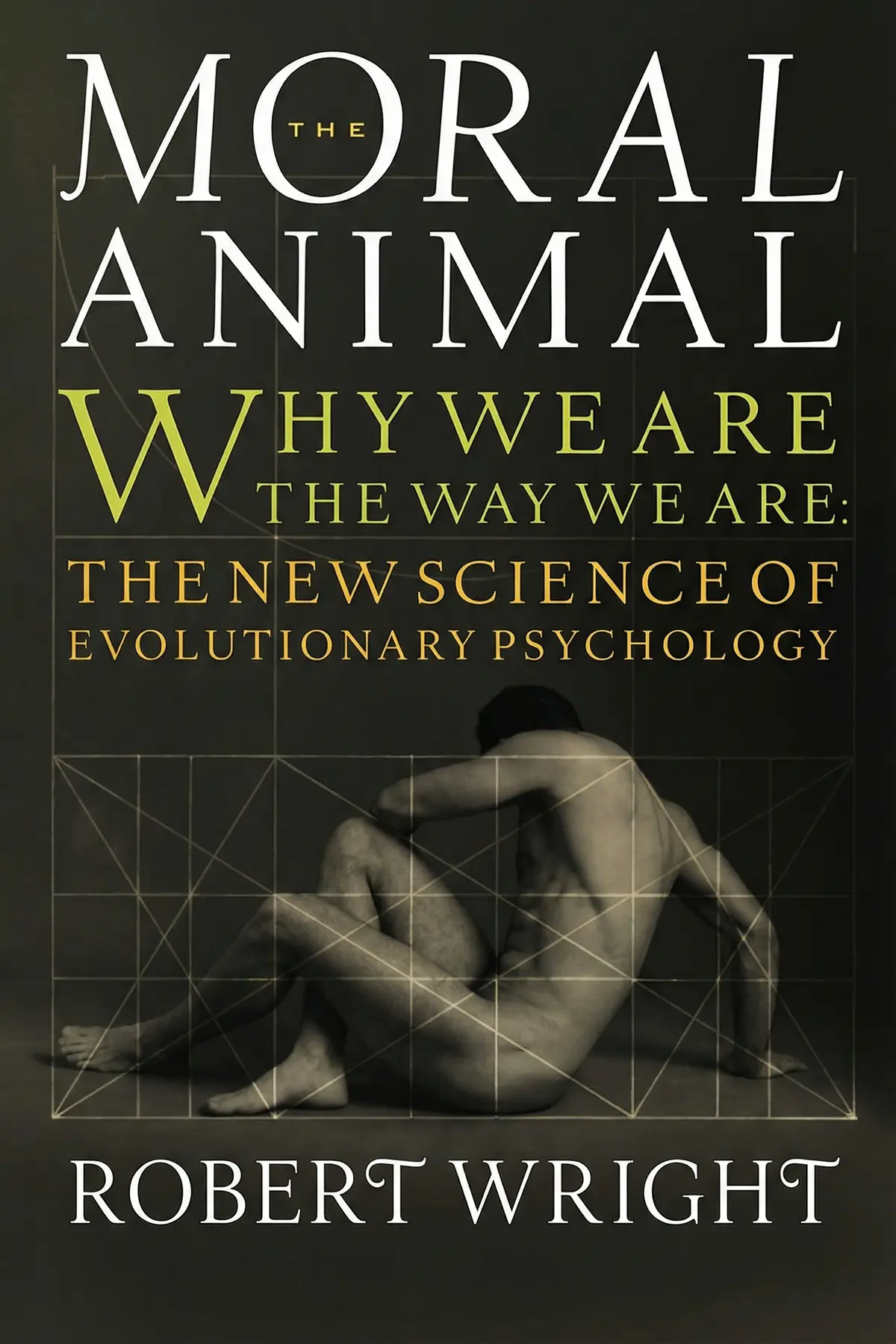
Table of Content
1. Introduction
2 min 22 sec
When we talk about morality, we usually think about the high-minded principles that guide our choices. We speak of the “Golden Rule,” the idea that we should treat others as we wish to be treated, as if it were a purely conscious decision made by a rational mind. It is a comforting thought to believe that our kindness, our loyalty, and our sense of justice are simply the result of our better nature. But what if there is a much deeper, more ancient script running beneath the surface of our daily lives? What if the behaviors we call “moral” are actually the refined products of millions of years of biological competition?
This is the central premise of Robert Wright’s landmark work on evolutionary psychology. This field of study, which gained significant traction in the early 1990s, suggests that the key to understanding human behavior lies not in our abstract philosophies, but in our evolutionary history. From the way we choose our partners to the way we compete for status at work, every action can be traced back to a fundamental Darwinian drive: the need to survive and, more importantly, to pass our genes on to the next generation.
In this exploration, we are going to look at the often-counterintuitive ways that evolution shapes our modern world. We will move beyond the idea that we are simply blank slates formed by culture and instead look at the biological machinery that influences our emotions and social structures. We will see how traits like jealousy, which we often dismiss as a character flaw, might actually be a highly evolved survival mechanism. We will examine how altruism—the act of helping others—might not be as selfless as it seems, but is instead a strategic investment in our own social standing.
Through the lens of evolutionary psychology, we can begin to see human nature in a new light. Whether we are observing the social dynamics of chimpanzees, the marriage customs of distant tribes, or the dating habits of modern city-dwellers, the patterns remain remarkably consistent. By the end of this journey, you will have a clearer understanding of the forces that govern your own life, providing a perspective that is both humbling and enlightening. We are, after all, part of a long biological lineage, and the ancient rules of that lineage still play a profound role in making us who we are today.
2. Biological Indicators in Mate Selection
2 min 42 sec
Uncover why our brains are wired to find specific traits like intelligence and youthful beauty attractive, and how these preferences served as survival strategies for our ancestors.
3. The Evolutionary Function of Jealousy
2 min 41 sec
Your jealousy isn’t a character flaw—it’s an evolutionary masterpiece. Discover why men and women fear different betrayals, and how ancient survival instincts still hijack your modern relationships.
4. Infidelity as a Survival Strategy
2 min 48 sec
Discover the complex reasons why some individuals might seek outside partners, and how these actions can be viewed as strategic biological moves for resource security and genetic quality.
5. Status, Wealth, and Parental Favoritism
2 min 35 sec
Your parents’ favoritism isn’t random—it’s an unconscious genetic strategy. Discover why wealth and social status secretly determine which child gets the most investment.
6. The Hidden Self-Interest of Altruism
2 min 42 sec
Explore the counterintuitive idea that our most selfless acts are actually fueled by a biological drive for reciprocity and reputation management.
7. The Inevitability and Fluidity of Hierarchy
2 min 47 sec
Hierarchy isn’t a modern curse—it’s woven into our biology. Discover why even “equal” societies secretly reward status, and how your brain literally rewires itself based on your social rank.
8. Power through Strategy and Alliance
2 min 53 sec
See how raw power is often secondary to social intelligence, as we explore how both chimps and humans use strategic alliances to climb the social ladder.
9. Conclusion
1 min 46 sec
As we wrap up our journey through the insights of Robert Wright, we are left with a perspective on human nature that is both challenging and deeply revealing. The core message of evolutionary psychology is that we are not the masters of our own minds in the way we often like to think. Instead, we are the current caretakers of a genetic heritage that has been shaped by millions of years of survival, competition, and social maneuvering. Every emotion we feel—from the sting of jealousy to the warmth of altruism—is a finely tuned instrument designed to help our genes navigate the world.
This doesn’t mean that our lives are predetermined or that our moral choices are ‘fake.’ Rather, it means that our morality is more complex than a simple set of rules. It is a biological strategy. When we understand that our impulses for status, our preferences in love, and our drive to help others all have deep evolutionary roots, we gain a ‘user manual’ for our own behavior. We can start to see why we are prone to certain biases and why we find certain social situations so stressful.
Ultimately, the ‘moral animal’ is a creature that has been designed to be good, but for very practical, biological reasons. By acknowledging these ancient instincts, we don’t have to be slaves to them. Instead, we can use this knowledge to build a society that accounts for our biological realities while still striving for our highest ideals. We are, after all, a species that can understand its own programming—and that, perhaps, is the most uniquely human trait of all. As you move forward, keep this in mind: your instincts are not just random feelings; they are the whispers of your ancestors, guiding you through the modern world using a map that was drawn long, long ago.
About this book
What is this book about?
The Moral Animal provides a deep dive into the fascinating world of evolutionary psychology, examining how our modern behaviors are deeply rooted in the survival needs of our ancestors. It challenges the traditional view of morality as a conscious choice, suggesting instead that many of our ethical impulses and social structures are actually clever strategies designed by natural selection to ensure our genetic success. By weaving together research on primate behavior, studies of hunter-gatherer tribes, and modern psychological experiments, this summary explores the complexities of human nature. You will discover the evolutionary reasons behind different forms of jealousy, the strategic logic of altruism, and the hidden mechanics of social hierarchies. Ultimately, it offers a provocative promise: by understanding the biological scripts we are programmed to follow, we can gain a clearer perspective on why we act the way we do and what it truly means to be a moral animal in a competitive world.
Book Information
About the Author
Robert Wright
Robert Wright is an American journalist whose work spans the fields of history, politics, psychology and religion. He has been a senior editor at the New Republic, a senior fellow at the non-partisan think tank New America and a regular contributor to magazines such as the New Yorker and Atlantic Monthly. Wright’s other books include Three Scientists and Their Gods (1988) and Nonzero (2000).
Ratings & Reviews
Ratings at a glance
What people think
Listeners find the work impactful and skillfully composed, with one review highlighting its concise explanation of human evolution. Additionally, it is celebrated as a pivotal text in evolutionary psychology, and one listener specifically enjoyed its Darwinian approach to discussing morality. Nevertheless, the narrative flow and style get varied feedback, as some think it is accessible while others argue it's not an easy read. The caliber of the arguments also results in mixed views, with some listeners finding them difficult to grasp.
Top reviews
Bird
Picked this up because I wanted to understand the biological roots of our behavior, and Wright delivers a masterclass in synthesis. This book is a landmark work that explains human evolution in concise, often biting terms that make you rethink every social interaction. I especially loved how the author used Charles Darwin’s own life and Victorian struggles as a recurring case study for evolutionary principles. It makes the abstract science feel grounded and personal rather than just a list of dry theories. While some critics argue that evolutionary psychology excuses bad behavior, Wright is careful to suggest we should rise above our primitive urges. The truth is, understanding our 'hairy history' is the first step toward genuine moral progress. It is a powerful read that remains relevant decades after its initial publication.
Show moreCamila
Wow, Robert Wright has crafted a truly landmark work that fundamentally changed how I view human interactions and our collective sense of ethics. By stripping away the veneer of 'free will,' he exposes the cold, Darwinian calculus that drives everything from sibling rivalry to corporate ladder-climbing. Some might find this perspective bleak, but I found it oddly liberating to see the gears of the 'moral animal' turning so clearly. The way he integrates biography with biology is a stroke of genius that keeps the pacing brisk and engaging. Not gonna lie, I had to reread several paragraphs to fully grasp the nuances of his utilitarian arguments. However, the effort was well worth it for the sheer depth of insight provided here. It’s easily one of the most influential books I’ve encountered on the nature of our species.
Show moreNit
After hearing so much about evolutionary psychology, I finally dove into this classic and found it to be incredibly powerful and deeply moving. Wright doesn't just explain evolution; he explains the soul, or at least the biological ghost that we mistake for one. The discussion on 'gene machines' and how we are designed to deceive ourselves is both terrifying and brilliant. He argues that our brains are not designed to see the truth, but rather to help us survive and reproduce at any cost. This realization is a bitter pill to swallow, yet Wright presents it with such wit and clarity that you can't help but be impressed. It is a landmark book that bridges the gap between the hard sciences and the humanities perfectly. Every page offers a new 'aha!' moment that sticks with you long after you close the cover.
Show moreSiraporn
This book provides a concise yet deep dive into the Darwinian roots of our most 'human' traits like altruism, shame, and spite. I was blown away by how Wright manages to connect ancient primate group dynamics to the way we behave on crowded subways today. He successfully argues that our big, fancy brains are often just tools for rationalizing the primitive urges of our 'hairy' ancestors. The book is well-written and packed with provocative ideas that challenge the standard social science model of human behavior. Personally, I think this is essential reading for anyone interested in why our society is structured the way it is. It isn't just a science book; it’s a mirror that reflects the most uncomfortable parts of our nature. If you want to understand the 'why' behind the 'what,' start here.
Show morePim
The chapter on Victorian morality versus our modern dating landscape was eye-opening, even if it felt a bit speculative at times. Wright explores how natural selection has shaped our sense of 'right' and 'wrong' to favor genetic survival over actual happiness. To be fair, the writing style is a bit dense and isn't always the easiest to navigate during a quick lunch break. You really have to sit with these ideas and chew on them to get the full effect of his arguments. I found the discussion on Trivers’ papers and reciprocal altruism to be the strongest part of the narrative. Even though some of the gender generalizations made me uncomfortable, the logic behind them is hard to dismiss entirely. It’s a thought-provoking look at why we aren't as selfless as we like to pretend.
Show moreAlejandra
Ever wonder why we feel crushing guilt or why men and women seem to have such different approaches to short-term courtship? This book attempts to answer those questions by looking at the 'software' our genes have written for us over millions of years. Wright is a fantastic writer who manages to make complex concepts like kin selection and parental investment feel accessible to the average reader. My only real gripe is that the book meanders a bit in the middle, losing the sharp focus it had in the beginning. In my experience, the chapters on social status and the 'cheater detection' mechanism were the most insightful. Even if you don't agree with every conclusion, the framework Wright provides for analyzing behavior is incredibly useful. It’s a solid 4-star read that will definitely spark some heated dinner-table conversations.
Show moreScarlett
To be fair, the writing style isn't always the easiest to navigate, with some transitions feeling quite awkward during long reading sessions. I found the book's reliance on Trivers' papers a bit repetitive, though the core arguments remain quite sturdy despite the age of the material. What really saved the experience for me was the way Wright framed Darwin's life as the ultimate test case for his theories. It adds a human element to a science that can often feel cold or deterministic. Gotta say, the explanation of how 'selfless' behavior is actually a form of genetic selfishness was particularly well-handled. It challenges your vanity and forces you to look at your own motivations through a much more clinical, yet fascinating, lens. It's a heavy read, but rewarding for those who persevere through the denser chapters.
Show moreWeera
As someone who has read a lot about evolution, I wasn't sure if Wright would bring anything new to the table, but I was pleasantly surprised. He weaves a narrative that is both an intellectual history of Darwinism and a forward-looking manifesto for a new science of the mind. While I agree with some critics that he occasionally overreaches into 'just-so' story territory, his logic is usually tight and compelling. The truth is, we are animals, and ignoring our biological heritage leads to all sorts of social and personal pathologies. Wright’s exploration of the disjunction between our ancestral design and modern life is particularly poignant and well-reasoned. It’s a thought-provoking, landmark work that deserves a spot on your shelf, even if you find some of the conclusions difficult to accept. It definitely made me look at my own 'moral' choices in a new light.
Show moreLuckana
Frankly, this book is a bit of a mixed bag for me; while the application of evolutionary theory is often brilliant, some sections feel like mere arm-waving. I found myself rolling my eyes at the way Wright stretches thin evidence to cover complex human emotions like grief or chronic spite. There is a lot of focus on a few specific papers from the 1970s, which makes the science feel slightly dated in a modern context. On the other hand, the anecdotes about Darwin’s marriage and his inner turmoil were genuinely fascinating and kept me turning the pages. It’s a decent introduction to the field, but you definitely need to read it with a grain of salt. If you’re looking for a definitive guide to the human mind, this might leave you wanting more data. It’s more of a philosophical exploration than a rigorous scientific text.
Show moreSurasit
Not what I expected, as the book seems to lean too heavily on older research to justify some pretty outdated and regressive gender dynamics. I understand that evolutionary psychology is about the 'ancestral environment,' but Wright’s flippant dismissal of social fluidity felt incredibly narrow-minded. It felt like he was using science to validate a very specific, patriarchal view of the world under the guise of 'natural' laws. Furthermore, the transitions between sections were often awkward and disjointed, making it hard to maintain a steady train of thought. Look, I appreciate the attempt to ground morality in biology, but the execution here feels biased and occasionally mean-spirited toward feminist critiques. It’s an interesting historical artifact of the field, but I wouldn't call it an objective look at human nature. There are better, more modern takes on this subject available now.
Show moreReaders also enjoyed


A Life Decoded: My Genome: My Life
J. Craig Venter

59 Seconds: Change Your Life in Under a Minute
Richard Wiseman
A Planet of Viruses
Carl Zimmer
A Short History of Nearly Everything
Bill Bryson
AUDIO SUMMARY AVAILABLE
Listen to The Moral Animal in 15 minutes
Get the key ideas from The Moral Animal by Robert Wright, plus 5,000+ more titles in English and Thai.
- 5,000+ titles
- Listen as much as you want
- 7-day free trial
- Cancel anytime







