
16 min 29 sec
The Motorcycle Diaries: Notes on a Latin American Journey
Follow the transformative 1952 journey of Ernesto Che Guevara across South America. This narrative explores how a rugged motorcycle trip evolved into a profound social awakening and the birth of a revolutionary spirit.
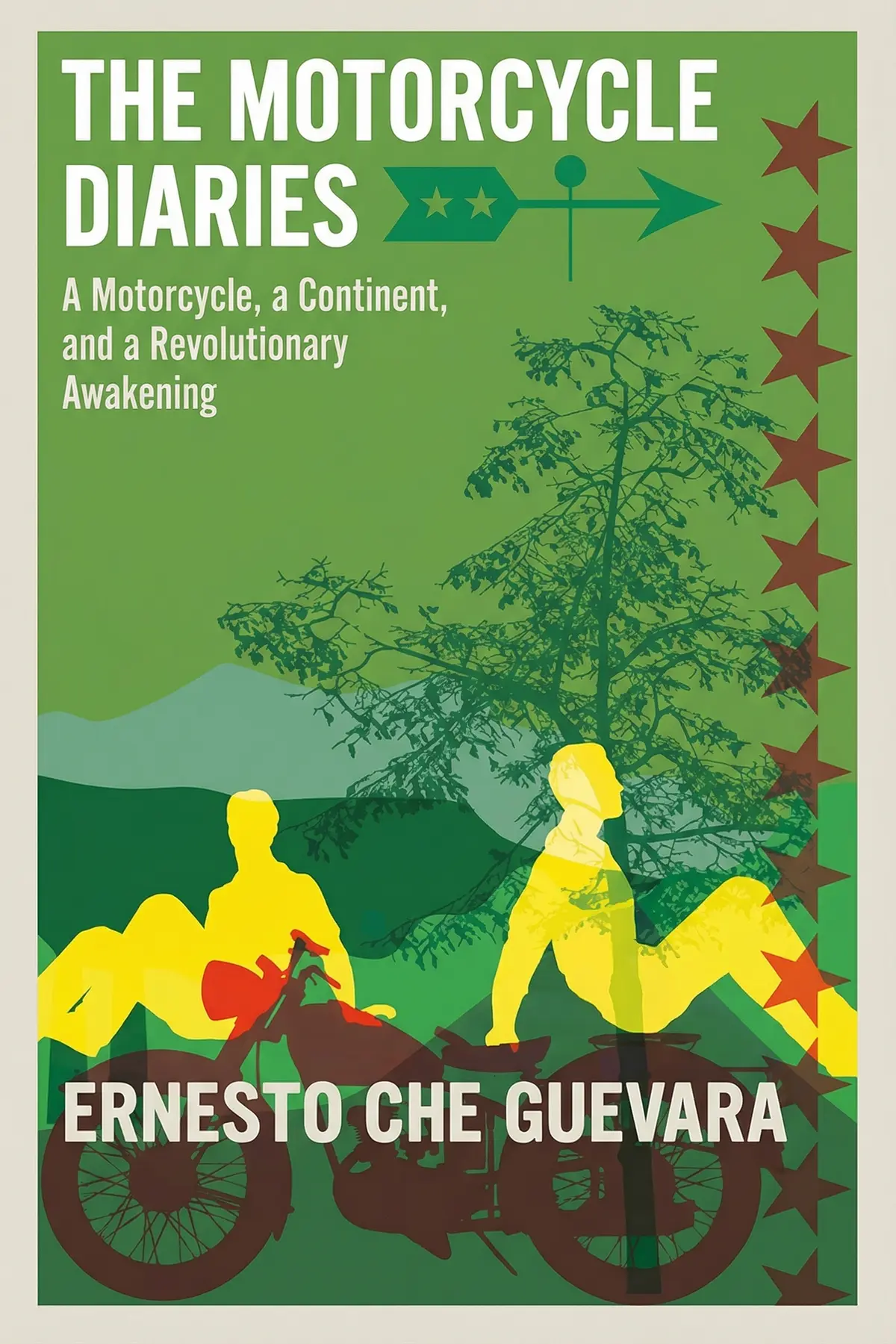
Table of Content
1. Introduction
1 min 33 sec
Every great shift in history often begins with a single step, or in some cases, the roar of a struggling engine. We often see historical figures as static icons, frozen in time on posters or in textbooks, but they all had a beginning—a moment where the world they thought they knew was stripped away to reveal a much more complex reality. Imagine standing at the threshold of your adult life, filled with the idealism of youth and a thirst for the unknown, and deciding to leave everything familiar behind to see a continent through the lens of the open road.
This is the throughline of our exploration today. We are following the path of two young men, Ernesto Guevara and Alberto Granado, as they set out from Argentina in 1952. While they intended to find adventure and see the sights of South America, the journey became a crucible. The rugged terrain of the Andes, the dense humidity of the Amazon, and the social friction of industrial towns acted as catalysts for a profound internal metamorphosis.
As we move through their story, notice how the focus shifts from the mechanical health of their motorcycle to the social health of the people they meet. This isn’t just a travelogue; it’s a study of how empathy is born from proximity. By the time we reach the end of their journey, you will see how the dust of South America didn’t just coat their clothes—it settled into their souls, changing the way they viewed justice, medicine, and their own roles in the world. Let’s join them on the road to see how a simple trip can ignite a revolutionary spark.
2. The Call of the Open Road
2 min 15 sec
Two friends set out on a temperamental motorcycle seeking adventure, but the vast landscapes of South America soon offer much more than simple sightseeing.
3. The Breaking Point of Idealism
2 min 23 sec
Mechanical failures and physical hardships strip away the comforts of the travelers, forcing them to confront the stark realities of poverty.
4. Industrial Struggle and the Human Cost
2 min 01 sec
Deep in the mining regions of the continent, the travelers witness the harsh conditions of the working class, fueling a desire for social justice.
5. Bridging the Gap at the Edge of Society
2 min 12 sec
At a leper colony in the Amazon, a powerful lesson in dignity and connection challenges the traditional boundaries between doctor and patient.
6. The Weight of History and Modern Inequity
2 min 02 sec
Exploring the ruins of ancient civilizations reveals the stark contrast between a glorious past and a present marked by colonial legacy.
7. The Final Synthesis of a New Identity
2 min 21 sec
The journey concludes in Venezuela, where the collected experiences of the road finally solidify into a lifelong commitment to social change.
8. Conclusion
1 min 42 sec
As we look back on the journey of Ernesto and Alberto, it becomes clear that their trip was never really about the destination. It was about the slow, deliberate process of opening one’s eyes. They began as two friends chasing a horizon on a vintage motorcycle, and they ended as men who could no longer ignore the systemic suffering that defined their continent. The motorcycle, La Poderosa II, may have failed them physically, but it succeeded in carrying them to the places where their hearts and minds could be broken and rebuilt.
The core takeaway of this narrative is the power of proximity. By choosing to step outside their comfort zones and live among the miners, the lepers, and the farmers, they transformed abstract social issues into deeply personal missions. Ernesto Guevara’s evolution reminds us that empathy is a choice—a choice to look, to listen, and to allow the reality of others to change our own trajectory.
In our own lives, we can take away the lesson that travel and exposure to different perspectives are not just for leisure; they are essential for growth. When we bridge the gaps between ourselves and those on the margins, we find a shared humanity that can ignite a lifelong commitment to something greater than ourselves. Whether or not you agree with the political path Ernesto later took, the story of his awakening on the road remains a powerful testament to the idea that a single journey can change the course of a life—and potentially, the course of history. As you move forward, consider what ‘roads’ you might take to broaden your own perspective and what ‘rivers’ you might need to swim across to find solidarity with those around you.
About this book
What is this book about?
This summary explores the formative experiences of a young Ernesto Che Guevara as he and his friend Alberto Granado traverse the diverse landscapes of South America on a temperamental motorcycle. What begins as a quest for adventure and youthful exploration quickly shifts into a deep, eye-opening encounter with the systemic inequalities of the continent. Through various encounters—from the struggle of miners in Bolivia to the isolation of a leper colony in the Amazon—the narrative tracks the psychological and ideological evolution of a man who would later become a global icon. It promises a look into the heart of a traveler who finds his medical training and middle-class background challenged by the raw reality of the human condition. You will see how the dust of the road and the warmth of shared stories transformed a medical student into a focused advocate for the marginalized, providing a unique perspective on the roots of social consciousness.
Book Information
About the Author
Ernesto Che Guevara
Ernesto Che Guevara was a central figure in the Cuban Revolution and has evolved into an enduring symbol of rebellion and leftist ideology within popular culture. Beyond his role in political and military history, Guevara was a prolific writer, notably authoring Guerrilla Warfare, a manual rooted in his firsthand experiences during the Cuban guerrilla movement. His life and literary works continue to exert a significant political and cultural impact on a global scale.
Ratings & Reviews
Ratings at a glance
What people think
Listeners find this to be a superb experience featuring graceful prose and deep perspective on Ernesto Guevara's life and ideology. The narrative brings South American nations and their citizens to life vividly, and listeners value the historical setting of Guevara's travels. They characterize Guevara as a man of great passion, though some find the translation difficult to track. The political themes receive a variety of reactions from listeners.
Top reviews
Rosa
The prose in this travelogue is surprisingly elegant for a young medical student. It's fascinating to watch Ernesto's casual observations of the landscape slowly morph into a deep, agonizing awareness of social inequality. You can see the seeds of the revolutionary being sown when he encounters the indigenous people and the poverty-stricken workers. Truth is, I expected something much more dry or dogmatic, but what I got was a very human story about a boy becoming a man. The way he describes the various South American countries feels incredibly vivid and lived-in. While some might find the structure a bit loose, it feels authentic to the diary format. It’s a beautifully written journey of the soul that transcends simple politics and gives us the man behind the beret.
Show moreSayan
Wow, the descriptions of the leper colony in the later chapters were incredibly moving and surprisingly tender. This book really captures the 'Our America' spirit that Guevara became so famous for championing later in his life. The transition from a bored medical student to a compassionate observer of human suffering is handled with remarkable grace. I particularly loved the vibrant descriptions of the landscapes, from the freezing mountains to the humid jungles. It feels like you are sitting on the back of that breaking-down motorcycle right alongside him. Gotta say, his passion for the people he encounters is infectious and truly shines through every single page. It’s a hauntingly beautiful account of a young man discovering his purpose in a very broken world. Highly recommended.
Show moreChee
The way this book captures the spirit of South America is truly vivid and breathless. It’s a classic coming-of-age story set against a backdrop of breathtaking landscapes and systemic injustice. Ernesto's voice is surprisingly relatable; he isn't a saint yet, just a guy trying to figure things out while his bike falls apart. The humor in his interactions with Alberto Granado provides a nice balance to the heavier themes of exploitation and sickness. You can feel the heat of the sun and the dust of the road in his writing. For me, the lasting appeal is the sense of adventure and the genuine compassion he shows for the marginalized. It’s a must-read for anyone who believes that travel should be more than just simple sightseeing.
Show moreAraya
Finally got around to reading the source material for that famous face on every college dorm T-shirt. It’s funny because Guevara actually comes across as a bit of a reckless jokester in the early chapters. His motorcycle, La Poderosa II, seems to spend more time sliding across the dirt than actually driving. To be fair, the humor and the light-hearted tone of the first half make the later shifts into serious social commentary hit much harder. You feel his outrage when he encounters the exploitation of miners and the sick. It isn't a perfect book—some entries feel like hasty scribbles—but it humanizes an icon. Seeing his medical background influence his empathy for the leper colony was particularly striking. A solid, insightful read for history buffs.
Show moreIsabelle
After hearing about his revolutionary exploits for years, seeing Ernesto as a middle-class kid was jarring. He starts the journey with such a carefree attitude, focused mostly on girls and booze and the next adventure. But as they move through Chile and Peru, the tone shifts into something much more somber and urgent. The description of the leper colony near the end is the emotional heart of the book for me. You see his medical training colliding with his sense of justice in a way that feels very authentic. My only gripe is that the ending felt a bit abrupt, though the included speeches help fill the gaps of his later ideology. It’s a great glimpse into how travel can fundamentally change a person’s worldview forever.
Show moreJames
Ever wonder how a doctor becomes a guerrilla leader? This book provides the most human answer possible: through direct, unshielded contact with the suffering of others. The moment he treats the old woman with asthma is a clear turning point where his internal world shifts. Personally, I found the prose to be quite elegant and full of a youthful hope that is both inspiring and tragic. He captures the diverse cultures of the South American continent with a level of detail that feels very respectful and curious. While some parts of the diary are clearly more polished than others, the raw honesty of his transformation is what makes it work. It’s a powerful reminder that our surroundings shape us as much as we shape them.
Show moreDarius
Is it possible to separate the myth of Che from the actual writing on these pages? I struggled with this because the legend is so pervasive that you look for clues of the revolutionary in every sentence. Some of the observations are truly poetic, yet other parts feel like the ramblings of a privileged kid on a gap year. In my experience, the book works best when he forgets he's trying to be an explorer and just describes the people he meets. The section on the dying woman with asthma was undeniably heartbreaking and showed his burgeoning social conscience. However, the political content can feel a bit forced in retrospect, as if later editing tried to make his evolution seem more linear. It's a decent travelogue, but significantly overhyped by his eventual fame.
Show moreZoey
Look, this isn't a political manifesto, so don't go in expecting deep Marxist theory or revolutionary strategies. This is primarily a story about two friends, a leaky motorcycle, and the vast, beautiful expanse of South America. The writing style is somewhat uneven; it jumps from beautiful, sweeping prose to very dry, clinical observations without much warning. Some of the anecdotes are genuinely funny, especially their various schemes to get free lodging and meals from unsuspecting locals. That said, the historical significance carries the book more than the narrative arc does. If this were written by any other medical student, it probably wouldn't be a bestseller. It’s a worthwhile read for the context, but don't expect it to change your life or your politics.
Show moreLogan
As someone who loves a good road trip story, the constant motorcycle crashes kept me entertained for the first few chapters. However, once the bike finally gives out, the narrative slows down considerably and becomes much more introspective. The truth is, I found some of the historical and geographical details a bit tedious to wade through. Guevara is clearly a talented observer, but his youthful arrogance can sometimes be a bit much to handle as a reader. I appreciated the insight into the poverty of the region, yet the pacing felt disjointed and lacked a strong central thread. It's a fascinating historical artifact for sure, but as a standalone travel memoir, it didn't quite live up to the massive reputation it has held for decades.
Show moreWatcharee
Frankly, I found the translation a bit clunky and the pacing was all over the place throughout the entire book. While I understand this is a historical document, the writing often feels like a series of disjointed vignettes that don't always lead anywhere meaningful. The constant talk about motorcycle maintenance and begging for food got a bit repetitive after a while. I was expecting more profound philosophical insights into the Latin American condition, but a lot of it felt like typical middle-class tourism. Not gonna lie, the controversial comments about race in the earlier sections were also quite off-putting, regardless of the historical context. It’s definitely more interesting because of who wrote it than because of the actual literary quality of the text itself. It's a bit of a slog.
Show moreReaders also enjoyed
A Theory of Justice
John Rawls
A Year in the Life of William Shakespeare: 1599
James Shapiro

A Warning
Miles Taylor

Agent Sonya: The Spy Next Door
Ben Macintyre
AUDIO SUMMARY AVAILABLE
Listen to The Motorcycle Diaries in 15 minutes
Get the key ideas from The Motorcycle Diaries by Ernesto Che Guevara, plus 5,000+ more titles in English and Thai.
- 5,000+ titles
- Listen as much as you want
- 7-day free trial
- Cancel anytime







