
20 min 45 sec
The Myth of American Inequality: How Government Biases Policy Debate
The Myth of American Inequality challenges standard economic narratives by revealing how flawed government statistics overlook trillions in welfare and taxes, leading to a massive overestimation of poverty and wealth gaps.
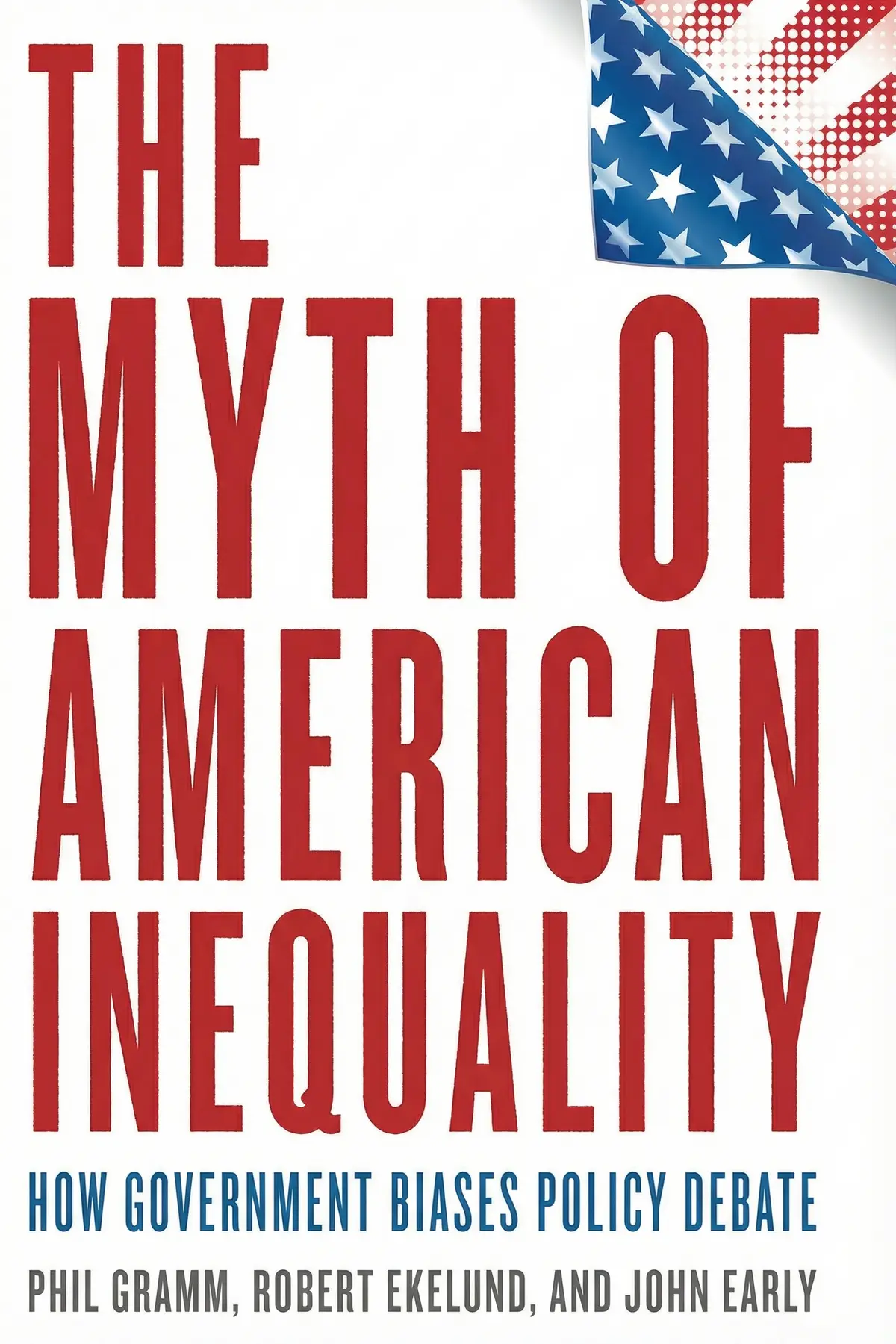
Table of Content
1. Introduction
1 min 54 sec
In our modern era, we rarely make decisions based on what we see with our own eyes alone. Instead, we rely on a massive infrastructure of data to tell us how our society is performing. We look at charts, percentages, and economic indicators to determine if our country is thriving or failing. These numbers form the bedrock of our political arguments, our legislative priorities, and our collective sense of fairness. But what happens if the very lens through which we view our economic reality is smudged? What if the official statistics we use to measure wealth and poverty are not just slightly off, but fundamentally misleading?
This is the provocative question at the heart of our exploration today. We are diving into a deep analysis of American economic health that suggests the story we’ve been told about rising inequality is largely a myth born of outdated accounting. The central throughline here is that the United States government uses a system of measurement that ignores trillions of dollars in resources. By failing to count the assistance provided to the poor and failing to subtract the taxes paid by the wealthy, the official record creates an artificial gap that fuels social division.
Over the next several chapters, we will deconstruct how these statistical errors occurred, why they persist, and what the real numbers look like when we account for the full picture of American life. We will see that the ‘War on Poverty’ might actually have been won without us realizing it, and that the divide between the top and bottom of the economic ladder is far narrower than the headlines suggest. It’s a journey from perception to reality, challenging us to look past the political rhetoric and focus on the actual standard of living enjoyed by citizens across the country.
2. The Dominant Narrative of Decline
2 min 47 sec
Explore why a rare consensus between political rivals regarding rising inequality might actually be based on a shared misunderstanding of the underlying data.
3. The Ghost of 1947 Accounting
2 min 55 sec
Discover how a measurement system designed just after World War II failed to evolve alongside the modern welfare state, creating a massive statistical blind spot.
4. The Spending Paradox of the Bottom Quintile
2 min 58 sec
Uncover the mathematical mystery of how the lowest-income households in America manage to spend twice as much as they officially earn.
5. Winning the War on Poverty in Secret
2 min 52 sec
Learn why the official poverty rate has remained stagnant for decades while actual living conditions for the poor have drastically improved.
6. The Other Side of the Ledger: Taxes and the Wealthy
2 min 33 sec
Explore the often-overlooked ‘money-out’ side of the inequality equation and how progressive taxation significantly reduces the real income of top earners.
7. Closing the Gap: 16-to-1 or 4-to-1?
2 min 52 sec
Witness the dramatic shift in the American wealth gap when you finally combine accurate benefit data with real-world tax burdens.
8. Conclusion
1 min 54 sec
As we wrap up our look at the actual state of American wealth and poverty, we find ourselves standing in a very different landscape than the one we started in. The throughline of this journey has been the realization that our national sense of crisis is, in many ways, a product of our own bad bookkeeping. By clinging to a 1947 method of measuring income, we’ve effectively blinded ourselves to the success of our own social programs and the impact of our own tax system.
The real story of America isn’t one of inevitable decline or ‘obscene’ gaps. It is a story of a country that has spent trillions of dollars to ensure that even those at the bottom of the economic ladder have access to a standard of living that was once reserved for the middle class. It’s a story of a tax system that aggressively pulls resources from the top to fund that progress. When we fix the data, the poverty rate drops from 13 percent to 3 percent, and the inequality ratio collapses from 16-to-1 down to 4-to-1.
What is the actionable takeaway here? It’s that we must demand better of the information we consume. We cannot have a rational democracy if we are arguing over numbers that ignore the reality of how people live. If we want to solve the remaining 3 percent of poverty, or if we want to talk about how to encourage more upward mobility, we have to start with the truth. We should celebrate the fact that the ‘War on Poverty’ has been largely successful and use that confidence to tackle the challenges that remain. America is not as divided or as desperate as the headlines suggest—it is a nation that has quietly become more prosperous and more equal than its own official records dare to admit.
About this book
What is this book about?
This exploration of American economics argues that the data driving our political division is fundamentally broken. By examining the methodology of the U.S. Census Bureau, the authors reveal that official statistics fail to account for two-thirds of all government transfer payments and ignore the impact of progressive taxation. This creates a distorted image of a nation plagued by stagnant wages and runaway inequality. The promise of the book is a restorative look at the facts. It demonstrates that when non-cash benefits like food stamps and Medicaid are included, and taxes are subtracted from the wealthy, the actual income gap shrinks significantly. Rather than a society in decline, the data suggests that the war on poverty has been largely successful, with true poverty rates falling to historic lows. It offers a new framework for discussing policy based on consumption and actual standard of living rather than incomplete cash-flow reports.
Book Information
About the Author
Phil Gramm
Phil Gramm is a former senator who spent years heading up the US Senate Banking Committee. He is currently a visiting scholar at the American Enterprise Institute. Bob Ekelund is a professor of economics at Auburn University in Alabama. He is the author of over 20 books as well as hundreds of articles on economic history and policy. John Early is a mathematical economist and former assistant commissioner at the Bureau of Labor Statistics. He has written widely on topics including price change, labor force dynamics, and health care.
Ratings & Reviews
Ratings at a glance
What people think
Listeners find the work thoroughly researched and presented with a solid factual foundation, as one listener points out that the authors are a trio of economists from varied political backgrounds. Furthermore, the book earns praise for its clear readability and pacing, while one review emphasizes how it structures its core arguments around data charts. Listeners also value the book’s significance regarding fiscal oversight, with one review noting that it establishes a framework for managing federal deficit spending. However, views on accuracy and the depiction of wealth gaps are divided, as some listeners suggest that the degree of inequality is exaggerated.
Top reviews
Bae
Wow, this isn't your typical dry academic text, even though it's packed to the gills with charts and tables. The authors make a compelling case that the Census Bureau's data is fundamentally broken because it ignores nearly $50,000 in transfer payments per household. If you add back food stamps and Medicaid while subtracting taxes from the top earners, the gap looks totally different. I found the pacing surprisingly brisk for a book written by three economists from different backgrounds. It’s a massive relief to see a well-grounded factual analysis that doesn't just parrot the evening news. Highly recommended for anyone worried about the federal deficit.
Show moreWei
The most striking thing about this analysis is how it highlights the total exclusion of transfer payments from government data. Gramm, Ekelund, and Early show that when you count everything from rent subsidies to healthcare, the inequality ratio shrinks from 60-to-1 down to 4-to-1. That is a massive discrepancy that should be front-page news for anyone interested in budget control. Personally, I appreciated how they handled the history of the Great Society programs without being overly emotional. The writing is incredibly well-researched and grounded in facts rather than political rhetoric. If you want to understand the base of federal deficit spending, this is the book you need.
Show moreKamol
As someone who enjoys digging into the 'why' behind policy, I found the breakdown of the Gini coefficient and CPI calculations fascinating. Most people don't realize that the Census Bureau uses a version of inflation that often overstates the cost of living for the average family. This book corrects those errors and shows that the American standard of living has actually improved significantly since the 1970s. The authors do a great job of explaining why things like air conditioning and cell phones are valid markers of economic progress. It is a dense read, but the pacing is kept alive by the sheer number of 'aha!' moments. Every policymaker in Washington should have a copy on their desk.
Show moreMarasri
After years of hearing about the 1% versus everyone else, Gramm and his co-authors provide a much-needed reality check on the actual distribution of wealth. They systematically dismantle the idea that mobility is dead, using the Vanderbilt family as a perfect example of how fortunes dissipate over generations. The book is very well-researched and provides a refreshing counter-argument to the pessimistic views popularized by people like Thomas Piketty. I particularly liked the section on how Asian American students are outperforming other groups, which suggests education is the real key to mobility. It's a dense, fact-heavy book that rewards careful reading. This is exactly the kind of academic rigor we need right now.
Show moreChamnong
Maybe the most important book on economics I've picked up this year, despite some of the dense mathematical passages. It addresses the massive 'missing' income that the government fails to report, which completely distorts our understanding of poverty. To be fair, you have to be comfortable with a lot of charts to get through the middle chapters. But the payoff is a much clearer picture of how our tax and transfer system actually functions in the real world. It turns out that the social safety net is actually doing exactly what it was designed to do. We should be celebrating the fact that poverty has been drastically reduced instead of pretending things are getting worse.
Show moreSkylar
Ever wonder why the official poverty numbers never seem to budge regardless of how much we spend on social programs? This book provides a fascinating answer by looking at the specific metrics used to define well-being in America. The authors argue that by ignoring non-cash benefits, the government creates a false narrative of stagnation. While I think they occasionally gloss over the real-world struggles of finding childcare or affordable transportation, their data work is top-tier. The argument about how the 'second quintile' ends up barely better off than the 'bottom quintile' after taxes is eye-opening. It makes you realize how much our current policy accidentally discourages work.
Show moreOrm
Picked this up with a healthy dose of skepticism because the title sounds like a partisan talking point. However, Gramm and his team rely on rigorous data to show that the income gap is often exaggerated by bad math. They point out that a huge chunk of taxes paid by the wealthy isn't even subtracted from the inequality stats we see on TV. The book is heavily focused on exhibits and numbers, which can be a bit of a slog if you aren't into statistics. Still, the central message about how we measure progress is too important to ignore. It definitely changed my perspective on whether the 'War on Poverty' was actually a success.
Show moreSombat
Finally, a book that uses the government’s own data to show that we are actually winning the war on poverty. The authors explain that the only reason the poverty rate looks high is because we refuse to count the trillions of dollars spent on aid. Not gonna lie, some of the chapters on CPI and inflation adjustments are a bit dry and repetitive. However, the overarching argument that Americans are better off today than they were fifty years ago is backed up by undeniable evidence. It’s a great resource for anyone who wants to argue against the constant doom and gloom in the media. This is a grounded, factual look at the American economy.
Show moreKoi
Truth is, I nearly put this down during the first chapter because of the heavy focus on Texas-style conservative economics. While the authors make some great points about the inaccuracy of Census Bureau data, their tone can be a bit snide at times. They spend a lot of time attacking Dickens’ 'A Christmas Carol' as if it’s a modern economic textbook, which felt unnecessary. That said, the actual data regarding how transfer payments impact the bottom quintile is hard to argue with. I wish there had been more focus on the non-economic barriers people face every day. It’s a solid 3-star read that offers a unique perspective but feels a bit one-sided.
Show moreLily
Frankly, the authors seem to live in a world of spreadsheets and have very little grasp on the actual lived experience of the working poor. They spend hundreds of pages arguing that inequality is a myth simply because people receive government assistance. Just because someone has a flat-screen TV or a microwave doesn't mean they aren't struggling with systemic barriers like racial prejudice or lack of voting access. They assume that if someone isn't working, it must be because welfare is too generous, completely ignoring things like broken-down cars or the job market. It’s a very conservative, 'bootstrap' view of the world that feels out of touch with reality. Too much math, not enough humanity.
Show moreReaders also enjoyed

A Biography of Loneliness: The History of an Emotion
Fay Bound Alberti

A Force for Good: The Dalai Lama's Vision for Our World
Daniel Goleman
1929: Inside the Greatest Crash in Wall Street History--and How It
Andrew Ross Sorkin

A Room of One’s Own
Virginia Woolf
23 Things They Don’t Tell You About Capitalism
Ha-Joon Chang
Abolish Rent: How Tenants Can End the Housing Crisis
Tracy Rosenthal
AUDIO SUMMARY AVAILABLE
Listen to The Myth of American Inequality in 15 minutes
Get the key ideas from The Myth of American Inequality by Phil Gramm, plus 5,000+ more titles in English and Thai.
- 5,000+ titles
- Listen as much as you want
- 7-day free trial
- Cancel anytime







