
The Rebel: An Essay on Man in Revolt
Albert Camus
An exploration of the absurd human condition, Albert Camus examines how we can find profound freedom, passion, and joy by embracing life’s inherent lack of meaning instead of seeking false hope.
1 min 46 sec
The question of why we continue to exist is perhaps the most pressing dilemma any person can face. In our modern, secular era, many of us encounter a persistent, underlying sense that the world lacks a grand design or a pre-ordained purpose. This feeling of meaninglessness can be heavy, leading to a profound intellectual malaise. It forces us to confront a difficult choice: Should we retreat into the comforting arms of traditional faith, or is the lack of meaning so unbearable that life is no longer worth the effort?
In this exploration of Albert Camus’s landmark essay, we dive into the heart of what he calls the absurd. This isn’t just a philosophical concept; it is a lived experience that occurs when our human desire for clarity and reason crashes against a world that offers neither. Most of us go through life on autopilot, following routines and chasing goals, until a sudden moment of clarity makes everything seem strange and hollow.
What follows is not a descent into darkness, but an invitation to a different kind of life. Camus suggests that the very thing we fear—the lack of an ultimate meaning—is actually the foundation for a much richer, more passionate existence. By stripping away the illusions of an afterlife or a divine plan, we are left with the raw reality of the present. This summary will guide you through the logic of the absurd, explaining why the struggle of existence is not a reason for despair, but a reason for a spirited, conscious revolt. We will see how embracing our limitations can lead to a radical kind of freedom and why, ultimately, we must imagine that even a life of repetitive struggle can be one of deep satisfaction. Here, we move beyond the search for ‘why’ and learn how to truly master the ‘how’ of living.
2 min 45 sec
Discover how the repetitive nature of daily life and the reality of death act as catalysts for the sudden realization that our existence might be absurd.
2 min 41 sec
Explore the intellectual side of absurdity, where the human mind’s drive for order meets a world that is fundamentally indifferent and complex.
2 min 51 sec
Learn why turning to religious faith or choosing suicide are both seen as ‘escapes’ that deny the reality of the human condition.
2 min 48 sec
By abandoning the hope for a future afterlife, we can redirect our energy toward experiencing this life with maximum passion and intensity.
2 min 47 sec
Through the myth of Sisyphus, we learn how to transform a seemingly futile existence into a personal victory by owning our struggle.
2 min 15 sec
The journey through the philosophy of the absurd brings us back to the very first question: Is life worth living? After examining the mechanical nature of our routines, the silence of the universe, and the various ways we try to escape our condition, Albert Camus provides a resounding ‘yes.’ But it is a ‘yes’ that comes with conditions. It is not the ‘yes’ of someone who has found a magic answer or a divine purpose. Instead, it is the ‘yes’ of a person who has looked into the void and decided to dance on the edge of it.
To live an authentic life, we must hold on to three things: our revolt, our freedom, and our passion. We revolt by refusing to accept the world’s meaninglessness as a reason to stop trying. We exercise our freedom by making our own choices in a world without a pre-written script. And we fuel our passion by recognizing that this earthly existence is the only one we get, making every moment intensely valuable. This mindset transforms our daily struggles. The repetitive ‘boulders’ we push are no longer burdens imposed by a cruel fate; they are the materials of our own self-expression.
As a practical step, Camus often pointed toward the act of creation. Whether you are writing, painting, or simply finding a creative way to solve a problem at work, the act of making something new is the ultimate expression of the absurd life. It requires you to be fully present, to grapple with the limitations of your materials, and to assert your own vision in a world that doesn’t provide one for you. Creation is a way of saying, ‘The universe may be silent, but I am not.’
So, as you go back to your daily routines, remember Sisyphus. When you feel the weight of your own ‘boulder,’ don’t look for a way to make it disappear. Instead, look at the strength you’ve gained by moving it. Acknowledge the absurdity of the climb, but don’t let it dampen your spirit. By letting go of the need for a ‘why,’ you gain the power to define your own ‘how.’ Life doesn’t need to have a meaning to be lived to the fullest; in fact, it may be better without one. Embrace the struggle, find joy in the present, and remember that your life belongs to you, and you alone.
The human experience is often defined by a deep-seated craving for purpose, yet we find ourselves in a universe that remains stubbornly silent and indifferent to our questions. Albert Camus identifies this tension as the absurd. In this philosophical landmark, he asks a fundamental question: If life has no intrinsic meaning, is it still worth living? Rather than falling into nihilism or despair, Camus argues that acknowledging the absurdity of existence is the key to true liberation. By rejecting the comforts of religious faith or the finality of suicide, an individual can live with greater intensity and authenticity. Through the metaphor of Sisyphus—condemned to roll a boulder uphill for eternity—Camus illustrates how we can find victory in the struggle itself. This summary provides a roadmap for navigating a world without certainties, teaching us to live for the present moment and to find joy in our own conscious rebellion against fate.
Albert Camus was a celebrated French philosopher, author, and journalist whose work deeply influenced 20th-century thought. Known for his focus on existentialist and absurdist themes, he produced literary masterpieces such as The Stranger and The Plague. In 1957, his intellectual contributions were honored with the Nobel Prize in Literature.
Albert Camus
Listeners find this work profoundly philosophical and intellectually stimulating, particularly valuing its deep dive into Camus' core concepts of absurdism. Regarding the prose, reactions are varied; some listeners highlight its clarity, while others describe the text as challenging to navigate. There is also disagreement concerning the translation quality, which several listeners found frustrating. Despite these critiques, listeners feel the book offers great value and appreciate its surprisingly positive outlook, with one listener specifically noting that it changed their life.
Ever wonder if the struggle itself is the point? Camus is out here spitting bars about the human condition, starting with the heaviest question imaginable—suicide—and somehow building a bridge toward a weirdly optimistic kind of defiance. It’s not an easy read by any stretch, but the way he deconstructs the 'absurd' makes you realize that meaning isn't something you find, it's something you create through sheer stubbornness. Truth be told, the middle sections can be a bit of a slog, but the payoff in the final chapter is worth every bit of effort. One must imagine Sisyphus happy, and after reading this, I actually think I can.
Show moreAs someone who spent most of my twenties feeling like I was walking with my head down, eyes to the ground to avoid the gaze of others, Camus gave me a way to look up without needing a divine reason. This isn't just a philosophy; it's a rigorous, almost surgical look at why we choose to keep going when things feel meaningless. The concept of the 'worm in the heart'—that nagging sense of self-interest and habit—really hit home for me. I felt like Camus was speaking directly to that silent, grave persona I used to adopt in high school to hide my deep insecurities from the world. It’s a beautiful spectacle of a human mind grappling with a reality that far exceeds its grasp.
Show moreWow, this actually changed my perspective on what it means to be productive in a world that feels increasingly hollow and commercialized. The idea that we can find joy in the 'absurd work' of our daily lives is perhaps the most uplifting message I've encountered in years. Camus doesn't offer easy answers or cheap hope, which makes the eventual conclusion feel much more earned and authentic. I'll admit that the text is heavy with reflection and requires a slow pace to truly digest the weight of each sentence. However, if you're struggling with the 'why' of existence, this is an essential manual for staying sane.
Show moreTruth is, we are all pushing boulders, and Camus is the only one brave enough to tell us that the hill doesn't actually have a top. This book is a masterclass in intellectual honesty, stripping away the 'evasions' of religion and false hope to see what’s left of the human spirit. I loved the way he describes the 'spectacle' of the mind trying to understand a silent universe—it’s both tragic and incredibly heroic. It’s the kind of reading that makes your own life feel more vivid and your personal struggles feel more significant. Absolutely life-changing if you are willing to sit with the discomfort he presents.
Show moreBy the end of this short book, I felt like my brain had been through a car wash, leaving my thoughts much more lucid than they were before. It’s fascinating how Camus can take a subject as dark as suicide and turn it into a celebration of human vitality and rebellion. The comparison to Sisyphus is perfect; it turns our repetitive, boring routines into a field of battle where we can actually win. To be fair, you might need a dictionary and a lot of coffee to get through some of the denser paragraphs. But once you 'get' it, you’ll never look at your daily commute the same way again.
Show morePicked this up after seeing it on every 'must-read' list, and frankly, it lives up to the hype even if the translation is a bit clunky in spots. The core idea that we should embrace the silence of the universe rather than seeking fake hope is incredibly empowering for the modern age. There were times when the philosophical jargon felt like it was going in circles, which I suppose is ironic given the subject matter. To be fair, you have to be in a very specific, reflective headspace to appreciate the dense logic he uses to reject the 'leap' of faith. It’s great value for money if you want a book that forces you to pause and re-evaluate your daily routine.
Show moreThe chapter on Sisyphus is obviously the crown jewel here, yet the preceding arguments about suicide as a 'confession' are what actually haunt you for days. Camus manages to out-think both the religious types and the hardcore rationalists by suggesting that the absurdity of life is actually our greatest freedom. Personally, I found the analysis of Kafka in the appendix to be just as insightful as the main essay, offering a clearer window into how this philosophy works in fiction. The writing is lucid but demands your full attention, so don't expect to breeze through this over breakfast. My only real gripe is that some of the cultural references feel a bit dated now.
Show moreFinally got around to finishing this, and while I’m not sure I fully buy into the sticker-chart-level happiness of Sisyphus, the logic leading up to it is sharp. Camus identifies the habit of living as something that precedes the habit of thinking, which is a terrifyingly accurate observation of most adult lives. In my experience, the book works best when it's being provocative and worst when it descends into more abstract ontological arguments. The translation I read was a bit hit-or-miss, with some phrasing feeling stiff, but the core message remained loud and clear. It’s a slim volume but packs a massive punch for the price.
Show moreNot what I expected from such a famous essay, as the dense prose often felt like it was actively trying to push me away rather than invite me in. While the central metaphor of the boulder is brilliant, the actual experience of reading the book felt like doing the work alongside Sisyphus. I found some of the translation choices quite annoying, as they made already complex ideas feel almost impenetrable to a casual reader. Got to say, I appreciate the 'no-nonsense' approach to existential dread, but I think I prefer his novels like The Stranger for getting the same point across. It’s certainly thought-provoking, but it’s more of a chore than an enlightenment.
Show moreLook, I wanted to love this because the premise is iconic, but the writing style is so unnecessarily obtuse that it borders on being unreadable. I understand it's a landmark philosophical text, but there’s a fine line between 'deeply reflective' and just being intentionally difficult for the sake of it. The translation I picked up was particularly annoying, with several clunky passages that made the logic even harder to parse. Honestly, I think the summary of his ideas is far more interesting than the actual experience of sitting down and reading the full essay. It felt like a pretentious exercise in gloom that didn't provide enough light to justify the effort.
Show more
William B. Irvine
Nigel Warburton
John Rawls
Kate Kirkpatrick
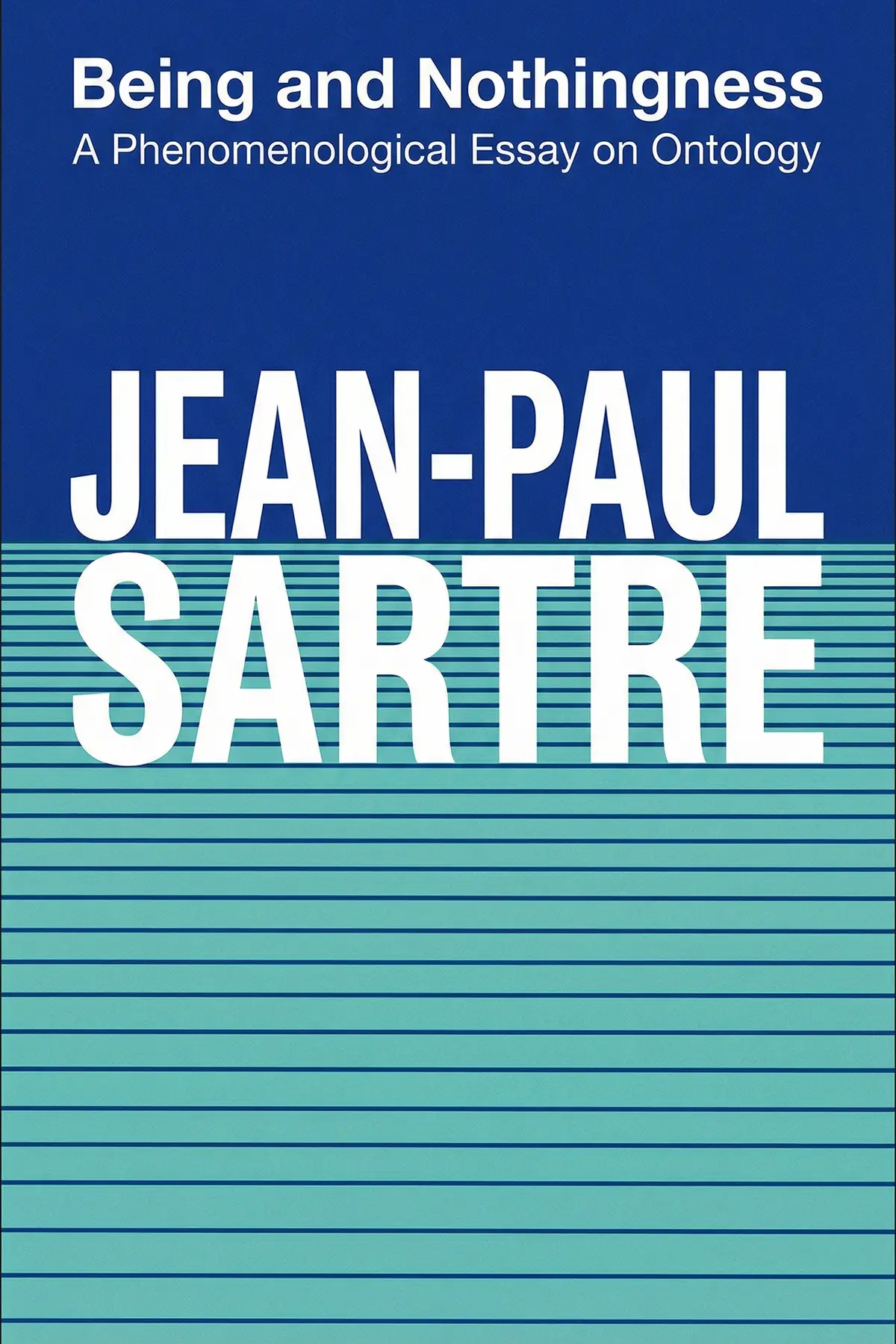
Jean-Paul Sartre
AUDIO SUMMARY AVAILABLE
Get the key ideas from The Myth of Sisyphus by Albert Camus, plus 5,000+ more titles in English and Thai.







