
20 min 49 sec
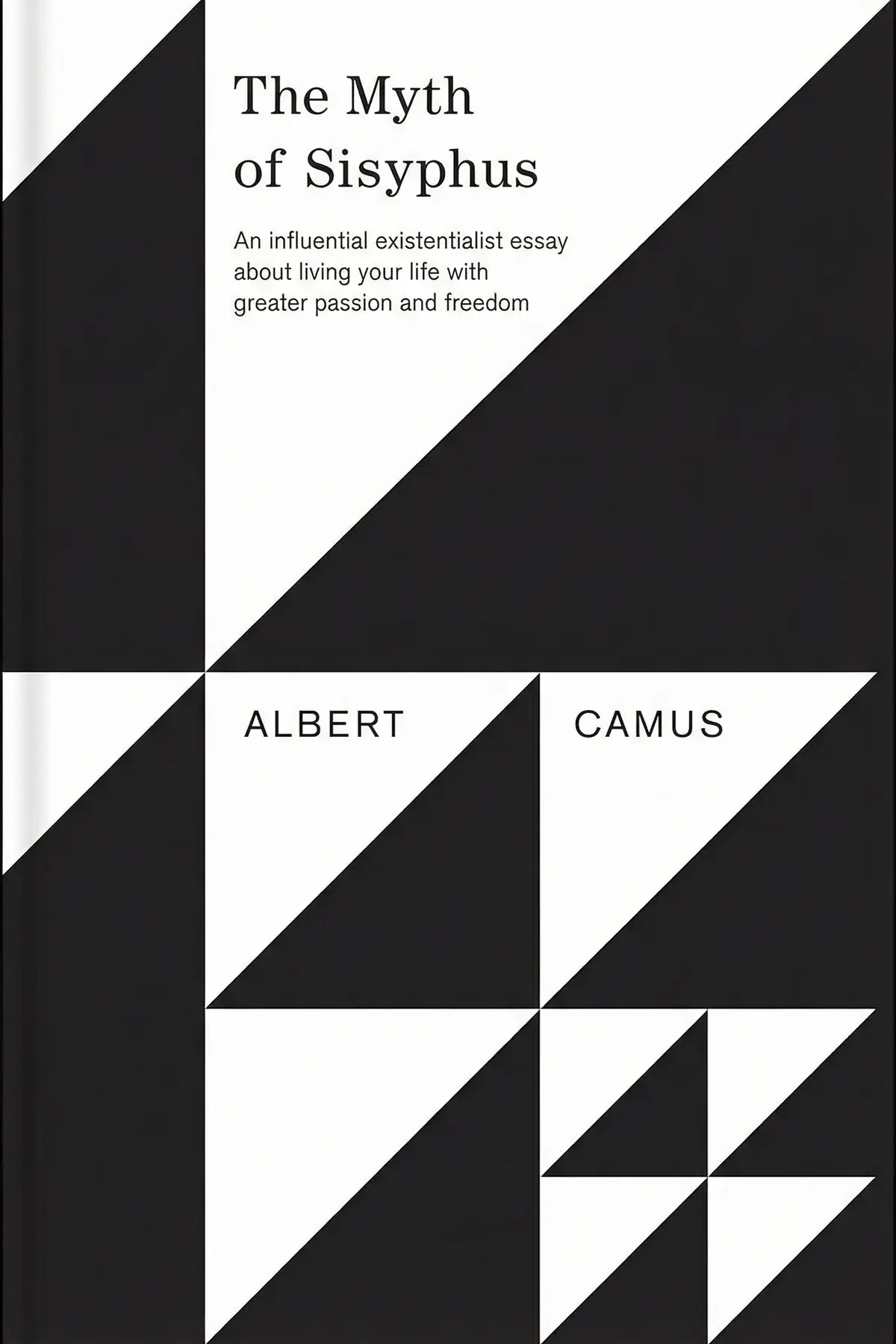
The Stranger: A Philosophical Journey Into Alienation
By Albert Camus
Explore Albert Camus’s landmark novel about Meursault, a man whose emotional detachment and encounter with the absurdity of existence lead to a shocking crime and a controversial trial in colonial Algiers.
Table of Content
1. Introduction
1 min 41 sec
When Albert Camus published his debut novel in 1942, the world was in the middle of a catastrophic conflict. Against this backdrop of global upheaval, Camus introduced a character who seemed remarkably unbothered by the chaos of human emotion. The Stranger is more than just a story about a crime; it is a vehicle for the philosophical questions that Camus had been exploring in his earlier essays. It serves as an invitation to look at the world through a lens of total honesty, even when that honesty feels cold or unsettling.
The throughline of this journey is the concept of the absurd—the conflict between our human desire for meaning and the silent, indifferent universe we inhabit. We see this play out in the life of Meursault, a man who lives entirely in the present moment, guided by physical sensations rather than social expectations. The book is meticulously structured into two distinct acts. First, we follow the events leading up to a fatal moment on a beach. Second, we witness the aftermath: a trial where the legal system is less interested in the facts of a killing and more obsessed with the defendant’s refusal to cry at his mother’s funeral.
In the sections ahead, we will navigate the dusty streets of Algiers and the stifling atmosphere of a courtroom. We will see how Meursault’s detachment makes him a stranger to his peers and a threat to the moral order. By the end, we’ll analyze why Camus’s vision of the ‘absurd hero’ continues to resonate, offering a provocative look at what it means to truly be free in a world that often demands we perform emotions we do not feel.
2. An Unusual Reaction to Loss
2 min 35 sec
The story opens with a shocking display of emotional distance as the protagonist navigates his mother’s death with more concern for the weather than for grief.
3. The Dynamics of Neighborhood and Morality
2 min 44 sec
Meursault becomes entangled in the lives of his neighbors, revealing his passive nature and his willingness to ignore the moral failings of others.
4. A Fatal Encounter Under the Sun
2 min 27 sec
A weekend trip to the coast takes a dark turn when the oppressive heat and a series of coincidences lead to a senseless act of violence.
5. The Isolation of the Accused
2 min 38 sec
Behind bars, Meursault faces a legal system that is more baffled by his lack of remorse than by the crime he committed.
6. A Trial of Character, Not Crime
2 min 20 sec
In the courtroom, the facts of the murder take a backseat to a scathing critique of Meursault’s personal life and emotional coldness.
7. The Final Rebellion and Acceptance
2 min 16 sec
Facing the guillotine, Meursault rejects the comforts of religion and finds a profound sense of peace in the world’s indifference.
8. The Philosophy of the Absurd
2 min 27 sec
The Stranger is a gateway into Camus’s ideas on absurdism, illustrating the tension between human search for meaning and the world’s silence.
9. Conclusion
1 min 41 sec
As we reach the end of Meursault’s journey, we are left with a startlingly clear picture of what it means to live without pretense. The Stranger is not just a portrait of an indifferent man; it is a mirror held up to society’s own rituals and expectations. Through the two acts of the novel—the crime and the trial—Camus shows us that we are often judged more for our failure to conform to emotional scripts than for our actual deeds. Meursault becomes a victim of a system that cannot handle his honesty, a system that prefers a comfortable lie to an uncomfortable truth.
The takeaway from this philosophical classic is a call to authenticity. Camus doesn’t ask us to become as cold as Meursault, but he does challenge us to recognize the ‘absurd’ nature of our world. He suggests that true freedom begins when we stop searching for a grand, pre-ordained meaning and start taking responsibility for our own existence. When Meursault finds peace in the ‘gentle indifference’ of the world, he isn’t giving up; he is finally waking up to the reality of his life.
As you move forward, consider the ways in which you might be performing for the ‘courtroom’ of your own life. Are there places where you are hiding your true reactions to fit a social norm? The Stranger invites you to embrace the present moment and to find value in the physical reality of the world around you. In a universe that often feels silent, the meaning we create for ourselves is the only meaning that truly matters. Like Meursault, we can find a sense of liberation in the truth, no matter how stark it may seem.
About this book
What is this book about?
The Stranger is a profound exploration of the human condition, centered on a protagonist who refuses to perform the emotional rituals expected by society. When Meursault faces the death of his mother and, later, commits a senseless murder on a sun-drenched beach, he becomes a lightning rod for societal judgment. The narrative is split between his passive life in Algiers and the rigid, often hypocritical legal process that seeks to define his character. This summary delves into Camus’s core philosophical concepts of absurdism and existentialism. It promises to guide you through the stark, honest perspective of a man who sees the world without the filter of traditional meaning. By following Meursault’s journey from the funeral home to the guillotine, you will gain a deeper understanding of why this story remains a pillar of 20th-century thought and how it challenges our ideas of morality and truth.
Book Information
About the Author
Albert Camus
Albert Camus was a renowned French author, playwright, and philosopher who was awarded the Nobel Prize in Literature in 1957. Known for his contributions to the philosophy of absurdism, his influential body of work includes celebrated novels such as The Plague and The Fall. In addition to his fiction, Camus produced significant non-fiction essays, most notably The Myth of Sisyphus and The Rebel, which further articulated his views on existence and rebellion.
More from Albert Camus
The Rebel: An Essay on Man in Revolt
Albert Camus
Ratings & Reviews
Ratings at a glance
What people think
Listeners find this to be a stimulating experience that maintains their interest from beginning to end, featuring a masterfully written plot with surprising developments. Its straightforward yet masterful prose serves as an ideal entry point for Albert Camus' literature, and listeners value its brevity. Regarding the emotional impact, responses vary, as some consider it profoundly touching while others call it bleak; similarly, the tempo splits views between those enjoying the rhythm and those who feel the story moves too gradually.
Top reviews
Pong
The opening sentence alone is enough to hook you into Meursault’s detached world. Camus writes with a chilling, clinical precision that reflects the narrator's own indifference toward life and death. While the story is remarkably short, the themes of existentialism and the absurdity of the legal system feel massive. You find yourself judging Meursault not for his crime, but for his refusal to cry at his mother's funeral. It is a thought-provoking read that forces you to confront the cold, benign indifference of the universe itself. To be fair, it is a perfect introduction to Camus' philosophy without being overly dense.
Show moreAubrey
Wow, I was not prepared for the visceral reaction I had to the trial in the second half of the book. Seeing the prosecutor twist Meursault’s past—his relationship with Marie and his mother's funeral—into proof of a soul-less monster was terrifying. It highlights the absurdity of how society demands we perform our emotions in a specific way to be considered human. Camus manages to pack more existential dread into a hundred pages than most authors do in a thousand. The final confrontation with the priest is easily one of the most powerful scenes in all of literature. Personally, I think this should be mandatory reading for anyone interested in the human condition.
Show moreFord
Ever wonder why we perform grief just to satisfy the expectations of strangers? This book dives headfirst into that question through the eyes of an 'everyman' who just doesn't see the point. The writing is simple and brilliant, stripping away any unnecessary fluff to get to the core of Meursault’s alienation. I loved how the courtroom scenes felt like a parody of justice, where the murder of the Arab almost felt secondary to the defendant's personality. It’s a concise masterpiece that manages to be both a gripping legal drama and a deep philosophical treatise. Not gonna lie, the ending made me look at the stars in a completely different way.
Show moreAnawin
It’s rare to find a book that feels so incredibly light in your hand yet so heavy on your conscience. Meursault's journey from a mundane shipping clerk to a condemned man is portrayed with such startling clarity. Every word feels intentional, as if Camus was carefully measuring the weight of each syllable. The way the trial focuses on his lack of tears rather than the four quick shots on the beach is a biting critique of social hypocrisy. Look, if you want a book that will make you rethink your place in the universe, this is it. It’s a short, brilliant, and absolutely essential piece of fiction.
Show moreKwan
Picked this up because I needed something short for a long flight, but I didn't expect it to linger in my mind for weeks. The plot moves with an unexpected rhythm, alternating between mundane daily routines and that fateful, sun-drenched day on the beach. I gotta say, the description of the heat and the blinding light before the murder was masterfully done. It felt like the environment itself was the catalyst for the violence. My only gripe is that the first half feels a bit sluggish compared to the intense courtroom drama of the second act. Regardless, it remains a brilliant character study of a man who simply refuses to lie about his feelings.
Show moreMind
Truth is, reading about a man who refuses to play the game of human emotion is both fascinating and deeply unsettling. Meursault is a difficult protagonist to like, yet his honesty about his lack of grief over 'Maman' is strangely refreshing. The prose is incredibly simple, with short sentences that hit like hammer blows. It makes the complex philosophical questions about the meaning of life much more accessible to a casual reader. Some might find the ending a bit depressing, but I think it’s actually quite empowering in its own weird way. It is a well-crafted story that challenges everything you think you know about morality.
Show moreSupranee
The chapter on the beach is easily one of the most atmospheric and tense sequences I have ever read in literature. You can almost feel the sweat stinging your eyes and the oppressive weight of the Algerian sun on your neck. It’s a well-paced journey that takes several unexpected turns once Meursault is behind bars. I found the interactions with his neighbor and the dog to be particularly poignant examples of the 'benign indifference' Camus talks about. While the lack of emotional depth in the characters might turn some readers off, it serves the theme perfectly. It is a short, sharp shock to the system that stays with you.
Show moreYuki
Look, the writing style is undeniably sharp, but the sheer nihilism makes it a difficult recommendation for everyone. I appreciated the brevity of the novel, as it gets straight to the point without any floral descriptions. However, I found it hard to connect with any of the characters, especially Marie, who deserved much better than Meursault’s apathy. The philosophical arguments are interesting, but the narrative can feel a bit hollow at times because of the protagonist's detachment. It’s a significant work for a reason, though it left me feeling more cold than enlightened. It is definitely a unique read, but perhaps too bleak for my current mood.
Show moreElias
Not what I expected from a staple of high school reading lists, but it turned out to be a decent character study. The first half is a bit of a slog through Meursault’s boring life, though the second half picks up significantly during the trial. I think the translation plays a huge part in how you perceive the opening, which sets a very specific tone for the rest of the book. While the simple writing is praised as brilliant, it sometimes felt like it lacked the descriptive power I usually enjoy in fiction. In my experience, it works better as a philosophical exercise than as a compelling novel with a satisfying plot.
Show moreLars
Frankly, I struggled to stay engaged with a narrator who seems to care about the temperature more than his own mother's funeral. I understand that the indifference is the entire point of the philosophy, but it made for a very boring reading experience. The sentences are so short and repetitive that they feel like they were written by a robot. I kept waiting for a big emotional payoff or a twist that never really arrived. While the beach scene was tense, the rest of the book felt like it was moving in slow motion. It is definitely a thought-provoking book, but I found the execution to be more annoying than profound.
Show moreReaders also enjoyed

A Bigger Prize: How We Can Do Better Than the Competition
Margaret Heffernan

1491: New Revelations of the Americas Before Columbus
Charles C. Mann

AI 2041: Ten Visions for Our Future
Kai-Fu Lee Chen Qiufan

A Biography of Loneliness: The History of an Emotion
Fay Bound Alberti
AUDIO SUMMARY AVAILABLE
Listen to The Stranger in 15 minutes
Get the key ideas from The Stranger by Albert Camus — plus 5,000+ more titles. In English and Thai.
✓ 5,000+ titles
✓ Listen as much as you want
✓ English & Thai
✓ Cancel anytime







