
The Myth of Sisyphus
Albert Camus
An exploration of the philosophical nature of rebellion, tracing how individual acts of defiance evolve into collective movements for justice and the moral complexities that arise when seeking human liberation from oppression.
1 min 42 sec
In the middle of the twentieth century, a time defined by massive social shifts and the weight of global conflict, a profound question emerged: why do we stand up and say ‘no’? This isn’t just about small disagreements or personal preferences. It’s about the moment a human being decides that a line has been crossed, that their dignity is being eroded, and that the world as it stands is no longer acceptable. This is the starting point for Albert Camus in his deep dive into the philosophy of resistance.
In this exploration, we aren’t just looking at historical dates or political slogans. We are looking at the very soul of the act of defiance. We are asking what happens in the mind of a person who has spent a lifetime in silence and suddenly speaks up. What does that act tell us about what it means to be human? Through this journey, we will explore the roots of this defiance, how it grows from a solitary spark into a collective fire, and the dangerous territory that opens up when the desire for justice meets the reality of power.
We will see that rebellion is not a simple choice, but a complex moral landscape. It is a search for justice that is constantly at risk of losing its way. As we move through these ideas, notice the throughline: the rebel is someone who wants to affirm a truth about human value, but they must do so while navigating the heavy consequences of their actions. This is a story about the limits of what we can endure and the heights of what we hope to achieve. It’s an invitation to look at the tension between our need for freedom and our responsibility to one another. Let’s begin by looking at that very first moment of refusal—the birth of the rebel.
2 min 01 sec
What truly happens when someone says ‘no’? Explore how a simple act of defiance is actually a powerful affirmation of hidden human values.
2 min 09 sec
Rebellion is rarely a solitary journey. Discover how one person’s defiance creates a bridge to the rest of humanity and the shared search for justice.
1 min 58 sec
When the search for justice leads to action, how do we handle the results? Explore the difficult questions regarding the ethics of revolt.
1 min 51 sec
Can the pursuit of total freedom lead to a new kind of tyranny? See how the evolution of rebellion can sometimes lose its way.
1 min 58 sec
Beyond politics, why do we rebel against existence itself? Discover the roots of defiance against the unfairness of the universe.
1 min 57 sec
Is there a middle ground between total submission and total destruction? Explore the idea of a balanced rebellion.
1 min 59 sec
What happens after the initial fight is over? Learn why the act of rebellion is a constant, ongoing part of the human journey.
1 min 51 sec
As we reach the end of this journey through the landscape of defiance, we are left with a clearer picture of what it means to be a rebel. It is a path that starts with a simple refusal, but grows into a massive responsibility. We’ve seen that to rebel is to affirm that something in us is worth more than the pain we are being asked to endure. We’ve explored how this personal stand creates a ‘we’ out of an ‘I,’ connecting us in a shared search for justice that spans across history and even across our relationship with the universe itself.
But we’ve also seen the warnings. We’ve seen how easy it is for the desire for freedom to turn into a desire for control, and how the search for justice can be hijacked by an absolute logic that forgets the individual. The lesson here is one of balance. True rebellion requires us to hold two things at once: a fierce refusal to accept what is wrong, and a humble commitment to not become a source of wrongness ourselves. It is about finding the limit and respecting it.
The throughline of the rebel is a call to stay human in a world that often asks us to be something else—a tool, a victim, or a tyrant. The most actionable takeaway from this philosophy is to look at your own life and ask: where is the line I must draw? And when I draw it, am I doing it to build a bridge to others, or a wall? The rebel’s journey is an invitation to live with your eyes open, to value the dignity of every person you meet, and to never stop believing that the search for a more just world is the most important work we can do. In the face of oppression and the silence of the world, we can still choose to say ‘no’ to what is wrong and ‘yes’ to what is human. And in that choice, we find our freedom.
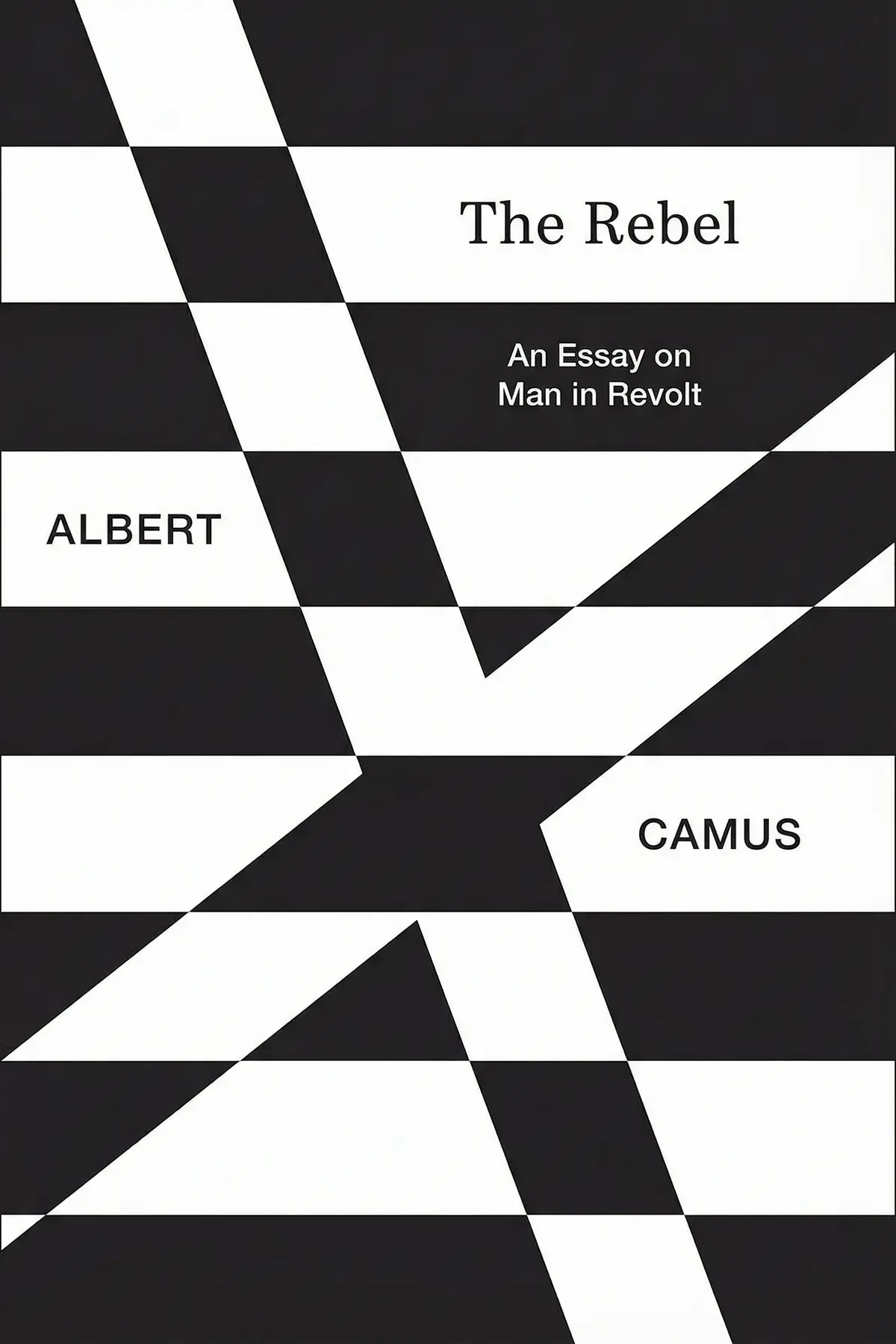
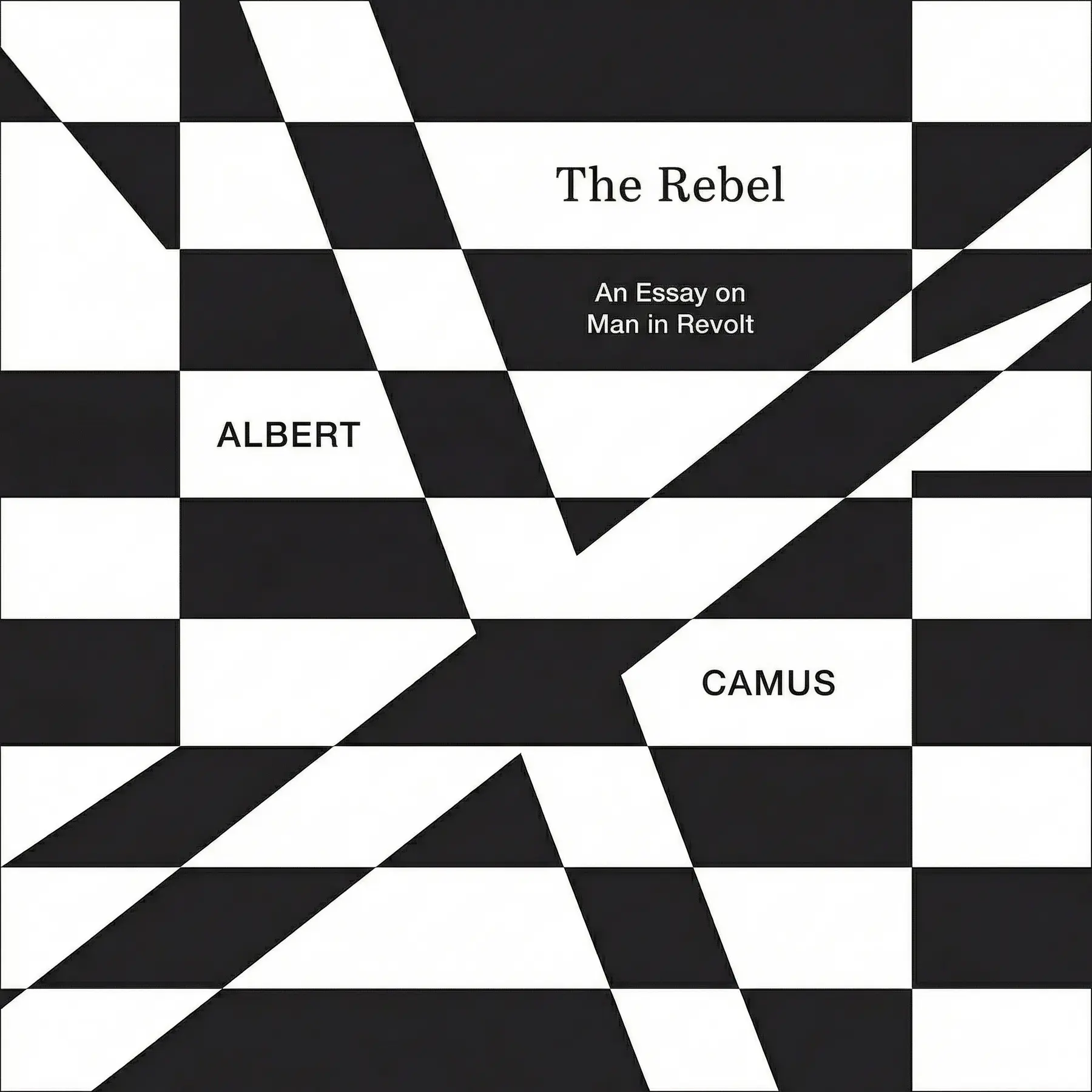
The Rebel delves into the profound question of why human beings choose to say no to the conditions imposed upon them. It begins with the fundamental act of defiance, examining how a single person’s refusal to accept oppression reveals a deeper, shared value for all of humanity. From there, the exploration moves into the evolution of revolt, tracing its path from a personal realization to a historical force that shapes societies. This analysis questions the very heart of the revolutionary spirit. It asks whether the search for justice can remain pure, or if the consequences of rebellion inevitably lead to new forms of control. By weighing the morality of action against the necessity of resistance, the work provides a framework for understanding the tension between total freedom and the limits required to maintain true human dignity. It promises to illuminate the fine line between the rebel who seeks to preserve life and the revolutionary who might be tempted to sacrifice it.
Albert Camus was a French writer, philosopher, and journalist who became one of the most influential thinkers of the 20th century. His philosophical novels The Stranger and The Plague established him as a leading voice of the French existentialist movement, though he often navigated his own unique path within those ideas. Known for his clarity and moral depth, his work continues to challenge how we view the human condition.
Albert Camus
Listeners appreciate how accessible the writing is and value the depth of the philosophical inquiry, with one describing it as a masterpiece by a true prophet. Furthermore, the work is praised for being highly relevant today; one listener highlights how Camus details historical events, and finds its intellectual thrill keeps them thoroughly engaged. The recording quality is also solid, and listeners appreciate the book's power to resolve the mystery of modern evil. Nevertheless, opinions among listeners vary regarding the difficulty level of the material.
Albert Camus offers a stunningly lucid defense of the individual in an era that seems obsessed with the faceless collective. I was particularly struck by his refusal to let revolution become a secular version of the Rapture where we just trade one tyrant for another. Truth is, the way he deconstructs the 'logical crime' of the 20th century remains chillingly relevant today. His analysis of the Marquis de Sade and the roots of totalitarianism provided a much-needed framework for understanding why modern uprisings so often devolve into murder. It’s a brave, necessary book that demands you look at the human cost of ideology. While the prose can be dense, the moral clarity he provides is worth every ounce of effort required to finish it.
Show moreAs someone who has always felt a bit skeptical of Utopian promises, this book felt like a long-overdue conversation with a kindred spirit. Camus stands tall next to Sartre, who often felt like a naive bourgeois flattering tyrants from the safety of a Parisian café. I loved the focus on 'solidarity founded upon rebellion'—the idea that we lose the right to rebel the moment we start justifying murder in the name of a future paradise. Look, it’s not an easy read, and the language is often quite abstract, but the core message is deeply grounding. Real generosity toward the future is giving everything to the present. This is a masterpiece of philosophical analysis that remains a necessary check on extremist tendencies.
Show moreAfter hearing so much about the fallout between Camus and Sartre, I finally dived into the work that started the war. The result is a breathtakingly brave book that puts the individual’s moral responsibility back at the center of the political stage. Camus identifies the 'logical crime' of our era with terrifying precision, tracing it from Sade's unbridled freedom to the bureaucratic nightmares of the Soviet era. The truth is, his refusal to bow to the collectivist trends of his time makes him seem like a true prophet today. My only gripe is that his deep dives into 18th-century literature can feel a bit tangential to the main argument. Still, the intellectual thrill of seeing such a sharp mind at work is undeniable.
Show moreWhat is a rebel? Camus answers this immediately: a man who says no, but also says yes to something worth preserving. This book is an awesome display of moral courage, especially considering it was written when praising Stalin was still fashionable in certain French circles. I particularly appreciated how he balanced the need for justice with the necessity of liberty, arguing that one cannot exist without the other. To be fair, the section on the Gnostics and Lucretius felt a bit like a detour, but it all feeds into his larger point about metaphysical rebellion. It’s a very human book that rejects the idea of sacrificing people today for a hypothetical utopia tomorrow. A vital read for anyone interested in the limits of power.
Show moreFinally got around to this classic and I’m genuinely surprised by how prophetic it feels in the 21st century. Camus warns that when a man takes refuge in doctrine, crime begins to reason about itself, and that is exactly what we see in modern radicalism. The history and tragedy of our times are laid bare in these pages, especially in his critique of how legal murder has replaced instinctive murder. I loved his focus on the 'middle way'—a balance between extremes that values the present over a distant, bloody future. It is an intellectual thrill that demands your full attention. While some chapters are definitely a struggle to get through, the overall impact is nothing short of a masterpiece.
Show moreThe chapter on Nietzsche and the 'death of God' completely changed how I view the 20th century’s descent into nihilism. Camus manages to be both a philosopher and a prophet here, warning us that when ends are great, humanity often ignores the means. Personally, I found his critique of 'chic revolt' to be an incredible inoculation against the kind of performative radicalism we see on social media today. He doesn't just ask us to say 'no' to authority; he asks what we are saying 'yes' to in its place. The distinction between the rebel and the revolutionary is subtle but absolutely vital for anyone who cares about justice. It's a heavy lift, but it provides a sense of moral awareness that is rare in political writing.
Show moreEver wonder why every 'liberation' movement seems to end with a secret police force and a firing squad? Camus tackles this paradox head-on, meticulously examining how 'reasoned crime' multiplies under the guise of logic. I found his take on Rimbaud and the poet’s ultimate act of rebellion to be one of the most poignant parts of the book. The prose oscillates between soaring poetic insights and heavy-duty philosophical sifting. Gotta say, it’s refreshing to read a thinker who values human life over abstract ideology. He successfully resolves the mystery of modern evil by showing how absolute justice can actually deny liberty. This is a challenging but rewarding text that stays with you long after you close the cover.
Show morePicked this up after reading some Existentialist history, but frankly, I found it much harder to digest than The Stranger. Camus is clearly a genius, yet his deep dives into specific French literary figures and obscure gnostic sects felt like a barrier to entry for a casual reader like me. I appreciate the core question—why does rebellion against injustice so often create more injustice?—but I spent more time Googling references than actually reading the text. To be fair, the section on Ivan Karamazov and the moral limits of crime was brilliant and accessible. It’s an intellectual thrill, but you definitely need a philosophy degree or a very thick companion guide to get the full experience. Not a beach read by any means.
Show moreWow. This was a lot to take in. I enjoyed the sections on Dostoyevsky and the 'death of God,' but much of the rest went way over my head. I think I need to read Sarah Bakewell’s book about the existentialists before I give this another go. The basic question of why revolutions fail is extremely relevant, but the way Camus presents it is very dense and academic. Personally, I preferred The Myth of Sisyphus because it felt more universal and less tied to specific historical figures. It’s obviously an important work, and the production quality of this edition is great, but it requires a level of concentration I wasn't always prepared to give. Three stars for the insight, minus two for the difficulty.
Show moreNot what I expected given the reputation of Camus as a writer of clear, accessible fiction. This essay is a grueling slog through dense, academic jargon that makes it nearly impossible to follow without an extensive background in European history. While I respect the theme of resisting injustice, the actual experience of reading this was frustrating and felt unnecessarily convoluted. In my experience, a good philosopher should be able to explain complex ideas without burying them under layers of 19th-century literary theory. I stuck it out for the historical context, but I wouldn't recommend it unless you're already deeply invested in French existentialist debates. It lacks the punch of his novels and feels much more like a dated academic lecture.
Show more
Miles Taylor
William B. Irvine
Tracy Rosenthal
Nigel Warburton
Jessica Valenti
AUDIO SUMMARY AVAILABLE
Get the key ideas from The Rebel by Albert Camus, plus 5,000+ more titles in English and Thai.







