
16 min 21 sec
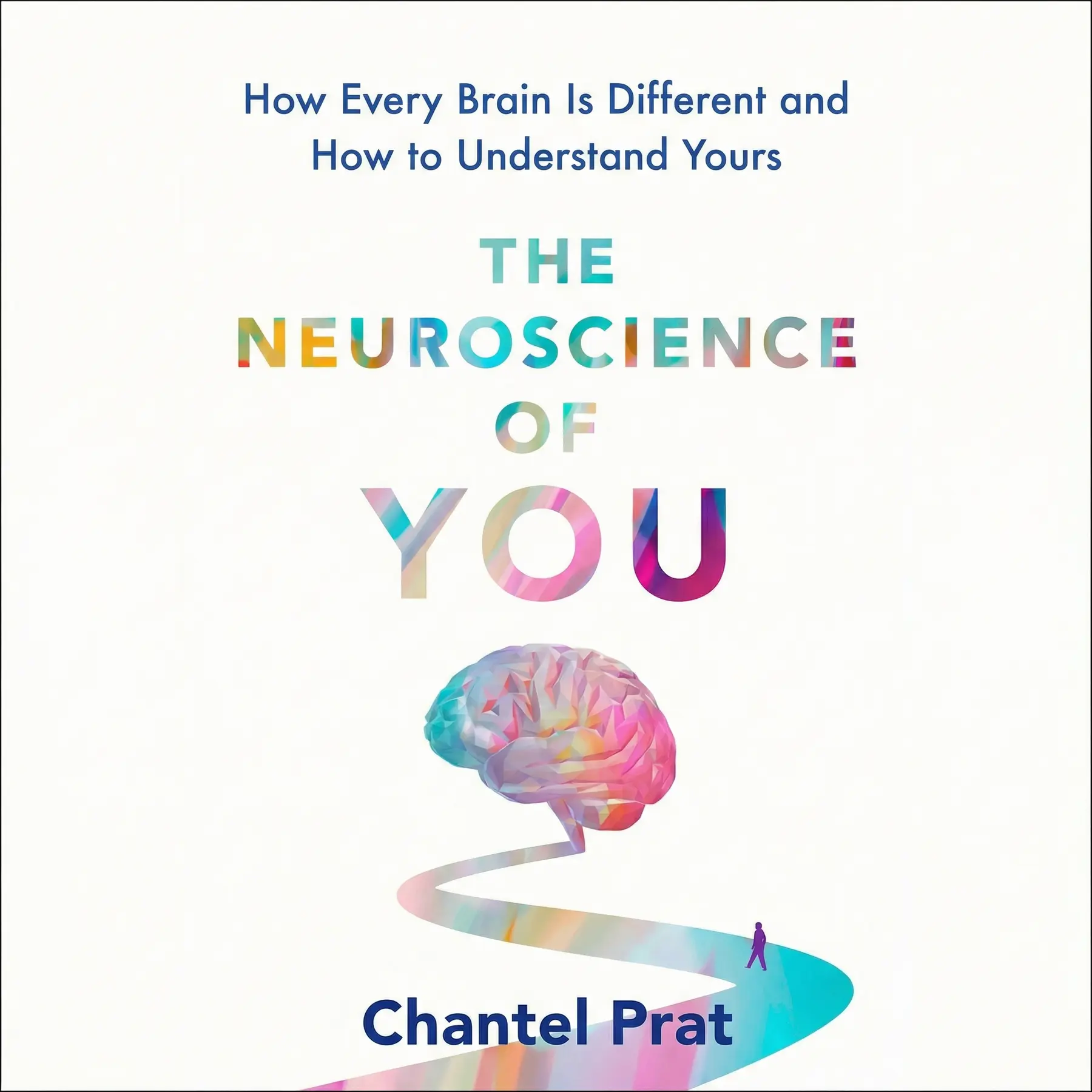
The Neuroscience of You: How Every Brain Is Different and How to Understand Yours
By Chantel Prat
Explore the biological blueprints of individuality in The Neuroscience of You. Discover how structural lopsidedness, neurochemical balances, and life experiences combine to create a mind that is uniquely yours.
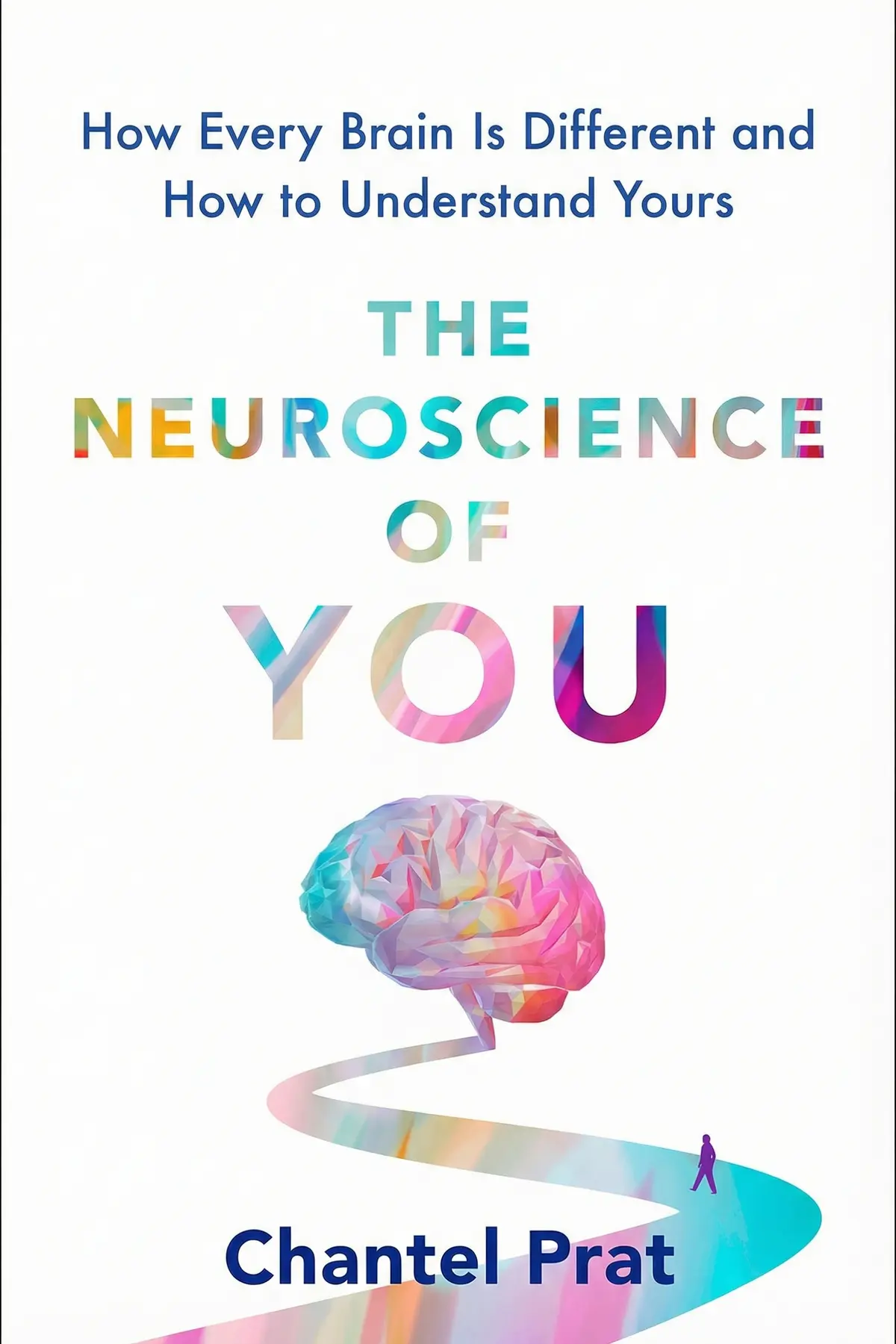
Table of Content
1. Introduction
1 min 58 sec
Think for a moment about the people closest to you. You might share a home, a history, or even half of your DNA, yet your reactions to the world can be night and day. Why does one person thrive in a crowded party while another finds it exhausting? Why can two people look at the exact same image and see different colors? For a long time, the world of neuroscience tried to answer these questions by looking for a ‘universal’ brain—a single blueprint that could explain how humans work on average. But as Dr. Chantel Prat points out, the ‘average’ brain is a myth. In reality, every brain is as unique as a fingerprint, and these differences aren’t just minor details; they are the very things that define our personalities, our abilities, and our worldviews.
In this exploration of The Neuroscience of You, we are going to dive deep into the biological variations that make you who you are. We’ll move past the generic diagrams of the brain and look at the actual structural and chemical differences that separate us. We will explore how the physical shape of your brain—its specific ‘lopsidedness’—dictates whether you are a detail-oriented thinker or a big-picture visionary. We’ll look at the neurochemical ‘cocktails’ that bubble within your synapses, influencing your motivation and your social drives. And finally, we will examine how your life experiences act as a sculptor, physically molding your brain over time through a process of learning and adaptation.
This isn’t just a science lesson; it’s a manual for understanding the throughline of your own life. By understanding the hardware and software of your mind, you can gain a clearer picture of why you do what you do. You might discover that your quirks aren’t just habits, but the result of a brain that has specialized in specific ways to help you navigate a complex world. So, let’s begin this journey into the most complex object in the known universe: the one sitting right between your ears.
2. The Cost and Power of Neural Specialization
2 min 43 sec
Discover how the intense mental demands of learning can physically reshape your brain, enhancing specific skills while naturally limiting others in a fascinating game of neural trade-offs.
3. Brain Asymmetry and the Balance of Perspective
3 min 06 sec
Explore the structural lopsidedness of the human brain and learn how the dominance of one hemisphere over the other determines your unique problem-solving style.
4. The Neurochemical Roots of Personality
3 min 25 sec
Uncover the secret ‘neural cocktails’ within your brain and see how levels of dopamine can transform your social behavior and your relationship with risk.
5. Perception, Experience, and the Power of Hebbian Learning
3 min 13 sec
See how your past literally shapes your present reality, using a viral internet phenomenon to explain why your brain’s history dictates what you see and believe.
6. Conclusion
1 min 56 sec
As we wrap up our journey through the unique architecture of the human mind, the most important takeaway is that your brain is a work in progress. From the physical expansion of your hippocampus to the delicate balance of dopamine in your synapses, your brain is a master of adaptation. It has specialized and evolved to help you survive in your specific corner of the world. But as we’ve seen, this specialization comes with a cost: no single brain can see the whole truth. We are all looking through filters created by our biology and our history.
Understanding the neuroscience of individuality doesn’t just help us understand ourselves; it gives us a vital tool for navigating a world full of people who see things differently. When you encounter someone with a radically different perspective, you can move past the idea that they are ‘wrong’ and consider that their brain might simply be using a different set of filters. Perhaps their brain is more balanced while yours is more lopsided, or perhaps their neural cocktail makes them more sensitive to risks that you don’t even notice.
The throughline of this summary is that our differences are our greatest strength. By recognizing that our perceptions are ‘guesses’ based on our unique hardware and software, we can approach life with a sense of curiosity and intellectual humility. We can seek out the ‘balanced’ thinkers when we are lost in the details, and we can intentionally diversify our experiences to rewire our biases.
You are not just a passenger in your own mind; you are its primary architect. Every new person you meet, every book you read, and every new skill you practice is a literal ‘re-wiring’ of your reality. By embracing the unique way your brain works—and respecting the way others work—you can lead a more intentional, empathetic, and vibrant life. Thank you for listening to this exploration of your one-of-a-kind mind.
About this book
What is this book about?
Have you ever wondered why you and a friend can experience the same event but walk away with two completely different interpretations? The Neuroscience of You explores the fascinating biological reality that no two human brains are wired the same way. While traditional science often focuses on how the 'average' brain functions, Dr. Chantel Prat shifts the spotlight to our individual differences. This summary breaks down the complex mechanics of brain asymmetry, the unique chemical 'cocktails' that dictate our social temperaments, and the way our personal histories physically reshape our neural pathways. You will learn how the lopsidedness of your brain affects your problem-solving style and why your sensitivity to dopamine might determine whether you are an introvert or an extravert. By the end, you’ll understand how your brain’s specific design influences everything from your reaction to a viral internet meme to your most deep-seated biases. The book promises a new perspective on yourself and a greater empathy for the different ways others process the world around them.
Book Information
About the Author
Chantel Prat
Chantel Prat, PhD, is a distinguished professor of psychology, neuroscience, and linguistics at the University of Washington. Beyond the classroom, she is a prominent public speaker featured at major events like The World Science Fair and in the documentary I Am Human. Her research and insights have been highlighted in leading publications such as Scientific American and Psychology Today, as well as on NPR.
Ratings & Reviews
Ratings at a glance
What people think
Listeners find the material to be informative, and one listener notes that it offers useful perspectives on human behavior and neuroscience. Feedback regarding the prose and accessibility is divided, with several listeners reporting that they were dissatisfied with the specific writing style.
Top reviews
Rafael
Wow, what an eye-opener. I’ve always wondered why my husband and I can look at the exact same situation and come away with two completely different interpretations, and now I have the vocabulary to explain it. Dr. Prat explains cerebral asymmetry and dopamine circuits in a way that actually sticks. The book is packed with these 'aha!' moments that make you want to go out and test everyone you know. I especially appreciated the deep dive into how our past experiences create filters that we can't just 'turn off' by sheer will. It’s helped me be a bit more patient with people who have different brain designs than I do. The writing is witty and fast-paced, which I personally loved. If you’re looking for a dry textbook, keep moving, but if you want to understand the 'why' behind your personality, this is a must-read.
Show moreSuthinee
This book changed how I look at my family. We all have such different personalities, and I used to just think we were being difficult, but understanding the literal hardware differences in our brains has given me so much more empathy. The way Prat explains dopamine and reward-seeking behavior made so many things click for me regarding my own habits. I loved the casual, conversational tone—it felt like I was grabbed by a very smart friend and told all the coolest secrets about the human mind. The exercises are a highlight, especially if you actually take the time to do them. Not gonna lie, I was skeptical about another brain book, but this one stands out because it focuses on the individual rather than the average. It’s refreshing, funny, and deeply informative. Five stars for making science feel this accessible and personal.
Show moreAnna
Finally got around to finishing this one, and I’m glad I did. Prat takes a very different route than most brain books by focusing on what makes us different rather than the 'average' brain. I loved the interactive tests scattered throughout, especially the ones about lopsidedness and the viral dress controversy from a few years back. To be fair, her writing style is a bit polarizing—she uses a lot of slang and pop-culture references that might grate on someone looking for a serious academic text. However, if you want a relatable guide to why your brain works differently than your neighbor's, this is a solid choice. It's informative without being too dry. I found myself highlighting quite a bit of the section on dopamine and personality. It definitely feels more like a self-help book wrapped in science, but in a way that actually makes sense.
Show moreKoi
The chapter on bilingualism alone made this purchase worth it. I never realized how much my second language was actually reshaping the physical structure of my brain or affecting my executive functions. Chantel Prat has a knack for taking complex neural oscillations and turning them into something digestible for the average person. Look, the book isn't perfect; some of the analogies feel a bit stretched and the lack of diagrams in certain sections made it harder to visualize the anatomy. But the core message—that there is no such thing as a 'normal' brain—is incredibly powerful. It’s a fresh take on neuroscience that moves away from the one-size-fits-all model. I’d recommend this to anyone who feels like they don't fit into the typical boxes of psychology. It's a very human look at a very technical subject.
Show moreRuangrat
Ever wonder why you’re a night owl or why you see that viral dress as white and gold? This book dives into the biology behind those tiny differences that make us unique. I found the section on how our brains 'fill in the blanks' based on past experience to be particularly haunting—it really makes you question your own perception of reality. Dr. Prat is clearly brilliant, and her passion for the subject jumps off every page. My only real gripe is that the book can be a bit lopsided itself; some chapters are dense with neurochemistry while others feel a bit light on substance. Still, the quizzes were fun and actually gave me some insight into my own problem-solving style. It's a great choice for a book club because there is so much to discuss and compare. Definitely worth the read for the trivia alone!
Show moreAnong
Directly addressing the 'typical' brain myth was the highlight of this book for me. Prat points out that so much of what we know about neuroscience comes from a very specific, non-representative demographic, which is a huge blind spot in the field. This book tries to correct that by celebrating individual variation. The deep dive into how our neurochemical cocktails—like oxytocin and cortisol—affect our daily interactions was fascinating and felt very up-to-date. I appreciated that she didn’t oversimplify things; she acknowledges that neuroscience is a work in progress. While the writing is very down-to-earth and accessible, it doesn't shy away from the technical details of how neurons fire and wire together. It's a great bridge between a textbook and a popular science book. A few more graphics would have been nice, but the content itself is excellent.
Show moreSirinat
Picked this up on a whim and ended up finishing it in two days. It’s rare to find a science book that is this genuinely funny while still teaching you something meaningful. The 'London Knowledge' test example was a great way to show how our brains change with use, and the bits on curiosity really hit home for me. My only complaint is that it leans a bit hard into the self-help category at times, which might turn off someone looking for pure data. But for a general audience? It’s perfect. It makes you feel like you’re finally getting an owner’s manual for your own head. I’ve already recommended it to several friends who are interested in psychology. If you want a fun, relatable, and informative look at why you are the way you are, give it a shot.
Show moreVipawan
As someone with a background in biology, I found the core concepts in this book fascinating but struggled with the delivery. The information regarding Hebbian learning and the specialization of the hippocampus in London taxi drivers was well-presented. However, the author's attempt to be 'relatable' through constant jokes and puns felt a bit forced and distracting for my taste. It felt like the book was trying too hard to appeal to the TikTok generation rather than providing a deep dive into neuroanatomy. Truth is, there’s some excellent science here regarding how individual quirks arise from neural cocktails, but you have to wade through a lot of fluff to get to it. It’s a decent entry-point for a casual reader, but I personally found the tone a bit grating after the first few chapters. It’s informative, sure, but the execution was hit-or-miss for me.
Show moreViroj
After hearing several people rave about this, I decided to give it a go. There’s a lot of good stuff here, particularly the breakdown of the left vs. right hemisphere that avoids the usual 'creative vs. logical' cliches. However, I found the lack of illustrations to be a major hurdle. When the author starts talking about the tail of the hippocampus or specific neural pathways, a few simple diagrams would have gone a long way. Personally, I found the writing style a bit hit-or-miss; the humor is very specific and sometimes gets in the way of the explanation. It’s definitely informative, and I learned a lot about how my own brain handles information processing, but it wasn't a 'can't put it down' kind of read for me. It’s a solid 3-star book that provides some valuable insights if you can get past the tone.
Show moreNoi
Not what I expected based on the title. I was hoping for a more rigorous scientific exploration of neurology, but this felt more like a 'know thyself' self-help book with some brain trivia thrown in for flavor. The author's voice is incredibly chatty—almost too much so—and it frequently distracted me from the actual data being presented. Frankly, the jokes felt dated and the constant conversational asides made it difficult to maintain a flow. While the section on the London cab drivers was interesting, I’ve seen that study cited in a dozen other books already. I didn't feel like I was getting 'cutting-edge' insights as much as a recycled primer with a lot of quirky commentary. If you are new to the subject, you might enjoy it, but for anyone who has read even a few books on the brain, this will likely feel like a bit of a letdown.
Show moreReaders also enjoyed
Acting with Power: Why We Are More Powerful Than We Believe
Deborah Gruenfeld

Alien Earths: The New Science of Planet Hunting in the Cosmos
Lisa Kaltenegger
Age of Propaganda: The Everyday Use and Abuse of Persuasion
Anthony Pratkanis

AUDIO SUMMARY AVAILABLE
Listen to The Neuroscience of You in 15 minutes
Get the key ideas from The Neuroscience of You by Chantel Prat, plus 5,000+ more titles in English and Thai.
- 5,000+ titles
- Listen as much as you want
- 7-day free trial
- Cancel anytime







