
17 min 46 sec
The New Breed: What Our History with Animals Reveals about Our Future with Robots
By Kate Darling
Explore a revolutionary perspective on robotics that moves away from the fear of human replacement, suggesting instead that our future with machines should mirror our ancient partnerships with animals.
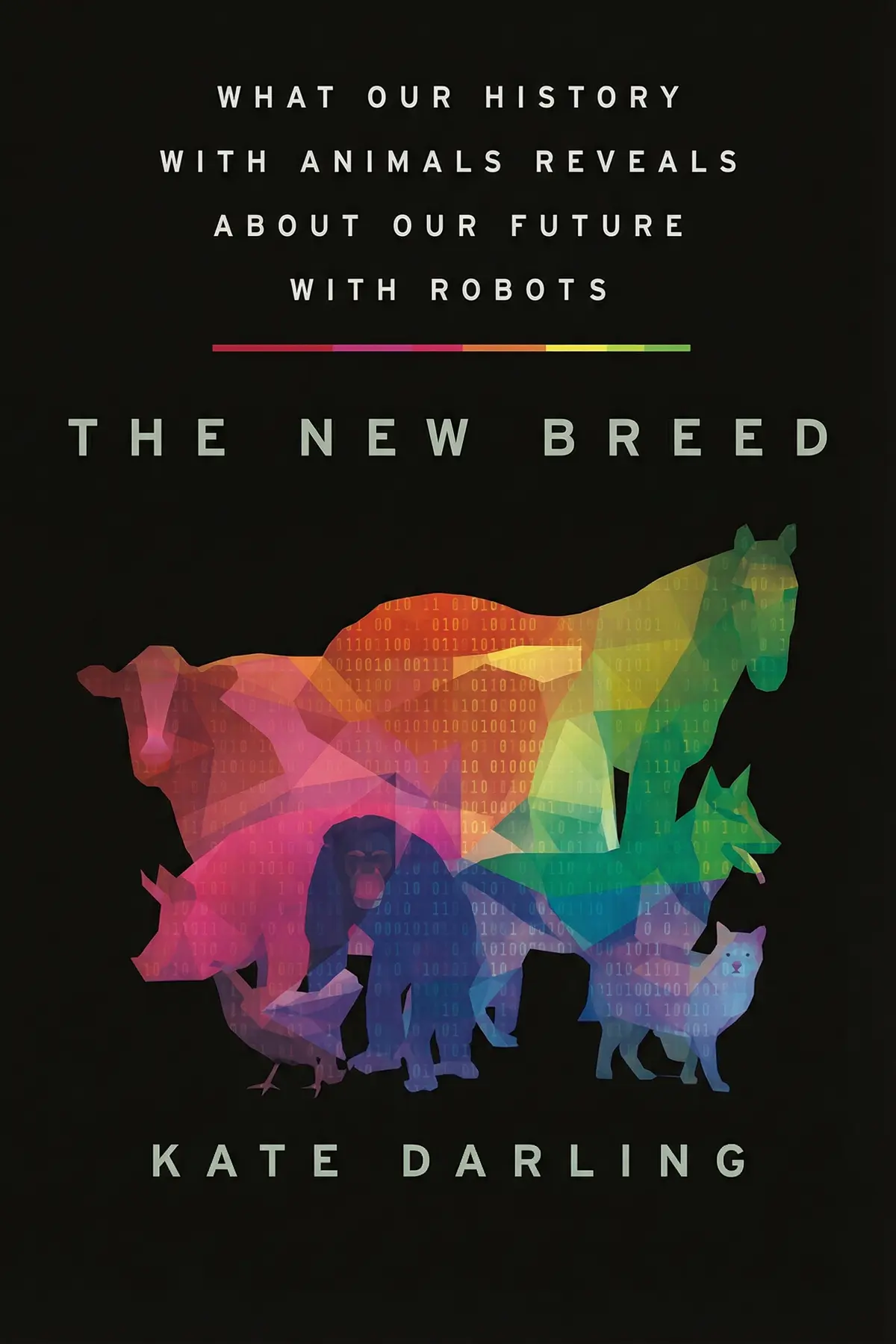
Table of Content
1. Introduction
1 min 48 sec
When we think about robots, our minds often jump to the glossy, anthropomorphized figures of science fiction—beings like C-3PO or the menacing terminators of the future. We tend to view these machines through a binary lens: either they are tools meant to serve us, or they are competitors designed to replace us. This narrow perspective creates a sense of anxiety about the future of work, law, and human connection. But what if we are looking at the entire problem the wrong way? What if the most accurate way to understand our relationship with robots isn’t by comparing them to ourselves, but by looking at our ancient bond with animals?
This is the central premise we are going to explore. By shifting the analogy from human-like machines to machine-like animals, a whole new world of possibilities opens up. We begin to see that robots don’t have to be a threat to our humanity; instead, they can be a supplement to it, much like the oxen that plowed our fields or the dogs that guarded our homes for millennia. Throughout this summary, we will look at how human psychology forces us to bond with non-human entities, why our current legal systems are unprepared for this shift, and how we can steer the development of technology to enhance our social lives rather than diminish them.
This journey isn’t just about technology; it’s about understanding the deep-seated instincts that make us human. It’s about how we project feelings onto inanimate objects and why that matters for the way we design our cities, our homes, and our laws. As we move into an era where robots are becoming increasingly present in our daily lives, finding a healthy framework for interaction is more than just a philosophical exercise—it is a societal necessity. Let’s dive into how we can redefine our mechanical future by looking back at our biological past.
2. The Power of Anthropomorphism
2 min 33 sec
Discover why our brains are hardwired to treat robots as living creatures, often leading us to feel genuine empathy for machines that have no feelings of their own.
3. The Animal Analogy as a Better Blueprint
2 min 22 sec
Explore why comparing robots to animals, rather than humans, provides a more accurate and productive way to integrate technology into our society.
4. Reimagining Responsibility and the Law
2 min 26 sec
What happens when a robot causes harm? Look at how ancient laws regarding animal ownership could solve the modern legal headaches of autonomous technology.
5. The Impact of Robots on Human Connections
2 min 15 sec
Delve into the complex social dynamics of robot-human interaction and whether machines will enrich or isolate our social lives.
6. Why We Might Protect Robots (Even Without Rights)
2 min 22 sec
Learn why we might choose to create laws against robot cruelty, not for the sake of the robot, but to protect our own human values.
7. Work and the Myth of Total Replacement
2 min 20 sec
Challenge the common fear of the ‘robot apocalypse’ in the workforce by understanding how technology has historically shifted, rather than erased, human labor.
8. Conclusion
1 min 40 sec
As we have seen throughout this exploration, the future of robotics is not a predetermined path toward human replacement or mechanical coldness. Instead, it is a future that we have the power to shape by choosing the right metaphors and frameworks. By moving away from the ‘human’ analogy and toward the ‘animal’ one, we can demystify these machines and see them for what they truly are: sophisticated, autonomous partners that can supplement our own abilities in ways we are only beginning to imagine.
We must acknowledge our biological drive to empathize with robots, but rather than seeing this as a weakness, we should see it as a tool for better design and more compassionate integration. We need to build legal systems that account for the unique nature of autonomous technology, drawing on the wisdom of the past to manage the risks of the future. And most importantly, we must ensure that as we invite these ‘new breeds’ into our homes and workplaces, we do so in a way that prioritizes human connection and dignity.
The throughline of this journey is simple: robots are what we make of them. They are a reflection of our values, our creativity, and our ancient history of partnership with the non-human world. If we approach the robotic revolution with the same spirit of cooperation that allowed us to partner with animals thousands of years ago, we won’t just survive the age of automation—we will thrive in it. The robots are coming, but they aren’t here to take our place. They are here to join us on the next stage of our journey, as a new breed of companion and coworker in the grand story of human progress.
About this book
What is this book about?
For decades, our collective imagination has been dominated by a single vision of the future: one where robots either serve us as mechanical slaves or eventually rise to replace us. In this thought-provoking exploration, the focus shifts toward a more nuanced and historically grounded analogy. Instead of viewing robots through the lens of human intelligence, we are encouraged to see them as a new kind of animal. This book promises to reshape how you think about everything from your household Roomba to advanced military technology. By looking at the thousands of years of history we share with domesticated animals—as laborers, companions, and protectors—we can find a blueprint for how to integrate robots into society. It addresses the legal, ethical, and emotional complexities of this new era, offering a hopeful path forward that prioritizes human values while acknowledging our innate tendency to bond with the machines we create.
Book Information
About the Author
Kate Darling
Kate Darling is a distinguished researcher at the Massachusetts Institute of Technology Media Lab. Her work is situated at the fascinating intersection of technology and society, with a specific focus on the ethical, legal, and economic implications of our interactions with robots. She is a leading voice in how the public and lawmakers will navigate the unique challenges posed by the coming age of automation and artificial intelligence.
Ratings & Reviews
Ratings at a glance
What people think
Listeners find the book highly perceptive, and one listener points to its proposal for human/robot coexistence. Furthermore, the work is quite accessible, and listeners describe it as an entertaining experience.
Top reviews
Rotjanee
Wow, I didn't expect a book about robotics to be so deeply grounded in biology and human history. Kate Darling’s central thesis is brilliant: we should stop comparing AI to humans and start treating robots like domesticated animals. It sounds odd at first, but she makes a compelling case using everything from historical Luddite uprisings to the way we treat our household pets. The stories about people getting emotionally attached to their robotic vacuum cleaners or the MIT experiments with the Pleo dinosaur robots were particularly eye-opening. To be fair, some sections on animal law go a bit long, but the overall shift in perspective is worth it. It’s a refreshing break from the usual 'AI will kill us all' doom-scrolling. If you want a more optimistic, nuanced view of how we might actually live alongside these machines, this is the book for you. It’s readable, fun, and profoundly thoughtful.
Show moreDarawan
Ever wonder why we feel bad for a Roomba when it gets stuck under the couch? This book explains that instinct perfectly. As someone who isn't a 'tech person,' I was worried this would be too dense, but Kate Darling is a fantastic communicator. She moves away from the scary Terminator scenarios and focuses on the emotional bonds we form with non-human entities. The way she links robot ethics to animal welfare laws is something I had never considered before. It actually made me think more about how we treat animals as much as how we treat machines. Not gonna lie, I teared up a bit during the parts about people refusing to trade in their 'broken' robots for new ones because they felt the original had a personality. It's a beautiful, human-centric look at a cold, mechanical topic. Absolutely loved it and have recommended it to all my friends.
Show moreAndrew
As someone who works in the legal field, the chapters on robot rights and liability were the absolute highlight for me. Darling uses the history of 'animal trials' to show how we’ve historically handled non-human agency, and it’s a brilliant way to frame the coming legal headaches of AI. Her writing is accessible and avoids the heavy jargon that usually plagues these kinds of books. I found the discussion on anthropomorphism—our tendency to give names and genders to inanimate objects—to be fascinating and very true to life. It’s a refreshing, optimistic vision of a future where robots aren't our replacements, but our partners. The book is well-researched and provides a much-needed bridge between the humanities and the tech world. Personally, I found it to be one of the most thought-provoking books on my shelf this year. Truly a great read for anyone curious about the future.
Show moreSuvannee
Finally got around to finishing this, and it has completely shifted my perspective on my smart devices. I used to think of my smart home tech as just tools, but Darling's 'animal' analogy makes so much more sense. We don't expect a dog to be a human, so why do we expect that from AI? The book is filled with great examples, from carrier pigeons to therapy robots for children with autism. It's a very 'human' book about machines. While some reviewers mention it’s repetitive, I actually found the reinforcement of the main themes helped the concepts stick. The tone is chatty and academic at the same time, which is a hard balance to strike. If you’re tired of the 'AI apocalypse' narrative and want something that feels more grounded in how humans actually behave, pick this up. It’s a delightful and deeply insightful journey through our past and future.
Show moreVarinee
After hearing the author on a podcast, I had to see if her full argument about robot-human relations held up. It mostly does. Darling avoids the typical sci-fi tropes and instead looks at how technology functions as a tool and a partner, much like an ox or a hunting dog. The legal comparisons—like the Austrian laws about walking dogs while sober—are hilarious but also make a lot of sense when applied to future autonomous tech. My only real gripe is that the book, published in 2021, already feels slightly dated given the massive leap in LLMs we've seen recently. She treats AI as a narrow tool, which might be underestimating where things are headed. Still, her focus on the psychology of empathy is top-notch. It’s an easy read for non-techies who are curious about the social impact of automation without getting bogged down in code.
Show moreFatou
Picked this up on a whim and found it incredibly readable for a book written by an MIT researcher. The chapters on how we've used animals for labor—like ferrets pulling cables through pipes—provide such a great framework for imagining the future of specialized robotics. Darling argues that we shouldn't try to make robots human; we should make them useful in the way a horse is useful. It’s a practical, grounded take that ignores the hype. My only criticism is the structure. It felt a bit jumpy, moving from one anecdote to another without a strong unifying thread in some chapters. I also think she spends a bit too much time on the history of animal cruelty laws, though I see why it’s relevant to her robot rights argument. Overall, it's an insightful and surprisingly fun read that will make you look at your Alexa differently.
Show moreBo
The parallels drawn between the Luddites and our current tech anxiety are spot on in this volume. I appreciated Darling's refusal to succumb to the 'robots are taking our jobs' panic, opting instead for a historical perspective on how humans adapt to new partners. Her expertise in ethics shines through, particularly when she discusses the implications of surveillance in our 'companion' devices. It’s a nuanced take on the privacy trade-offs we make for convenience. To be fair, the book can be a bit repetitive, and the prose isn't always the most engaging, but the ideas themselves are heavy hitters. I especially liked the discussion on how protecting robots from abuse might actually make us more empathetic humans. It’s a thoughtful exploration of what it means to be a 'person' in a world filled with autonomous agents. Definitely a must-read for anyone interested in the philosophy of technology.
Show moreYothaka
Kate Darling has a fascinating central premise, but the execution felt a bit padded for my taste. The idea that robots are the 'new breed' of companion animals is a clever lens, especially when she discusses how we naturally anthropomorphize anything with googly eyes. However, the book feels quite repetitive in the middle sections. I found myself skimming through lengthy histories of animal domestication that didn't always feel directly tied back to the robotics side of the house. It’s as if the book needed a more aggressive editor to trim the bloat. Frankly, I was hoping for more technical depth regarding current AI developments. While I appreciate the ethical questions she raises about robot rights and our own empathy, the narrative felt a bit disjointed. It’s a solid 3-star read for the unique concept, but it didn't quite stick the landing for me as a cohesive piece of science writing.
Show moreWipawan
To be fair, the core idea is brilliant, but the book itself is a mess of structure and missed opportunities. I was really excited for a deep dive into robotics from an MIT expert, but what I got was a lot of fluff about animal history that I could have found on Wikipedia. The author spends so much time justifying her animal analogy that she forgets to talk about the actual robots! There are some interesting bits about human-robot interaction experiments, but they are buried under mountains of repetitive arguments. I also found her dismissal of AI threats to be a bit too dismissive. It felt like she had an idea and wanted to push it to the limit, even where it didn't quite fit. If you've read the summary, you've basically read the book. It’s a shame because the ethical questions she brings up are important, they just get lost in the disjointed narrative.
Show morePop
Look, this is dangerously naive in the age of generative AI and rapidly approaching AGI. Darling seems to think we can just treat robots like 'Jess the pooch' lying at our feet, but that is a fundamental misunderstanding of the scale of intelligence we are dealing with. The book is way too blasé about the risks of runaway AI. She trots out the same tired Luddite examples to prove that everything will turn out fine for the workforce, ignoring that this technological shift is qualitatively different from the industrial revolution. I found her writing style to be quite bloated and repetitive, often circling back to the same points about animal trials from centuries ago. Unless you want a very old-fashioned, rose-tinted view of robotics that ignores the actual warnings from the people building these systems, skip this. It feels like it was written a decade ago, not a few years ago. One star for being out of touch with reality.
Show moreReaders also enjoyed

AUDIO SUMMARY AVAILABLE
Listen to The New Breed in 15 minutes
Get the key ideas from The New Breed by Kate Darling, plus 5,000+ more titles in English and Thai.
- 5,000+ titles
- Listen as much as you want
- 7-day free trial
- Cancel anytime







