

16 min 37 sec
The New Map: Energy, Climate, and the Clash of Nations
The New Map explores the shifting global landscape as energy revolutions and climate policies redefine international power, from American shale dominance to China’s expanding influence and the rise of renewable technology.
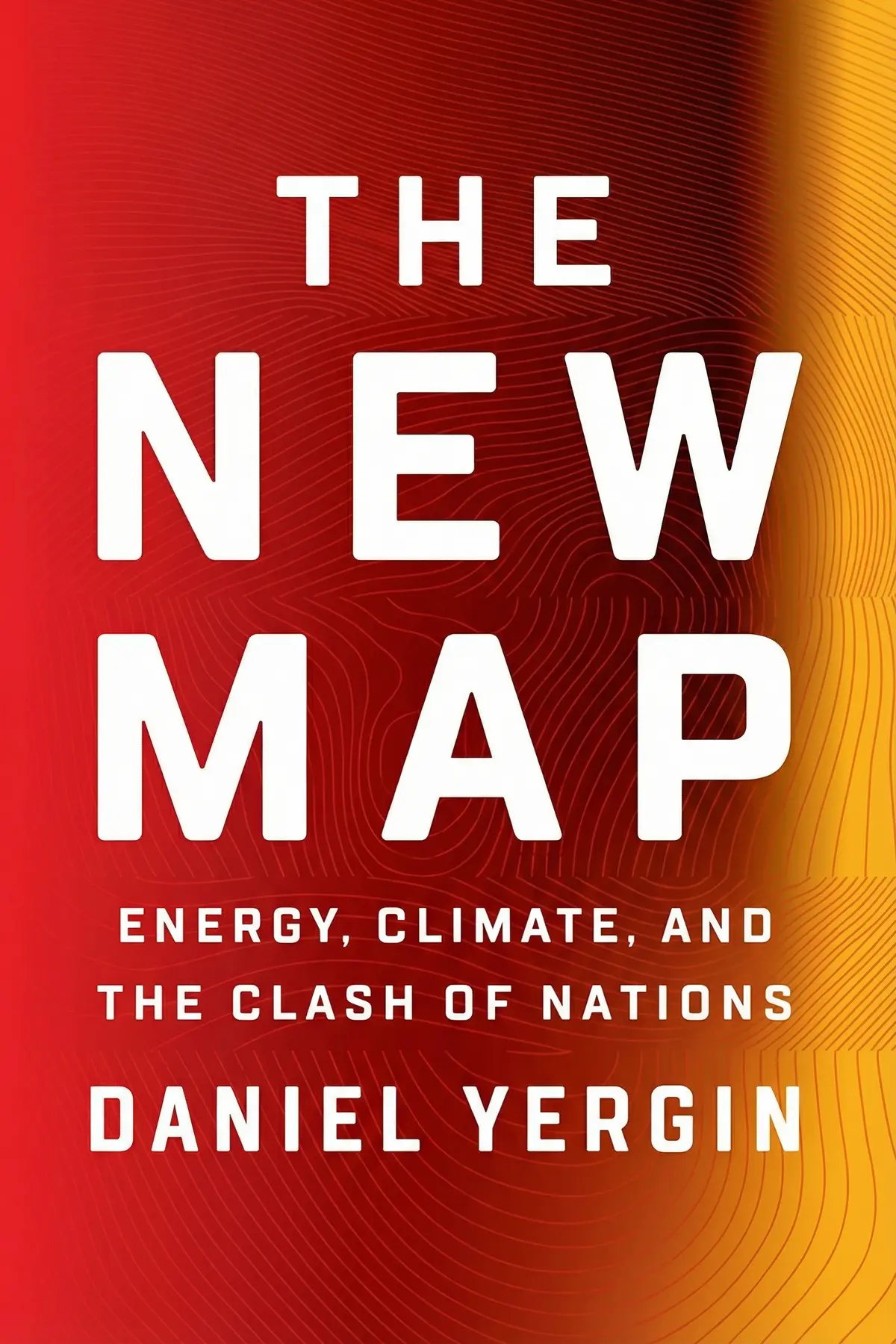
Table of Content
1. Introduction
1 min 46 sec
When we think of maps, we usually imagine static lines on a globe—borders that define where one country ends and another begins. But there is another kind of map, one that is constantly shifting and vibrating with the flow of power. This is the energy map. In the early 21st century, these maps were thrown into a state of total upheaval. For decades, the world operated under a predictable set of rules regarding who had the oil, who needed it, and how it moved across the oceans. But then, almost overnight in historical terms, everything changed.
Consider the year 2014. As political tensions flared in Crimea, the rest of Europe suddenly felt a chill that had nothing to do with the weather. They realized that nearly 40 percent of their natural gas was flowing through a single set of pipes originating in Russia. This wasn’t just a matter of keeping the lights on; it was a matter of national sovereignty. This realization is at the heart of our exploration today. We are witnessing a collision between the old world of fossil fuel dominance and a new world defined by technological breakthroughs and climate mandates.
In this summary, we will walk through the major territories of this new map. We’ll look at how a localized technological experiment in the United States fundamentally broke the global oil market. We’ll explore how Russia attempts to use its massive gas reserves as a geopolitical steering wheel and how China is desperately trying to bypass the maritime bottlenecks that threaten its economic survival. We’ll also see how the traditional powerhouses of the Middle East are racing to build a future where oil is no longer king. Finally, we’ll look at the horizon, where the transition to clean energy is creating an entirely new set of winners and losers. This isn’t just about energy; it’s about the clash of nations and the very future of global influence.
2. The American Shale Revolution
2 min 39 sec
Discover how a persistent immigrant’s son and a gamble on new drilling technology turned the United States from a dependent importer into a global energy leader, shifting the balance of world power.
3. Russia’s Pipeline Power and the Pivot East
2 min 36 sec
Explore how Russia uses its vast natural gas reserves as a strategic tool in European diplomacy and why it is now looking toward China to secure its economic future.
4. China’s Energy Security and the Belt and Road
2 min 37 sec
Understand the ‘Malacca Dilemma’ and how China’s massive infrastructure projects across the globe are designed to protect its economy from energy supply disruptions.
5. The Middle East and the Race Against Peak Oil
2 min 34 sec
See how the historic rivalry between Saudi Arabia and Iran, combined with the threat of declining global oil demand, is forcing Middle Eastern powers to reinvent their entire economies.
6. The Great Transition to a Clean Energy Map
2 min 47 sec
Explore how the rise of electric vehicles and the global push for net-zero emissions are creating a new geopolitical landscape focused on mineral wealth and technical innovation.
7. Conclusion
1 min 38 sec
As we have seen, the map of our world is never truly finished. The lines are constantly being redrawn by the ways we harvest, trade, and consume energy. We have moved from an era of perceived scarcity to an era of abundance driven by the shale revolution. We have seen how pipelines can be used as both bridges and barriers between nations. We have watched China attempt to break free from its geographic constraints and seen the Middle East begin the difficult journey toward a post-oil existence.
The overarching throughline of this journey is that energy is the lifeblood of geopolitics. Every major shift in how we power our lives leads to a corresponding shift in who holds the power in international relations. Today, we stand at the most significant crossroads yet. The transition to clean energy is not just a moral or environmental imperative; it is a strategic one. The ‘New Map’ is a landscape where the old fossil fuel giants must adapt or fade, and where a new generation of powers will emerge based on their mastery of the technologies of the future.
To navigate this map, we must understand that energy, climate, and the clash of nations are inextricably linked. The choices made by leaders in Washington, Beijing, Moscow, and Riyadh today will determine the shape of the global hierarchy for the next century. As the world moves toward a net-zero future, the competition for resources will change, but the fundamental struggle for influence will remain. The map is changing, and the race to define its new borders has already begun. In this era of rapid transformation, the only certainty is that the energy map of tomorrow will look nothing like the one we knew yesterday.
About this book
What is this book about?
What drives the tension between the world's greatest superpowers? In The New Map, the answer lies beneath the ground and within the shifting currents of energy technology. This summary takes you through the tectonic shifts currently reordering the global hierarchy. You’ll explore how the United States transformed from a vulnerable importer to an energy powerhouse through the shale revolution, and how that shift disrupted the leverage of traditional giants like Russia and the Middle East. The narrative moves beyond just oil and gas to look at the 'New Map' of the future—one defined by the race for lithium, the rise of electric vehicles, and the urgent transition to renewable energy. It explains China’s strategic maneuvers to secure its supply lines through the Belt and Road Initiative and how the global push for climate action is forcing every nation to reinvent its economic foundation. By the end, you’ll understand that the maps we see in school are being redrawn not by soldiers alone, but by the pipelines, power grids, and technical innovations that fuel our modern world.
Book Information
About the Author
Daniel Yergin
Daniel Yergin is one of the world’s foremost authorities on energy, winning the Pulitzer Prize for The Prize and serving as Vice Chairman of S&P Global. Through his books and leadership roles, including founding Cambridge Energy Research Associates, he’s shaped global understanding of energy geopolitics and economics for over four decades.
Ratings & Reviews
Ratings at a glance
What people think
Listeners consider this title highly valuable, praising its sharp examination of recent history and a gripping story that effectively anticipates modern developments. Furthermore, the work is thoroughly researched and offers a superb look at the evolution of energy, with one listener mentioning how it connects past events. Listeners also enjoy the prose, geographical focus, and stimulating material, while one review emphasizes how the book presents major figures and their underlying goals.
Top reviews
Nikolai
How did we go from worrying about "Peak Oil" to the United States becoming a leading exporter in less than a decade? This book provides the most comprehensive answer I’ve encountered, blending technology, geology, and high-stakes diplomacy into a single, cohesive map. Yergin is clearly in his element when discussing the intricacies of the Middle East, explaining the religious and ethnic clashes with a clarity that few other authors can match. To be fair, he definitely spends more time on oil and gas than on wind or solar, but his argument that "energy addition" precedes "energy transition" is hard to ignore. The chapters on China's "One Belt, One Road" initiative were particularly eye-opening for me. It’s an essential read for anyone trying to navigate the complexities of our modern world.
Show moreWaree
The section on the South China Sea alone makes this book worth the purchase price for any serious student of international relations. Yergin explains how maritime claims and energy security are fundamentally linked, creating a "clash of nations" that could define the next several decades of our lives. His writing style is polished and professional, often feeling like a high-level briefing for an executive or a government official. Look, some might find his cautious stance on the speed of the green transition frustrating, but his realism is a necessary counterweight to the often-unrealistic timelines pushed by activists. He correctly identifies that the infrastructure of the past won't be replaced overnight. This is a brilliant, provocative look at the literal fuel that powers our global conflicts.
Show moreLuke
Finally got around to reading this and I was struck by how effectively Yergin introduces the key players and their underlying motivations in the global energy game. He doesn’t just tell you what happened; he explains the "why" behind the shift from a world of scarcity to a world of abundance. The narrative flows effortlessly from the oil fields of Texas to the boardrooms of Beijing, creating a compelling picture of a world in flux. I appreciated how he addressed the COVID-19 impact, showing how the pandemic acted as an accelerant for trends that were already beginning to take shape. It’s a well-documented piece of work that serves as an excellent predictor of why certain alliances are forming today. A must-read for those who like their history mixed with current events.
Show moreManee
As someone who has followed Yergin’s career for years, I found "The New Map" to be a remarkably clear-eyed assessment of the obstacles facing our global energy future. He avoids the political posturing that often clutters these discussions, focusing instead on the hard realities of supply chains, mineral requirements for batteries, and the sheer scale of global demand. The book is an excellent overview for anyone who wants to understand why we can't just flip a switch to reach net-zero carbon tomorrow. Yergin’s deep dive into the shale boom explains so much about the current American economic landscape that other authors simply gloss over. It’s well-documented, insightful, and written with a sophisticated tone that respects the reader's intelligence. I highly recommend it for its depth and breadth.
Show moreSurasit
Daniel Yergin has a knack for turning what should be dry economic data into a propulsive narrative that feels like a political thriller. In "The New Map," he meticulously traces how the shale revolution completely upended the global hierarchy, effectively moving the center of gravity back toward the United States. While some critics argue he’s too dismissive of the environmental costs of fracking, I found his breakdown of the "era of shortage" ending to be incredibly well-documented. He bridges historical context with the sudden shifts caused by the pandemic, making the current tensions with Russia and China feel inevitable. It’s a dense read, yet the journalistic prose keeps things moving at a brisk pace. If you want to understand why the South China Sea is a powder keg, this is your guidebook.
Show moreNarongrit
After years of hearing about the legendary status of "The Prize," I had massive expectations for this latest installment, and for the most part, Yergin delivers on the promise of a clear geopolitical synthesis. The book functions as a series of regional profiles—Russia, China, the US, and the Middle East—showing how energy needs dictate their every move on the world stage. I particularly enjoyed the section on "Auto-Tech" and the future of mobility, even if the cameo by Elon Musk felt a little too fawning for my taste. Truth is, the author’s perspective is unapologetically American, which might grate on some international readers, but the sheer volume of data he presents is undeniable. He manages to make sense of the chaotic price collapses during 2020 without getting bogged down in too much jargon.
Show moreLily
Picked this up during a layover and ended up finishing it before my return flight because the storytelling is just that engaging. Yergin has this way of making infrastructure—something most of us take for granted—seem like the most exciting thing in the world. He frames the "New Map" not just as a geographical concept, but as a shift in power dynamics where technology is the ultimate disruptor. While I thought the section on the Middle East was the strongest, the chapters on Russia's "pivot to the East" offered a sobering look at the growing partnership between Putin and Xi Jinping. My only real gripe is that the book leans a bit too heavily on US-centric interests, sometimes ignoring the nuances of the European energy transition. Overall, it’s a thought-provoking and timely contribution.
Show moreLayla
Rarely do you find a book that manages to bridge historical facts with futuristic forecasting so seamlessly, but Yergin pulls it off with his usual flair. He masterfully explains the transition from the "era of oil" into this new, multi-polar world where climate concerns and technological innovation are the new frontiers. I found the discussion on the South China Sea particularly chilling, given the current headlines regarding trade routes and military posturing. However, the book does have a few dry patches, particularly when it gets into the weeds of regulatory challenges for pipelines in the US. In my experience, Yergin is best when he's looking at the big picture rather than the minute legal details. Despite the occasional slog, the overarching analysis of the global energy "chessboard" is absolutely top-tier.
Show moreSara
To be fair, this is a solid enough primer on energy, but it lacks the monumental "epic" feel of Yergin’s earlier masterpieces. It often feels more like a collection of disparate magazine articles than a singular, unified thesis on where the world is actually headed. I found the analysis of the "Green New Deal" and European climate policy to be surprisingly cursory, especially considering how much weight those movements carry today. Yergin seems much more comfortable talking about pipelines and fracking rigs than he does discussing the hard science of decarbonization or the social impact of climate change. It’s an informative read if you’re a beginner, but seasoned energy professionals might find the conclusions a bit repetitive and safe. Still, the historical background on Putin’s energy strategy is quite useful.
Show moreWatchara
This book is a bit of a mixed bag for me, especially compared to the heavy-hitting analysis found in Yergin's earlier work. On one hand, the writing is accessible and the historical context provided for the shale revolution is genuinely fascinating for someone not already in the industry. On the other hand, the tone often feels a bit like it was written for a bored middle manager in an airport bookshop rather than a serious scholar. Yergin's dismissal of climate activists as mere "legal obstacles" felt a bit reductive, and his focus on the deal-making style of certain political leaders was a bit distracting. It’s a useful summary of where we stand today, but it doesn't offer the kind of seminal insights I was hoping for. It's a decent read for the background info, but not his best.
Show moreReaders also enjoyed
A Warning
Miles Taylor
Abolish Rent: How Tenants Can End the Housing Crisis
Tracy Rosenthal
Abortion: Our Bodies, Their Lies, and the Truths We Use to
Jessica Valenti

Adults in The Room: My Battle With Europe’s Deep Establishment
Yanis Varoufakis
21 Lessons for the 21st Century
Yuval Noah Harari
AUDIO SUMMARY AVAILABLE
Listen to The New Map in 15 minutes
Get the key ideas from The New Map by Daniel Yergin, plus 5,000+ more titles in English and Thai.
- 5,000+ titles
- Listen as much as you want
- 7-day free trial
- Cancel anytime







