

16 min 55 sec
The Next Conversation: Argue Less, Talk More
Learn to navigate high-stakes conflict and everyday disagreements using professional communication tactics. This summary reveals how to maintain composure, decode hidden emotions, and project confidence through strategic silence and linguistic precision.
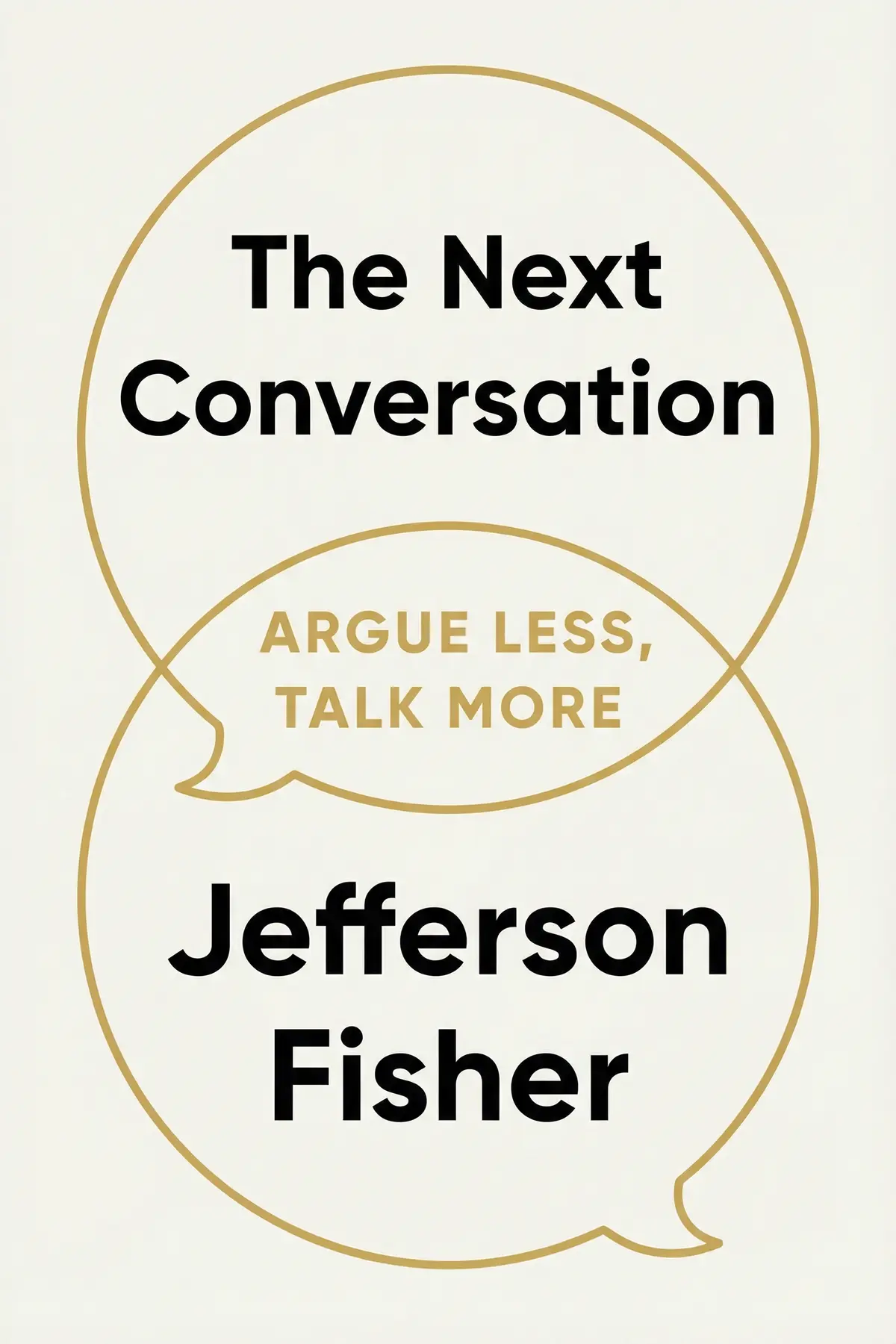
Table of Content
1. Introduction
2 min 11 sec
We have all been there. One minute, you are having a perfectly civil discussion about the budget, the dishes, or the weekend plans, and the next, the temperature in the room spikes. Suddenly, the words coming out of your mouth feel like they belong to someone else. Your heart is pounding, your face is flush, and the actual topic of the conversation has been completely buried under a mountain of resentment and defensive barbs. When the dust finally settles, you are left with a feeling of regret, wondering how a simple chat turned into a full-blown battle.
It is easy to believe that these moments are just an inevitable part of being human—that some people are just difficult or that some topics are naturally explosive. But there is a different way to look at it. What if no argument was truly inevitable? What if you had a set of tools that allowed you to see a conflict coming and gently steer the conversation back toward productive ground, all while keeping your cool and your dignity?
This is exactly what Jefferson Fisher explores. As a trial lawyer, he has spent his career in the ultimate laboratory of high-stakes communication: the courtroom and the deposition room. These are environments where emotions run incredibly high, where people are often at their worst, and where every single syllable carries weight. In these settings, a lawyer cannot afford to lose their temper or get rattled by a witness’s outburst. They have to remain the most composed person in the room to get to the truth.
In the following sections, we are going to look at how these professional legal strategies can be adapted for your daily life. We will go beyond the surface of what is being said to find the ‘why’ behind an outburst. We will look at the biology of stress and how to interrupt your body’s urge to fight or flee. We will also discover the surprising power of saying absolutely nothing at all and how making tiny, one-word edits to your speech can completely change how others perceive you.
This isn’t about learning how to win an argument in the traditional sense. It’s about something much more valuable: learning how to stop the argument before it starts and turn your next conversation into a bridge rather than a barrier. Let’s dive into the core principles that turn even the most difficult dialogues into meaningful exchanges.
2. Uncovering the Underlying Struggle
2 min 33 sec
Discover why the most aggressive outbursts are rarely about the person they are directed at, and learn the trial lawyer’s secret for de-escalating hostility.
3. Mastering the Biological Reset
2 min 34 sec
Learn how to interrupt your brain’s ancient alarm system to stay calm when a conversation starts to heat up.
4. Grounding Yourself with Small Talks
2 min 23 sec
Explore the power of internal mantras to maintain your focus and identity during difficult interactions.
5. The Strategic Use of Silence
2 min 35 sec
Uncover how the intentional use of a pause can project authority, expose dishonesty, and give you the upper hand in any dialogue.
6. Refining Your Voice with the One-Word Edit
2 min 38 sec
Learn how to strip away the verbal clutter that undermines your authority and replace hollow apologies with powerful gratitude.
7. Conclusion
2 min 01 sec
Mastering the art of the ‘next conversation’ is not a skill you perfect overnight. It is a continuous practice of awareness and intentionality. We have journeyed through the high-stakes world of trial law to find that the most effective tools for handling a witness in a courtroom are surprisingly applicable to a disagreement with a spouse or a difficult meeting with a boss.
At the heart of everything we have discussed is the shift from being a reactive communicator to a responsive one. When you stop seeing an argument as a battle to be won and start seeing it as a puzzle to be solved, your entire approach changes. You begin to look for the ‘iceberg’ of hidden struggle beneath an outburst. You learn to breathe through the biological surge of the amygdala, giving yourself the ten seconds you need to stay in control. You use ‘small talks’ to keep your internal compass steady, and you embrace the strategic power of silence to let the truth breathe.
Most importantly, you have learned that the words you choose—and the words you choose to leave out—have the power to shape your reality. By applying the ‘one-word edit’ and replacing hollow apologies with genuine gratitude, you project a level of self-respect that naturally commands the respect of others.
As you move forward, remember that you don’t have to overhaul your entire communication style all at once. Start small. The very next time you feel that familiar spike of tension, just try the conversational breath. The next time you’re about to send an email starting with ‘I just,’ delete that one word. These small, deliberate choices accumulate over time, building a foundation of clarity and confidence. Every conversation you have is an opportunity to practice, and every interaction is a chance to build a stronger connection. By focusing on the ‘how’ of your communication, you ensure that no matter what the topic is, your next conversation will be your best one yet.
About this book
What is this book about?
Have you ever found yourself in an argument that escalated before you even realized what was happening? The Next Conversation provides a roadmap for transforming these volatile moments into opportunities for connection. Drawing from the high-pressure world of trial law, the book explains that effective communication isn't about winning a fight; it's about understanding the biological and emotional currents that drive human interaction. Through practical techniques like the ten-second reset and the one-word edit, listeners learn how to master their internal reactions and guide external dialogues. You will discover how to identify the hidden struggles beneath an outburst, use silence as a tool for truth, and refine your speech to project natural authority. The promise is simple: by changing how you handle your next conversation, you can reduce conflict and foster more collaborative, meaningful relationships in both your professional and personal life.
Book Information
About the Author
Jefferson Fisher
Jefferson Fisher is a trial lawyer, author, and circuit speaker. He founded the Fisher Firm and works as a Texas board-certified personal injury attorney. His no-nonsense approach to conflict resolution has attracted millions of followers worldwide through his podcast The Jefferson Fisher Podcast, as well as his videos and newsletter.
Ratings & Reviews
Ratings at a glance
What people think
Listeners find this book to be an essential read, packed with effective communication techniques and actionable advice for handling tough interactions. They value the wisdom provided on understanding people, noting how the material remains engaging and fun. The prose is excellent and highly relatable, with listeners appreciating the friendly delivery; one listener specifically notes how it helps maintain emotional stability.
Top reviews
Aria
Jefferson Fisher has a way of making complex social dynamics feel like something you can actually handle. As a trial attorney, he brings a unique edge to his “Three Cs”—Control, Confidence, and Connection—that feels much more grounded than your average self-help guru. I found the advice on maintaining emotional stability during heated moments to be incredibly practical. Truth be told, I’ve already started using his techniques to pause and reframe my responses at work. It’s an entertaining read that doesn't get bogged down in heavy theory, making it perfect for anyone who wants to stop dreading difficult conversations and start leading them with clarity.
Show moreBenjamin
Ever wonder why some people just seem to 'win' every interaction without ever raising their voice? This book breaks down that exact magic. Fisher’s “never win an argument” philosophy is a total game-changer for those of us who tend to get defensive. His Texas-based attorney background shines through in the way he structures his 3-step identification process. It’s succinct, useful, and avoids the usual fluff you find in this genre. Personally, I think the section on changing “I think” to “I am confident” is worth the price of admission alone. It’s a personable guide that prioritizes human connection over being right.
Show moreGabriel
This isn't your typical dry business manual; it's a masterclass in human connection written with a very personable, Texas-sized heart. I loved how Fisher emphasizes that the person you see isn't always the person you're actually talking to. That insight alone helped me de-escalate a major disagreement with a family member last week. The writing is entertaining and keeps you interested from the first chapter. While I agree with other reviewers that it leans heavily into a Western, masculine communication style, the core principles of empathy and listening are universal. It’s a 5-star read for me because it's so immediately applicable.
Show moreSofia
Picked this up on a whim and ended up highlighting nearly every other page because the scripts are just that good. Jefferson Fisher manages to distill years of trial experience into a framework that works for normal people. I particularly liked the “Three Cs” method and how it helps you keep your cool when things get heated. It’s a very fast read, almost like a series of well-curated blog posts, but the impact is real. If you struggle with being heard or find yourself constantly apologizing, this book will give you the boost you need. Truly excellent for building daily confidence.
Show moreWyatt
Rarely do I find a self-help book that I actually want to keep on my desk for daily reference, but this one made the cut. Fisher’s writing is punchy, clear, and incredibly do-able. He doesn’t just offer theories; he gives you the exact words to say when you’re stuck. I really appreciated the first chapter on why you should never try to “win” an argument. It shifts your entire mindset from combat to collaboration. While some might call it basic, I think the simplicity is its greatest strength. It’s an effective tool for anyone looking to improve their social capabilities and maintain peace of mind.
Show moreChon
Finally got around to reading this after seeing Fisher’s viral clips, and it’s a solid expansion of his bite-sized tips. The book is immensely readable, with a wonderful writing style that feels like he’s coaching you over a cup of coffee. I really appreciated the focus on human biology and how our brains react under pressure. My only gripe is that some of the “common sense” advice felt a little too basic for anyone who has already studied communication. Still, the scripts for difficult conversations are gold. It’s a must-read for sales coaches or team leaders who need quick, memorable frameworks to share with their staff.
Show moreOwen
As someone who dreads confrontation, I found the section on setting boundaries without guilt to be the most valuable part of the whole book. Fisher doesn't just tell you to be assertive; he shows you how to do it while maintaining your emotional stability. The book is very short, which I loved because it gets straight to the point without any unnecessary filler. Look, it’s not reinventing the wheel—you’ll see shades of Stephen Covey here—but the presentation is fresh and very easy to digest. It helps you understand people on a deeper level. I've already noticed a shift in how I handle my “next conversation” at the office.
Show moreKevin
After hearing Fisher on a podcast, I wanted to see if his 'attorney logic' translated well to personal relationships. It’s a bit of a mixed bag. On one hand, his advice on framing feedback is brilliant and has already helped me at my job. On the other hand, some of the strategies feel a little too calculated for a casual dinner conversation. The book is very Western-centric and doesn't always account for how tone is perceived differently across genders. In my experience, though, the focus on “aiming to connect, not conquer” is a vital lesson everyone needs to hear. A very solid four-star effort.
Show moreSom
While the advice here is undeniably practical for a corporate setting, I couldn't shake the feeling that it's a bit tone-deaf to cultural nuances. Fisher’s strategies for taking the “high ground” can sometimes feel borderline manipulative or even condescending if applied in the wrong context. It definitely reads like a very long LinkedIn post at times, filled with punchy sentences that look good on a screen but lack depth. To be fair, the second half of the book picks up significantly with actionable tips on boundaries and defensiveness. However, if you aren't coming from a position of relative social privilege, some of these “power dynamics” might actually backfire in a real-world setting.
Show moreSavannah
The truth is, if you've already read Covey or similar communication classics, you might find about forty percent of this a bit redundant. It starts off a bit slow with some “Captain Obvious” moments regarding active listening. However, stay with it because the second half is where the real wisdom lies. The techniques for managing pace and tone during conflict are genuinely insightful. Frankly, I felt a little “icky” about the focus on power dynamics in certain chapters, but the overall message of seeking connection over victory is a healthy one. It’s a serviceable guide for professional settings, even if it ignores some cross-cultural complexities.
Show moreReaders also enjoyed

AUDIO SUMMARY AVAILABLE
Listen to The Next Conversation in 15 minutes
Get the key ideas from The Next Conversation by Jefferson Fisher, plus 5,000+ more titles in English and Thai.
- 5,000+ titles
- Listen as much as you want
- 7-day free trial
- Cancel anytime







