
A Life Decoded: My Genome: My Life
J. Craig Venter
Neurologist Steven Laureys investigates the biological reality of meditation, using brain scans and evolutionary science to prove that mindfulness physically reshapes the brain to decrease stress, increase focus, and improve overall happiness.
1 min 41 sec
Meditation is no longer confined to remote mountain monasteries or specific cultural traditions. In the modern world, it has become a global phenomenon, finding a home in busy cities and professional environments alike. The promise is always enticing: a simple practice that can lead to a happier life with significantly less stress. But for those with a scientific mindset, such promises often raise a red flag. Is this just a placebo effect, or is something deeper happening within our biology?
This is the question that drove Steven Laureys, a renowned neurologist, to investigate the matter. After experiencing the personal benefits of mindfulness himself, he decided to look under the hood using the tools of modern neuroscience. What he discovered is that the ‘feel-good’ aspect of meditation isn’t a vague spiritual mystery. Instead, it is the result of tangible, measurable changes in the brain’s architecture.
In the following minutes, we will explore the throughline of this work: the idea that our brains are not fixed entities, but dynamic organs that can be retrained for better health. We will look at why our evolutionary history has left us prone to constant worry and how the latest scanning technology proves that meditation can actually physically rewire our neural pathways. By understanding the science of the ‘monkey mind’ and the impact of neuroplasticity, you will see how a few simple mental exercises can lead to profound shifts in your mental clarity and emotional well-being. This isn’t about mysticism; it’s about understanding the high-performance machinery of your own mind and learning how to operate it with greater intention.
2 min 11 sec
Have you ever wondered why your mind seems to fixate on the negative? It turns out that our modern anxieties are actually rooted in prehistoric survival strategies that once kept our ancestors safe.
2 min 32 sec
The brain was once thought to be static after adulthood, but we now know it is constantly changing. Discover how your daily habits and thoughts are literally reshaping your neural pathways right now.
2 min 17 sec
Meditation comes in many forms across the globe, but they all share a singular, powerful objective. Learn why viewing meditation as a ‘workout’ for the mind changes everything.
2 min 11 sec
What happens to a brain after sixty-thousand hours of meditation? The results from a unique study on a Buddhist monk reveal the incredible physical shifts that are possible.
2 min 15 sec
Scientific studies show that our happiness is directly linked to where our attention is. Explore how ‘gamma waves’ and deep focus can transform even mundane tasks into joyful experiences.
2 min 05 sec
Understand the two branches of your nervous system and how mindful breathing acts as a biological switch to turn off the stress response.
2 min 08 sec
Mindfulness isn’t just for a meditation cushion. Discover practical exercises like the ‘body scan’ and sensory engagement that ground you in the now.
1 min 47 sec
As we have seen, the practice of meditation is far more than a cultural curiosity or a spiritual pursuit; it is a scientifically-backed method for optimizing the human brain. We began by acknowledging that our biological heritage has left us with a ‘monkey mind’ that is naturally prone to anxiety—a survival mechanism that served our ancestors well but often works against us in the modern world. However, through the principle of neuroplasticity, we now know that our brains are remarkably adaptable. We have the power to physically reshape our neural pathways, strengthening our capacity for focus and emotional regulation while diminishing the structures that drive our stress response.
The research conducted by Steven Laureys and his colleagues provides a clear and compelling picture: regular mental training leads to visible, structural changes in the brain’s gray and white matter. It allows us to engage the ‘brakes’ of our nervous system and tap into the high-speed processing of gamma waves, making our lives more focused and, as a result, more enjoyable. Whether it is through mindful breathing, body scans, or simply paying full attention to the taste of an apple, these practices offer a way to override our ancient instincts for worry.
The most important takeaway is that mindfulness is accessible to everyone. You don’t need a specific set of beliefs or a lifetime of dedication to start reaping the benefits. By committing even a few minutes a day to these exercises, you are beginning the process of biological transformation. As you move forward, try to remember that your mind is a tool that can be sharpened and a landscape that can be cultivated. By choosing to live more intentionally in the present moment, you are not just managing your stress—you are fundamentally changing the way you experience the world.
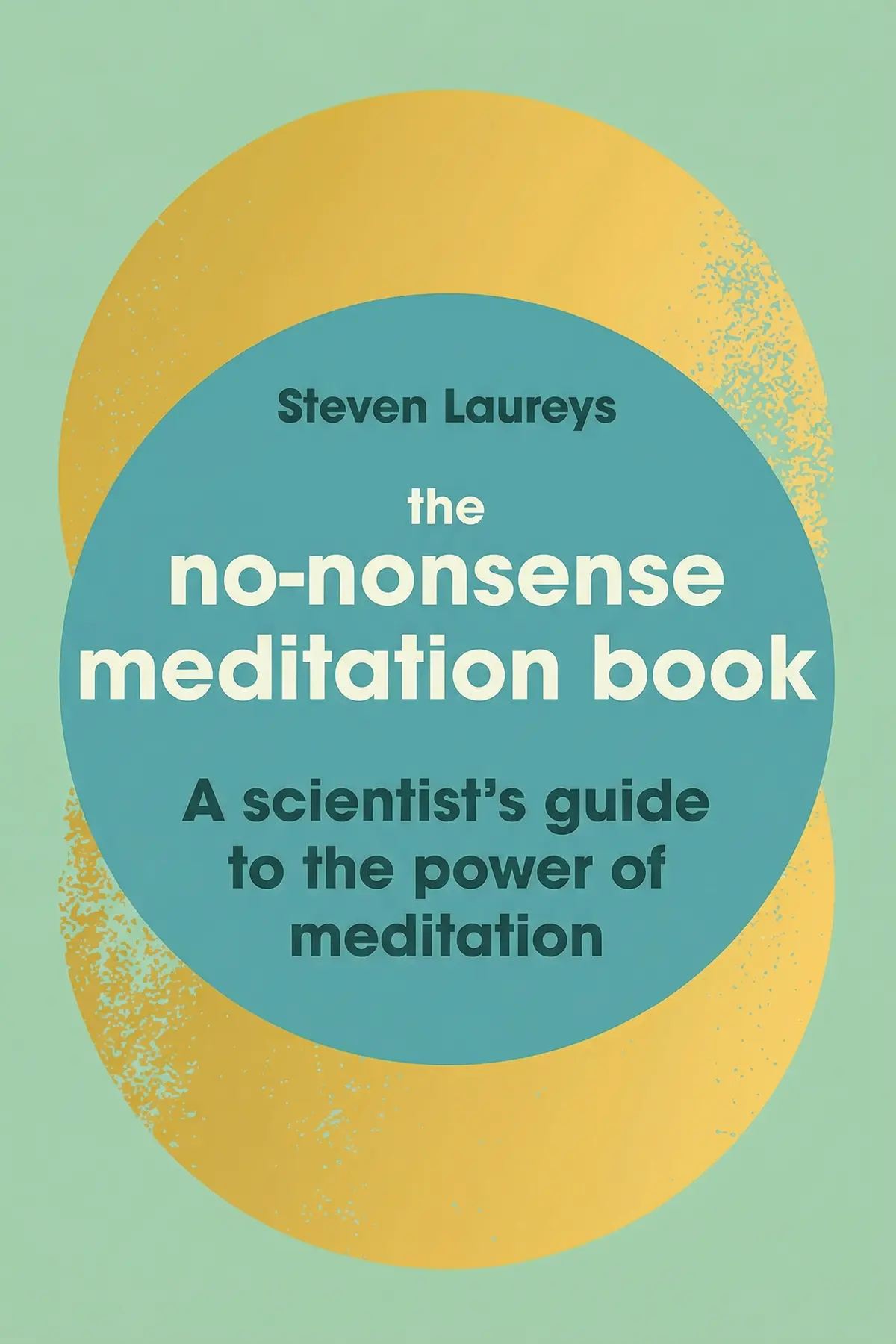
In The No-Nonsense Meditation Book, neurologist Steven Laureys offers a rigorous scientific examination of how mindfulness practices impact the human brain. Moving beyond the spiritual or mystical associations often linked to meditation, Laureys uses his background in neurobiology to explain that the benefits of the practice are deeply rooted in physical changes within our gray and white matter. The book promises to demystify the process of mental training, showing that anyone can harness these techniques to improve their focus and emotional resilience. By looking at the brain through the lens of evolution and modern scanning technology, the author demonstrates why we are naturally prone to stress and how we can override these ancient instincts. He presents meditation as a form of physical exercise for the mind, backed by clinical evidence and personal experience. Whether you are a skeptic or a curious beginner, this guide provides the biological why and the practical how behind achieving a calmer, more present state of existence. It serves as a bridge between high-level neuroscience and everyday well-being, proving that a more peaceful life is accessible through consistent, intentional brain training.
Steven Laureys is a prominent Belgian neurologist and author with a specialty in the neurology of consciousness. He serves as a professor at the University of Liège in Belgium and leads the Coma Science Group at the University Hospital. His scientific contributions have earned him prestigious recognitions, including the William James Prize and the Young Investigator Award from the Cognitive Neuroscience Society.
Listeners find the scientific foundation of this mindfulness guide to be both trustworthy and convincing, especially highlighting how the book utilizes neuroscience to clarify meditation's advantages. Although some have differing views regarding the repetitive prose, many enjoy that the material is easy to understand and steers clear of "esoteric" or "dreamy" terminology. Furthermore, they respect the author’s talent for making intricate biological theories easy to grasp, with one listener observing that the provided data offered a welcome "no-nonsense" credibility to the topic. They also point out that the addition of interviews and personal anecdotes helps anchor the technical research, making the practice seem attainable for those just starting out.
As a total skeptic of anything 'zen,' I found Steven Laureys’ approach incredibly refreshing. He doesn't ask you to believe in anything; he simply shows you the scans and the data that prove meditation actually changes the physical structure of your brain. The inclusion of personal anecdotes from various public figures was a nice touch, even if some of the interviews felt a bit disorganized in the overall layout. Truth is, I was already convinced of the benefits, but having the scientific 'why' behind the practice gave me the motivation to stay consistent. The writing style is very conversational, which helps when you're tackling complex topics like neuroplasticity. It avoids all the esoteric nonsense that usually clutters these types of books, making it a perfect gift for the more analytical people in your life.
Show moreEver wonder why every doctor suddenly recommends meditation for stress? This book provides the most comprehensive answer I’ve found yet, stripping away the incense and the chanting to focus on pure neuroscience. Steven Laureys writes with a sympathetic tone that makes you feel like you’re having a coffee with a very smart friend who just wants you to feel better. The way he explains the shift from the 'doing' mode to the 'being' mode using brain scans is genuinely eye-opening for a layperson. In my experience, most books on this topic get bogged down in philosophy, but this stays rooted in health and performance. It’s a low-threshold guide that doesn't talk down to the reader, even when discussing complex topics like the default mode network. Highly recommended for anyone who needs a logical reason to start their mindfulness journey.
Show moreBeing a data-driven person makes it hard to accept wellness trends without cold, hard facts. This book, however, provided the biological background and scientific data I needed to finally give meditation a real shot. Laureys explains the 'how' and 'why' with such clarity that even the most skeptical reader would have a hard time arguing with the results. I especially appreciated the lack of 'dreamy' language—no talk of chakras or universal energy here, just neurons and scans. The interviews with various high-achievers were a nice addition to show the practical application of the research. In my experience, this is the first book that treats meditation as a legitimate medical intervention rather than a lifestyle accessory. It’s an essential read for anyone who wants to optimize their brain function using proven methods.
Show moreFinally, a book that doesn't treat mindfulness like some mystical secret only accessible to monks. As someone who usually rolls their eyes at 'energy' talk, I appreciated how Laureys grounds everything in neurology and hard evidence. The way he breaks down the benefits for your gray matter makes the habit feel less like a chore and more like a necessary biological upgrade. It’s not perfect—there’s definitely some repetition that could have been trimmed by a stricter editor—but the core message is vital. Frankly, it’s the first time I’ve felt like I was being spoken to by a scientist rather than a guru. If you’ve been hesitant to try meditation because it felt too 'dreamy,' this is the entry point you’ve been waiting for. It’s accessible, data-driven, and surprisingly personal for a science-heavy text.
Show moreAfter hearing Laureys speak on a podcast, I had high expectations for this deep dive into the brain's plasticity. The book delivers exactly what the title promises: a no-nonsense look at what happens under the hood when we sit in silence. I was especially fascinated by the case study of Matthieu Ricard and the specific measurements of his brain tissue compared to the average person. It’s these kinds of concrete details that separate this work from the endless sea of self-help fluff. While the tone is very accessible, it doesn't shy away from the biological reality of how we process stress and focus. My only gripe is that it can feel a little disjointed at times, moving from hard data to celebrity anecdotes without much of a bridge. Still, it’s an inspiring read that makes a very compelling case for why everyone should be training their mind like a muscle.
Show moreThis book genuinely changed how I view my morning routine. I’ve always felt like meditation was just something people did to look trendy, but Laureys shows the actual biological necessity of it for a healthy brain. The writing is incredibly light and easy to digest, which is a feat considering he’s explaining things like prefrontal cortex activity. I liked the interviews with various public figures because they showed that even busy, successful people struggle with the practice at first. It made the whole habit feel much more achievable and less like some lofty goal I’d never reach. To be fair, if you’re already an expert in mindfulness, you might find this a bit basic, but for the rest of us, it’s a perfect primer. It’s personal, objective, and serves as a great reminder that our mental health is just as important as our physical fitness.
Show moreGotta say, I was pleasantly surprised by how much I enjoyed this as a non-fiction read. It’s been years since I picked up a book about health, but the promise of a 'no-nonsense' approach really pulled me in. Laureys doesn't try to convert you to a new religion; he just lays out the facts and lets you decide for yourself. The chapters move quickly, though I do agree with other reviewers that the organization is a bit haphazard in places. I found the section on how meditation affects the aging process particularly motivating, especially the bits about maintaining brain volume. It’s an inspiring read that manages to be both scientifically grounded and deeply human at the same time. Not a perfect five-star experience due to some of the repetitive phrasing, but it's a solid 4 for sure.
Show moreThere’s a lot of great information here, but the delivery feels surprisingly cluttered for a book about finding mental clarity. Steven Laureys is clearly a brilliant guy and his passion for the subject shines through every page, yet the structure of the chapters feels a bit like a rush job. I was particularly annoyed by how many times the same points were repeated, as if the author didn't trust us to remember them from three pages ago. On the plus side, the interviews with Belgian celebrities offered some grounded, real-world perspectives that I found quite charming. It’s a shame those interviews aren't even listed in the table of contents, which makes the whole thing feel a bit messy. Not gonna lie, I think there are more focused books on the market if you want a streamlined guide, but the science here is still solid enough to warrant a look.
Show moreThe chapter on brain scans was worth the price of admission alone. I've always been curious about what actually happens when people meditate, and seeing the visual evidence of how it changes the brain was fascinating. Steven Laureys is a sympathetic author who clearly knows his stuff, even if the book feels a bit unpolished in its final execution. There’s a lot of repetition, and the table of contents is practically useless if you’re looking for specific sections or interviews. Despite those flaws, the message is powerful and the science is accessible enough for anyone to understand. It’s a great introduction for beginners who want to skip the fluff and get straight to the benefits. I’m giving it three stars because while the content is 5-star quality, the presentation and editing really let it down.
Show moreLook, I really wanted to like this because of the author’s credentials, but it felt like a rushed assembly of blog posts rather than a cohesive book. As a renowned neuroscientist, Laureys has so much potential to bridge the gap between science and spirituality, but this publication is riddled with slordigheden and endless repetition. I found myself skimming through large sections because the same points about gray matter were being hammered home over and over again. Furthermore, the confusion between correlation and causality in some of the cited studies made me a bit skeptical of the overall conclusions. If you actually want to learn about the mechanics of breathing or the deep practice of meditation, you’re much better off reading someone like Edel Maex. This felt more like a promotional tool for the author's public persona than a serious scientific contribution. Disappointing.
Show moreJ. Craig Venter
Eckhart Tolle

Carl Zimmer
Bill Bryson
Pico Iyer
Jeff Hawkins

AUDIO SUMMARY AVAILABLE
Get the key ideas from The No-Nonsense Meditation Book by Steven Laureys, plus 5,000+ more titles in English and Thai.







