
21 min 21 sec
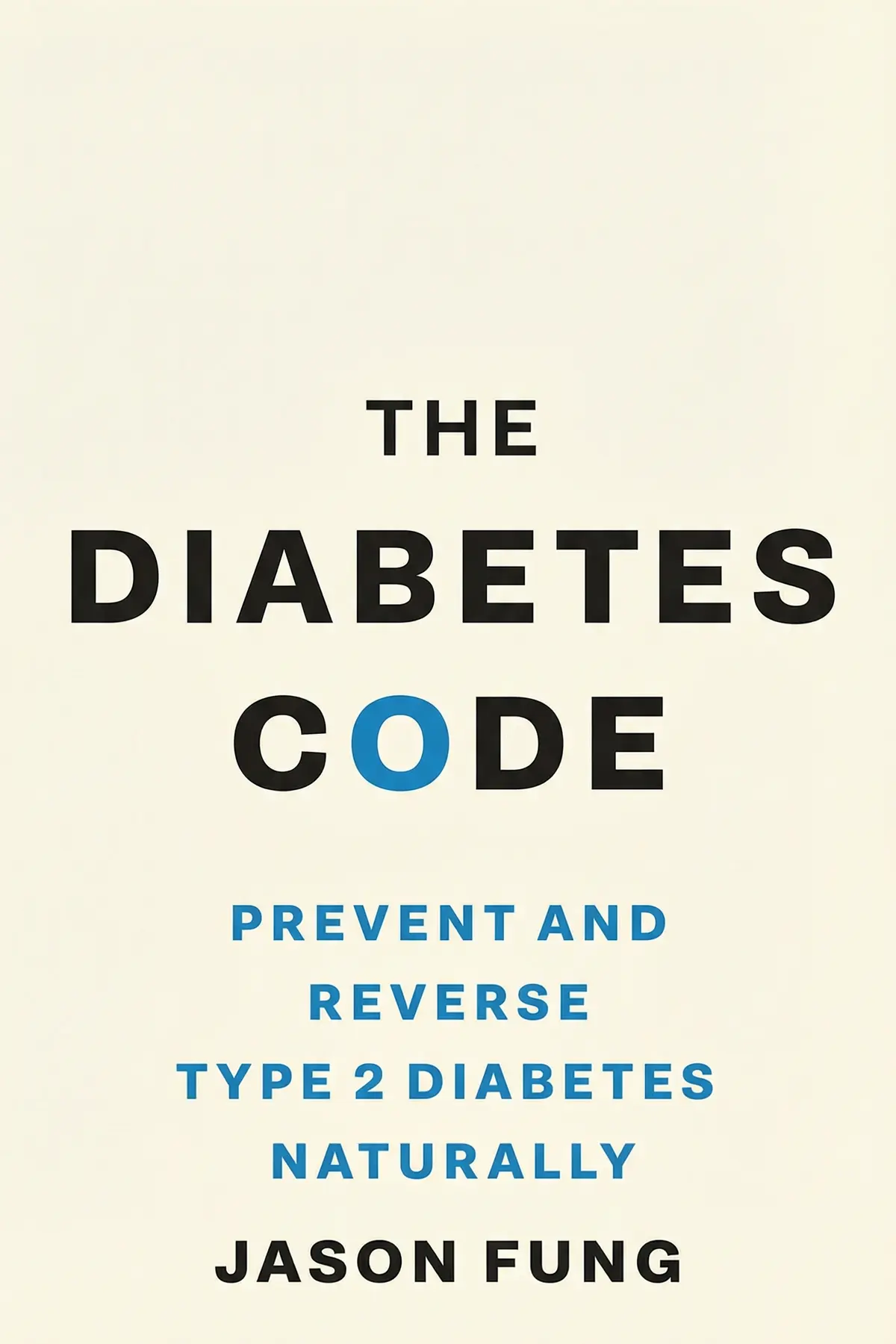
The Obesity Code: Unlocking the Secrets of Weight Loss
By Jason Fung
The Obesity Code challenges the traditional calories-in-calories-out model of weight loss. Dr. Jason Fung explains how insulin and hormonal imbalances drive obesity, offering a new perspective on sustainable health management.
Table of Content
1. Introduction
1 min 34 sec
For most of our lives, we have heard the same repetitive advice regarding weight loss: eat less, exercise more, and count every single calorie. This approach treats the human body like a simple machine or a bank account where fat is merely the balance left over after expenses. But if this formula were so easy and scientifically sound, why are we currently facing a global obesity crisis that shows no signs of slowing down?
In this exploration of The Obesity Code, we are going to pull back the curtain on the traditional ‘caloric obsession’ that has dominated health discussions for generations. As Dr. Jason Fung argues, many of our deeply held beliefs about weight are not just oversimplified; they are often flat-out wrong. We’ve been focusing on the wrong culprits while the true driver of weight gain—our hormones—remains largely ignored in the mainstream conversation.
Throughout this summary, we will examine how our internal chemistry, particularly the hormone insulin, dictates whether we store fat or burn energy. We will look at why social environment matters less than we think and why the biological ‘set point’ of our weight is so resistant to change through willpower alone. By the end of this journey, you will understand the profound difference between what you eat and when you eat, and how shifting your perspective on metabolic health can lead to far more sustainable results than any fad diet ever could. Let’s dive into the science that explains why we get fat and how we can finally address the root causes of obesity.
2. The Dominance of Genetics Over Environment
2 min 22 sec
Think your weight is a product of your childhood habits or household environment? Research suggests your biological blueprint plays a far more significant role than you might expect.
3. The Flawed Logic of Caloric Counting
2 min 27 sec
We are told that weight loss is a simple math equation of calories in versus calories out, but the human body doesn’t actually work like a calculator.
4. Metabolic Adaptation and the Failure of Diets
2 min 10 sec
Slashing your food intake might seem like the answer, but your body responds with a powerful survival mechanism that can actually make weight loss impossible.
5. Insulin: The Master Controller of Fat
2 min 14 sec
Behind every pound of fat gained is a single, powerful hormone. Understanding its role is the key to unlocking the mystery of weight gain.
6. The Danger of Constant Snacking
2 min 07 sec
The habit of eating small, frequent meals throughout the day might be the very thing preventing you from reaching your health goals.
7. Socioeconomics and the Subsidized Diet
2 min 10 sec
Obesity is often unfairly labeled as a personal failing, but the economic landscape makes it much harder for the less affluent to stay healthy.
8. The Truth About Dietary Fats
2 min 17 sec
For decades, fat was the villain of the dinner table. But new evidence shows that most fats are actually harmless—except for one specific type.
9. Breaking the Sugar Trap and Finding Balance
2 min 17 sec
To truly reset your health, you must address the specific way sugar affects the liver and learn to embrace foods that support your metabolism.
10. Conclusion
1 min 43 sec
As we have seen throughout this exploration of The Obesity Code, the conventional wisdom that has guided our health choices for decades is largely incomplete. Obesity is not a simple consequence of overeating or a lack of exercise. It is a complex hormonal disorder characterized by high insulin levels and the resulting insulin resistance. When we focus purely on calories, we ignore the biological signals that actually control our hunger, our energy levels, and our fat storage.
The path forward requires a fundamental shift in how we view food and timing. The most important takeaway is that what you eat is only half of the equation; when you eat is just as vital. By reducing our intake of refined carbohydrates and sugars—especially fructose—we stop overtaxing our liver and sparking constant insulin spikes. By avoiding the modern habit of perpetual snacking and embracing the ancient practice of fasting, we give our bodies the necessary time to burn stored energy and reset our metabolic ‘thermostat.’
Dr. Jason Fung’s research offers a message of hope. Weight loss isn’t about the grueling math of caloric restriction that eventually leads to metabolic failure. It’s about understanding your body’s internal chemistry and making choices that keep your hormones in balance. If you are ready to take action, start by cutting out liquid sugars and processed snacks. Experiment with giving your body longer breaks between meals. As your insulin levels stabilize, you may find that your energy returns, your cravings diminish, and your body finally finds its way back to its natural, healthy weight. The secret isn’t more willpower; it’s better science.
About this book
What is this book about?
For decades, we have been told that obesity is a simple matter of willpower and caloric accounting. We are instructed to eat less and move more, yet the global obesity epidemic continues to worsen. In this summary, we explore the groundbreaking research of Dr. Jason Fung, who argues that the conventional wisdom is fundamentally flawed. The core promise of this material is to reveal the true biological driver of weight gain: hormones, specifically insulin. By understanding how our bodies regulate weight through complex endocrine signals, we can move away from futile dieting cycles and toward lasting health. This journey covers the surprising role of genetics, the metabolic traps of calorie restriction, and why the timing of our meals may be more important than the content on our plates. It provides a roadmap for resetting the body’s natural weight-regulating systems through dietary changes and intermittent fasting.
Book Information
About the Author
Jason Fung
Jason Fung is a renowned kidney specialist and the head of the Intensive Dietary Management program at Scarborough Hospital in Ontario, Canada. He is recognized as a leading expert on type 2 diabetes and obesity. Fung has authored several influential books, including The Diabetes Code, The Longevity Solution, and The Complete Guide to Fasting.
Ratings & Reviews
Ratings at a glance
What people think
Listeners find this work to be well-researched and simple to understand, with one individual remarking that it unfolds with the intensity of a thriller. They value its holistic perspective on weight management and obesity, specifically regarding the insulin theory and its relationship with fat accumulation. The book is recognized for its meticulous documentation, lucid explanations, and useful tips, resulting in a transformative experience that many believe could actually save lives.
Top reviews
Maya
This book reads like a medical thriller, pulling back the curtain on why we actually gain weight. Dr. Fung presents a compelling case that obesity isn't a character flaw or a simple math problem involving calories. Instead, it’s a complex hormonal imbalance driven primarily by insulin. While the sections on intermittent fasting can feel a bit extreme for the average person, the explanation of 'body set weight' is revolutionary. I finally understand why my body fights so hard to keep the pounds on after a diet ends. It’s a dense read but remains incredibly accessible for those without a science background. Frankly, it should be required reading for anyone struggling with their metabolic health.
Show moreHenry
Ever wonder why the standard advice of 'eat less, move more' has failed so many people over the last fifty years? This book answers that question by focusing on the timing of when we eat rather than just the volume of food consumed. The research into insulin resistance and how it leads to fat storage is thorough and eye-opening for anyone struggling with a weight loss plateau. Personally, I appreciated the breakdown of the 'dawn phenomenon' and why I’m not actually hungry first thing in the morning. It isn't just a diet book; it's a masterclass in human metabolism that will change how you view your pantry. I’ve already seen my energy levels stabilize after cutting out refined grains as suggested.
Show moreChokdee
Wow, I didn't realize that my 'healthy' snacking was actually the thing keeping my insulin levels spiked and preventing fat loss. Fung explains that our bodies are like thermostats, and until we lower our insulin, our weight is essentially stuck at a predetermined set point. The truth is, the food industry has done a number on us by pushing 'low-fat' products that are actually loaded with sugar and refined carbs. Reading about the history of the food pyramid was infuriating but necessary to understand our current health crisis. This is life-changing information for anyone with Type 2 diabetes or those who are just tired of the yo-yo diet cycle. It's a comprehensive approach that prioritizes long-term health.
Show moreWissanu
Finally got around to reading this, and it’s easily the most important health book I’ve picked up in a decade. It completely debunks the idea that all calories are created equal, which is a lie we’ve been fed by big food corporations for years. The explanation of how fasting allows the body to actually burn stored fat instead of just lowering your metabolism is brilliant. I've switched to eating more natural fats like avocado and butter while cutting out the 'heart-healthy' margarines, and I feel significantly better. It’s rare to find a book that is both intellectually stimulating and immediately actionable. I'm recommending this to everyone I know who is tired of the traditional, failing diet advice.
Show morePierre
As a competitive powerlifter who spends a lot of time obsessing over macros, I found this perspective on hormones refreshing yet challenging. Fung’s critique of the 'calories in, calories out' model is spot on because it ignores how 100 calories of cookies impacts your blood sugar differently than 100 calories of broccoli. I have to be fair: his suggestion to fast for days at a time is a tough pill to swallow for someone trying to maintain heavy lifting volume. It’s a great resource for health, but the adherence factor for those 72-hour fasts is likely low for most people. Still, the focus on whole foods and vinegar is very practical for daily life.
Show morePalm
After hearing about this book in a health forum, I decided to give it a shot to break a six-month weight loss plateau. The focus on cortisol and stress as secondary drivers of weight gain was a major lightbulb moment for me because I'm a high-stress professional. Fung’s writing is punchy and direct, though his tone can occasionally come across as a bit condescending toward the medical establishment. I started the 16:8 intermittent fasting protocol he describes, and for the first time in years, I don't feel like a slave to my hunger pangs. It’s a very practical guide, even if some of the longer fasting windows seem unrealistic for a busy social life. Definitely worth a read for the science alone.
Show moreTalia
Look, the science behind the hormonal theory presented here is rock solid and backed by decades of research that usually gets ignored. Most doctors just tell you to walk more, but Fung explains why that 5% of the equation won't save you from a diet high in processed sugar. I loved the deep dive into how fiber and vinegar can actually mitigate the insulin response of certain foods. My only gripe is that the book could have been about fifty pages shorter if it didn't repeat the same core thesis in every single chapter. If you can get past the redundancy, the advice on avoiding artificial sweeteners is worth the price of the book alone. It's a foundational text.
Show moreSophia
The chapter on the 'dawn phenomenon' alone was worth the price of admission for me. Understanding why our bodies dump glucose into the bloodstream in the morning helped me realize why I wasn't actually hungry for breakfast. Fung does a great job of explaining how the 'snacking' culture was essentially manufactured to sell more processed goods. While I don't agree with every single conclusion—especially the dismissal of exercise as a weight-loss tool—the core message about insulin is undeniable. It's a well-documented look at a systemic problem that requires a lifestyle change, not just a temporary diet. I’m currently two weeks into the recommended changes and my sugar cravings have almost entirely vanished.
Show moreKiattisak
Not what I expected given the glowing recommendations, especially since it feels like it glosses over the risks of disordered eating. To be fair, Fung's logic regarding insulin as the primary driver of obesity is well-documented and hard to argue with from a biological standpoint. However, telling a population prone to bingeing that they should simply 'not eat' for extended periods feels a bit irresponsible without more psychological safeguards. The constant repetition of certain points made the middle sections feel like they were dragging on forever. It’s a solid read for the science, but I’m docking points for the lack of nuance regarding mental health and food relationships. Some of the fasting goals feel like a recipe for a crash diet.
Show moreMuk
Gotta say, I have mixed feelings about this one because while the insulin theory is fascinating, the implementation is quite extreme. Dr. Fung is a great writer, but he seems to think that everyone has the willpower of a saint when it comes to multi-day fasts. For someone like me who has a history of stress-eating, skipping meals can occasionally trigger a massive binge later in the week. The book assumes a 'one-size-fits-all' approach to fasting that might not work for people with different metabolic or psychological backgrounds. It’s definitely informative, and I learned a lot about how sugar affects my liver, but take the fasting advice with a grain of salt. It’s a good starting point, but don't feel like a failure if you can't go 48 hours without food.
Show moreFeatured in
Readers also enjoyed
AUDIO SUMMARY AVAILABLE
Listen to The Obesity Code in 15 minutes
Get the key ideas from The Obesity Code by Jason Fung, plus 5,000+ more titles in English and Thai.
- 5,000+ titles
- Listen as much as you want
- 7-day free trial
- Cancel anytime







