

A Liberated Mind: How to Pivot Toward What Matters
Steven C. Hayes
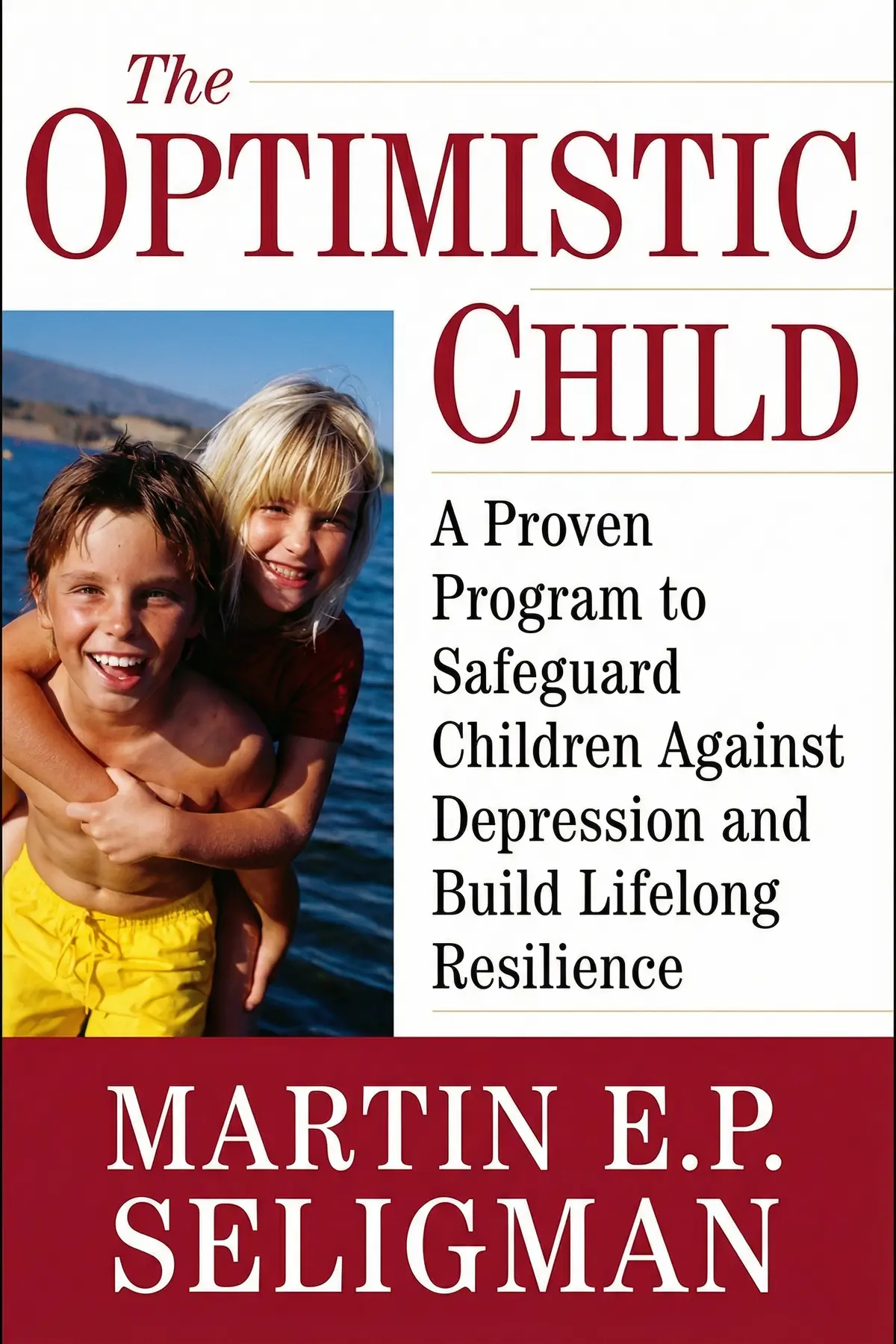
The Optimistic Child offers a psychological framework for raising resilient children. It focuses on changing how children interpret setbacks, moving away from empty self-esteem boosts toward genuine competence and mental flexibility.
1 min 46 sec
Every parent shares a common wish: they want their children to lead lives full of happiness, success, and meaning. We want them to bounce back from the inevitable bumps in the road and face the future with confidence. However, despite our best efforts and an era focused heavily on child well-being, many young people today are more vulnerable to depression and anxiety than ever before. This raises a difficult question: If we are trying so hard to make our children happy, why are they struggling so much?
In this summary, we explore the groundbreaking work of Martin Seligman, who suggests that the missing piece of the puzzle isn’t how children feel about themselves, but how they think about the world. He introduces the concept of optimism not as a sunny disposition or a habit of looking at the glass as half-full, but as a specific set of cognitive skills. These skills function like a mental vaccine, protecting children from the paralysis of helplessness and giving them the resilience to persevere when life gets tough.
Through these chapters, we will deconstruct the common myths surrounding self-esteem and explore the actual mechanics of a child’s inner dialogue. We will look at how children explain their failures to themselves and how these explanations can either lock them into a cycle of despair or open the door to growth. You will discover a framework for teaching your child how to challenge negative thoughts, take appropriate responsibility for their actions, and solve social problems with a clear head. This is about more than just helping children avoid sadness; it’s about providing them with a sturdy foundation of mental habits that will support them throughout their entire adult lives. By the end of this journey, you’ll see how shifting a child’s mindset from ‘I can’t’ to ‘I can learn how’ changes their entire trajectory.
2 min 39 sec
Discover how the way we explain our failures defines our resilience and why optimism is a sophisticated cognitive tool rather than just a personality trait.
2 min 35 sec
Explore why the modern obsession with making children ‘feel good’ has inadvertently led to higher rates of depression and lower levels of actual competence.
2 min 14 sec
Learn how the words ‘always’ and ‘never’ can trap a child in a cycle of pessimism and how to shift toward a more hopeful view of time.
2 min 17 sec
Understand why some children let one bad grade ruin their entire week, while others can keep their setbacks contained and their lives moving forward.
2 min 23 sec
Learn the art of teaching ‘accurate responsibility,’ ensuring your child neither blames themselves for everything nor avoids accountability for their actions.
2 min 23 sec
Discover the first step in mental resilience: learning to notice the ‘automatic’ negative thoughts that dictate our emotional responses.
2 min 27 sec
Learn how to help your child act like a detective, searching for the facts that challenge their most discouraging beliefs.
2 min 11 sec
Break the spiral of ‘what-ifs’ by teaching your child how to identify the most likely outcomes instead of the scariest ones.
2 min 20 sec
Optimism is only half the battle; discover the three-step framework for turning clear thinking into effective social action.
1 min 39 sec
The journey toward raising an optimistic child is not about shielding them from life’s difficulties or filling their heads with empty praise. It is about something much deeper and more enduring: it is about giving them the gift of accurate, resilient thinking. We have seen how the traditional self-esteem movement often falls short by focusing on feelings over competence, and how the real key to mental health lies in a child’s explanatory style. By teaching our children to view setbacks as temporary, specific, and manageable, we provide them with a mental framework that can withstand any storm.
As you move forward, remember that your role is to be both a teacher and a model. Your children are watching how you handle your own frustrations and failures. When you practice thought catching, disputing, and decatastrophizing in your own life, you are providing them with a living example of resilience. Encourage them to master new skills, to take responsibility for their actions without falling into shame, and to approach social problems with a calm and analytical mind.
Ultimately, optimism is a way of engaging with the world that says, ‘I have the power to learn, to grow, and to change my circumstances.’ It is the foundation of a life lived with hope and agency. By fostering these skills today, you are not just helping your child have a better childhood; you are equipping them to be an adult who can face the future with a steady heart and a clear mind. The tools of optimism are the greatest protection you can give them, ensuring that they don’t just survive the challenges of life, but truly flourish in spite of them.
The Optimistic Child addresses a growing crisis in youth mental health: the rise of depression and the lack of resilience in modern generations. While many parents believe that the secret to a happy child lies in constant praise and high self-esteem, the author argues that these methods often backfire. Instead of teaching children to merely feel good, the book advocates for teaching them how to think accurately and act effectively. It introduces the concept of explanatory styles—the internal habits children use to explain why things happen—and shows how these styles can be the difference between a child who gives up and one who thrives. By following the strategies outlined in this summary, you will learn how to help your child navigate failure without falling into despair. The book provides a practical, step-by-step program for shifting from a pessimistic mindset to an optimistic one. This transition isn't about ignoring reality or using empty slogans; it’s about developing the cognitive skills to view challenges as temporary and solvable. Ultimately, the book promises to equip parents with the tools to build their children’s emotional immunity, safeguarding them against future mental health struggles while fostering a lifelong sense of mastery and hope.
Martin E.P. Seligman is an influential American psychologist, educator, and author widely recognized for his work in the field of positive psychology. In 1998, he was elected President of the American Psychological Association, where he shifted the focus of the field toward well-being and human flourishing. Currently, he serves as the Zellerbach Family Professor of Psychology at the University of Pennsylvania, where he continues his research and teaching on resilience and optimism.
Listeners find the material both practical and wise, with one listener noting that it offers research-based applications. Furthermore, many view it as a necessary resource for parents, with one listener describing the book as a basic course in cognitive behavioral therapy. Additionally, listeners value how accessible and encouraging the text is, noting that it has a meaningful effect on overall resilience and mental health.
This book basically functions as an essential introductory course in cognitive behavioral therapy for parents who want to build genuine resilience in their children. Seligman provides a refreshing, research-based framework that moves far beyond the shallow 'participation trophy' culture that has dominated parenting for decades. Frankly, his explanation of how mastery leads to self-esteem—rather than the other way around—completely changed how I praise my ten-year-old son. Instead of empty puffery, I now focus on helping him develop an accurate explanatory style for his successes and failures. The chapter on how to identify and challenge pessimistic thoughts is worth the price of the book alone. It is not just about being 'happy,' but about giving kids the mental tools to handle life's inevitable setbacks without spiraling into a cycle of helplessness. While some of the academic studies mentioned are a bit dense, the practical applications for daily life are invaluable for any family struggling with a glass-half-empty outlook.
Show moreFinally got around to reading this after a friend recommended it for my teenager, and it turned out to be life-changing for the whole family. Personally, I have struggled with cycles of depression since my own youth, and doing the exercises alongside my daughter was a revelation. It is rare to find a psychology book that is this readable while still being grounded in rigorous scientific research. The author’s conclusion about the positive consequences of a realistic, optimistic mindset felt genuinely inspirational rather than just clinical. We’ve started using the 'ABC' method to challenge pessimistic thoughts, and I can already see a shift in how my daughter handles social conflicts at school. She is learning that her actions actually have an impact on her environment, which is the best defense against helplessness. This should be required reading for every new parent before their kids hit middle school. Truly a masterpiece of practical mental health.
Show moreAfter hearing about the 'self-esteem movement' for years, it was fascinating to read the actual science that debunks its effectiveness. Seligman explains that self-esteem is the byproduct of doing well, not a prerequisite for it, which is a total paradigm shift for many modern parents. This book is much more than a parenting guide; it’s a manual for building mental grit and preventing the 'learned helplessness' that leads to depression. I loved the specific focus on how parents should interpret failure for their children without taking over the problem themselves. Failure isn't catastrophic if you have the right mental framework to process it. The stories and assessments helped me identify my own pessimistic tendencies, which I hadn't even realized I was passing down to my kids. It is an inspirational and practical resource that I find myself quoting to other parents almost every single week. Absolutely essential reading for the modern age.
Show moreAs a parent of two, I found this book's critique of the self-esteem movement of the 1960s to be absolutely spot on. Seligman argues that artificial 'puffery'—telling kids they are special regardless of their actions—actually undermines their confidence because it isn't rooted in reality. Look, we have all seen those kids who get a trophy just for showing up, and this book explains why that approach fails to prevent depression. He emphasizes 'accurate optimism,' which is about weighing evidence and seeing multiple points of view rather than just ignoring problems. The truth is, I’ve started using these techniques on myself as much as on my children. While I agree with other reviewers that some sections feel a bit like a scholarly dissertation, the 'toolbox' provided is something I will keep on my nightstand for years. It’s a dense read, but the payoff for your child’s mental health and grit is undeniable.
Show moreEver wonder why some kids bounce back from a bad grade while others feel like their world is ending? This book provides a deeply insightful look into the mechanics of resilience and how we can teach optimism as a learned skill. Not gonna lie, I was skeptical about the idea that you can 'teach' a personality trait, but Seligman’s research on explanatory styles is very convincing. The way he breaks down how children develop theories of success and failure during their school years is eye-opening. I particularly liked the section on helping children avoid assigning negative motives to other people's actions. It is a great reminder that our thought patterns aren't fixed; they are habits that can be rewired with enough practice. My only minor gripe is that the book feels a bit dated in its examples, but the psychological principles remain incredibly relevant in our high-pressure society.
Show moreTruth is, I was a bit overwhelmed by the length of this book at first, but the insights into cognitive behavioral techniques for kids are gold. Seligman’s focus on 'accurate optimism'—being realistic about the world while still seeking positive outcomes—is exactly what my cynical eight-year-old needed. I’ve started applying the rule of 'telling the truth without puffery,' and it has actually improved our relationship. When he fails, I don't tell him he's the best anyway; instead, we look at what happened and make a plan to practice. This approach builds real confidence because it’s based on his actual achievements, not just my empty praise. The writing can be a bit dry in the middle sections where he discusses his staff’s resumes, but the 'toolbox' at the end makes it worth the effort. It’s an insightful, serious look at how to raise a child who can thrive in a difficult world.
Show moreThe chapter on how masterful action creates optimism was a huge 'aha' moment for me. Seligman argues that children need to persist through challenges to understand their own agency, which is a lesson many of us forget in our rush to protect them. To be fair, the book is quite long and some of the case studies feel repetitive after a while. However, the core message about cognitive thinking patterns is so important that I can overlook the occasional academic fluff. I’ve started using the assessments with my ten-year-old, and it has sparked some of the most honest conversations we’ve ever had about his fears and frustrations. It’s not a quick fix, and you definitely have to put in the work to see results, but the logic is sound. If you want a research-based alternative to the usual 'feel-good' parenting advice, this is the book you should be reading.
Show moreThe core concepts regarding how children interpret failure are brilliant, but the implementation side of things is surprisingly difficult for a busy household. Picked this up hoping for a quick set of strategies, but instead found a very involved curriculum that feels better suited for a classroom or clinical setting. Seligman’s distinction between 'feeling good' and 'doing well' is an important one, and I appreciate how he ties self-concept to actual commerce with the world. However, the exercises he suggests require a level of daily commitment that just isn't realistic for most working parents with multiple kids. I also found his dismissal of cross-cultural research regarding depression rates to be a bit shortsighted. It is a good book to read once to understand the philosophy of learned optimism, but don't expect it to be a simple 'how-to' guide that works overnight. I will probably just adapt his stories into my own simplified versions.
Show moreWhile Seligman is clearly the authority on learned optimism, I found this book to be a bit of a mixed bag in terms of accessibility. The first half is a fascinating deep dive into why depression rates are rising among children despite our obsession with making them feel special. He makes a compelling case that intelligence is fixed but optimism is a skill we can actually sharpen through deliberate effort. But then the book slows down significantly with pages of research data that could have been summarized much more efficiently. In my experience, the 'step-by-step' guides were hit or miss depending on the child’s personality. One of my kids was engaged, but the other felt like they were being interrogated during the exercises. It’s a solid 3-star read: great theory and essential concepts, but the execution and pacing left me wanting something a bit more streamlined for a general audience.
Show moreI really wanted to like this given Seligman's reputation as a pioneer of positive psychology, but the writing style was incredibly frustrating. Most of the practical advice could have been distilled into a short pamphlet, yet it’s stretched out with endless anecdotes about his research assistants' career milestones. To be fair, the core theory is sound, but the delivery feels like it was written for graduate students or professional colleagues rather than exhausted parents. Who is the target audience here? I was looking for a clear, actionable guide to help my daughter through a pessimistic streak, but I found myself wading through case studies that didn't feel relatable. The exercises are described as 'fun,' but my kids found them tedious and forced, making it nearly impossible to maintain any consistency. It is a shame because the underlying science of learned optimism is fascinating, but the filler makes it a chore to get through.
Show moreSteven C. Hayes
Leanne Maskell
AUDIO SUMMARY AVAILABLE
Get the key ideas from The Optimistic Child by Martin E.P. Seligman, plus 5,000+ more titles in English and Thai.







