
13 min 10 sec
The Perfectionist’s Guide to Losing Control: A Path to Peace and Power
Stop trying to cure your perfectionism and start using it. This guide redefines high standards as a unique power, offering a path to balance through self-compassion and adaptive strategies.
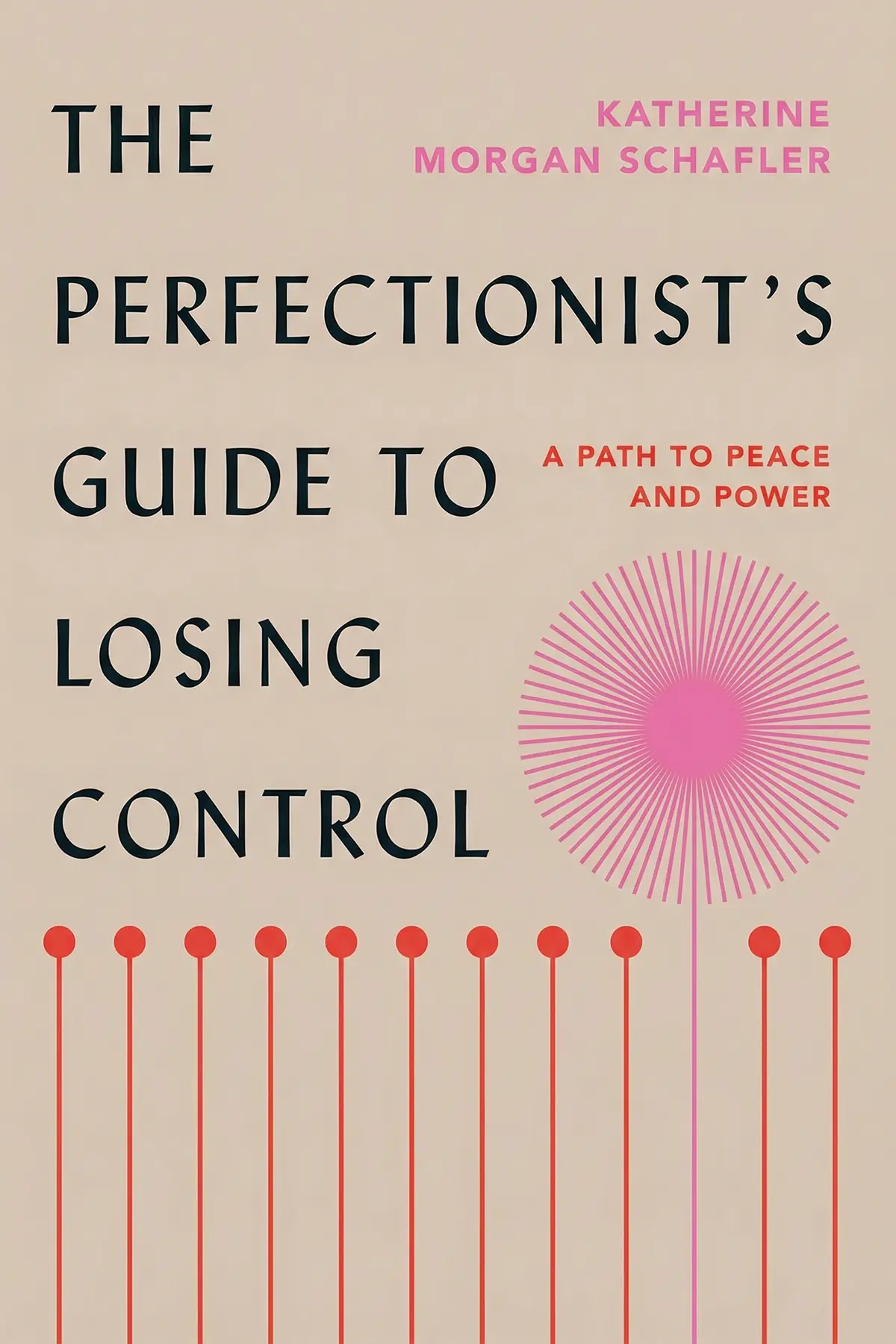
Table of Content
1. Introduction
1 min 14 sec
In a world that often views high standards as a burden or a pathology, we are frequently told that we need to relax, lower our expectations, and accept mediocrity for the sake of our mental health. We are conditioned to see perfectionism as a problem to be solved or a demon to be exorcised. But what if the very drive that pushes you toward excellence isn’t a flaw at all? What if it is actually your greatest source of strength?
This is the core premise we are exploring today. Rather than treating perfectionism as a heavy weight, we are going to look at it as a potent form of energy. The challenge isn’t the drive itself, but how we manage it. When mismanaged, it leads to burnout, anxiety, and a constant sense of failure. But when harnessed effectively, it becomes a superpower that fuels innovation and deep personal satisfaction.
Through this journey, we will move past the superficial advice of just ‘letting go’ and instead look at how to adapt. We will explore the different ways this trait manifests in our lives, the difference between healthy and unhealthy striving, and how to stop the cycle of self-criticism. By the end, you’ll see that you don’t need to lose your drive to find your peace; you just need to learn how to guide the power you already possess.
2. Perfectionism as a Constructive Force
1 min 57 sec
High standards are often labeled as a psychological burden, but they are actually a gift. Learn how to stop viewing your drive as a problem and start seeing it as a unique superpower.
3. The Divide Between Adaptive and Maladaptive Styles
1 min 57 sec
The difference between success and burnout lies in how you relate to your goals. Explore the two primary ways perfectionists handle the gap between reality and their ideals.
4. Identifying the Five Unique Archetypes
2 min 38 sec
Perfectionism doesn’t look the same for everyone. Discover the five distinct profiles and see which one resonates with your personal habits and internal motivations.
5. Breaking the Cycle of Internal Criticism
1 min 55 sec
Many perfectionists use self-punishment as a tool for motivation, but it actually hinders growth. Learn the crucial difference between holding yourself accountable and being your own worst enemy.
6. The Role of Connection and Meaningful Rest
2 min 11 sec
Perfectionism can be an isolating experience, but the key to balance lies in reaching out. Discover why community and restoration are essential for maintaining your high-achieving lifestyle.
7. Conclusion
1 min 18 sec
As we reach the end of this exploration, the most important takeaway is that your perfectionism is not an enemy to be defeated. It is a vital, energetic part of who you are. The journey toward a more peaceful life doesn’t require you to stop caring or to lower the bar for what you want to achieve. Instead, it asks you to change the way you relate to that ‘gap’ between where you are and where you want to be.
By moving from a maladaptive to an adaptive mindset, you replace the heavy chains of self-punishment with the liberating wings of self-compassion. You recognize that you are a complex individual who might fit into several different archetypes, and that each one has unique gifts to offer. You’ve learned that connection with others and intentional restoration aren’t distractions from your goals—they are the very things that make reaching those goals possible.
Remember that this is not a one-time fix, but an ongoing practice. There will be days when the old habits of self-criticism return, and that’s okay. The goal isn’t to be a ‘perfect’ perfectionist. The goal is to keep returning to a place of balance, where you can use your drive to create a life that is not only successful on the outside but rich and fulfilling on the inside. You have the power to bridge the gap; now, you have the tools to do it with grace.
About this book
What is this book about?
The Perfectionist's Guide to Losing Control challenges the conventional wisdom that having high standards is a psychological flaw. Instead of treating perfectionism as a disease to be cured, the book presents it as a natural energy that, when properly channeled, leads to immense creativity and fulfillment. It explores why many people feel stuck in a cycle of self-punishment and how to shift toward a healthier, more constructive way of being. By identifying five distinct archetypes of perfectionism, the book provides a roadmap for understanding one's own tendencies. It promises a transformation from being controlled by your drives to being the one who harnesses them. You will learn to navigate the gap between the ideal and reality without losing your sense of peace, ultimately reclaiming the power that comes with wanting the best for yourself and the world.
Book Information
About the Author
Katherine Morgan Schafler
Katherine Morgan Schafler is a psychotherapist, speaker, and writer. She completed her studies at UC Berkeley and Columbia University. Additionally, she holds a post-graduate certification from the Association for Spirituality and Psychotherapy based in New York City. The Perfectionist’s Guide to Losing Control marks her debut as an author.
Ratings & Reviews
Ratings at a glance
What people think
Listeners describe this work as accessible and articulately composed, offering an all-encompassing roadmap for mental health that assists in leveraging perfectionist tendencies for efficiency. Furthermore, many consider the content transformative, with one listener highlighting how it expanded their worldview, and listeners prize its hands-on methodology and detailed clarifications. Also, the prose is characterized as compassionate, and listeners appreciate the unique lens through which the author views perfectionism.
Top reviews
Mia
Wow. This isn’t your standard “just do less” self-help garbage. For years, I’ve felt like my high standards were a character flaw I needed to excise, but Schafler turns that entire narrative on its head. She argues that perfectionism isn’t a disease to be cured but a power to be channeled, and honestly, that shift in perspective changed everything for me. The way she breaks down the five different types of perfectionists—especially the Procrastinator and the Messy types—made me feel seen in a way I haven't since reading Brene Brown. The writing is incredibly empathetic, almost like sitting in a session with a therapist who actually likes you. It’s a thick book and takes some time to digest, but the practical tools for self-compassion are worth every page. I found myself highlighting entire paragraphs because the insights into why we feel the need to close the gap between ideal and reality were just that profound. If you’re tired of being told to just 'relax,' get this.
Show moreAdam
Finally, a perspective that doesn't treat perfectionism like a disease to be cured! I’ve read so many books that tell me to just 'be okay with average,' and that never worked for me because I genuinely love working and striving for excellence. Schafler is the first author I’ve found who says it’s okay to want things to be perfect, as long as you aren’t tying your self-worth to the outcome. Her background as a Google therapist shines through in how practical and structured her advice is. The book is readable and empathetic, providing a roadmap for channeling that intense energy into something productive rather than self-destructive. I was audibly gasping at some of the case studies because they mirrored my own life so closely. It’s a life-changing read for anyone who identifies as a high achiever but feels like they’re on the verge of burnout. It helped me open up my mind to a new way of existing without losing my edge.
Show moreKofi
After hearing the author on a podcast, I knew I needed the physical copy to highlight, and it did not disappoint. Katherine Morgan Schafler has written something truly life-changing here. She manages to be both clinical and deeply personal, which creates a feeling of safety while you're confronting your own toxic habits. I’ve struggled with the 'Classic' perfectionist profile my whole life, and her advice on how to stop trying to control the outcome and start focusing on the process was exactly what I needed to hear. The book is comprehensive and provides a total guide to mental wellness that feels sustainable. I loved her perspective on how perfectionism is just the desire to close the gap between what is and what could be. That’s a beautiful thing, not a flaw! I’ve already recommended this to three of my friends who are also chronic overachievers. It’s the kind of book you’ll want to revisit every year when you start feeling the burnout creep back in.
Show morePichaya
Ever wonder why you can't just 'relax' even when you're on vacation? This book is the answer. I’ve read dozens of self-help books, but this is easily in my top five. Schafler’s empathetic tone made me feel understood rather than judged. She doesn't tell you to lower your standards; she tells you how to live with them without letting them destroy your happiness. The way she defines the different types of perfectionism is brilliant and helped me identify my own 'Parisian' tendencies. The book is well-written and serves as a comprehensive guide for anyone who feels like they’re constantly chasing an impossible ideal. It’s life-changing to realize that your drive is a gift, not a burden. I’ve been using her strategies for self-compassion for a month now, and the shift in my mental health is palpable. It’s an essential read for anyone who identifies as a perfectionist and wants to find a way to be both ambitious and at peace.
Show moreVilaiporn
Picked this up because the cover was beautiful, but the content actually matched the aesthetic. Katherine Morgan Schafler has an accessible, conversational style that makes complex psychological concepts feel like advice from a smart friend. I really appreciated the specific framework for identifying your perfectionist 'type,' which helped me realize why I get stuck in certain loops. Truth is, I did find the middle section a bit repetitive. It felt like the book could have been about fifty pages shorter without losing much of the core message. Also, it’s very focused on the female experience, which might feel alienating to some readers, though as a woman in a high-pressure career, it resonated deeply with me. It’s a comprehensive guide to mental wellness that doesn't ask you to sacrifice your ambition. Instead, it teaches you how to keep your drive while ditching the soul-crushing self-flagellation that usually comes with it. Definitely a solid 4 stars.
Show moreJiraporn
As someone who has always viewed my high standards as a curse, this felt like a long-overdue exhale. Schafler defines perfectionism with such precision that it’s almost scary. She doesn't just give you vague platitudes; she provides a thorough explanation of the 'why' behind our behavior. I especially liked the distinction between healthy and maladaptive perfectionism. The writing is well-written and life-changing in parts, particularly when she discusses the difference between control and power. However, to be fair, the book does get a little disjointed in the second half. It starts to feel like a collection of separate essays on self-compassion rather than a focused manual. I also noticed the lack of intersectional nuance that some other reviewers mentioned—she touches on gender but ignores how race and class play into the pressure to be perfect. Still, the core message is incredibly empowering for anyone who feels like they’re constantly white-knuckling their way through life. It’s worth the read for the 'type' descriptions alone.
Show moreOat
Look, I’ll admit it: I’m a mess, but this book made me feel like a productive mess. The chapter on the 'Messy Perfectionist' felt like a personal attack in the best way possible. I always thought I couldn't be a perfectionist because my house is a disaster, but Schafler explains that perfectionism shows up in different ways for everyone. Her writing style is accessible and easy to digest, which I appreciated because some of these therapy books can be a real slog. It’s a bit long, and she does tend to ramble in the middle sections about self-compassion, but the core insights are solid. I really liked the practical approach to channeling energy into productivity. It gave me a different perspective on my own brain and helped me realize that I don't need to 'fix' myself—I just need to learn how to manage my intensity. It’s a very life-changing book if you’re willing to put in the work to read through the slower parts.
Show moreKavya
Gotta say, the framework for channeling your energy into productivity is solid. I’ve spent my whole life trying to be 'less'—less intense, less demanding, less focused on the details. Schafler argues that this is a mistake and that we should lean into our nature. It’s a bold take that I really appreciated. The book is very readable, but you have to be prepared for some redundancy. She defines and re-defines perfectionism a lot, which can get a bit tiring if you’ve already grasped the concept. I also found her focus on women to be a bit narrow at times, though I understand that was her intended audience. Despite those minor gripes, the book offers a wealth of practical advice and a refreshing, life-changing perspective. It’s a great resource for anyone looking to understand their own mind better and stop the cycle of self-criticism. Definitely worth picking up a physical copy so you can underline the best bits.
Show moreElise
To be fair, I have very mixed feelings about this one. On one hand, the author's central premise—that we should embrace perfectionism instead of fighting it—is refreshing and unique. I loved the breakdown of the different perfectionist archetypes. On the other hand, the book is much longer than it needs to be. By the 60% mark, it felt like I was wading through a 'word soup' of therapy speak that didn't always connect back to the main point. It’s very much written for a specific demographic (professional women), and the tone can occasionally come across as a bit condescending. There were a lot of broad strokes and generalizations about how 'men never do this' or 'perfectionists always do that' which lacked nuance. You can definitely find some nuggets of wisdom here, but you have to be willing to skim through a lot of redundant filler to get to them. It’s an interesting concept that probably would have worked better as a long-form article or a much tighter, 150-page book.
Show moreGioia
Not what I expected based on the glowing recommendations. While the cover is well-designed, the actual content felt scattered and surprisingly exclusive. My biggest issue is how much the author relies on generalizations. She constantly makes claims like 'Men never describe getting older this way,' which felt reductive and unnecessary. For a book about psychology, there’s a shocking lack of nuance regarding how different social identities affect our relationship with perfectionism. It also felt very repetitive; I felt like I was reading the same three points rewritten in twenty different ways just to fill up the page count. I kept waiting for actionable insights or success stories, but instead, I got a lot of 'ra-ra' cheerleading and vague mentions of self-compassion. I eventually DNF’d at 40% because it just wasn't helpful. If you’re looking for a rigorous, inclusive look at perfectionism, I’d suggest looking elsewhere. This felt more like a virtual retreat for a very specific social class than a universal guide.
Show moreReaders also enjoyed

A High-Performing Mind: Strengthen Your Mind and Live Your Best Life
Andrew D. Thompson
Alcoholics Anonymous
Alcoholics Anonymous World Services
Abundance: The Inner Path to Wealth
Deepak Chopra
A Liberated Mind: How to Pivot Toward What Matters
Steven C. Hayes
AUDIO SUMMARY AVAILABLE
Listen to The Perfectionist’s Guide to Losing Control in 15 minutes
Get the key ideas from The Perfectionist’s Guide to Losing Control by Katherine Morgan Schafler, plus 5,000+ more titles in English and Thai.
- 5,000+ titles
- Listen as much as you want
- 7-day free trial
- Cancel anytime







