

17 min 42 sec
The Power of a Positive Team: Proven Principles and Practices that Make Great Teams Great
By Jon Gordon
Discover the essential principles for building high-performing teams. This guide explores how positivity, clear communication, and a culture of shared commitment can transform any group into a powerhouse of collaborative success.
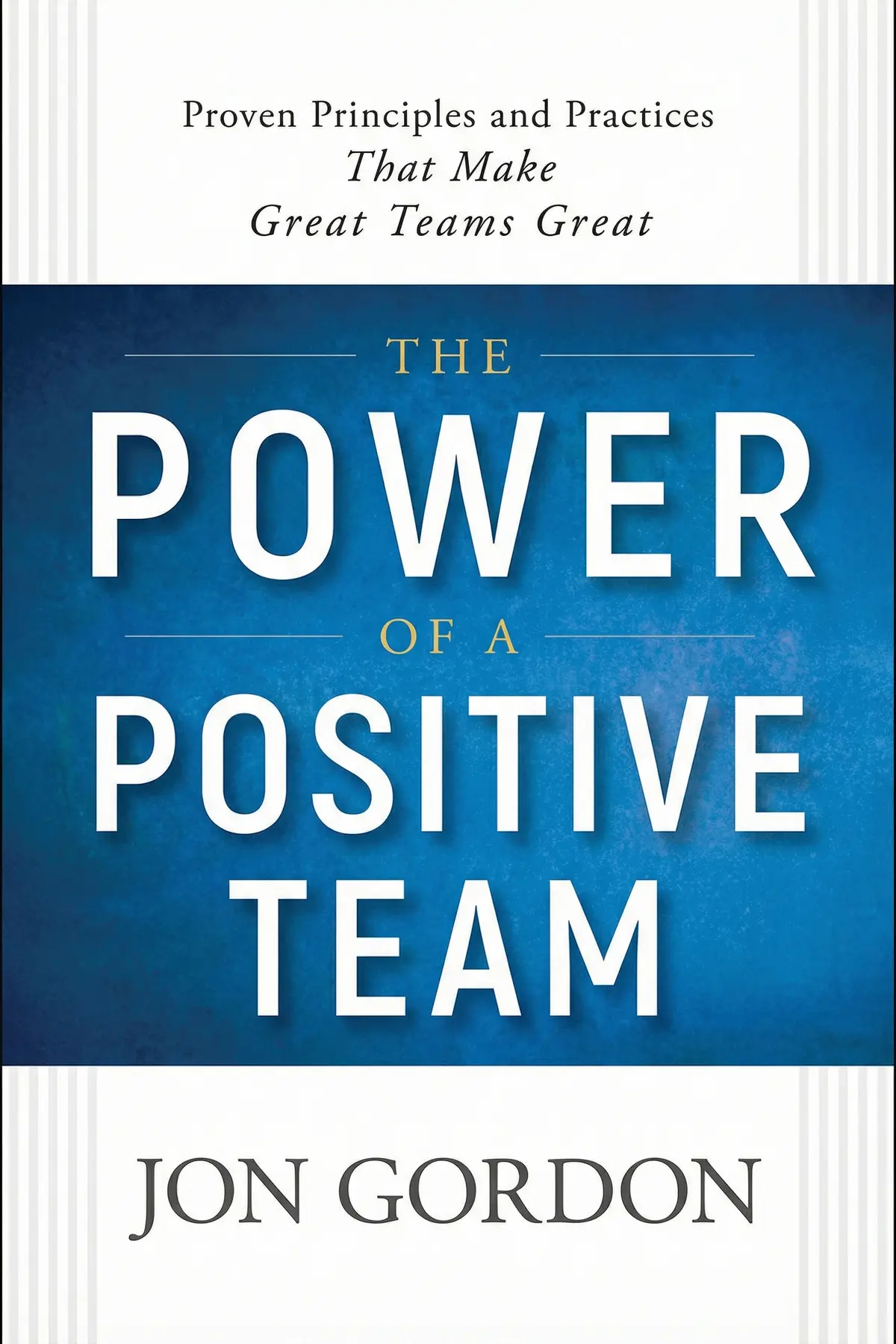
Table of Content
1. Introduction
1 min 39 sec
We often look at championship-winning sports teams or world-changing tech giants and assume their success is simply a byproduct of gathering the most talented individuals in a single room. We see the star quarterback or the visionary CEO and think that brilliance is the primary engine of progress. However, if you look closer at the history of failed enterprises and dysfunctional locker rooms, you’ll find they are often littered with talented people who simply couldn’t work together. The truth is that talent is just the starting point. What actually determines whether a group of people will thrive or crumble under pressure is a much more intangible force: the power of a positive team.
In the following discussion, we are going to explore why positivity isn’t just a feel-good cliché, but a functional requirement for high performance. We’ll look at the specific behaviors and mindsets that allow a group to move beyond a collection of individuals and become a single, unstoppable unit. This isn’t about ignoring reality or pretending that problems don’t exist; rather, it’s about a deliberate commitment to a shared vision and a refusal to let negativity dictate the group’s direction.
We’ll delve into the foundational role of culture, the necessity of closing communication gaps, and the transformative effect of moving from a ‘me’ mentality to a ‘we’ mentality. Whether you are leading a massive corporation, coaching a local sports team, or simply trying to improve the dynamics of your family, the principles we’re about to cover offer a roadmap for creating an environment where everyone can perform at their best. By the end of this journey, you’ll understand why the most successful teams in the world prioritize their internal connection just as much as their external strategy.
2. The Competitive Advantage of Optimism
2 min 33 sec
Explore why a positive outlook is more than just a personality trait—it’s a scientifically backed predictor of success for both leaders and their organizations.
3. Culture as the Team’s Beating Heart
2 min 32 sec
Understand why a strong organizational culture is the silent engine that drives every successful strategy and decision.
4. The War Against Negativity
2 min 29 sec
Learn how high-performing teams identify and eliminate toxic energy before it can compromise their shared goals.
5. Closing the Communication Void
2 min 10 sec
Discover why digital connectivity often masks deep disconnection and how to restore the vital flow of clear, face-to-face communication.
6. From Individual Talent to Collective Commitment
2 min 20 sec
Examine how true greatness is achieved only when individuals surrender their personal egos for the sake of the team’s mission.
7. The Pursuit of 1 Percent Improvement
2 min 15 sec
See how the most successful teams avoid complacency by embracing a culture of continuous, incremental growth.
8. Conclusion
1 min 44 sec
As we wrap up our look at the dynamics of high-performing groups, the throughline is clear: the strength of a team is not found in its individual parts, but in the connections between them. A positive team is a choice. It is a daily decision to prioritize optimism over cynicism, communication over silence, and the collective ‘we’ over the individual ‘me.’ We’ve seen how culture acts as the heartbeat of success and how a commitment to addressing negativity head-on can change a team’s entire trajectory.
If there is one actionable takeaway to carry forward, it is the idea that ‘care comes before criticism.’ In any high-functioning team, people need to be able to give and receive honest feedback to improve. However, that feedback only lands effectively when it is rooted in a foundation of genuine care. If your teammates know that you are invested in their success and that you truly value them as people, they will welcome your challenges. Without that care, criticism feels like an attack, leading to defensiveness and division.
So, start by building those bonds of trust. Show up with the intention of being the most positive person in the room, not because you are ignoring the difficulties, but because you have the courage to face them with your team. Implement the 1 percent rule in your own life and encourage your colleagues to do the same. By fostering an environment of continuous growth, clear communication, and unwavering support, you won’t just build a better team—you’ll create a culture where everyone has the opportunity to achieve something truly great. Remember, the journey to excellence is never a solo mission; it is a shared endeavor, powered by the incredible strength of a unified, positive team.
About this book
What is this book about?
The Power of a Positive Team is an exploration of what truly makes a group of people function at the highest possible level. While many organizations focus solely on talent or strategy, this book argues that the real differentiator is the emotional and cultural foundation of the team. It provides a roadmap for leaders and members alike to foster an environment where optimism is the default and negativity is actively managed. Through various real-world examples from the worlds of business and professional sports, the book promises to reveal how to close communication gaps, build deep-seated trust, and maintain a relentless pursuit of excellence. It offers practical tools like the No Complaining Rule and the 1 Percent Rule to help teams navigate challenges and stay connected even under immense pressure. Ultimately, the book serves as a manifesto for the idea that great things are never achieved in isolation, but through the collective power of a unified, positive group.
Book Information
About the Author
Jon Gordon
Jon Gordon is an author and expert on the subjects of teamwork, leadership and culture. He has worked for a number of athletic organizations and corporations, and his work has featured in the New York Post, the Wall Street Journal and the Washington Post.


Ratings & Reviews
Ratings at a glance
What people think
Listeners consider this title an exceptional tool for fostering team unity, especially for those in coaching roles, and value the actionable tips that work across different environments. The material is packed with stories and offers useful perspectives, with one listener highlighting its effectiveness as a manual for leadership. Listeners commend the writer’s contributions and feel the concepts are simple to implement, ultimately resulting in enhanced group productivity.
Top reviews
Ratree
Jon Gordon delivers exactly what you'd expect: high-energy, actionable advice for anyone leading a group. I've been a fan of The Energy Bus for years, but this felt like a more mature evolution of those core principles. Truth is, most teams fail because they ignore the culture, and Gordon provides a solid blueprint to fix that. The anecdotes about the Navy SEALs and various sports teams really drive home the point that excellence isn't an accident. While some might find the tone a bit too optimistic, I think that’s exactly what’s missing in today’s cynical corporate world. It is a quick read that you can actually implement tomorrow morning during your stand-up meeting. Great for those who want to foster real connection.
Show moreNang
Ever wonder why some teams just 'click' while others fall apart at the first sign of trouble? This book answers that question by focusing on the intangible elements of connection and commitment that make or break a group. Jon Gordon has a gift for taking complex social dynamics and distilling them into simple, memorable mantras that stay with you long after you close the book. I loved the emphasis on purpose over rules; page 124 really hit home about how demands often lead to oppression rather than inspiration. We are actually planning to buy copies for the entire department to read as a group study. It is easily one of the most impactful team-building resources I've found this year.
Show moreSeksan
Picked this up on a recommendation from a fellow coach and it absolutely lived up to the reputation. The examples from the Clemson football team and the Miami Heat provided a perfect roadmap for how to handle the inevitable egos and setbacks that come with high-stakes competition. Gordon’s focus on the 'Power of a Positive Team' isn't about ignoring the negative, but about building a culture strong enough to survive it. The book is incredibly easy to read and the practical tools for building trust are something every leader should have in their toolkit. If you want your team to move from a group of individuals to a united front, buy this today. It is truly an outstanding resource.
Show moreChanida
Wow, this was exactly the jolt our department needed after a really rough year of transitions and uncertainty. The book provides a clear blueprint for addressing common pitfalls like complaining and selfishness without sounding like a lecture. I found the section on 'refining vs. defining' feedback to be particularly transformative for our performance review process. It’s a quick read, but the impact of the stories—from Navy SEALs to the Billions writing team—is lasting. This is the kind of book that works best if the whole team reads it together to get on the same page. Highly recommend for any leader who wants to cultivate a more resilient and positive office culture.
Show moreKob
After hearing so much about Gordon’s work, I finally dove into this one during our quarterly retreat. The framework he provides for overcoming negativity is practical, even if it feels a little familiar to those who have studied leadership before. I particularly appreciated the section on having difficult conversations; it's a skill my team really struggles with. Frankly, there are a lot of sports references which might alienate non-fans, but the underlying message about 'The Power of We' is universal. My only real gripe is that it feels a bit repetitive in the middle chapters. Still, it’s a valuable resource for any coach or manager looking to boost morale and create a more cohesive environment.
Show moreIsabelle
As someone who manages a small corporate team, I found the chapters on transforming negativity particularly useful for our current office dynamic. Gordon emphasizes that positive teams don't just ignore problems, but rather they confront reality together to find a way forward. I took several pages of notes on how to foster better communication and shared many of the quotes with my staff. Some parts of the book definitely felt a bit repetitive, and the author does reference his own previous books quite a bit. However, the 'self-study' guide format makes it very easy for a group to read this together and discuss the concepts. It's a solid 4-star read for anyone needing a culture reset.
Show moreThitima
Finally got around to reading this and I think the biggest takeaway is the concept of 'connectedness' being more important than just following a set of rules. The author explains that when people are connected to a shared purpose, they don't need to be micro-managed. I’ll admit that the constant self-promotion of his other titles got a little annoying after a while. However, the core principles are sound and I found myself highlighting several passages to turn into posters for our breakroom. It’s a great guide for anyone who wants to move away from a 'demand and control' leadership style. A very solid, albeit slightly repetitive, addition to any leadership library for those looking to improve performance.
Show moreMethinee
To be fair, the message here is undeniably good, but the execution felt a bit thin for my taste. The book is filled with anecdotal evidence from winning sports teams, which is fine, but I would have loved to see some actual research or data to support the claims. Everything is very 'rah-rah' and optimistic, which can be great for motivation, but it lacks the grit needed for truly toxic environments. I also noticed that Gordon repeats himself quite a bit, making me feel like this could have been a very long blog post instead of a full book. It's not a waste of time by any means, but it isn't groundbreaking either. Decent for a quick shot of inspiration.
Show morePairot
Not what I expected given the massive hype and all the five-star reviews surrounding this title. To be honest, I found the content to be largely oversimplified kumbaya drivel that lacks any real scientific backing or data-driven studies. It seems like the author is just recycling the same three ideas across twenty different books to keep the royalty checks coming in. If you have never had a leadership training in your life, you might find a nugget of gold here, but for most professionals, it's just surface-level fluff. The sports examples are constant and frankly, they start to feel very one-dimensional after the first fifty pages. I’d suggest looking elsewhere for something with more meat on its bones.
Show moreRosa
Look, I really wanted to like this because I’m a fan of positive psychology, but it felt more like a commercial for the author’s speaking business. The writing style is very elementary and the advice is so surface-level that it becomes almost meaningless for a seasoned professional. 'Love each other' and 'get on the bus' are nice sentiments, but they don't help much when you're dealing with budget cuts or complex structural issues. It’s a very short read, which is its only saving grace, but I’d recommend spending that hour on a book with more depth. I truly don't understand how this has such a high rating when it offers so little substance. Hard pass for me.
Show more
Readers also enjoyed

7 Powers: The Foundations of Business Strategy
Hamilton Helmer

A Bigger Prize: How We Can Do Better Than the Competition
Margaret Heffernan



A Year with Peter Drucker: 52 Weeks of Coaching for Leadership Effectiveness
Joseph A. Maciariello


AUDIO SUMMARY AVAILABLE
Listen to The Power of a Positive Team in 15 minutes
Get the key ideas from The Power of a Positive Team by Jon Gordon, plus 5,000+ more titles in English and Thai.
- 5,000+ titles
- Listen as much as you want
- 7-day free trial
- Cancel anytime







