

14 min 25 sec
Difficult Conversations Don’t Have to Be Difficult: A Simple, Smart Way to Make Your Relationships and Team Better
Master the art of high-stakes communication with a six-step framework designed to resolve conflict. Learn to replace avoidance with productive dialogue to strengthen your professional teams and personal relationships through empathy and clear action.
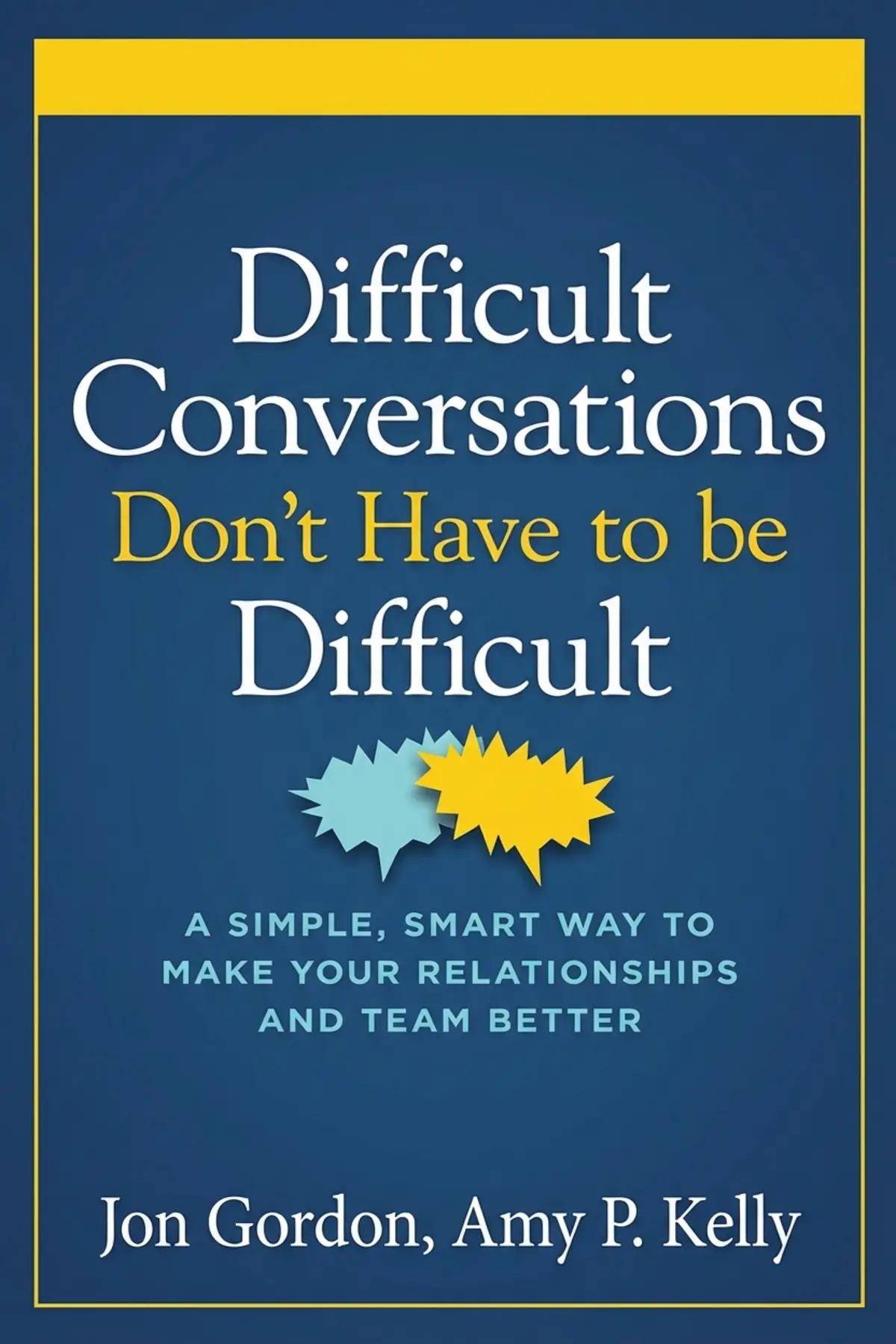
Table of Content
1. Introduction
1 min 14 sec
We have all been there—that sinking feeling in the pit of the stomach when we know a confrontation is inevitable. Perhaps it is a colleague who is consistently missing the mark, or a family member whose behavior has become a source of silent resentment. Our natural instinct is often to run the other way. We convince ourselves that if we just wait long enough, the issue will resolve itself or the tension will simply dissipate. But as we often discover too late, silence is not a solution; it is a catalyst for deeper problems.
The throughline of this summary is that difficult conversations are not just a hurdle to be jumped—they are an essential skill set for building healthy, high-performing teams and resilient personal bonds. By moving away from avoidance and toward a structured, empathetic framework, we can strip the fear out of these interactions. You are about to learn how to navigate the complexities of human disagreement with a simple, smart method that turns potential blow-ups into breakthroughs. This is not about winning an argument or asserting dominance; it is about finding a path forward where everyone feels heard and respected. Over the next several segments, we will break down the specific steps required to prepare, execute, and follow through on the talks that matter most, transforming the way you connect with the people in your life.
2. The Hidden Price of Avoidance
1 min 56 sec
What happens when we stay silent to keep the peace? Explore the cascading negative effects that avoidance has on team morale, productivity, and personal trust.
3. Creating the Right Environment
1 min 46 sec
Success begins before you say a single word. Discover why setting the stage and clarifying your intentions are the critical prerequisites for any productive dialogue.
4. Speaking Your Truth with Clarity
1 min 47 sec
Learn how to express your concerns without triggering defensiveness. The secret lies in focusing on specific observations and the consequences they create.
5. The Power of Active Listening
1 min 34 sec
Communication is a two-way street that requires more than just waiting for your turn to talk. Uncover the techniques that make others feel truly heard.
6. Reflecting and Seeking Confirmation
1 min 43 sec
Bridging the gap between what is said and what is heard is vital. Learn the art of paraphrasing to ensure both parties are on the same page.
7. Moving Toward Resolution and Resetting
1 min 31 sec
A conversation without a plan is just a complaint session. Discover how to transition from discussing the past to designing a better future.
8. Reinforcement and the STARRR Method
1 min 44 sec
The work doesn’t end when the meeting is over. Explore how to sustain change and apply a specialized model for team-wide conflict resolution.
9. Conclusion
1 min 10 sec
In the end, the most important thing to remember is that the difficulty of a conversation is often a reflection of the value of the relationship. We don’t have hard talks with people we don’t care about; we have them because the outcome matters. By following the framework of setting the stage, telling your truth, listening actively, reflecting for clarity, and moving toward a collaborative resolution, you are doing more than just solving a problem—you are building trust.
You now have the tools to stop avoiding and start engaging. Remember that a difficult conversation is not a sign of failure, but an opportunity for growth. Whether you are leading a corporation or raising a family, the quality of your life is determined in large part by the quality of your communication. Take these strategies and apply them to that one conversation you have been putting off. You might find that once you stop running, the ‘difficult’ part of the conversation starts to disappear, replaced by a sense of relief, understanding, and a clear path toward a better future. The journey to a better team and a better relationship starts with the courage to speak up and the wisdom to listen.
About this book
What is this book about?
This summary explores the heavy burden of avoiding necessary conflict and provides a clear roadmap for turning confrontation into collaboration. It addresses the emotional and professional costs of silence—from toxic workplaces to strained family bonds—and offers a structured approach to speaking your truth while maintaining respect. The promise of this guide is a total transformation in how you view challenges. Instead of seeing a difficult conversation as a threat, you will learn to see it as a strategic tool for growth. By applying steps like setting the right environment, practicing deep active listening, and establishing mutual resolutions, you can move past resentment. Whether you are a manager dealing with a performance issue or a parent trying to reconnect with a child, this framework provides the tools to navigate tension with grace and achieve results that benefit everyone involved.
Book Information
About the Author
Jon Gordon
Jon Gordon is a bestselling author, speaker, and consultant specializing in leadership, teamwork, and positive culture. His notable works include The Energy Bus and The Power of Positive Leadership. His principles are utilized by Fortune 500 companies and professional sports teams worldwide. Amy P. Kelly is a certified professional coach, speaker, and trainer with over 20 years of experience in leadership development and organizational effectiveness, helping both small businesses and large corporations improve communication and navigate change.

Ratings & Reviews
Ratings at a glance
What people think
Listeners find this book accessible and straightforward, featuring an exceptional core message that fosters greater trust and cohesion. The advice is highly actionable, as one listener points out its usefulness in both professional and private settings. On the other hand, the storytelling receives varied reviews, with several listeners describing the plot as contrived. Furthermore, opinions remain divided regarding the depth of the characters and the overall length of the work.
Top reviews
William
After hearing so many colleagues mention Jon Gordon's fables, I finally picked this one up to help with some recent friction in my department. It’s a very quick read. Only eighty-five pages total. That makes it perfect for busy managers who don't have time for a four-hundred-page academic text or a dense psychological study. The core message revolves around the idea that trust and truth are the only way to move past the roadblocks that inevitably stall team progress. I loved the Star3 model, especially the focus on putting the mission before the ego. Some might find the story a bit simplistic, but that simplicity is exactly what makes it easy to implement. We’ve already started using the Rules of Engagement. It is helping. Our team is finally managing emotional energy without resorting to personal attacks.
Show moreGoy
Truth and trust over time lead to transformation—that was my biggest takeaway from this fantastic little guide. I’ve always struggled with the elephant in the room. I usually prefer to ignore it until things reach a breaking point. This book gave me the courage to deal with those elephants by providing a structured approach that feels less intimidating. The examples of Michael and Jenna working through project delays were particularly helpful for me to visualize how active listening works in practice. It’s not just about talking. It is about reflecting and responding with genuine empathy. Gordon and Kelly have created something that is easy to digest but carries a phenomenal message about unity. This should be required reading for any leader who wants to build a healthier, more transparent culture.
Show moreOoi
In my experience, the biggest roadblock to organizational success isn't a lack of talent, but a lack of honest communication. This book addresses that head-on with the Star3 model. I love the emphasis on "Small Ego, Big Mission." When everyone on the team adopts that mindset, the difficult part of the conversation starts to melt away. Everyone knows the goal is collective improvement, not personal attack. The STARRR method is also a great way to keep the discussion focused on facts and results rather than getting bogged down in messy emotions. I’ve seen so many projects fail for the exact reasons Priya’s did in the story. It might be a short book, but the lessons on reinforcing and following up are essential for long-term trust. It's a great tool.
Show morePatchara
This book is a concise, powerful reminder that avoiding conflict only breeds toxicity in the workplace. I know some people hate the fable format, but I actually found the story of Marcus and the team quite relatable. We’ve all been in those situations where we know we need to speak up but are afraid of the fallout. The authors show that by using a structured method—Setting the stage, telling your truth, listening, and resolving—you can actually strengthen a relationship through conflict. I especially liked the part about acknowledging the emotions of others. It’s such a simple thing, but so many of us skip it. It took me less than an hour to finish. I’ve been thinking about the "root vs. fruit" analogy all week. Highly recommended for a quick culture reset.
Show moreSamira
The STARRR method outlined in these pages is a remarkably practical tool for anyone struggling to give honest feedback. I specifically appreciated the section on "setting the stage" before jumping into the truth-telling part of a talk. It’s so easy to forget that timing and location matter as much as the words you choose! While the fable format is a bit cheesy, it does help illustrate how avoidance can lead to a toxic environment. My only gripe is that the "perfect world" scenarios feel a bit unrealistic compared to the messy reality of corporate life. In my experience, people aren't always as receptive as the characters in this book. Still, the emphasis on active listening and asking clarifying questions is a great reminder for all of us. It is a solid resource for team building.
Show moreNang
Ever wonder why some teams can handle massive setbacks while others fall apart at the first sign of conflict? This book argues that it all comes down to the "we" being bigger than the "me." I found the Star3 model particularly insightful, specifically the "Assume Positive Intent" rule. It’s a game-changer when you stop taking things personally and start focusing on the root of the problem. Look, the storytelling isn’t going to win any Pulitzer Prizes. It is definitely a bit on the sappy side. However, the underlying principles are sound and easy to remember. The authors do a great job of explaining how unresolved issues eventually become roadblocks that stop all progress. It’s a fast read, which I appreciate. I’d recommend it for a team read-along to get everyone on the same page quickly.
Show moreArthit
Picked this up on a whim during a particularly stressful week at the office, and I’m glad I did. I was actually facing a difficult conversation with a direct report and used the "setting the stage" tips immediately. I made sure to choose a neutral space and checked my own intentions before we sat down. To my surprise, the conversation went much better than I anticipated! The book’s focus on being transparent and leading with trust really resonated with me. While I do think the story of the characters is a bit Hallmark-esque and simplified, the practical praxis is there. It’s a short, accessible read that you can apply to both your professional and personal life. I wish there were more examples of handling truly difficult people who refuse to cooperate.
Show moreKenji
As someone who deals with high-stakes negotiations, I found the advice in this book to be a bit of a mixed bag. On one hand, the STARRR framework is a very logical way to structure a tough talk. On the other hand, the delivery via a fictional fable made me cringe more than a few times. It’s very much in the vein of "The Goal," but hyper-simplified to the point of being a bit patronizing. The marketing feel of the Star3 method also felt a bit much. Truthfully, there isn’t much new information here if you’ve already read other books on communication. It’s a good refresher, but don't expect a deep psychological breakthrough. Three stars for the practical takeaways buried in the fluff. It is okay, but not ground-breaking.
Show moreBrahim
Not what I expected when I bought a book about "difficult conversations." The title suggests a deep dive into communication theory, but it’s actually a very short, allegorical story that feels more like a children’s bedtime story than a business guide. I found the narrative about Priya and her team to be incredibly artificial. It’s hard to stay engaged when characters feel like cardboard cutouts designed only to deliver a specific moral lesson. To be fair, the STARRR method included at the end is a decent framework. You could get all the value by reading the last five pages. The rest is just fluff and large font sizes. It feels like they tried to turn three pages of actual content into a full-priced book. If you want a Hallmark movie in book form, this is for you.
Show moreHang
Frankly, I feel like this was a complete waste of money given that the entire book is barely eighty-five pages long. It’s more of a pamphlet with an oversized font than an actual business guide. The parable style feels incredibly lazy here. It is almost as if it were written in an hour just to get people to sign up for a keynote speaker session. There is absolutely no character development. The solutions offered are kept at a 30,000-foot level without any real-world nuance or grit. It’s frustrating because communication is so important. This book just glides over the surface. The idea that a security guard's random advice would solve a CEO's problems is just silly. I didn't find any value here that I couldn't have found in a two-minute blog post online.
Show moreFeatured in

Readers also enjoyed
A Year with Peter Drucker: 52 Weeks of Coaching for Leadership Effectiveness
Joseph A. Maciariello


Acting with Power: Why We Are More Powerful Than We Believe
Deborah Gruenfeld

All In: How Great Leaders Build Unstoppable Teams
Mike Michalowicz
AUDIO SUMMARY AVAILABLE
Listen to Difficult Conversations Don’t Have to Be Difficult in 15 minutes
Get the key ideas from Difficult Conversations Don’t Have to Be Difficult by Jon Gordon, plus 5,000+ more titles in English and Thai.
- 5,000+ titles
- Listen as much as you want
- 7-day free trial
- Cancel anytime







