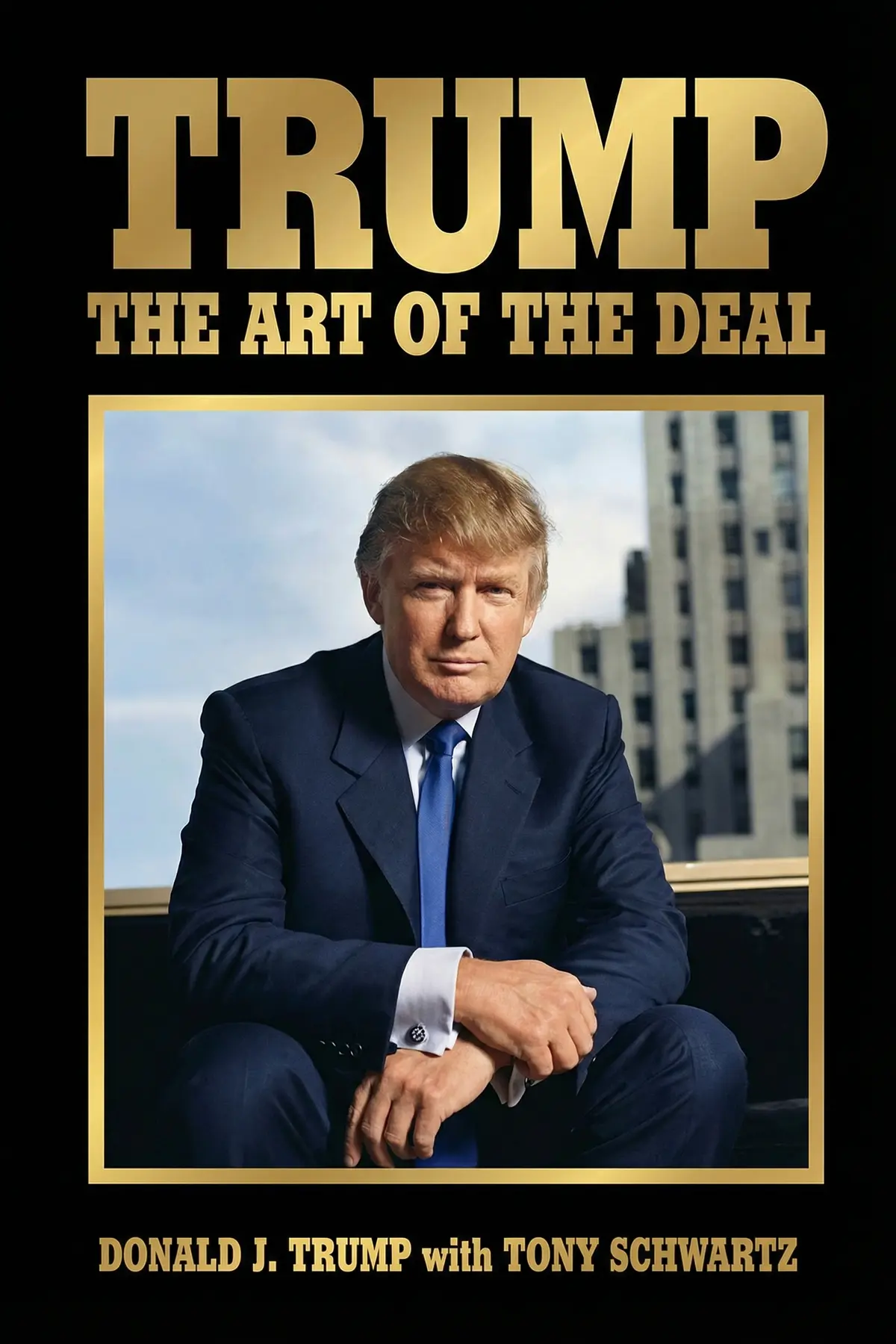
Trump: The Art of the Deal: The Art of the Deal
Donald J. Trump
Discover why managing energy, not time, is the secret to peak performance. This summary explores how balancing stress and recovery across physical, emotional, mental, and spiritual levels leads to lasting success.
2 min 23 sec
We live in a world that is obsessed with the clock. From the moment we wake up, we are checking our schedules, counting our minutes, and trying to figure out how to squeeze just one more task into an already overflowing day. We’ve been told that the secret to success lies in time management. If we can just become more efficient with our hours, we believe we will finally reach that elusive state of peak performance. But there is a fundamental flaw in this logic. No matter how much we optimize our calendars, we only have twenty-four hours in a day. Time is a finite, fixed resource. When we treat our lives like a marathon that never ends, we don’t become more productive; we simply become more exhausted.
What if the real key to high performance isn’t the time you spend working, but the energy you bring to that time? This is the core premise of the approach developed by Jim Loehr and Tony Schwartz. In their view, energy, not time, is the fundamental currency of high performance. When you are fully engaged, you aren’t just putting in hours; you are bringing your whole self—your body, your emotions, your mind, and your spirit—to the task at hand. This summary will take you through a journey of personal renewal, showing you how to move away from the frantic pursuit of more time and toward the intentional management of your energy reserves.
You’ll learn why pushing through fatigue is a recipe for failure and how a well-timed break can actually make you faster and sharper. We’ll explore the four distinct types of energy that fuel your life and how to strengthen each one like a muscle. Along the way, we’ll discover why your best ideas often show up when you aren’t trying to think of them, and how connecting your daily tasks to a deeper sense of purpose can provide an inexhaustible source of motivation. By the end, you’ll see how to build a life of full engagement where work and personal fulfillment aren’t in competition, but are instead two sides of the same thriving coin. It’s time to stop managing your minutes and start mastering your energy.
2 min 36 sec
Think time is your most valuable resource? Learn why energy is the true driver of efficiency and why working longer hours often leads to diminishing returns.
2 min 48 sec
High performance requires more than just physical stamina. Discover the four interconnected energy sources that determine how well you function every day.
2 min 34 sec
Living like a marathon runner is a recipe for burnout. Learn how to adopt the ‘corporate athlete’ mindset by balancing stress with recovery.
2 min 43 sec
Your body is the engine that drives your productivity. Learn the three critical pillars of physical energy that most people overlook.
2 min 33 sec
Negative emotions are energy vampires. Discover how to tap into positive emotional renewal to stay energized even under pressure.
2 min 31 sec
Ever wonder why your best ideas come in the shower? Learn how to balance the two sides of your brain for maximum mental clarity.
2 min 26 sec
Spiritual energy isn’t just about religion—it’s about the ‘why’ behind your work. Discover how a sense of purpose can fuel your drive.
2 min 30 sec
Values are only meaningful when they are lived. Learn how to define your personal compass and create a vision for your life.
2 min 34 sec
Willpower is a finite resource that we often over-rely on. Discover how to create positive rituals that make high performance automatic.
2 min 13 sec
As we have explored, the journey toward peak performance and personal renewal isn’t about finding more hours in the day. It’s about a fundamental shift in how we manage ourselves. We’ve seen that energy is the true driver of efficiency, and that by honoring the natural pulse of stress and recovery, we can achieve far more than we ever could through sheer endurance. We have looked at the four essential dimensions of energy—physical, emotional, mental, and spiritual—and how each one must be nurtured and protected to maintain full engagement.
The throughline of this approach is that we must treat ourselves not as machines to be driven, but as precious systems to be managed. This means fueling our bodies with the right food and rest, cultivating a positive emotional environment, training our minds for focus, and anchoring everything we do in a deep sense of purpose. When these elements come together, we no longer find ourselves dragging through our tasks or collapsing at the end of the day. Instead, we find a sense of vitality and presence that extends into every area of our lives.
To move forward, start by identifying one area where your energy is most depleted. Is it your physical health? Your emotional resilience? Your sense of purpose? Once you’ve identified that area, create one simple ritual to begin addressing it. It could be as small as taking a ten-minute walk every afternoon or writing down your core values. Remember that high performance is not a destination, but a way of living. By making the choice to manage your energy rather than your time, you are choosing a life of greater productivity, deeper satisfaction, and true, lasting engagement. The clock will always keep ticking, but you now have the tools to ensure that every second is filled with the best of what you have to offer.
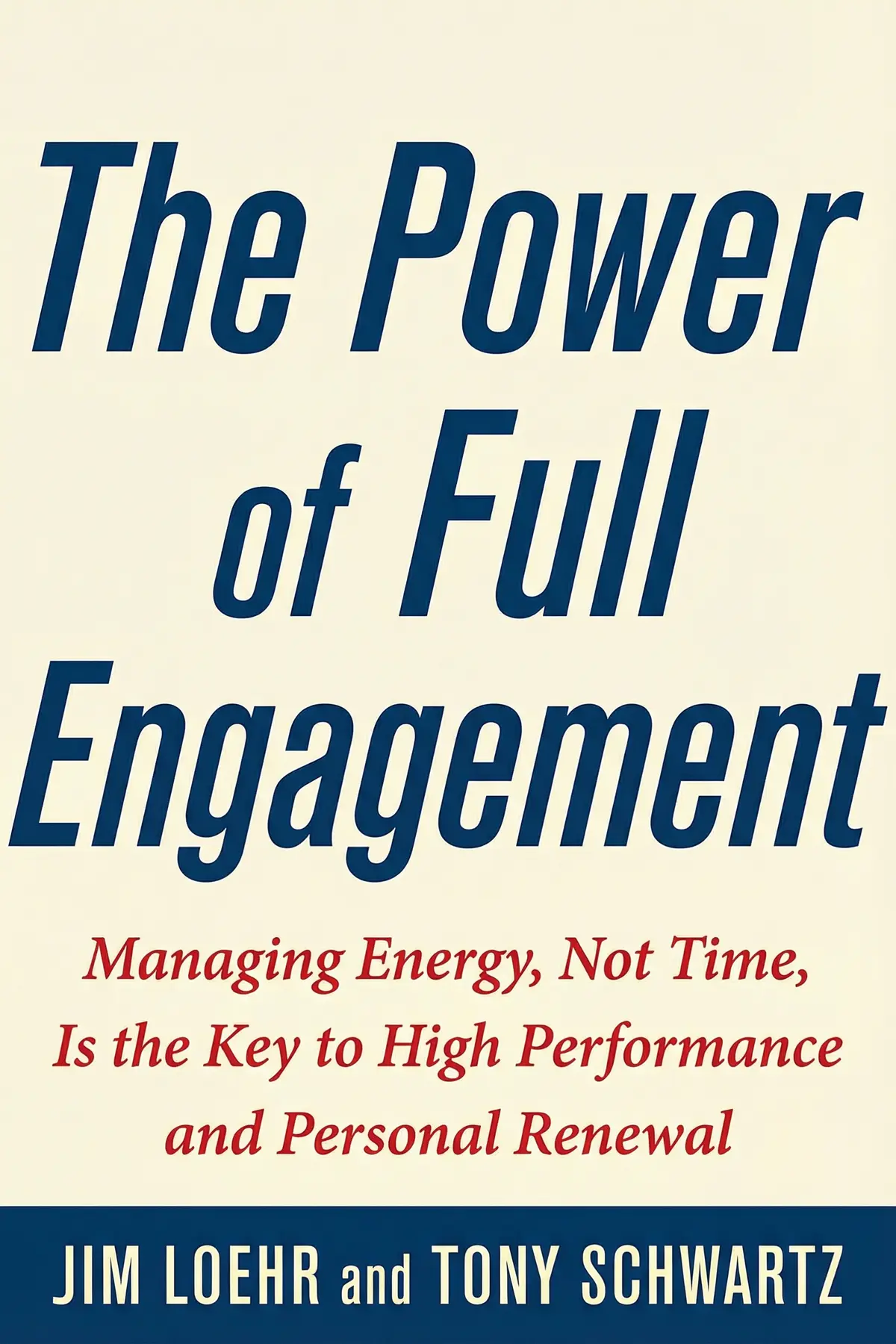
Most professionals are caught in a cycle of constant work, believing that managing their schedules more tightly is the only way to get ahead. However, The Power of Full Engagement argues that time is a finite resource, while energy is renewable. By shifting focus toward how we fuel and refresh our personal energy, we can achieve higher levels of productivity and fulfillment. The book outlines a four-dimensional energy model: physical, emotional, mental, and spiritual. It teaches readers how to navigate the rhythms of stress and recovery, much like an elite athlete. By establishing powerful rituals and aligning daily actions with deep personal values, anyone can overcome burnout and reach their full potential without sacrificing their personal life or health.
Jim Loehr is a world-renowned performance psychologist and the CEO of LGE Performance System. His groundbreaking research has helped elite athletes and business leaders achieve peak performance under pressure. Tony Schwartz is the founder of The Energy Project, an organization dedicated to improving workplace productivity by focusing on the energy needs of employees and their companies.
Donald J. Trump
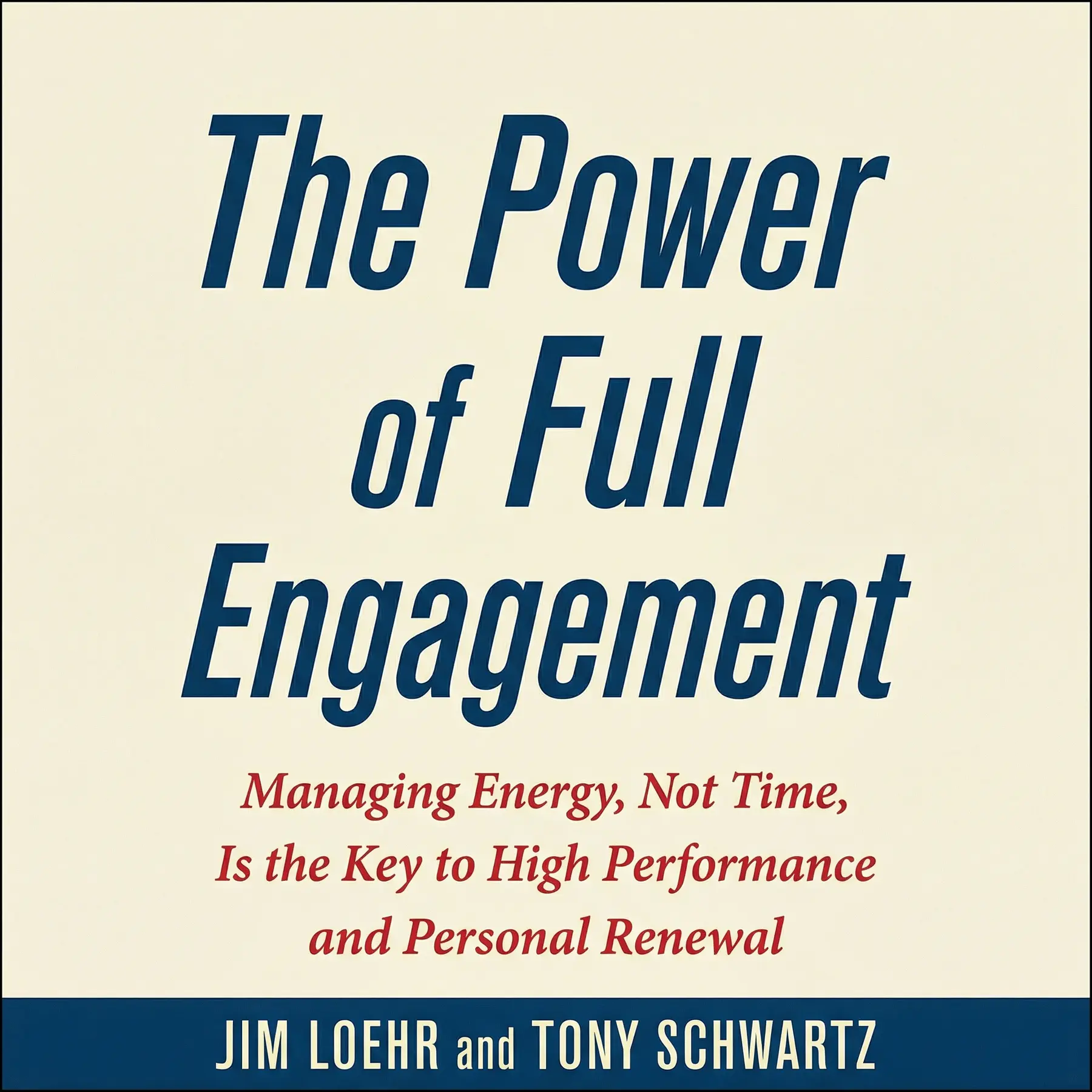
Listeners find this work captivating and simple to grasp, commending its thoroughly researched material and insightful details. Furthermore, the book offers actionable advice on managing energy, with one listener observing that connecting energy use to personal values and goals results in improved performance. Listeners also value how the writing facilitates emotional restoration and healing, with one pointing out its emphasis on self-confidence as a vital muscle for generating positive emotional energy.
Finally got around to reading this classic, and I must admit that the core premise of managing energy instead of time is life-altering. While the writing style definitely feels like a product of the early 2000s, the actionable steps regarding rituals are timeless. I used to think that pushing through a twelve-hour day was a badge of honor, but now I understand the 'corporate athlete' concept much better. Truth is, if you don't schedule your recovery, your body will eventually schedule it for you in the form of a total collapse. It is a harsh reality. By focusing on physical, emotional, and mental renewal, I've managed to get more done in fewer hours. This is an essential read for anyone who feels like they are constantly running on empty.
Show moreThis book completely reframed how I approach my workday by highlighting that energy, not time, is our most precious resource. I love the idea that we need to treat our lives like a series of athletic events rather than one long, grueling slog. The sections on emotional renewal and self-confidence were particularly eye-opening for me because I usually neglect those 'muscles' in favor of raw logic. Frankly, it’s a bit repetitive, but the core message is so vital that I didn’t mind the extra emphasis on their specific methodology. My daily rituals are now non-negotiable. I feel much more present with my family and more focused at my desk. It is a game-changer for the modern professional.
Show moreEver wonder why top athletes can perform under pressure while office workers crumble by 3 PM? This book explores that gap by treating the reader like a 'corporate athlete' who needs periodized rest just as much as intense effort. I’ve started implementing the 90-minute work intervals and the difference in my mental clarity by the end of the afternoon is staggering. The book emphasizes that we must move beyond our comfort zones in small increments to expand our capacity. To be honest, I wish I had read this ten years ago before I hit my first major wall of professional burnout. It provides a clear roadmap for anyone looking to optimize their health and happiness simultaneously. This is essential reading for high-performers.
Show moreA massive shoutout to whoever recommended this for the focus on 'rituals' over the usual reliance on willpower and discipline. The authors argue that willpower is a limited resource that eventually fails us, whereas rituals become automatic behaviors that conserve our precious energy. I found the sections on building self-confidence as an emotional muscle to be particularly insightful and relevant to my current career stage. Even though some of the examples feel a bit exaggerated, the core principles of recovery and purpose-driven living are absolutely solid. This is a book I will likely revisit every few years to stay on track. It is simply one of the best manuals for sustainable high performance I have ever encountered. Every manager should read this.
Show moreAs someone who has struggled with burnout for years, this perspective on 'sprints' versus 'marathons' was exactly the wake-up call I needed. I spent so long trying to be a productivity ninja by squeezing every second out of the day, yet I was consistently exhausted and miserable. This book shifts the focus to renewal and recovery, teaching you how to build the emotional muscles necessary for sustained engagement. Some of the case studies are a bit melodramatic, but the underlying science about ninety-minute cycles is incredibly robust and easy to implement. Frankly, the advice on spiritual energy—finding a purpose beyond yourself—was the most impactful part for me. It transformed my morning routine into something that actually feeds my soul.
Show moreLook, we all know we should sleep more, but Loehr and Schwartz explain why it is a fundamental performance requirement for any serious professional. The book is well-researched and provides a deep explanation of how our values must align with our energy expenditure to find true purpose. I especially appreciated the focus on the 'spiritual' energy quadrant, which isn't about religion but about what actually moves and motivates us. While the writing is a bit dry and clinical at times, the practical guidance on building positive rituals is worth the price of admission. It's a must-read for anyone feeling stagnant in their career. Just be prepared to overlook some of the dated references and the frequent mentions of their private training institute.
Show moreThe 'sprint and recover' philosophy is exactly what I needed to hear after months of trying to maintain an unsustainable pace. I was skeptical at first because the book feels very '90s management style,' but the results of changing my habits have been undeniable. Managing energy levels by aligning them with my core priorities has helped me reclaim my evenings and improve my focus at work. It’s not just about getting more done; it’s about being more present for the things that actually matter in your life. Personally, I found the section on mental recovery—taking real breaks away from screens—to be the most difficult but rewarding challenge. It is a fantastic resource for high-achievers who are currently running on empty.
Show moreThe central concept here is brilliant, but the delivery feels stuck in a 2003 time capsule with way too much fluff. To be fair, the authors do a great job explaining the four sources of energy, which provides a helpful framework for high performance. However, a lot of this boils down to very basic common sense like eating breakfast, drinking water, and getting enough sleep. I also felt like I was being sold their consulting services every other chapter, which got old fast. It is a solid three-star read for the worksheets alone, but don't expect a literary masterpiece. If you've read any modern productivity blogs, you've likely seen these ideas summarized more effectively elsewhere.
Show moreAn interesting read that probably could have been a long-form blog post, but I still found some nuggets of wisdom worth highlighting. The authors push the idea of being 'fully engaged' through a balance of the physical, mental, and emotional, which is a great holistic approach. However, I found the constant self-promotion of their training institute a bit distracting from the actual advice. The worksheets at the end are helpful for auditing your own life, but don't expect any groundbreaking revelations if you already lead a healthy lifestyle. It’s a good refresher, nothing more, nothing less. I did enjoy the tennis player metaphors, even if they were used a bit too frequently. It serves its purpose as a motivational tool.
Show moreWait, did they really suggest work stress causes cancer by using that Nancy Woodhull anecdote? That part on page 42 really rubbed me the wrong way and felt like a desperate attempt to scare the reader into compliance. Beyond the questionable health claims and the slightly dated 'corporate' tone, there is a decent message about balance buried under all the marketing. Not gonna lie, I think you could get the same value from a detailed summary or a well-written blog post without all the filler. The authors spend way too much time touting their own resumes and client lists. It is okay for a quick skim, but I wouldn't recommend buying it full price. There are better, more modern resources available now.
Show more
William B. Irvine
Andrew D. Thompson
Deepak Chopra
Laura Vanderkam
AUDIO SUMMARY AVAILABLE
Get the key ideas from The Power of Full Engagement by Jim Loehr, plus 5,000+ more titles in English and Thai.