
25 min 23 sec
The Rise and Fall of the Dinosaurs: A New History of a Lost World
A comprehensive journey through the Mesozoic era, tracing the rise, dominance, and sudden fall of dinosaurs, while highlighting the cutting-edge paleontological research that allows us to piece together this ancient history.
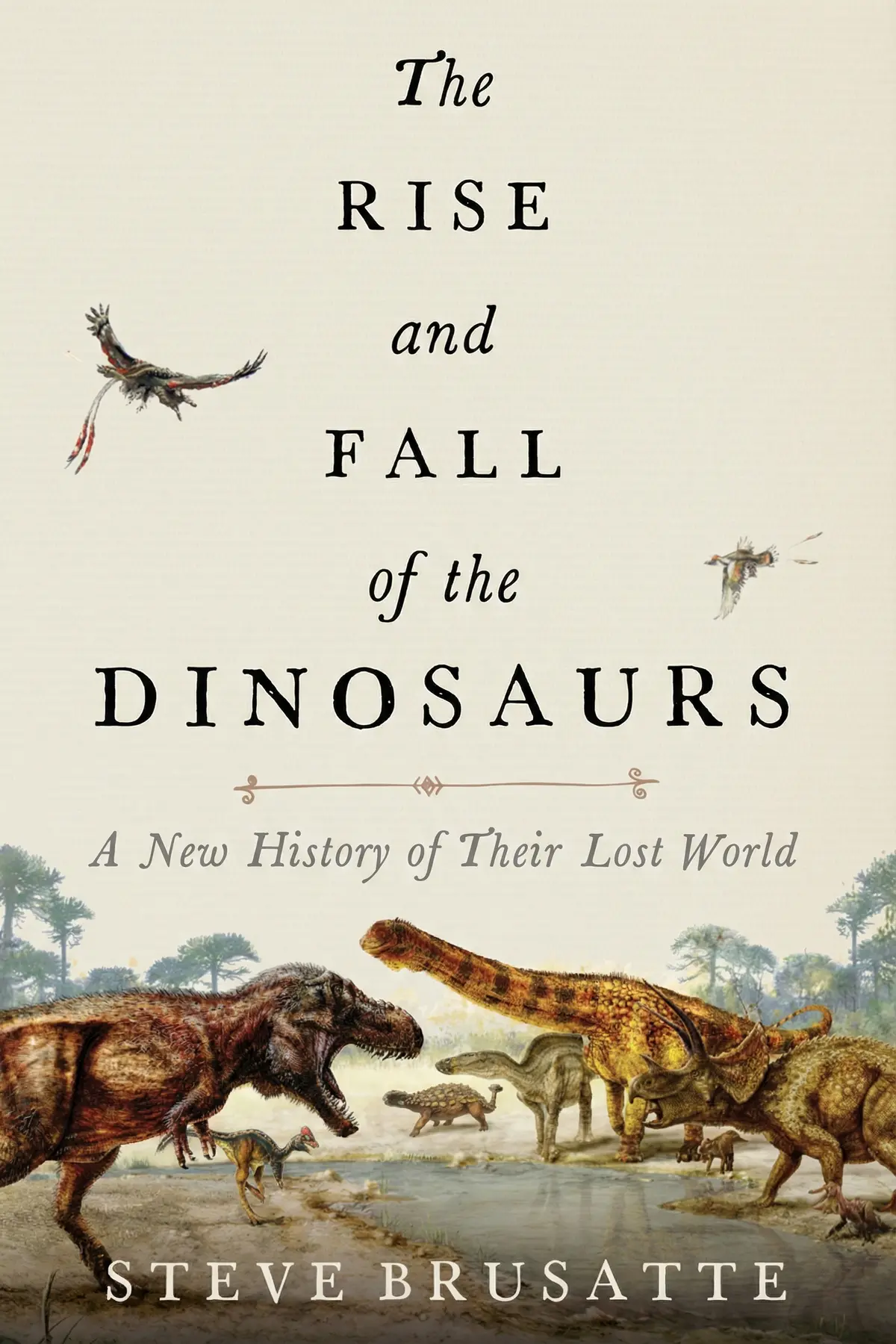
Table of Content
1. Introduction
2 min 21 sec
When we think about dinosaurs, we often visualize the high-octane battles of the silver screen or the towering skeletons in museum halls. They feel like creatures of myth—monsters that belong in the realm of fantasy rather than reality. But the truth is far more staggering. For nearly 200 million years, these animals were the masters of our planet, living through tectonic shifts, volcanic apocalypses, and radical climate changes. To put that in perspective, human civilization is a mere blink in the eyes of deep time. If our entire history were a single day, the reign of the dinosaurs would stretch for hours, while our presence would occupy only the final few seconds.
In this exploration, we are going to peel back the layers of the Earth to uncover the real story of this lost world. It is a story that has been painstakingly reconstructed by paleontologists over centuries, and especially in the last few decades, thanks to a golden age of new fossil discoveries. We will see how dinosaurs were not always the giants we imagine them to be. They started as underdogs, survivors of a global catastrophe who had to scrap for their place in a world dominated by other fierce predators.
We will follow the trail from the supercontinent of Pangea to the split of the modern continents, watching as dinosaurs adapted to every niche—from the humid jungles of the south to the arid deserts of the north. We will witness the rise of the sauropods, the largest land animals to ever exist, and the terrifying evolution of the tyrannosaurs. Along the way, we’ll see how science has debunked long-held myths, such as the idea that birds merely followed the dinosaurs. Instead, we’ll discover that birds are the living descendants of the very creatures we thought were lost forever.
Ultimately, this is a narrative about resilience, adaptation, and the fragile nature of life on Earth. By understanding how the dinosaurs rose to power and why they eventually fell, we gain a profound perspective on our own place in the natural world and the forces that shape the destiny of every species. So, let’s travel back across the eons to a time before man, when the earth shook under the weight of titans.
2. The Ashes of the Permian
2 min 23 sec
Before dinosaurs could rule, the world had to end. Discover how the greatest mass extinction in history paved the way for a new kind of survivor.
3. A World Divided by Monsoons
2 min 32 sec
In the early days of the Triassic, the Earth was a single supercontinent where climate, not competition, dictated where dinosaurs could live.
4. The Jurassic Explosion
2 min 16 sec
When the supercontinent began to tear apart, a second mass extinction cleared the path for dinosaurs to finally claim their crown.
5. The Bone Wars and the Fossil Record
2 min 32 sec
Discover how a 19th-century rivalry and the unique geology of the American West revealed the secrets of the Jurassic world.
6. The Rise of the Tyrant Dynasty
2 min 20 sec
Before the T. Rex became a king, its ancestors were small, scrappy predators living in the shadows of much larger monsters.
7. Anatomy of a King
2 min 25 sec
The T. Rex was more than just a mindless killing machine. New science reveals a predator with surprising intelligence and devastating power.
8. Life on the Fringes
2 min 12 sec
While T. Rex ruled the north, the rest of the world was home to a bizarre and beautiful array of evolutionary experiments.
9. The Dinosaur in Your Backyard
2 min 15 sec
One of the most startling revelations of modern paleontology is that the dinosaurs never truly went extinct—they just evolved wings.
10. The Day the World Stood Still
2 min 27 sec
It took a mountain-sized rock moving at forty thousand miles per hour to bring the age of the titans to a sudden, violent end.
11. Conclusion
1 min 40 sec
The story of the dinosaurs is more than just a chronicle of ancient bones; it is a testament to the incredible power of life to adapt and persist through the most extreme conditions imaginable. We have seen them rise from the rubble of one mass extinction, navigate the fracturing of a supercontinent, and grow into the most magnificent creatures the world has ever known. They weren’t failures; they were a spectacular success that lasted far longer than we have even existed as a species.
What we can take away from this journey is a sense of humility and wonder. Our understanding of these creatures is constantly evolving, with every new fossil discovery adding a piece to a puzzle that spans millions of years. The golden age of paleontology is happening right now, and it is revealing a world that was more colorful, intelligent, and complex than we ever dared to dream. Even the way we look at our own world is changed by this history—when we see a bird take flight, we are seeing the surviving spirit of the dinosaurs.
The fall of the dinosaurs also serves as a stark reminder of the planet’s volatility. A single day, 66 million years ago, changed the trajectory of life forever. It reminds us that while we are currently the masters of our environment, we are part of a much larger, much older cycle of rise and fall. By studying the dinosaurs, we learn to respect the deep history of our home and the incredible resilience of the life that inhabits it. Their legacy is etched in the stone beneath our feet, waiting for us to keep listening to the stories it has to tell.
About this book
What is this book about?
The Rise and Fall of the Dinosaurs offers a sweeping narrative of the prehistoric world, moving beyond Hollywood myths to present a scientifically grounded history of the most iconic creatures to ever walk the Earth. It begins with the catastrophic extinction event that cleared the way for the first dinosaurs and follows their journey from small, peripheral players to the undisputed rulers of the planet. Through the eyes of a field paleontologist, the narrative explores the massive geological shifts of Pangea, the evolution of gargantuan sauropods, and the rise of fearsome predators like Tyrannosaurus rex. It also delves into the fascinating evolutionary link between dinosaurs and modern birds, revealing that the dinosaur legacy is still with us today. Finally, it provides a minute-by-minute account of the asteroid impact that ended the Cretaceous period, explaining how a world teeming with life was suddenly silenced, paving the way for the eventual rise of mammals and humanity.
Book Information
About the Author
Steve Brusatte
Steve Brusatte is a prominent American paleontologist based at the University of Edinburgh. Recognized as a world expert in his field, he has contributed to Scientific American and served as a consultant for the BBC’s iconic series Walking with Dinosaurs. His career has been marked by significant fossil discoveries and collaborations with leading figures in paleontology, helping to reshape our modern understanding of ancient life.
Ratings & Reviews
Ratings at a glance
What people think
Listeners find this work to be a superb resource for exploring Earth’s history and the current scientific consensus on dinosaurs. The prose is both lucid and captivating, simplifying intricate topics while maintaining academic depth. They value the storytelling style, with one listener noting the effective blend of personal anecdotes and technical data, and another pointing out the clear explanation of fundamental evolutionary concepts. The book earns high marks for its portrayal of prehistoric life, particularly the insight that birds are actually dinosaurs, and listeners frequently praise the author’s vibrant enthusiasm for his field.
Top reviews
Yuki
This book is a total game-changer for anyone who grew up thinking dinosaurs were just scaly monsters from a 90s movie. Brusatte writes with such infectious energy that you can almost feel the heat of the Cretaceous sun on your skin. I was particularly blown away by the detailed look at the evolution of feathers; the idea of a fuzzy T-Rex is actually way more terrifying than the hairless version. It bridges the gap between dense academic papers and pop-science perfectly. If you want to know how a 7-ton predator actually lived, this is your bible. Not gonna lie, I'll never look at a chicken the same way again.
Show moreBo
As someone who usually sticks to history books about wars and empires, I found this deep dive into the Mesozoic era surprisingly gripping. The narrative doesn't just list facts; it tells a story of survival, luck, and catastrophic change that feels incredibly relevant today. The final chapter describing the asteroid impact is hauntingly vivid, painting a picture of a world ending in hours after 150 million years of success. It's a humbling reminder of how fragile life on Earth can be. Truly excellent writing that balances technical data with a cinematic flair. To be fair, I stayed up way too late finishing the section on the T-Rex's binocular vision.
Show moreKavya
The chapter on the breakup of Pangea was worth the price of admission alone. Most books treat continental drift as a boring background fact, but here it’s a character that dictates the entire destiny of the dinosaur lineage. I loved the way the author profiles colorful figures like Baron Nopcsa; it adds a human element to the hunt for old bones. The prose is punchy and direct, avoiding the dry, academic slog you might expect from a textbook author. It makes you realize just how much our understanding of these "terrible lizards" has evolved in just the last decade. It’s an essential history of our planet.
Show morePacharapol
After hearing so many people rave about this, I finally sat down to read it and was not disappointed. The sheer scale of what we’ve learned recently—like the fact that we’re discovering a new species almost every week—is mind-boggling. Brusatte does a fantastic job of deconstructing the "failed species" myth, showing instead how dinosaurs were peak evolutionary machines for over 150 million years. It’s written with a genuine sense of wonder that is completely contagious. The truth is, I’ll never look at a pigeon the same way again after reading his take on the avian transition. This is science communication at its very best.
Show moreNang
Wow. This is easily the most engaging non-fiction book I've read in years. Brusatte takes the "rise and fall" trope and applies it to a biological empire with the skill of a seasoned historian. He makes you care about creatures like the Metoposaurus (basically a Buick-sized killer salamander) just as much as the famous giants. The book is a perfect blend of "big picture" geology and minute fossil details that reveal how these animals breathed, moved, and died. Personally, I loved the portraits of current paleontologists like Thomas Carr—it made the science feel like a living, breathing field. This should be required reading for anyone curious about our world’s past.
Show moreSomchai
Ever wonder why we are so obsessed with creatures that died out millions of years ago? Brusatte answers that by making paleontology feel like a high-stakes adventure rather than a dusty museum trip. While he does tend to name-drop his colleagues quite a bit—which can get slightly repetitive—the actual science is top-notch and easy to follow. The way he explains the transition from the Permian extinction to the Triassic dominance made sense of a timeline I usually find confusing. It’s a solid, engrossing read for any adult who never outgrew their dino phase. The prose is punchy, even if the author's ego peeks through occasionally.
Show moreIngrid
Picked this up on a whim and was immediately sucked into the world of the Hell Creek formation and the rise of the Tyrant Kings. The revelation that birds are essentially modern-day dinosaurs is handled with such clarity that even a complete novice can grasp the evolutionary mechanics. Brusatte has a knack for making complex biology feel intuitive, using modern analogies that stick in your brain. To be fair, some of the descriptions of his fellow scientists felt a bit like inside jokes I wasn't part of. Still, the sheer volume of new information about pack-hunting and bone-crushing bites makes it worth every penny. It is scientifically rigorous but never dry.
Show moreYulia
Finally got around to finishing this, and I'm struck by how Brusatte manages to make the end of the Cretaceous feel like a thriller. The way he builds up the T-Rex as this apex predator—not just a mindless beast, but a sophisticated animal with binocular vision—is masterfully done. It’s refreshing to see a scientist who isn’t afraid to use a little imagination to fill in the gaps of the fossil record. My only gripe is that the pacing slows down a bit when he goes into his personal academic history. Overall, it’s a vibrant, necessary update for anyone whose dino knowledge stopped at the first Jurassic Park film. Educational and wildly entertaining.
Show moreGai
Frankly, I have mixed feelings about this one. On one hand, the information regarding the sauropods’ respiratory systems and how they managed those massive necks was genuinely enlightening. On the other hand, the author's writing style is a bit... much. He tries very hard to be the "rockstar" of paleontology, which results in some cringey descriptions of his peers' fashion choices and late-night parties. If you can look past the ego, there’s a wealth of incredible science here that clarifies a lot of misconceptions. It's a 5-star subject trapped in a 3-star memoir. I enjoyed the T-Rex pack theory, but could have done without the travelogues.
Show moreSupranee
Not what I expected at all, and unfortunately, not in a good way. I wanted a book about dinosaurs, but instead, I felt like I was reading a 400-page personal resume for Steve Brusatte. He’s clearly brilliant, but the constant self-congratulatory anecdotes about his travels and his "legendary" paleontology friends really soured the experience for me. When he actually sticks to the dinosaurs, the information is fascinating, especially the parts about early dinosauromorphs. However, the "cool nerd" persona felt forced and distracting. I eventually started skimming the personal parts just to get back to the fossils. If you want a memoir, buy this. If you want science, look elsewhere.
Show moreReaders also enjoyed
A Life Decoded: My Genome: My Life
J. Craig Venter
A Planet of Viruses
Carl Zimmer
A Short History of Nearly Everything
Bill Bryson
A Thousand Brains: A New Theory of Intelligence
Jeff Hawkins
AUDIO SUMMARY AVAILABLE
Listen to The Rise and Fall of the Dinosaurs in 15 minutes
Get the key ideas from The Rise and Fall of the Dinosaurs by Steve Brusatte, plus 5,000+ more titles in English and Thai.
- 5,000+ titles
- Listen as much as you want
- 7-day free trial
- Cancel anytime







