
20 min 04 sec
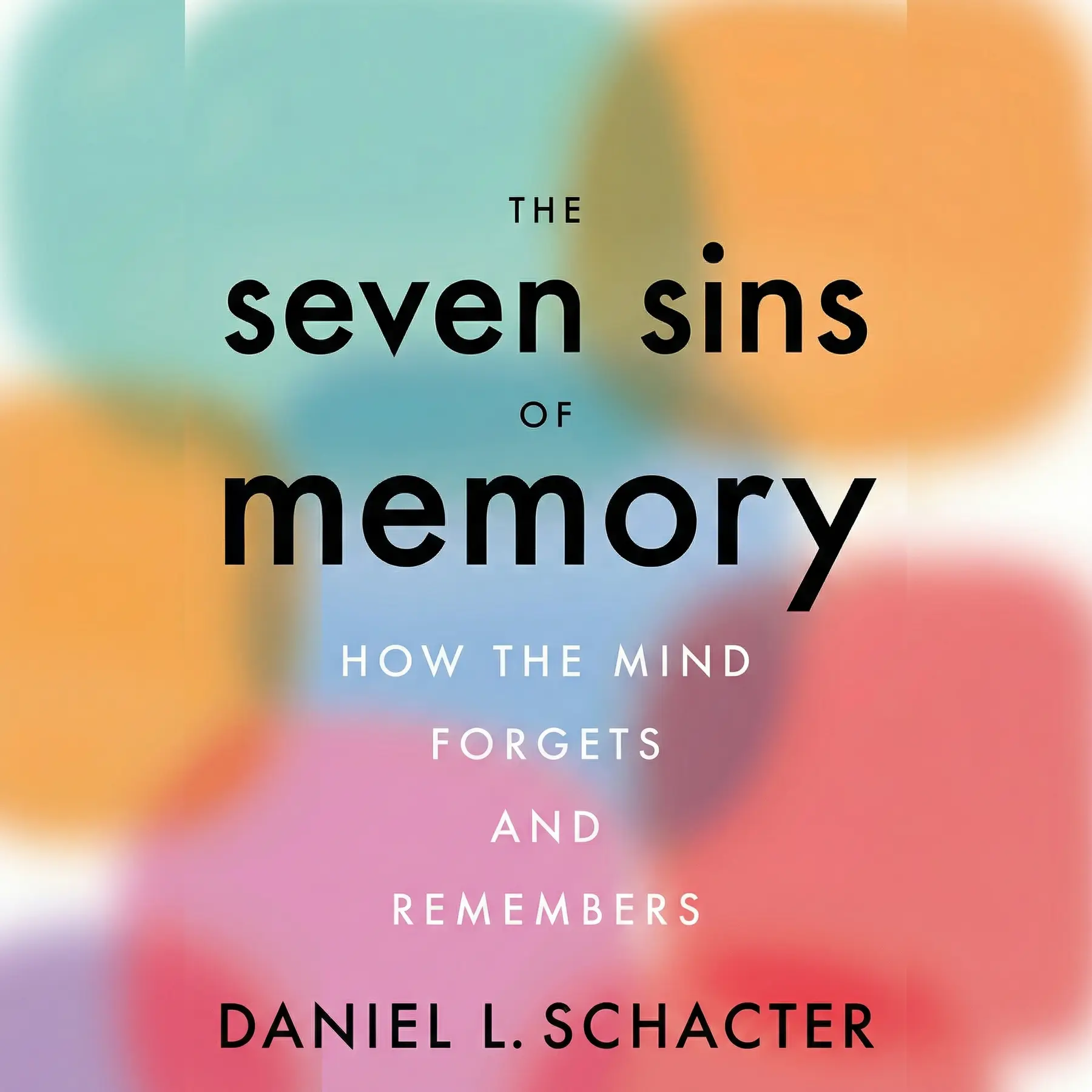
The Seven Sins of Memory: How the Mind Forgets and Remembers
Explore the biological and psychological reasons behind memory failures. This summary breaks down seven distinct ways our minds forget and distort information, revealing why these flaws are actually evolutionary advantages.
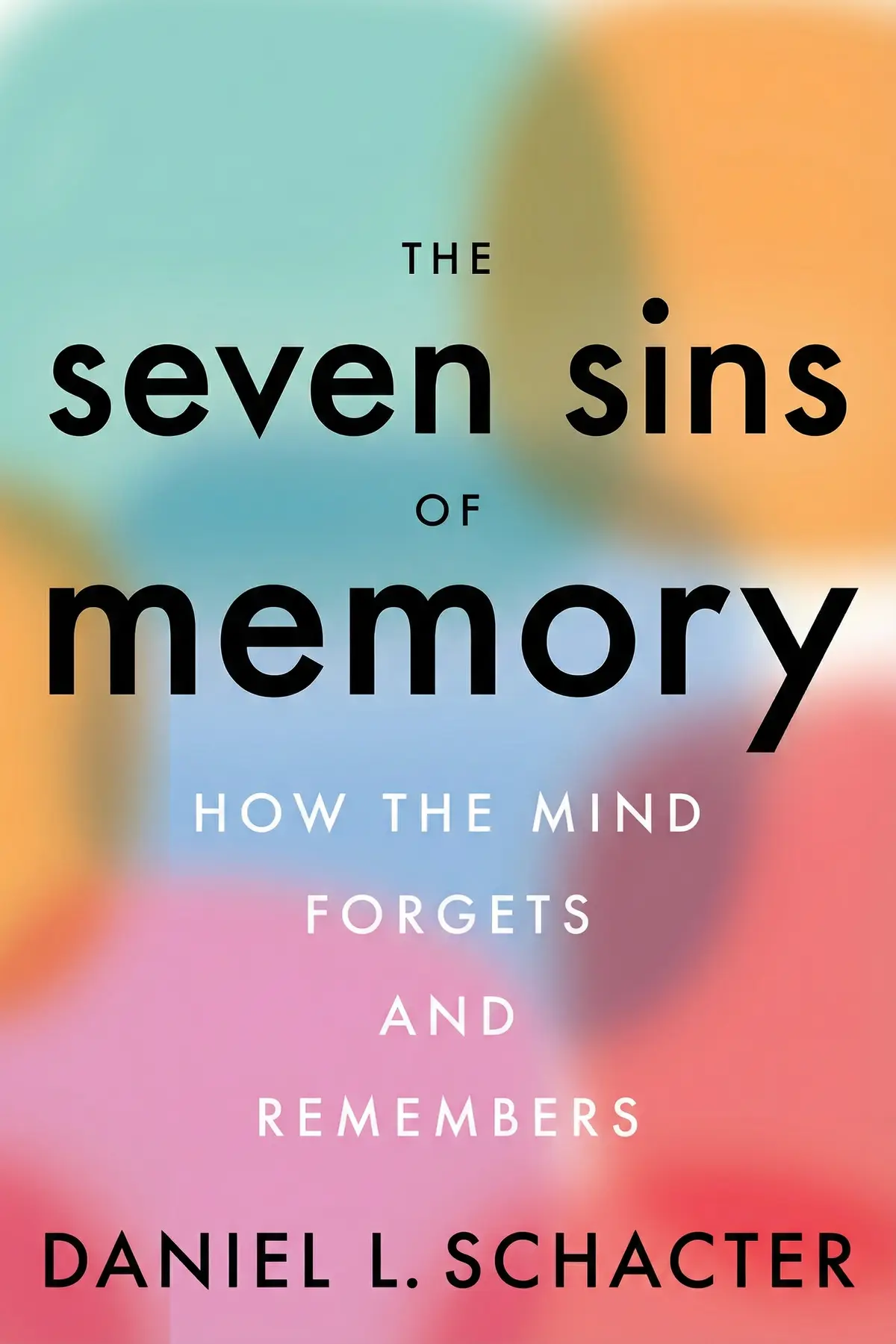
Table of Content
1. Introduction
1 min 40 sec
We’ve all experienced that sinking feeling when we realize a crucial piece of information has slipped through our fingers. Perhaps it’s the location of your car keys when you’re already ten minutes late, or the name of a business associate who is walking toward you with a wide, expectant smile. In those moments, it feels like our brains are working against us. We treat memory as a digital archive that should be perfectly indexed and always accessible, but the reality of human biology is far messier.
As it turns out, the way we remember—and the way we forget—is a deeply refined product of our evolution. Our minds are not broken; rather, they are optimized for a world that is constantly changing. In this summary, we are going to dive into what are called the seven sins of memory. These aren’t moral failings, but rather psychological tendencies that affect us all. We will explore why names are harder to recall than occupations, how a simple question from a stranger can rewrite our personal history, and why some memories refuse to leave us alone even when they cause us pain.
By looking at these frailties through the lens of cognitive science, we can start to see a throughline: our memory isn’t designed to be a literal video recorder of the past. Instead, it is a dynamic system meant to help us navigate the present and plan for the future. Understanding these seven vulnerabilities—transience, absent-mindedness, blocking, misattribution, suggestibility, bias, and persistence—is the first step toward working with your brain instead of against it. Let’s begin by looking at the most common way we lose our grip on the past.
2. The Decay of Detail Over Time
2 min 17 sec
Discover why our most vivid recollections of major historical events begin to crumble after just a few years and how we can fight this natural erosion.
3. The High Cost of Inattention
2 min 15 sec
Explore why ‘forgetting’ is often a failure of attention rather than memory, and learn the secret to setting mental traps that actually work.
4. The Tip-of-the-Tongue Obstacle
2 min 25 sec
Find out why your brain struggles to recall proper names more than anything else and why your mind feels ‘blocked’ even when you know the answer.
5. The Confusion of Context
2 min 12 sec
Learn how our brains can remember a face or a story perfectly while completely losing track of where that information actually came from.
6. The Power of Suggestion
2 min 21 sec
Discover how a single leading question can plant a entirely false memory in your mind, leading people to ‘remember’ events that never happened.
7. The Mirror of Our Current Self
2 min 22 sec
Explore why our brains constantly rewrite our personal history to match how we feel today, creating a ‘consistency bias’ that masks our true growth.
8. The Burden of Persistent Memories
2 min 34 sec
Uncover why our most painful and traumatic memories are often the most difficult to forget and how we can use narrative to reduce their power.
9. Conclusion
1 min 58 sec
As we have seen, the human memory system is riddled with what we call ‘sins.’ We fade, we get distracted, we get blocked, and we even invent things that never happened. But after examining all seven of these flaws, a surprising truth emerges: these ‘sins’ are actually the price we pay for a brilliantly functional brain.
Imagine for a moment if you had no ‘sins’ of memory. If you lacked transience and absent-mindedness, you would remember every single table you’ve ever seen, every face you passed on the street, and every trivial detail of every day. This was the reality for a famous patient of the neuropsychologist Alexander Luria. While the man could remember everything, he was unable to function in daily life because he couldn’t filter out the noise. He couldn’t see the forest for the trees. Our ability to forget is what allows us to generalize, to form categories, and to focus on what actually matters for our survival.
Even persistence and bias have their roles. The tendency to remember traumatic events vividly helped our ancestors avoid predators and dangerous locations. The biases that make us view our past in a positive light help protect us from depression and give us the confidence to take on new challenges. Our memory isn’t a flawed recording device; it’s a highly sophisticated tool for living.
The takeaway is not to despair over your forgetfulness, but to understand the mechanics of your mind. By using mnemonics to fight transience, setting better cues to avoid absent-mindedness, and using narrative to soothe persistent memories, you can mitigate the downsides of these seven sins. Your memory is a dynamic, living part of who you are—one that is designed not to keep you anchored in the past, but to propel you successfully into the future. Embrace the sparkles on the end of your tongue, and trust that your brain is doing its best to keep the right information at the front of your mind.
About this book
What is this book about?
Have you ever wondered why you can remember a face but not a name, or why your most embarrassing moments seem to play on a loop in your mind? This exploration of human cognition investigates the seven fundamental flaws that plague our memory systems. From simple forgetfulness to the dangerous creation of entirely false memories, these 'sins' affect everyone from students to eyewitnesses in criminal trials. While these glitches can be frustrating and even life-altering, they aren't merely design flaws. The author argues that each of these tendencies is a side effect of a brain that has evolved to prioritize useful information and maintain a coherent sense of self. By understanding the mechanics of transience, absent-mindedness, and bias, you can learn to navigate your own mental landscape more effectively. The book promises to change how you view your own history and provides practical strategies to help you anchor the memories that matter most.
Book Information
About the Author
Daniel L. Schacter
Daniel Schacter is the head of the department of psychology at Harvard University. He is a fellow of the American Academy of Arts and Sciences and has won numerous awards for his research and writing on memory and neuropsychology. His work is highly regarded in the field of cognitive science, focusing on the relationship between conscious and unconscious forms of memory.
Ratings & Reviews
Ratings at a glance
What people think
Listeners find this an engaging listen that offers an intriguing perspective on how the mind functions, including relevant research into memory failures and therapeutic applications. The depth of information is generally praised, and one listener mentions that it incorporates examples to explain theories. Opinions on the writing style and accessibility are split; while some feel it is articulate and straightforward, others describe the material as dry and challenging to stay engaged with.
Top reviews
Piyanart
This book is a complete game-changer for how I view my own brain and its many, many failures. I used to get so angry when I had a name on the tip of my tongue, but now I understand the mechanics of 'blocking.' Schacter explains that these glitches are actually the price we pay for a memory system that is otherwise incredibly efficient and adaptive. My favorite part was learning about 'persistence' and why those embarrassing or traumatic memories stay so vivid while the mundane stuff fades away. The author manages to bridge the gap between high-level Harvard research and everyday experiences like leaving your keys in the fridge. If you have ever questioned your own sanity after forgetting a simple task, please read this. It’s an empowering and deeply fascinating look at the human condition.
Show moreGift
Rarely does a science book feel so personal while maintaining such rigorous academic standards. I found myself constantly nodding along, thinking 'oh, that is exactly why I did that yesterday!' The explanation of 'bias'—how we assume we’ve always thought the way we do now—was a total 'aha' moment for me. Schacter argues that these seven sins are actually side effects of a system that works incredibly well, which is a very comforting thought. The book is packed with fascinating studies, including one about how kids can’t truly form memories before age two. I’ve already recommended this to three friends who are constantly complaining about their 'bad' memories. It turns out our memories aren't broken; they're just doing their best to filter a chaotic world. Truly a remarkable and insightful read.
Show moreYok
Forget everything you think you know about your past because this book will prove you’re probably remembering it wrong. Schacter’s deep dive into the 'sins' of memory is both terrifying and exhilarating in its implications for human identity. I was particularly fascinated by the research on how children react to leading questions and how easily their stories can be shaped by adults. The book is a masterclass in explaining why our brains prioritize certain details while letting others fade into the background. Even the technical bits about the lobes of the brain were written in a way that didn’t make me feel stupid. It is a brilliant, essential piece of work that everyone should read at least once. It makes you realize that memory isn't a tape recorder; it’s more like a creative storyteller that isn't always concerned with the truth.
Show moreNarumon
Ever wonder why you can remember a commercial jingle from childhood but forget your spouse’s grocery list the moment you walk into the store? Schacter breaks down these frustrations into seven distinct categories, or 'sins,' making sense of our mental lapses. I found the section on 'bias' particularly eye-opening, especially how our current beliefs can actually rewrite our memories of the past. To be fair, the writing can lean into the academic side, with plenty of references to MRI scans and laboratory word lists. However, the real-world implications for things like eyewitness testimony and legal accuracy are simply staggering. It is a solid read for anyone who wants to understand why their brain feels like a leaky bucket sometimes. You will definitely walk away with a dozen 'did you know' facts to share at your next dinner party.
Show moreWanphen
As someone who has always been fascinated by true crime, the chapters on 'misattribution' and 'suggestibility' were absolutely chilling. It is wild to think that 90% of certain DNA exoneration cases involved mistaken eyewitnesses who were actually certain of their choice. Schacter does a masterful job of explaining how a witness can start out uncertain and become 'convinced' through subtle cues from investigators. The book moves at a steady pace, though some of the chapters on 'transience' felt a little bit like common sense. Still, the way he connects these 'sins' to the way our brains evolved to prioritize certain information is quite brilliant. I took off one star because the formatting of the e-book I read made the many footnotes a bit difficult to navigate. Overall, it’s an essential read for understanding the frailty of the human mind.
Show morePalm
Finally got around to reading this classic, and it’s easy to see why it’s still cited so often in psychology circles. The framework of 'sins' is a clever way to organize what could have been a very disjointed collection of data points. Not gonna lie, some of the stuff about women being better at spatial location because of gathering roots and berries felt a bit dated. Nevertheless, the core science regarding how we encode and retrieve information is rock solid and very well-presented. I particularly appreciated the discussion on beta-blockers and their potential to help people dealing with the 'sin' of persistence after a trauma. It is a thoughtful, provocative book that makes you realize just how much of our 'self' is built on shaky ground. It’s definitely worth the price of admission for the chapter on suggestibility alone.
Show moreHugo
The structure here is incredibly helpful for organizing complex psychological concepts into something a layman can actually digest. Each 'sin' is illustrated with real-world examples, from high-profile court cases to everyday instances of forgetting where you parked. Look, the book can be dense, and you might need to read certain paragraphs twice to really grasp the neurological pathways being described. That said, the payoff is worth it when you start seeing these patterns in your own daily life and the lives of those around you. It’s a bit of a warning against trusting our own 'vivid' memories too much, which is a humbling lesson to learn. While the academic tone might turn some people off, the quality of the information is top-notch. I’m giving it four stars for being both educational and practically useful.
Show moreJoy
Schacter clearly knows his stuff, but the prose feels a bit like a lecture hall drone at times. I picked this up hoping for a fast-paced pop-science journey, yet I found myself wading through quite a lot of dense research data. The chapters on 'misattribution' and 'suggestibility' were the highlights for me, specifically the terrifying statistics about how easily false memories are planted during police interviews. Truth is, the book is incredibly informative, but the 'seven sins' framework feels a little forced toward the end. I also struggled with the concluding chapter on evolution, which felt like a rushed afterthought rather than a cohesive part of the thesis. It is a decent resource for students of psychology, but the average reader might find themselves skimming the more technical passages to get to the interesting tidbits.
Show moreBun
The 'tip-of-the-tongue' phenomenon is something that plagues me weekly, so I was eager to see what the science had to say. Schacter’s explanation of lexical versus phonological cues was genuinely interesting and offered a new perspective on my own forgetfulness. However, the book as a whole felt somewhat imbalanced, with some chapters feeling much more robust and researched than others. Personally, I found the section on 'absent-mindedness' a bit too basic, as it mostly boiled down to 'pay more attention.' The writing style is clear enough, but it lacks the 'hook' that makes other science books really unputdownable. It serves as a good introductory text for the subject, but don’t expect a life-altering experience. It’s a 3.5-star book that I’m rounding down because the ending was such a letdown.
Show moreLena
I really wanted to love this because the concept is brilliant, but the execution felt incredibly dry and repetitive. Frankly, the author’s constant mentions of prestigious universities and his own high-level credentials started to grate on me after a while. The book is heavily focused on technical studies involving nonsense words and mouse models, which lacks the narrative drive I expect from modern non-fiction. By the time I reached the final chapter on evolution, I was totally checked out; it felt like a cheap attempt to join a trendy scientific debate. While there are some interesting facts hidden in here about DNA evidence and childhood amnesia, they are buried under mountains of academic jargon. If you aren't already a psychology student, you might find this to be a bit of a slog to finish.
Show moreReaders also enjoyed
A Liberated Mind: How to Pivot Toward What Matters
Steven C. Hayes
Acting with Power: Why We Are More Powerful Than We Believe
Deborah Gruenfeld
Age of Propaganda: The Everyday Use and Abuse of Persuasion
Anthony Pratkanis
59 Seconds: Change Your Life in Under a Minute
Richard Wiseman
AUDIO SUMMARY AVAILABLE
Listen to The Seven Sins of Memory in 15 minutes
Get the key ideas from The Seven Sins of Memory by Daniel L. Schacter, plus 5,000+ more titles in English and Thai.
- 5,000+ titles
- Listen as much as you want
- 7-day free trial
- Cancel anytime







