

16 min 36 sec
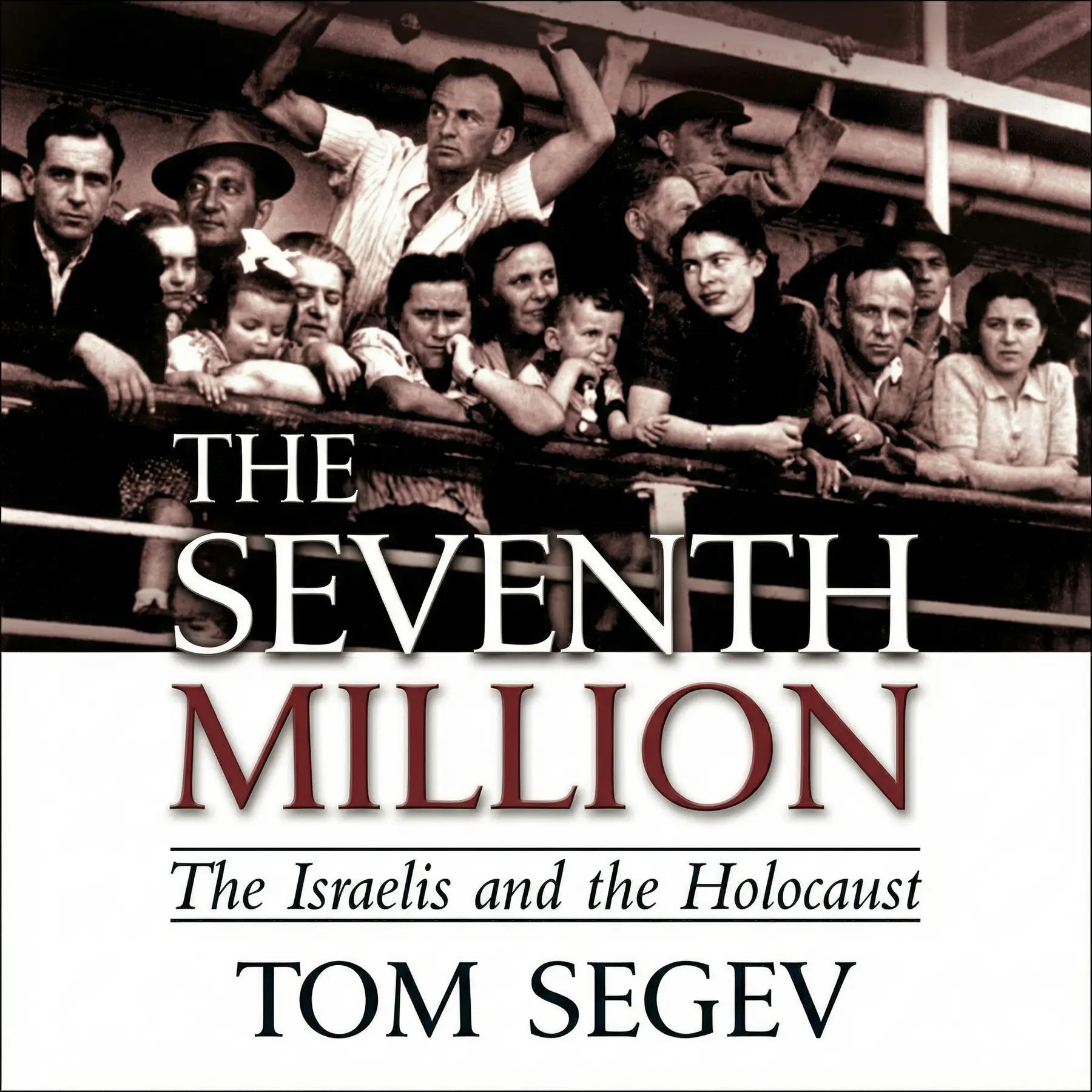
The Seventh Million: The Israelis and the Holocaust
By Tom Segev
An insightful exploration of how the Holocaust’s shadow transformed Israel. Tom Segev examines the complex relationship between the Jewish state and the memory of the six million, shaping national identity and politics.
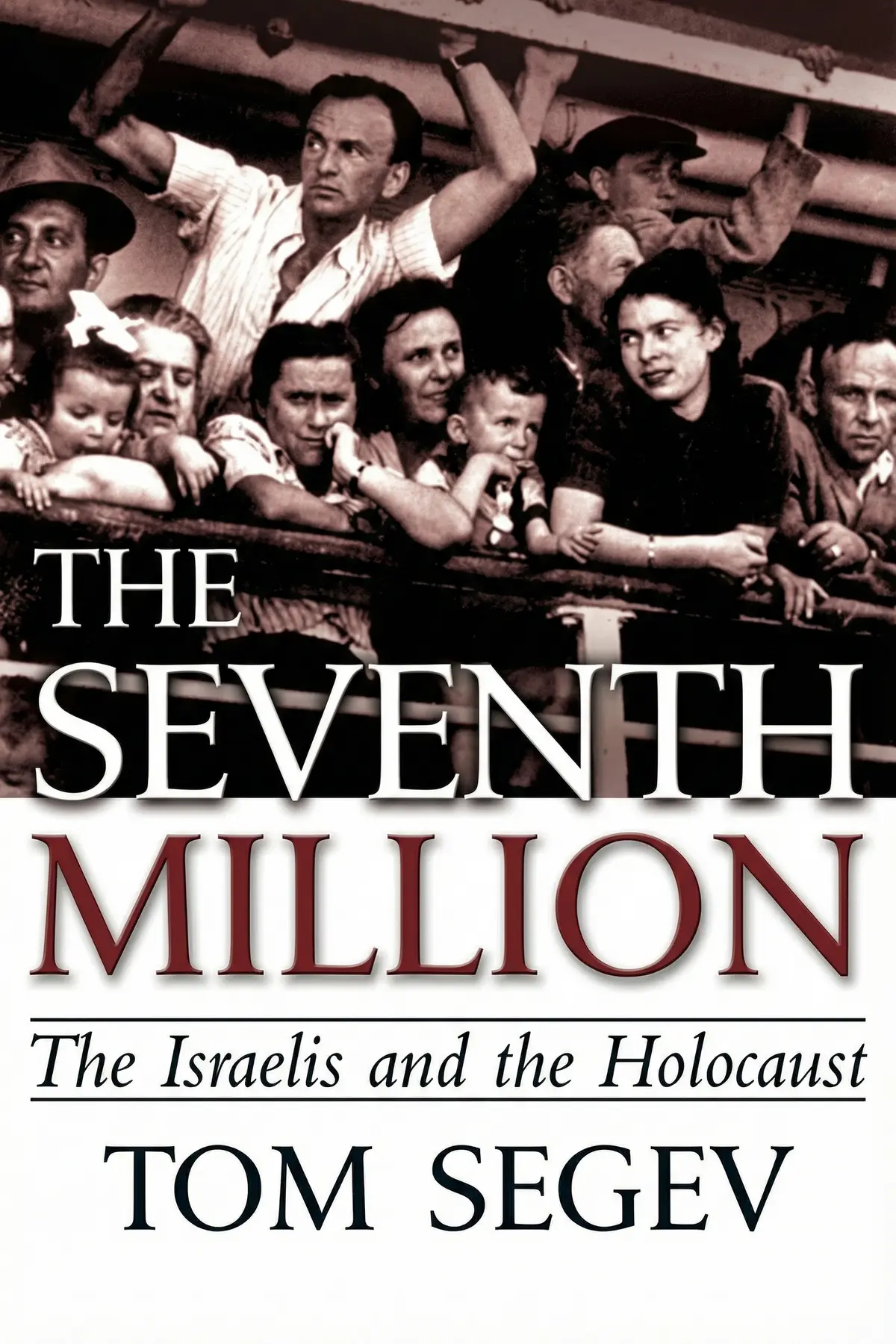
Table of Content
1. Introduction
1 min 44 sec
The history of the twentieth century is marked by a wound that refuses to fully heal. Between 1933 and 1945, the Nazi regime and its collaborators systematically murdered approximately six million Jews across Europe. This event, the Holocaust, is often viewed as a singular tragedy of the past, but for the State of Israel, it is something much more: it is a living presence. This narrative explores what historian Tom Segev calls the “seventh million.” This term refers to the collective body of the Jewish population in Israel—both the survivors who arrived with their trauma and the pioneers who were already there—all of whom had to find a way to live in the wake of total destruction.
As we look through this lens, we begin to see that the Holocaust didn’t just end with the liberation of the camps. Instead, it moved. It migrated from the killing fields of Europe to the halls of the Israeli Parliament, the classrooms of Jerusalem, and the collective psyche of a new nation. The central question we face here is: How does a tragedy of such unfathomable scale define a nation’s identity, its politics, and its culture?
In the coming segments, we will journey through the complicated and often controversial history of how Israel dealt with its past. We will look at the uneasy alliances formed out of necessity, the struggle to acknowledge the full extent of the horror, and the moments when the past and present collided in explosive ways. From the early tensions between European refugees and local pioneers to the high-stakes drama of the Eichmann trial, this is the story of how the memory of the six million became the defining soul of the seventh million. It’s a journey that reveals the heavy burden of history and the resilience required to build a future upon it.
2. Early Paradoxes and the Haavara Agreement
1 min 54 sec
Before the war began, an unlikely and controversial arrangement existed between the Nazi regime and Zionist leaders, highlighting the complex pragmatism used to facilitate Jewish emigration to Palestine.
3. The Dissonance of Priorities during the Final Solution
1 min 43 sec
As the genocide in Europe escalated, the Jewish community in Palestine struggled to grasp the magnitude of the horror, often prioritizing the birth of their new state over the unfolding tragedy.
4. The Aftermath of Trauma and the Thirst for Vengeance
1 min 51 sec
Following the war, a wave of survivors arrived in a land that was ill-equipped to handle their deep psychological scars, leading some toward radical plans for revenge.
5. The Moral Agony of the Reparations Agreement
1 min 38 sec
The decision to accept financial compensation from West Germany sparked riots and a profound national debate over whether it was possible to put a price on human life.
6. Military Ties and the Legacy of Collaboration
1 min 46 sec
Israel’s pragmatic survival necessitated secret military cooperation with Germany, while the trial of Rudolf Kastner forced the nation to confront the gray areas of wartime choices.
7. The Eichmann Trial and the Voice of the Victim
1 min 43 sec
The capture and trial of Adolf Eichmann in the early 1960s marked a turning point, transforming the Holocaust from a source of shame into a collective national narrative.
8. Existential Fear and the Echoes of the Past
1 min 37 sec
During the 1960s, the threat of conflict with Arab neighbors was frequently framed through the lens of the Holocaust, influencing both military strategy and social attitudes.
9. The Institutionalization of Memory
1 min 43 sec
Israel has created a comprehensive culture of remembrance that ensures the Holocaust is woven into the daily lives and education of every citizen.
10. Conclusion
57 sec
In the end, the story of the “seventh million” is a story of a nation that has been sculpted by fire. We have seen how the Holocaust moved from a distant European horror to become the central pillar of Israeli identity. It has influenced the country’s economic survival through reparations, its legal system through the Eichmann trial, and its very sense of security in a hostile region.
What this really means is that for Israel, the Holocaust is not just history—it is a lens through which the present is constantly viewed. It provides a sense of unity and purpose, but it also carries a heavy burden of guilt, fear, and moral complexity. The takeaway here is that a nation’s identity is often forged in its darkest moments, and the way a people chooses to remember their trauma defines how they will treat others and themselves in the future. As you reflect on this, consider how the history we inherit shapes the choices we make today. The past is never truly behind us; it is the ground upon which we build our tomorrow.
About this book
What is this book about?
The Seventh Million offers a profound and sometimes unsettling look at how the memory of the Holocaust has served as the foundational bedrock of the State of Israel. While the world remembers the six million Jews who perished in Europe, Tom Segev focuses on the so-called “seventh million”—the survivors and the broader Israeli population whose lives and national identity were forever altered by the genocide. The book traces the evolution of this relationship from the pre-state era, through the controversial negotiations with Germany, and into the modern day. It promises to reveal the hidden tensions that defined the early Zionist movement’s response to the disaster and explores how the trauma of the past was eventually mobilized to build a sense of national unity. Through stories of political intrigue, personal trauma, and cultural shifts, the narrative explains why the Holocaust remains an ever-present force in Israeli life, influencing everything from foreign policy to education. It is a story of a nation grappling with an impossible history while trying to forge a future.
Book Information
About the Author
Tom Segev
Tom Segev is a prominent historian and a regular columnist for Ha’aretz, one of Israel’s leading daily newspapers. He has gained international recognition for his deep research into the formative years of the Israeli state. In addition to this work, he is the author of One Palestine, Complete: Jews and Arabs Under the British Mandate.
Ratings & Reviews
Ratings at a glance
What people think
Listeners describe the work as both profound and pleasurable, praising the author's compelling prose. Furthermore, the caliber of information is well-regarded; one listener specifically points out that the narratives help clarify the overall history. The text also offers significant historical context, as one review emphasizes its unique take on the Israeli mindset. Nevertheless, views on the historical material vary, as some find it captivating while others remain unconvinced.
Top reviews
Tee
Finally got around to reading "The Seventh Million" and it blew me away. Segev manages to take a subject as heavy as the Shoah and weave it into the very fabric of the Israeli state's birth. The way he details the Kastner affair is especially gripping, showing the messy reality of human choices during wartime. I appreciated how he didn't shy away from the friction between survivors and the Yishuv. It’s a dense read, sure, but the narrative flow keeps you moving through the decades. This isn't just a history book; it's a psychological profile of a nation trying to define itself against a backdrop of unimaginable trauma.
Show moreSomboon
Wow. This is easily one of the most provocative books I’ve read this year. Segev challenges the official narrative of Israeli history by looking at how the memory of the six million shaped the "seventh million"—those who built the state. The details about the trials and the way survivors were often viewed with a mix of pity and disdain were heartbreaking. It really made me rethink everything I knew about the early years of the country. If you want a book that makes you think instead of just nodding along, this is it. It’s brilliant, exhausting, and utterly necessary for understanding the modern Israeli mindset.
Show moreWei
This book is a masterclass in historical reporting. Segev has this incredible ability to take complex bureaucratic events, like the negotiations for German reparations, and turn them into a high-stakes drama. I was particularly struck by the sections on the Kastner trial; it’s a haunting reminder of how easily history can turn someone from a savior into a villain. The writing style is engaging and vivid, never becoming dry despite the heavy data and myriad of sources. It completely expanded my horizons on what the Holocaust meant to the people actually living through the creation of the Israeli state. I cannot recommend this highly enough.
Show moreRungrat
After hearing about Segev’s reputation for years, I finally dove into this, and it lived up to the hype. The way he tracks the evolution of the Holocaust in the Israeli mind—from a source of shame to a pillar of national strength—is masterful. It’s not an easy read emotionally, but the clarity of the writing makes the difficult subject matter much more manageable. The stories of individual survivors and their struggles to find normalcy in a new land were what resonated with me the most. This is a profound exploration of memory and the burdens of history that every serious student of history should own.
Show moreRapee
Segev writes with a sharp, often critical edge that might rub some readers the wrong way. Personally, I found his revisionist approach quite refreshing, even if I didn't agree with every single conclusion he drew about David Ben-Gurion. The book is meticulously documented, using a massive amount of sources to back up its claims about the Eichmann trial and the politics of reparations. My only real gripe is that it feels a bit overlong in the middle sections. To be fair, the level of detail is necessary to understand the complexity of the German Jews—the Yekkes—and their struggle to integrate. It’s an essential piece of Israeli historiography.
Show moreOm
As someone who has studied this period for years, this provided a totally new lens on the aftermath of the war. Segev's focus isn't just on the tragedy itself, but on how that tragedy was used to build a national identity. The exploration of the reparations debate was eye-opening—seeing the moral versus practical arguments play out in the streets of Jerusalem was intense. Truth is, the prose is remarkably accessible for a scholarly work, making it easy to digest even when the topics are grueling. I would have liked more on the Palestinian perspective, but the book’s focus on the internal Jewish struggle is deeply informative and well-researched.
Show moreWatcharaporn
Ever wonder how a nation reconciles its traumatic past with the pragmatic needs of its future? That’s the central question here, and Segev explores it through the lens of political maneuvering and cultural shifts. The chapter on the Eichmann trial is particularly strong, showing how it served as a turning point for Israeli consciousness. I found his analysis of the Holocaust’s institutionalization through monuments and schools to be very thought-provoking. While some might find his tone a bit too detached or dispassionate, I thought it helped maintain focus on the broader historical trends. A solid four stars for the depth of documentation alone.
Show moreRatthapong
The chapter on the Eichmann trial alone makes this worth the price of admission. It’s a very thorough look at the internal conflicts within Israel, especially the clash between the socialist pioneers and the traumatized refugees from Europe. Segev is definitely coming from a specific political viewpoint, and he isn't afraid to go after sacred cows like Ben-Gurion or Begin. You might not agree with all of his interpretations, but the sheer volume of references makes his arguments impossible to ignore. It’s a serious, heavy book that provides a much-needed fresh perspective on the Israeli mindset. Definitely worth the time it takes to get through it.
Show moreSupatra
Look, I wanted to love this given its reputation, but Segev's cynicism toward the founding fathers of Israel felt a bit much at times. While the historical facts are mostly there, he frequently jumps to conclusions regarding Ben-Gurion’s motives that seem grounded more in political bias than in the archives. The section on Yad Vashem was fascinating, but again, it felt like he was digging for dirt rather than providing a balanced view. It's a well-written book, and I learned a lot about the Haavara agreements, but you have to read it with a very critical eye. It is just too one-sided to be the definitive account.
Show moreChaiwat
Not what I expected based on the glowing blurbs. While the first half of the book is a masterpiece on the Yishuv's reaction to the war, the second half drags significantly. It felt a bit disjointed, like Segev was trying to cram too many disparate political anecdotes into one volume. Some of the revisionist takes felt forced, as if he was trying to be controversial for the sake of it. However, the information regarding the treatment of German Jewish immigrants was genuinely illuminating and saved the experience for me. It’s a bit of a mixed bag—richly documented but perhaps a bit too cynical and uneven for my taste.
Show moreReaders also enjoyed

A Year in the Life of William Shakespeare: 1599
James Shapiro

A Warning
Miles Taylor

Agent Sonya: The Spy Next Door
Ben Macintyre
1491: New Revelations of the Americas Before Columbus
Charles C. Mann

Alexander Hamilton
Ron Chernow
1929: Inside the Greatest Crash in Wall Street History--and How It
Andrew Ross Sorkin
Alexander the Great
Philip Freeman
AUDIO SUMMARY AVAILABLE
Listen to The Seventh Million in 15 minutes
Get the key ideas from The Seventh Million by Tom Segev, plus 5,000+ more titles in English and Thai.
- 5,000+ titles
- Listen as much as you want
- 7-day free trial
- Cancel anytime







