
19 min 46 sec
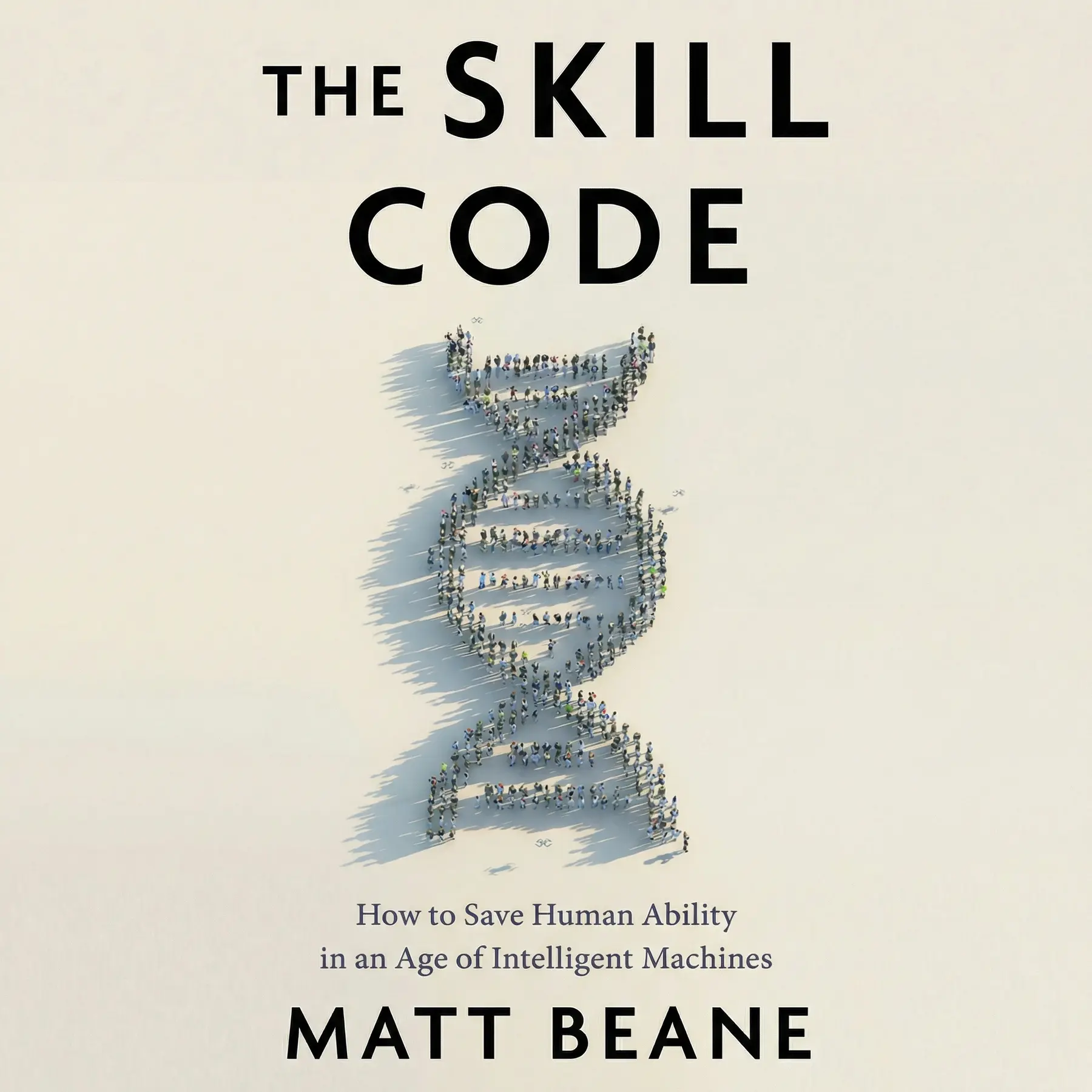
The Skill Code: How to Save Human Ability in an Age of Intelligent Machines
By Matt Beane
Explore the critical intersection of human expertise and artificial intelligence. This summary reveals how to protect traditional apprenticeship models and foster deep mastery in an era of increasing workplace automation.
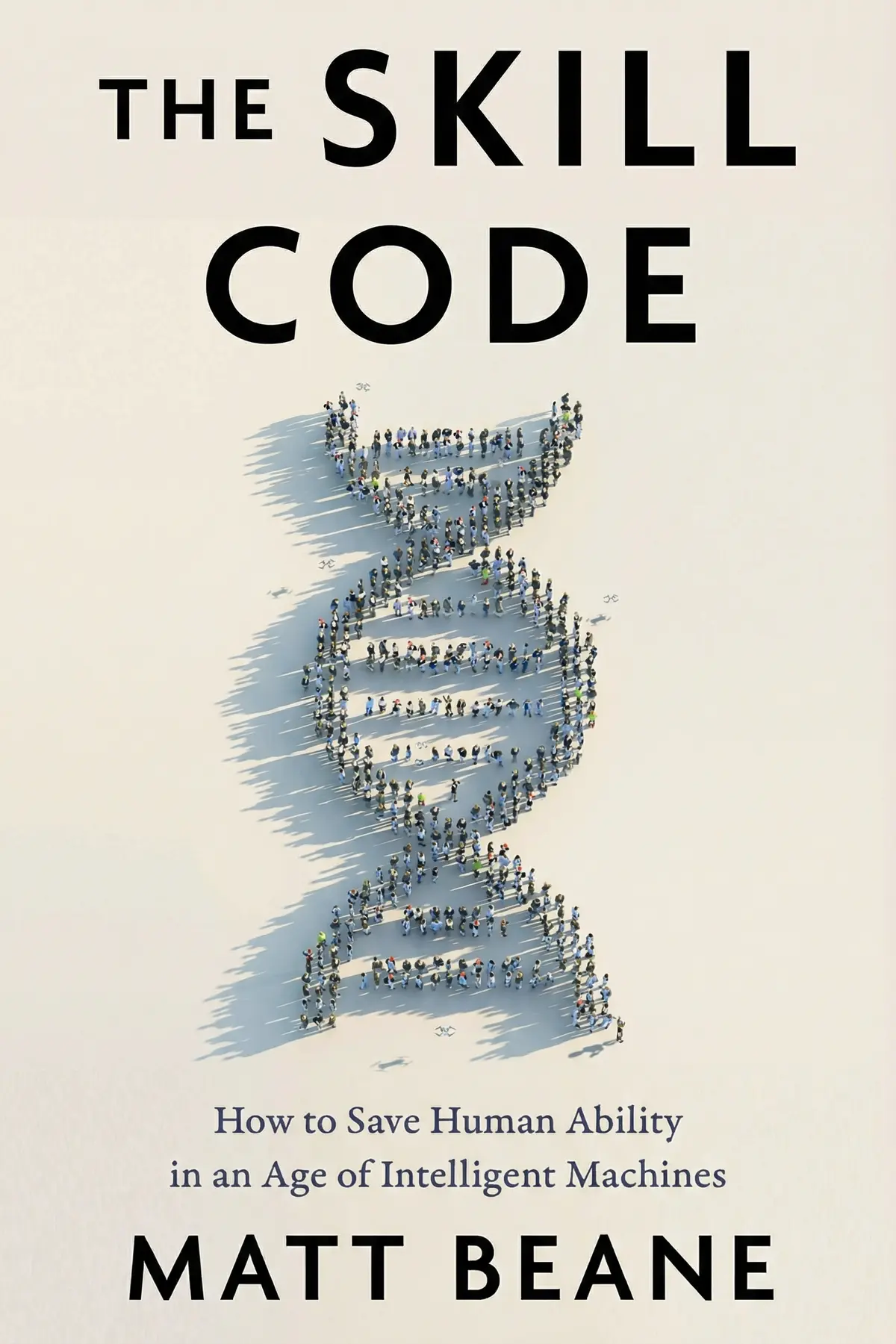
Table of Content
1. Introduction
2 min 05 sec
Have you ever paused to consider how you actually became good at what you do? Think back to the early days of your career, or even a hobby you’ve mastered. Chances are, your expertise didn’t come solely from a manual or a series of online videos. It likely grew through the messy, hands-on process of watching someone who knew more than you, making mistakes under their watchful eye, and slowly taking on more responsibility. This is the ancient art of apprenticeship, and for thousands of years, it has been the primary engine of human progress.
But today, a new force is entering the workplace: artificial intelligence. On the surface, AI and robotics seem like the ultimate efficiency tools. They take over the boring, repetitive tasks, freeing us up for higher-level work. However, there’s a hidden cost to this efficiency that we are only just beginning to understand. When a machine takes over the ‘easy’ parts of a job, it also takes away the training ground for the next generation. If a novice surgeon never gets to perform the simple incisions because a robot does them perfectly, how will they ever develop the intuition needed for a complex heart transplant?
This is the central dilemma we explore today. In this summary of The Skill Code, we are looking at how to save human ability in an age of intelligent machines. We will move beyond the fear that robots will take our jobs and instead focus on a more subtle threat: that technology might take away our capacity to learn. We’ll look at why mentorship is becoming more difficult in a digital-first world, how ‘shadow learners’ are finding clever ways to master new tools, and why the future of work depends on our ability to create ‘chimeric’ systems where humans and AI work in a way that makes both smarter. This isn’t just about surviving the AI revolution; it’s about thriving within it by reclaiming the essential elements of skill: challenge, complexity, and connection.
2. The Crisis of the Missing Middle
2 min 37 sec
What happens when the traditional ladder of skill development loses its bottom rungs? Discover how automation is inadvertently disrupting the ancient bond between experts and beginners in the workplace.
3. The Necessity of Healthy Challenge
2 min 43 sec
Learning isn’t supposed to be easy, yet modern tools often strive to remove all friction. Explore why the ‘sweet spot’ of difficulty is vital for brain growth.
4. Embracing Complexity and Troubleshooting
2 min 36 sec
Meet Sita, a warehouse worker whose story proves that real expertise is born from solving messy, real-world problems that machines can’t handle alone.
5. The Threat of Digital Isolation
2 min 55 sec
Remote work and automated workflows are changing how we interact. Learn why the ‘filtered’ nature of digital communication is a hurdle for mentorship.
6. The Rise of the Shadow Learner
2 min 33 sec
When the official training fails, the ‘shadow learners’ take over. Discover how people like Inés are subverting systems to gain true mastery.
7. Building a Chimeric Future
2 min 47 sec
The ultimate goal isn’t to fight the machines, but to merge our strengths with theirs. Explore the vision for ‘chimeric’ systems that elevate human skill.
8. Conclusion
1 min 30 sec
As we have seen throughout this exploration of The Skill Code, the rise of artificial intelligence does not have to mean the end of human expertise. While it is true that automation is changing the landscape of work, the fundamental elements of how we learn have not changed. We still need the spark of healthy challenge, the grit required to navigate complexity, and the deep, human connection that only a mentor can provide.
The real danger isn’t that machines will become too smart; it’s that we will allow ourselves to become too passive. If we surrender the ‘hard parts’ of our jobs to algorithms without finding new ways to stretch our minds, we risk losing the very thing that makes us valuable. But the story of the ‘shadow learner’ and the vision of ‘chimeric’ systems show us a different path. We have the opportunity to build a future where technology doesn’t just do the work for us, but works with us to unlock new levels of human potential.
So, as you step back into your professional life, ask yourself: Where is the challenge in my day? Am I running toward complexity or away from it? How can I use the tools at my disposal not just to be faster, but to be better? By intentionally seeking out the pillars of skill—challenge, complexity, and connection—you can ensure that your abilities don’t just survive the age of intelligent machines, but are transformed by them. The future belongs to those who can crack the code of learning alongside their technology, preserving the ancient wisdom of apprenticeship in a world of tomorrow.
About this book
What is this book about?
The Skill Code investigates a quiet crisis brewing in the modern workplace: the erosion of human ability. As artificial intelligence and advanced robotics take over entry-level tasks, the traditional path from novice to expert—long defined by hands-on apprenticeship and mentorship—is being disrupted. Matt Beane argues that while technology offers incredible efficiency, it often removes the very challenges and complexities that allow humans to develop high-level skills. The book provides a roadmap for navigating this technological shift. It explains why healthy challenges, exposure to complexity, and deep human connections are the non-negotiable pillars of learning. By exploring real-world examples of individuals who have successfully integrated technology into their craft, Beane offers a vision for the future. Readers will learn how to build chimeric systems that combine the best of human intuition with the power of AI, ensuring that our collective capabilities continue to grow alongside our machines.
Book Information
About the Author
Matt Beane
Matt Beane is an assistant professor in the Technology Management Department at the University of California, Santa Barbara, where he specializes in field research involving robots and AI. His work has been recognized in journals including Administrative Science Quarterly and Harvard Business Review. Beane is also a founder of the IoT startup, Humatics, and has been acknowledged as a Human-Robot Interaction Pioneer and a member of the Thinkers50 Radar list.
Ratings & Reviews
Ratings at a glance
What people think
Listeners find the book highly perceptive, with one person noting its evidence-based methodology and another emphasizing the vivid real-world examples. They characterize it as a delightful and engrossing experience.
Top reviews
Waree
Wow, Beane really nails the specific anxiety I've been feeling about how AI might hollow out our professional growth. This isn't just another 'AI is taking our jobs' book; it’s a deep dive into how we actually learn through struggle and connection. The visceral case studies, particularly in the medical field, show exactly how the expert-novice bond is being severed by new technology. I found the concept of chimeric systems—blending human skill with AI for better results—to be incredibly hopeful and visionary. It's a must-read for anyone worried about remaining relevant in an increasingly automated workforce. Highly recommended.
Show moreJong
After hearing the author discuss the skill externality on a podcast, I had high expectations, and the case studies here really delivered on that promise. The book captures the tension between short-term efficiency and long-term capability in a way that feels very urgent. I especially appreciated the story of Sita in the warehouse; it reminds us that human initiative is still the most powerful tool we have. We need to stop using AI as a crutch and start using it as a partner that enhances our unique human abilities. Truly an eye-opening and essential read for the modern era that focuses on what makes us human.
Show moreWoramet
Ever wonder why you feel less capable even as your software gets smarter? The author uses his background in robotics research to explain that by offloading 'boring' tasks to AI, we’re actually cutting the bottom rungs off the ladder of expertise. I loved the shadow learning examples, like the factory worker Inés who mastered robots by reading error codes. It’s an intriguing, empirically grounded look at how we can still thrive if we’re intentional about our learning. The writing style is very accessible, though it occasionally veers into slightly sci-fi territory near the end. Overall, a solid read for anyone looking to evolve their work environment.
Show moreWin
As someone who manages junior team members in a remote environment, the insights here are frighteningly relevant to my daily life. Beane argues that technology often filters out the necessary hardships that lead to deep learning, leaving novices stranded without a path to mastery. The book suggests we need to consciously structure projects to force interaction between experts and newcomers. I found the advice on creating healthy challenge to be actionable, even if some of the tech predictions felt a bit like science fiction. It’s a strong look at how we preserve human capital during this transition into an AI-dominated landscape.
Show moreChon
Finally finished it, and while the middle section drags quite a bit, the core concept of shadow learning is absolutely brilliant. It highlights how some people are naturally bypassing the formal system to educate themselves on the fly using whatever tools they can find. This book gave me a lot to think about regarding how we integrate AI into our workflows without losing the 'why' behind the tasks. It’s an enjoyable and thought-provoking read, provided you’re willing to wade through some of the more anecdotal stretches of text. It definitely changed how I view the tools I use every single day at the office.
Show morePrae
This exploration of how we lose our edge in an automated world starts with a killer premise. Beane breaks down his 'Skill Code'—challenge, complexity, and connection—to show why traditional mentorship is dying in the face of robotics. To be fair, the distinction between challenge and complexity felt a bit thin at times, almost like he was reaching for a catchier acronym. While the anecdotes are engaging, I found myself skimming through some of the repetitive filler in the middle sections. It’s an important wake-up call for managers, but it definitely didn't need to be this long to get the point across. Decent, but it could've been significantly tighter.
Show moreSophia
Picked this up because I’m fascinated by how automation changes our brains, and it’s a decent primer on the knowledge chasm we’re facing. The truth is, we need the mundane tasks to build the muscle memory required for high-level expertise. My favorite part was the discussion of shadow learners who find ways to grok complex systems when no human expert is available to teach them. However, the book gets quite repetitive, restating the challenge, complexity, connection mantra every few pages. It’s a useful read for the notes, but be prepared to speed read through the sections that stretch out the word count unnecessarily.
Show moreLucia
The chapter on surgical robotics was easily the highlight for me, providing a clear window into how efficiency can kill skill development. It's an important insight: if the robot does the tricky parts, how does the next generation of surgeons learn to handle a crisis? But outside of those specific, high-stakes examples, the advice felt a little too generalized for my taste. You’ll find yourself nodding along with the premise, but maybe wishing for a bit more analytical depth in the how-to section. It's an important conversation to have, just delivered in a somewhat dilettantish way that values breadth over depth.
Show moreNum
Not exactly the deep dive I was hoping for, but still a decent overview of the challenges facing professional growth today. The writing is snappy and the tone is mostly optimistic, which is a nice change of pace from the typical AI doomerism. That said, I found the core framework a bit redundant—do we really need three separate 'C' words for what is basically just working hard with a mentor? It’s worth a read if you’re interested in the future of work, but you could probably get the gist from a detailed summary of the knowledge chasm concept and skip the repetitive chapters.
Show morePat
Frankly, this could have been a twenty-page white paper instead of a full-length book. The central thesis is solid, but the execution feels like a Gladwell-lite collection of anecdotes that don't always add up to a deep analytical framework. Beane laments the loss of old-school apprenticeships, but his solutions often felt like jargon-heavy versions of common sense. I was also pretty annoyed by the sudden pivot into quantum computing and a pitch for the author's own company toward the end. It felt more like a long advertisement for his consulting work than a groundbreaking study. There is way too much filler here for such a simple message.
Show moreReaders also enjoyed
AUDIO SUMMARY AVAILABLE
Listen to The Skill Code in 15 minutes
Get the key ideas from The Skill Code by Matt Beane, plus 5,000+ more titles in English and Thai.
- 5,000+ titles
- Listen as much as you want
- 7-day free trial
- Cancel anytime







