
18 min 35 sec
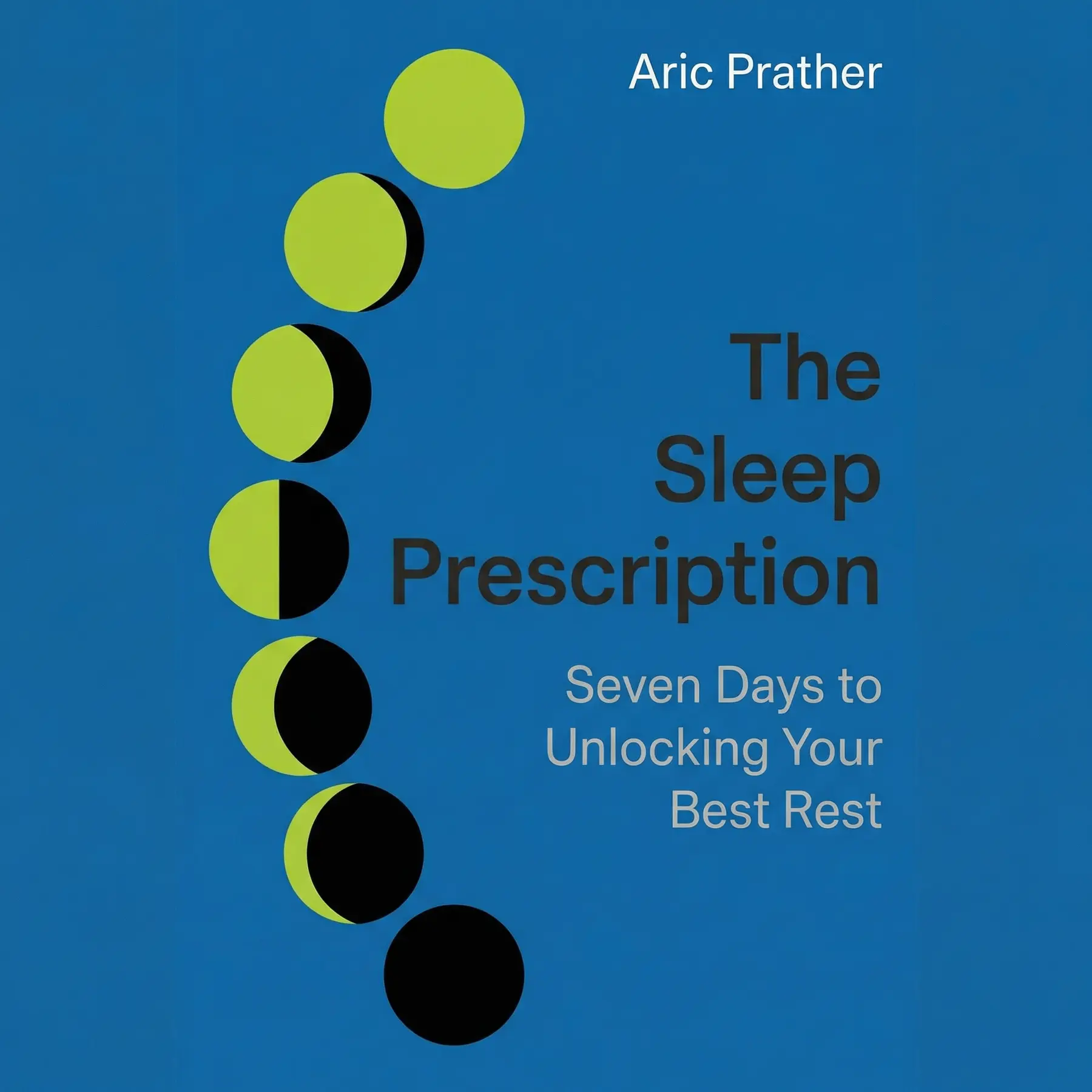
The Sleep Prescription: Seven Days to Unlocking Your Best Rest
By Aric Prather
The Sleep Prescription provides a scientifically grounded, seven-day plan to overhaul your rest. Dr. Aric Prather shares actionable behavioral techniques to reset your biological clock and silence the mental noise keeping you awake.
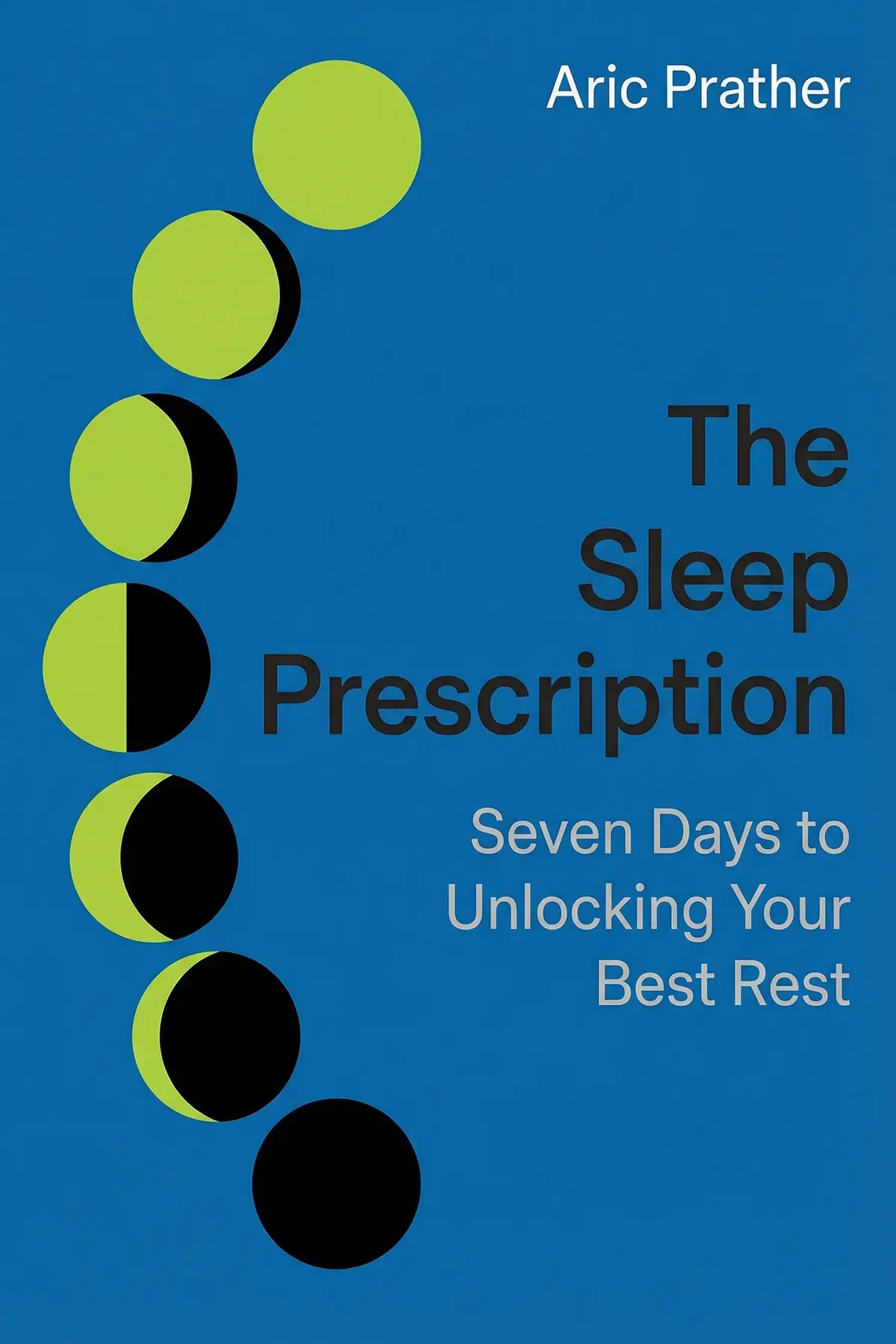
Table of Content
1. Introduction
1 min 44 sec
Think about the last time you truly felt rested. For many of us, that memory is frustratingly distant. We treat sleep like a luxury or a negotiable item on our to-do list, yet it is as fundamental to our survival as the air we breathe or the food we eat. We often find ourselves staring at the ceiling at 2:00 a.m., wondering why something so natural has become so elusive. The truth is that we are living in a world that is fundamentally at odds with our biological needs. Our fast-paced environment, constant connectivity, and high-pressure schedules create a barrier between us and the restorative rest we crave.
But the problem isn’t just the world around us; it’s also how we respond to it. We tend to think that sleep problems start when our head hits the pillow, but the reality is much more complex. The choices you make at 8:00 a.m. or 3:00 p.m. are the true architects of your night. In the following pages, we are going to walk through a transformative seven-day journey based on the work of Dr. Aric Prather. You’ll step into the role of a sleep scientist, examining your own habits and biological rhythms.
This isn’t about vague advice or miracle cures. It’s about understanding the mechanics of your body’s internal clock, managing the mental clutter that keeps you wired, and learning how to build up the physiological drive necessary for deep, uninterrupted rest. By shifting your perspective and implementing small, intentional changes, you can stop fighting against your own biology and start working with it. Let’s explore how you can unlock your best rest by following a structured, week-long prescription for better sleep.
2. The Power of the Master Clock
2 min 20 sec
Discover why your wake-up time is the most important anchor for your biological rhythm and how consistency can stabilize your internal systems.
3. The Reciprocal Link Between Stress and Rest
2 min 22 sec
Explore the surprising relationship between daily pressure and sleep quality, and learn why small breaks are the secret to buffering your nervous system.
4. Navigating the Afternoon Energy Valley
1 min 58 sec
Learn why the 3:00 p.m. slump is a biological certainty and how to recharge your energy without relying on caffeine.
5. Managing the Mind’s Nighttime Echoes
2 min 07 sec
Understand why your brain chooses bedtime to replay your worries and how a ‘scheduled worry’ session can quiet the mental noise.
6. Creating a Buffer Between Day and Night
2 min 17 sec
Discover why the transition to sleep isn’t an instant switch and how a two-hour wind-down routine prepares your brain for the dark.
7. Retraining the Bed Association
2 min 01 sec
Learn how to break the cycle of ‘conditioned arousal’ by ensuring your bed remains a sanctuary for sleep and nothing else.
8. Using Sleep Pressure to Your Advantage
2 min 06 sec
Understand the concept of homeostatic sleep drive and why staying up later might be the key to fixing chronic sleep issues.
9. Conclusion
1 min 40 sec
As we reach the end of this seven-day journey, it’s clear that better sleep isn’t just about what happens in the dark. It’s a holistic process that involves your internal clock, your stress management, your daytime habits, and even the way you think about your bed. We’ve explored how a consistent wake-up time serves as your biological anchor and how micro-breaks can prevent the accumulation of sleep-disrupting stress. We’ve looked at the importance of managing your afternoon energy and the psychological benefit of scheduling your worries so they don’t haunt you at midnight. Finally, we learned the importance of environmental cues and the power of building up physiological sleep pressure.
Improving your sleep is not an overnight fix, but it is a skill that can be mastered. The techniques we’ve discussed—from stimulus control to sleep restriction—are grounded in the science of how our bodies and minds actually function. By applying these practices, you are essentially becoming your own sleep scientist, fine-tuning your habits to match your biology.
Remember that the goal isn’t perfection; it’s progress. Some nights will be better than others, but by sticking to these core principles, you are building a foundation for a lifetime of better health. Sleep is the foundation upon which all other aspects of well-being are built. When you sleep better, you think more clearly, you regulate your emotions more effectively, and you have the energy to live your life to the fullest. You have the tools and the knowledge to reclaim your rest. Now, it’s time to put them into practice and finally unlock the restorative sleep you deserve.
About this book
What is this book about?
Many people view sleep as a passive activity that just happens—or fails to happen—at the end of the day. The Sleep Prescription challenges this by illustrating how our daytime choices, from the moment we wake up, dictate the quality of our rest. Drawing on his experience as a clinical psychologist and sleep scientist, Aric Prather offers a week-long protocol designed to retrain the brain and body. This guide moves beyond basic hygiene tips like avoiding screens. It dives into the mechanics of the circadian rhythm, the psychology of rumination, and the physiological build-up of sleep pressure. By the end of the seven days, listeners will understand how to manage stress through micro-breaks, how to utilize stimulus control to re-associate the bed with rest, and why staying awake longer might actually be the secret to falling asleep faster. It is a promise of transformation through small, consistent behavioral shifts.
Book Information
About the Author
Aric Prather
Aric Prather, PhD, is a professor of psychiatry and behavioral sciences at the University of California, San Francisco. As a licensed clinical psychologist, he specializes in cognitive behavioral therapy for insomnia. The Sleep Prescription is his first book.
Ratings & Reviews
Ratings at a glance
What people think
Listeners find this guide highly practical and simple to follow, featuring a realistic tone that ensures accessibility. The book assists listeners in achieving better rest, as one listener points out it is based on a program of sleep restriction. They value how digestible the material is and regard it as one of the best books on CBTi.
Top reviews
Ubolwan
Wow. This isn't your typical 'drink chamomile tea' sleep guide that you see all over the internet. Dr. Prather takes a very pragmatic, evidence-based approach to insomnia that feels like a condensed version of CBT-i. What I loved most was the concept of the 'homeostatic sleep drive' and the balloon metaphor. It really helped me understand why my naps were actually ruining my nights. The seven-day structure makes the daunting task of fixing your life feel manageable. It’s written with a sense of empathy that most medical books lack. I’m finally sticking to a consistent wake-up time, and while the first few days were rough, the 'sleep pressure' is finally working in my favor. If you’ve been struggling to find a science-backed method that doesn't feel like a chore, this is it. It’s short, punchy, and actually works if you follow the steps.
Show moreSukit
Finally got around to reading this and it’s a game-changer for those of us struggling with revenge bedtime procrastination. Prather’s advice isn't about being a monk; he actually says you can keep your screens if they help you wind down! That kind of realistic approach is so refreshing in the health space. The book focuses on the 'arousal systems' in the brain and how to transition from a hectic day into a restful state. I particularly enjoyed the section on sticking your head in the freezer to snap out of an afternoon slump. It sounds crazy, but it works! The seven-day format provides a clear roadmap that takes the guesswork out of the process. I’ve recommended this to three friends already because it’s the first sleep book I’ve finished that didn’t make me feel guilty about my habits.
Show moreAiden
As someone who has struggled with chronic insomnia for a decade, I appreciated that Prather doesn't demand total perfection. He’s a sleep scientist who actually understands that we live in the real world where people drink coffee and watch Netflix. The book explains the 'sleep drivers' in a way that finally clicked for me. I stopped focusing so much on the hours of sleep I was getting and started focusing on the quality and the consistency of my internal clock. This shift in perspective reduced my sleep anxiety almost immediately. The prose is lean and mean, with no fluff or filler to waste your time. It feels like a comforting hug from a doctor who actually gets it. I’ve tried the heavy hitters like 'Why We Sleep,' but this one is actually actionable. It’s easily the best CBT-i resource for the layperson on the market.
Show moreFatima
Prather manages to condense complex sleep science into a digestible week-long program that anyone can follow. Not gonna lie, I was worried this would be another boring textbook, but it's quite the opposite. The metaphors, like the balloon for sleep pressure, stay with you and help you make better choices throughout the day. I learned that simple carbs like white bread can actually cause more wake-ups at night, which was a total 'aha' moment for me. By switching to more complex carbs and stabilizing my wake time, I've seen a massive improvement in my 'sleep efficiency.' The charts and data points provided are excellent for tracking progress. It’s a very grounding read that reminds you that you were built to sleep. If you feel like your brain just won't shut down, this book provides the manual you've been missing.
Show moreJoseph
Ever wonder why you can't just 'shut down' your brain like a computer? Dr. Prather explains that we aren't machines, and our bodies need a 'wind-down' period that most of us completely ignore. This book changed how I view my entire day, not just my bedtime. I’ve started taking short, screen-free breaks like he suggests, and it has made a world of difference in my evening stress levels. The advice is grounded in science but delivered with a very human touch. I love that he acknowledges that things like meditation can actually make some people more anxious. It’s not a one-size-fits-all approach, which I found deeply refreshing. By the time I hit Day 7, I felt like I had a totally different relationship with my bedroom. It's no longer a place of struggle, but a place of rest. Truly a must-read for the modern, stressed-out adult.
Show morePan
After hearing about Prather's work on a podcast, I decided to give this 7-day plan a go. Personally, I found the chapter on 'Worry Early' to be the most transformative part of the whole book. For years, I’ve been taking my stress to bed with me, but setting aside specific 'worry time' during the day actually helped quiet my mind at 11 PM. The writing style is very accessible and avoids the heavy jargon that usually bogs down science books. My only gripe is that the physical sleep journal at the back is a bit small for my handwriting, so I ended up using a separate notebook. To be fair, most of the advice is common sense if you’ve studied sleep hygiene before. However, the way it’s packaged into a week-long challenge makes it much easier to implement than just reading a list of tips on a website.
Show moreRin
Picked this up because my internal clock felt completely broken after months of late-night working. The book is incredibly easy to read and I managed to finish it in just two sittings. Prather has a very conversational voice that makes complex medical concepts feel like a chat with a friend. I was skeptical about the 'stay up late' advice on Day 7, but it really helped reset my sleep drive. My only minor complaint is that the anecdotes about clinic patients started to feel a bit repetitive after a while. However, the summaries at the end of each chapter are golden for quick reference. It’s a very pragmatic guide that focuses on what you do during the day, not just the thirty minutes before bed. My sleep isn't perfect yet, but the ripple effect on my daily energy levels is already noticeable.
Show moreGun
The chapter on 'Ease off the Gas' offered some decent insights, but I found the rest of the book a bit basic for my needs. Look, if you’re a traditional insomniac who can’t fall asleep, this will be your bible. But for those of us who wake up at 3:00 AM and can’t get back to sleep? The author basically admits there isn't a magic fix for that once the sleep pressure has drained away. That was a bit of a letdown. I did appreciate the science regarding how our master clock is shaped by our DNA, but much of the 'prescription' felt like things I’ve heard a million times before. Stop the caffeine early, don't drink booze, and keep the room cool. It’s a quick read and very well-organized, but don't expect earth-shattering revelations if you’ve already been down the sleep-research rabbit hole.
Show moreGung
In my experience, this book is a solid introduction to sleep hygiene, but it might leave seasoned insomniacs wanting more. The writing is great and the 7-day plan is a smart way to organize the material. That said, a lot of the 'prescriptions'—like avoiding naps and cutting caffeine—are things you can find in any basic health article. I did find the section on high rumination and how it affects our perception of stressful events to be quite insightful. It explains why neutral events can feel threatening when we are sleep-deprived. But did I need a whole book for this? Probably not. The author’s voice is soothing, and I actually fell asleep while reading it a few times, which I guess is a compliment! It’s a good gift for someone who doesn't know where to start, but experts can skip it.
Show moreChiw
Frankly, if you work the night shift or have a non-traditional schedule, save your money. This book is almost entirely geared toward the 9-to-5 crowd who can maintain a perfectly consistent wake-up time. As a nurse, my 'circadian rhythm' is constantly being assaulted by my shift rotations, and the author offers very little in the way of adaptations for people in my position. The tone is a bit too 'pull yourself up by your bootstraps' regarding the morning wake-up call. I also felt like the 7-day structure was a bit forced just to sell the 'prescription' gimmick. Most of this info could have been a PDF or a long-form blog post. While the science about neural pathways being like forest paths was an interesting metaphor, the practical application just wasn't there for my lifestyle. Disappointing.
Show moreFeatured in
Readers also enjoyed


AUDIO SUMMARY AVAILABLE
Listen to The Sleep Prescription in 15 minutes
Get the key ideas from The Sleep Prescription by Aric Prather, plus 5,000+ more titles in English and Thai.
- 5,000+ titles
- Listen as much as you want
- 7-day free trial
- Cancel anytime







