
12 min 40 sec
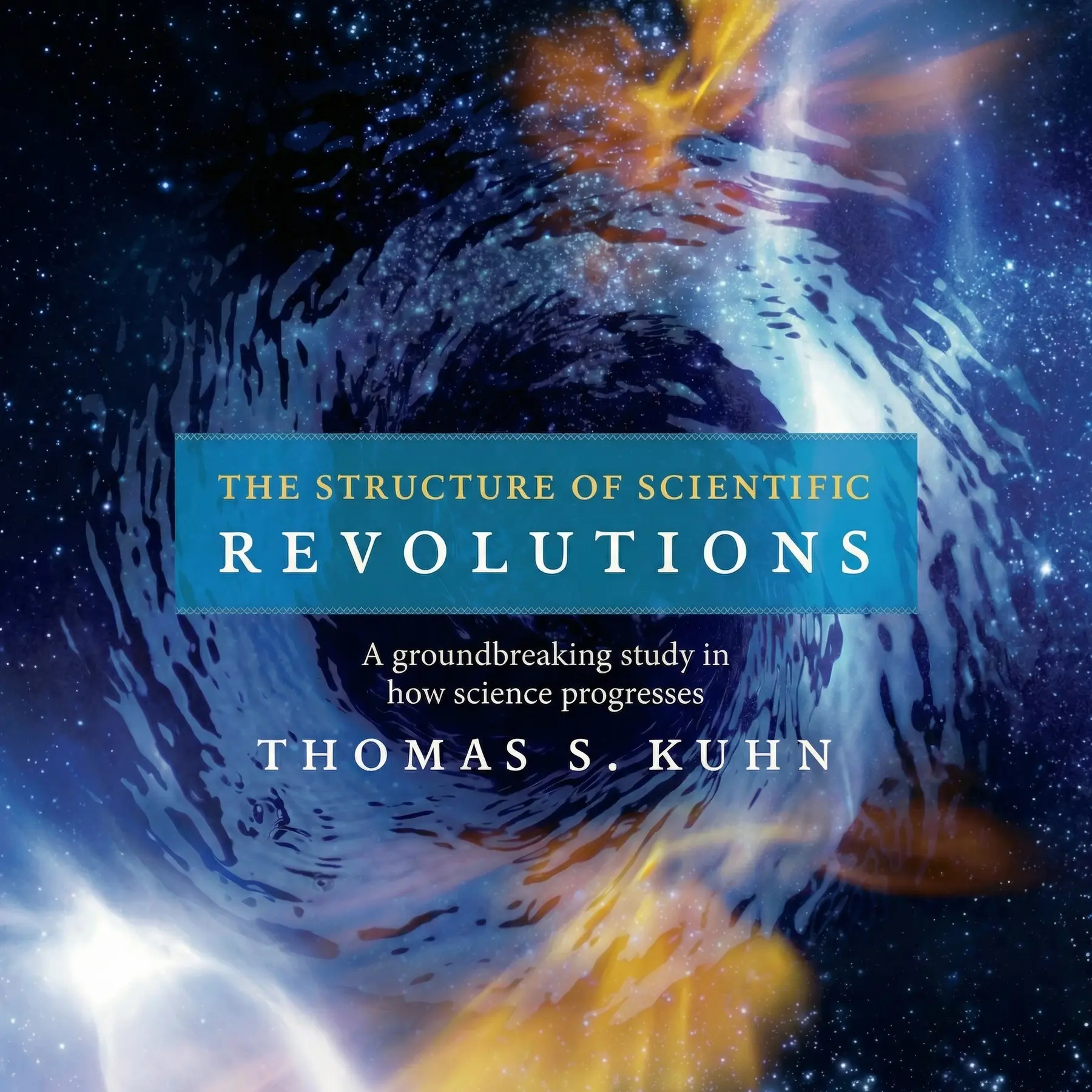
The Structure of Scientific Revolutions
Explore how science evolves through dramatic paradigm shifts rather than steady accumulation. This summary breaks down why revolutions, not gradual progress, define our understanding of the natural world.
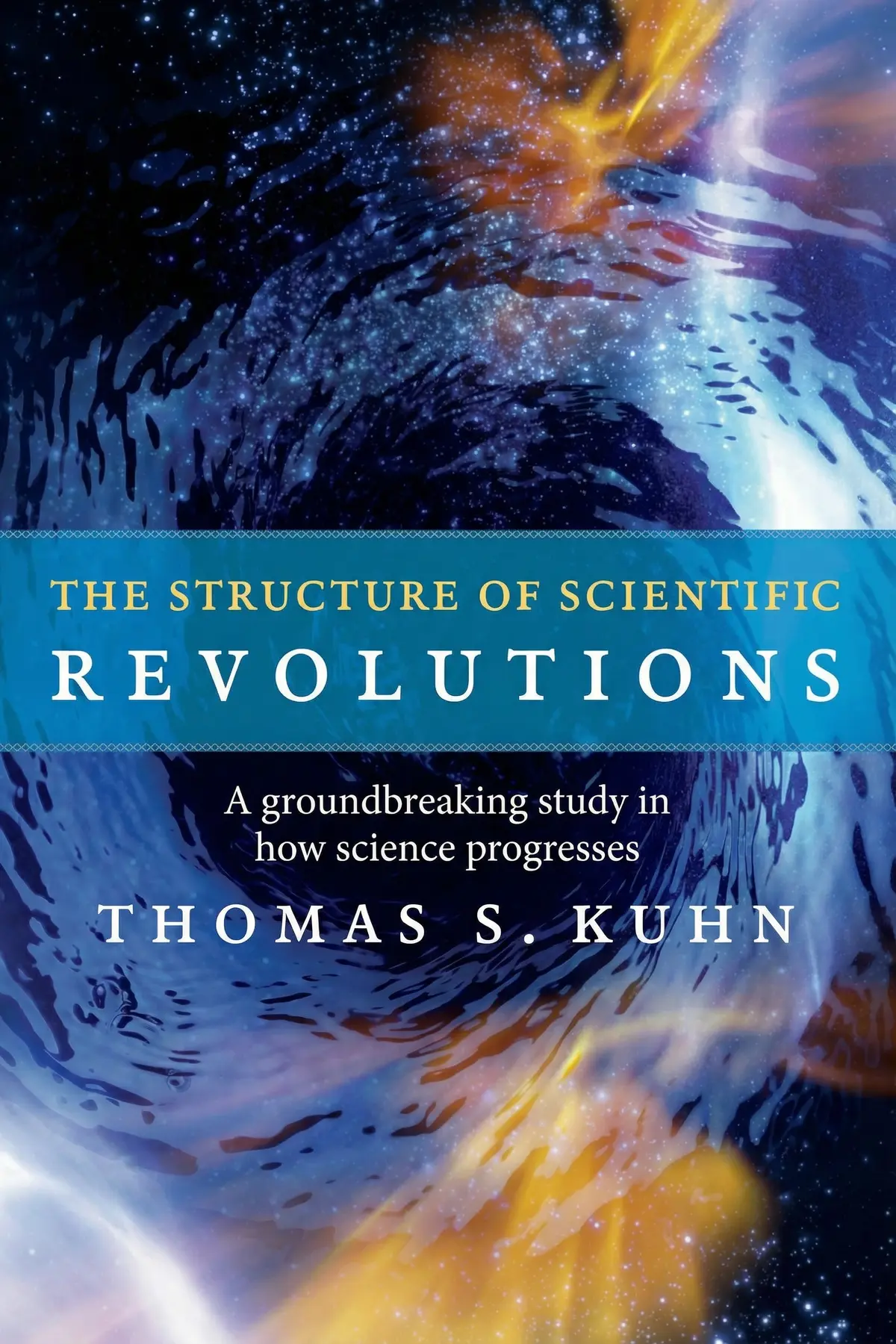
Table of Content
1. Introduction
1 min 53 sec
How do we envision the march of human knowledge? Most of us carry a mental image of a staircase. We imagine that every generation of researchers adds a single brick to a wall or climbs one step higher on a ladder. In this traditional view, science is a cumulative process of steady improvement. We think of thinkers from ancient Greece to the modern day as part of one long, unbroken chain, each person adding their small piece of the puzzle to a growing picture of the universe. It’s a comforting idea because it suggests that we are constantly moving closer to an ultimate, objective truth.
However, this model of constant, linear progress might be a complete misunderstanding of how discovery actually works. What if science doesn’t move in a straight line at all? What if it moves in fits and starts, characterized by long periods of calm followed by violent intellectual upheaval? This is the core challenge presented in this landmark study. Instead of a steady accumulation of facts, the history of science is a series of revolutions. When a major new idea arrives, it doesn’t just sit on top of the old ideas; it often demands that we throw the old ideas away entirely.
In the following insights, we are going to explore why science relies on shared frameworks called paradigms and why scientists spend the majority of their time simply trying to make reality fit into those frameworks. We’ll look at what happens when those frameworks begin to fail and why a scientific crisis is the only path to a true breakthrough. Ultimately, we’ll see why two competing scientific views often cannot coexist in the same world, and why a revolution in thought changes not just what we know, but how we actually see the world around us. Let’s dive into the mechanics of how our understanding of reality truly evolves.
2. The Power of Paradigms
2 min 03 sec
Scientists don’t start from scratch every morning. They rely on established frameworks that allow them to focus on the fine details of their research.
3. When the Map Fails
1 min 50 sec
Precision is the mother of discovery, but it also reveals the cracks in current theories when the results don’t match our expectations.
4. The Shift to Extraordinary Science
1 min 56 sec
When anomalies pile up, science moves from a calm period of puzzle-solving into a frantic state of crisis and exploration.
5. A Conflict of Worlds
1 min 53 sec
Scientific revolutions aren’t polite handovers of power; they are total replacements of one worldview by another.
6. Changing the Vision
1 min 53 sec
A new paradigm doesn’t just provide new answers; it actually changes what scientists see when they look through their instruments.
7. Conclusion
1 min 12 sec
In the end, we are left with a vision of science that is far more dynamic and human than the one we were taught in school. We’ve seen that science isn’t just a collection of facts, but a series of worldviews called paradigms. These paradigms provide the essential structure for research, but they also create blind spots. We’ve learned that progress happens through the accumulation of anomalies, leading to a state of crisis that can only be resolved by a radical, revolutionary shift in perspective.
What this means for us is that ‘truth’ in science is often tied to the paradigm of the moment. Today’s settled science might be tomorrow’s discarded theory. This shouldn’t make us cynical about science; instead, it should make us appreciate the courage required to overturn an old way of thinking. The throughline of this journey is that intellectual growth requires us to be willing to let go of the maps that no longer fit the territory. By understanding the structure of these revolutions, we can become more open to the extraordinary moments when the world shifts and something truly new comes into view. The next time you hear about a scientific breakthrough, remember that it isn’t just a new step on a ladder—it might be the start of a whole new climb.
About this book
What is this book about?
The Structure of Scientific Revolutions challenges the common belief that science is a slow, steady climb toward truth. Instead, Thomas S. Kuhn argues that science is defined by long periods of stability interrupted by sudden, radical transformations. He introduces the concept of the paradigm—a shared framework that guides scientific inquiry—and explains how these frameworks eventually collapse under the weight of their own failures. This summary explores the cycle of normal science, the emergence of anomalies, and the resulting crises that force researchers to abandon old theories for entirely new ways of seeing the universe. By the end, you will understand the promise of this work: a profound shift in how we perceive intellectual progress, moving away from a linear model and toward a revolutionary one where new ideas do not just build upon the past, but completely replace it.
Book Information
About the Author
Thomas S. Kuhn
Thomas Kuhn (1922-1996) was a highly influential physicist, philosopher, and historian. His most famous work, The Structure of Scientific Revolutions, changed how we think about the history of science and introduced concepts that remain foundational to the philosophy of science today.
Ratings & Reviews
Ratings at a glance
What people think
Listeners find this work remarkably accessible and impactful for its perspectives on how science functions, utilizing historical instances for context. Furthermore, they view it as a necessary read for those in research fields, commending the lucid prose and stimulating ideas. The text also gains approval for being straightforward, with one listener highlighting that it remains approachable for a broad audience rather than being overly specialized. Ultimately, listeners value its reputation as an enduring classic.
Top reviews
Sarawut
Wow. I never expected a philosophy of science book to feel so visceral and human. Kuhn captures the raw passion scientists have for their work, suggesting research is almost like a committed romance where a theory colors your entire worldview. The way he describes 'normal science' as a process of solving puzzles within a relationship makes perfect sense to anyone who has spent years in a lab. While some parts of the 'paradigm' definition feel a bit loose, the overall insight into how we abandon old ideas is staggering. It is a powerful classic that stays with you long after you have finished the final chapter. I highly recommend it to anyone who thinks science is just about dry facts.
Show moreWittaya
As a grad student in the lab, this was the first book that made my daily struggles feel like part of a larger historical cycle. Kuhn explains that most of what we do is 'normal science,' which involves filling in the details of an existing framework rather than making world-shattering discoveries. Frankly, it is a relief to realize that the anomalies we encounter aren’t just personal failures but the potential seeds of a future scientific revolution. The writing is clear and the arguments are persuasive, even when he gets into the weeds of belief holism. This isn't just a book for philosophers; it's a guide for anyone who wants to understand the soul of scientific inquiry. Truly life-changing.
Show moreViolet
Picked this up on a whim and ended up underlining almost every page because the insights were so sharp. Personally, I found Kuhn’s discussion of how we process information through a 'filter' of assumptions to be a brilliant take on human perception. He compares the shift in scientific views to a Gestalt switch, where you suddenly see a completely different image in the same data. I especially liked the section on how new paradigms are often rejected at first by the established guard. It is a very readable book that manages to be deep without being pretentious or overly bogged down in jargon. If you want to understand why 'experts' often clash, this is where you start.
Show moreDuangjai
Ever wonder why science seems to move in fits and starts rather than a smooth, constant line of progress? Thomas Kuhn’s landmark work explains this through the concept of paradigm shifts, arguing that scientific discovery isn't just about accumulating facts. He provides a fascinating look at the history of science, particularly the transition from the geocentric model to the Copernican revolution. I loved how he challenged the popular notion of falsifiability, showing that scientists often cling to their theories even when anomalies begin to pile up. My only gripe is that the middle sections on 'normal science' can feel repetitive. Still, it is essential reading for anyone trying to understand the actual mechanics of intellectual change.
Show moreTun
This book basically invented the way we talk about 'paradigm shifts' today, and it is remarkable how well it has aged. Kuhn’s central argument is that science doesn't just step closer to a capital-T 'Truth' but rather moves between different ways of seeing the world. Truth is, I was surprised by how much he focuses on the community aspect of research, highlighting that science is a social endeavor. His breakdown of how a crisis leads to a revolution is thought-provoking and supported by deep historical dives into chemistry and physics. A few of the examples felt a bit dated, but the core logic remains incredibly robust. It is a must-read classic for any serious researcher.
Show moreMai
After hearing about Kuhn for years, I finally sat down with the actual text and was blown away by his psychological insight. He treats scientific communities like tight-knit groups with shared commitments, which explains why change is so difficult and often requires a generational leap. The chapter on the nature of crisis was particularly gripping, showing how pressure builds until the old system simply breaks. It is not too technical for a general audience, though you do need to pay attention to the philosophical underpinnings. My only complaint is that the 'Postscript' is absolutely necessary to understand his refined definitions, so don't skip it. A timeless piece of scholarship that effectively redefined an entire field.
Show moreSamroeng
Kuhn’s challenge to Karl Popper’s idea of falsifiability is what really stuck with me after finishing this. Instead of a single experiment proving a theory wrong, Kuhn shows that we usually try to force new data into our old boxes until the boxes literally burst. This vision of science as a series of revolutions rather than a steady climb is much more realistic to how humans actually behave. The writing is accessible, though the parts discussing the metaphysics of space and time require a bit more concentration. It is a powerful reminder that our current 'facts' are often just the most useful paradigms we have at the moment. Definitely deserves its status as a foundational text.
Show moreTippawan
To be fair, I found the prose a bit denser than the 'accessible' labels on the back cover suggest. Kuhn is undeniably brilliant, and his critique of Karl Popper’s logic is well-constructed, yet the terminology can be exhausting for a casual reader. He spends a significant amount of time defending his use of 'paradigms,' which he reportedly uses in dozens of different ways throughout the text. I appreciated the historical examples involving Aristotle’s physics, but I often felt like I was drowning in academic nuances. It is an important book, no doubt, but perhaps not the 'easy read' some fans claim it to be. If you aren't already familiar with epistemology, you might struggle with the pacing.
Show morePia
Look, I recognize the historical importance of this text, but I’m not entirely sold on Kuhn’s relativism regarding 'incommensurability.' The idea that we can't truly compare two different paradigms because they speak different languages feels a bit extreme to me. In my experience, scientists from different eras still share a basic commitment to empirical observation that Kuhn seems to downplay. He writes with a very specific, almost psychological tone that is engaging but sometimes lacks the rigorous logic I expected after reading Popper. It is a thought-provoking essay, and the examples of Ptolemaic epicycles are great, but I found myself disagreeing with his conclusions about progress. It’s a solid three-star read for the context.
Show moreAva
Finally got around to this classic, and while I appreciate the 'paradigm shift' concept, I found the lack of clear definitions frustrating. Kuhn himself admitted in the later editions that he used his most famous term in far too many ways, which makes the core argument slippery. Gotta say, his historical accounts of Lavoisier and the discovery of oxygen are masterfully told and provide great flavor. But as a philosophy of science, it felt a little more like sociology than hard logic. I would recommend it for the historical perspective, but be prepared for some circular reasoning. It is a solid three stars for me—brilliant in sparks but occasionally muddled in its execution.
Show moreReaders also enjoyed

A Guide to the Good Life: The Ancient Art of Stoic Joy
William B. Irvine

A Life Decoded: My Genome: My Life
J. Craig Venter

A Planet of Viruses
Carl Zimmer
A Little History of Philosophy
Nigel Warburton
AUDIO SUMMARY AVAILABLE
Listen to The Structure of Scientific Revolutions in 15 minutes
Get the key ideas from The Structure of Scientific Revolutions by Thomas S. Kuhn, plus 5,000+ more titles in English and Thai.
- 5,000+ titles
- Listen as much as you want
- 7-day free trial
- Cancel anytime







